The United Arab Emirates (UAE) has attracted global businesses with its strategic location, advanced infrastructure, and supportive business environment. The introduction of the federal corporate tax in 2023 marked a significant change, aligning the UAE with international tax standards while preserving its competitiveness. As of 2026, the corporate tax regime has evolved with minor updates to enhance compliance and transparency.
This guide provides essential information on corporate tax in the UAE, including rates, exemptions, filing requirements, and recent changes. Understanding these rules is crucial for both new and established businesses.
What is Corporate Tax in the UAE?
Corporate tax (CT) is a federal tax levied on the net income or profits of corporations and businesses operating in the UAE. Introduced under Federal Decree-Law No. 47 of 2022, it applies to financial years starting on or after June 1, 2023. The tax aims to diversify the economy, support sustainable development, and adhere to global best practices, such as those of the OECD. Unlike the value-added tax (VAT), which is an indirect tax, corporate tax is a direct tax on business earnings.
Key objectives include:
Promoting transparency and fairness in taxation.
Encouraging investment while ensuring large multinationals contribute appropriately.
Maintaining the UAE’s appeal as a low-tax jurisdiction compared to global averages.
Who is Subject to Corporate Tax?
Corporate tax applies to various entities, though not all businesses are subject to it. The following outlines the main categories:
Taxable Persons
Juridical Persons: This includes UAE-incorporated companies (e.g., LLCs, PSCs), foreign companies with a permanent establishment (PE) in the UAE, and free zone entities.
Natural Persons: Individuals conducting business activities with an annual turnover exceeding AED 1 million.
Foreign Entities: Those managed and controlled in the UAE or with a PE, such as a fixed place of business or dependent agent.
Exempt Persons
Certain entities are exempt from corporate tax, including:
Government entities and public benefit organisations.
Extractive businesses (e.g., oil and gas) and non-extractive natural resource companies are subject to emirate-level taxation instead. Note: In February 2025, Sharjah introduced a 20% emirate-level tax on extractive and non-extractive natural resources activities.
Qualifying investment funds and pension funds.
If you are uncertain about your status, it is advisable to consult a tax advisor.
Corporate Tax Rates and Thresholds in 2026
The UAE’s corporate tax rates remain unchanged in 2026, supporting small businesses while applying progressive rates to higher earners.
Standard Rates:
0% on taxable income up to AED 375,000.
9% on taxable income exceeding AED 375,000.
Domestic Minimum Top-up Tax (DMTT): For multinational enterprises (MNEs) with global consolidated revenues over €750 million, a 15% effective minimum tax applies under OECD Pillar Two rules, effective from January 1, 2025. If the effective tax rate falls below 15%, a top-up tax is imposed.
Example: A company with AED 1 million in taxable income pays 0% on the first AED 375,000 and 9% on the remaining AED 625,000, resulting in AED 56,250 in tax.
Exemptions and Reliefs
Several reliefs are available to support smaller entities and specific sectors:
Small Business Relief (SBR): Businesses with annual revenue below AED 3 million may elect SBR, which treats them as having no taxable income. This relief is available for tax periods ending on or before December 31, 2026. Businesses must elect SBR on their tax return to benefit.
Other Reliefs:
Tax losses can be carried forward indefinitely and offset up to 75% of future taxable income.
Foreign tax credits are available to avoid double taxation.
Proposed R&D tax incentive: Expected to take effect for tax periods starting on or after January 1, 2026, offering additional deductions or credits for qualifying research activities.
Free Zone Corporate Tax Regime
Free zones continue to play a key role in the UAE’s business landscape, and the tax regime maintains their appeal:
Qualifying Free Zone Persons (QFZPs): Eligible entities enjoy 0% tax on “Qualifying Income” (e.g., from qualifying activities like manufacturing, logistics, or trading with non-UAE entities).
Non-Qualifying Income: Taxed at 9%.
De Minimis Rule: If non-qualifying income is below 5% of total revenue or AED 5 million (whichever is lower), the entire income may qualify for 0% tax.
To qualify as a QFZP, businesses must maintain sufficient presence in the free zone, including adequate employees and assets. The FTA’s guide on Free Zone Persons outlines the detailed criteria.
Calculating Taxable Income
Taxable income is based on accounting income under IFRS or equivalent standards, adjusted for tax purposes.
Starting Point: Net profit from financial statements.
Additions: Non-deductible expenses (e.g., fines, bribes, certain entertainment costs).
Deductions: Allowable expenses (e.g., interest up to limits, depreciation).
Exempt Income: Dividends from UAE residents and certain capital gains are exempt.
All taxable persons must register with the Federal Tax Authority (FTA) via the EmaraTax portal.
Timeline: Within 3 months of incorporation or becoming taxable.
Requirements: Trade license, financial statements, and identification documents.
Groups: Tax groups (e.g., holding companies and subsidiaries) can register as a single entity if 95% owned.
Failure to register incurs penalties up to AED 20,000.
Filing and Payment Deadlines
Tax Return Filing: Due within 9 months after the end of the financial year. For a December 31 year-end, file by September 30 of the following year.
Payment: Tax is due by the filing deadline. Advance payments are voluntary but recommended to avoid late penalties.
Audits: The FTA conducts risk-based audits. Businesses should retain records for seven years.
New in 2026: The amended Tax Procedures Law introduces tighter deadlines, including reduced response times to FTA queries from 40 to 30 business days.
Penalties for Non-Compliance
Penalties are strict to ensure compliance:
Late registration: AED 10,000.
Late filing: AED 500 per month (up to AED 50,000).
Late payment: 1% per month on unpaid tax.
Inaccurate returns: Up to 200% of the tax due.
Voluntary disclosures can reduce penalties by up to 75%.
Recent Updates in 2026
As of February 2026, key developments include:
Advance Pricing Agreements (APAs): The FTA’s guide on APAs, issued December 31, 2025, provides certainty on transfer pricing for multinationals.
Service Fee Amendments: New APA application fees are effective January 1, 2026.
Enhanced FTA Powers: Broader audit scopes and stricter timelines under Federal Decree-Law No. 17 of 2025.
R&D Incentive: Anticipated rollout to boost innovation.
Monitor the FTA website for further announcements and updates.
Conclusion: Navigating UAE Corporate Tax with Confidence
The UAE’s corporate tax system is straightforward, competitive, and supports business growth. By maintaining compliance, businesses can benefit from available exemptions and reliefs. For those establishing or expanding operations in the UAE, professional guidance is highly recommended. Shuraa TAX offers expert support in tax registration, compliance, and optimisation tailored to your needs.
Behind every successful business in Dubai, there’s often a trusted consultant offering expert advice from the sidelines. From solving business challenges to guiding strategic decisions, consultants are the go-to experts that companies rely on to move forward with clarity and confidence.
As Dubai continues to attract global investors and startups, the demand for professional consultancy services is rising rapidly across industries—from tech and finance to healthcare and human resources.
Recent figures show that the UAE’s consulting market is on track to grow by over 6% annually through 2028, driven by:
Digital transformation
Government initiatives like UAE Vision 2031
The constant push for innovation
But here’s the key: to offer consultancy services legally, you must have a valid consultancy license in Dubai.
This license makes your business legal and allows you to
Sign contracts
Open a company bank account
Rent office space
Sponsor employees
If you’re thinking of offering consultancy services in Dubai, here’s a step-by-step guide to obtaining a valid consultancy license in Dubai.
What is a Consultancy License in Dubai?
A Consultancy License in Dubai is a legal authorisation that allows individuals or companies to offer advisory and expert services to businesses across various industries. This license is essential for consultants to operate legally in the UAE and provides the necessary framework for conducting business in a transparent and regulated environment.
Why Choose Dubai to Starting a Consultancy Business?
Here’s why starting a consultancy business in Dubai is a smart choice:
Growing Knowledge Economy: Dubai is rapidly transitioning into a knowledge-based economy, with a strong demand for consultancy services in emerging sectors like AI, smart cities, and renewable energy. This shift provides incredible opportunities for consultants with expertise in these areas.
Low Operational Costs: Dubai offers relatively low operational costs for startups, especially in Free Zones, where businesses can benefit from tax exemptions and reduced administrative costs.
High Client Retention: Dubai values long-term relationships, and consultants who deliver results can benefit from strong client retention and referrals, leading to sustained growth.
Ease of Business Setup: Dubai has a business-friendly regulatory environment that makes it relatively simple and quick to set up a consultancy. The process is streamlined, and there are various Free Zones that cater specifically to consultancy firms, providing packages that include office space, visas, and licenses.
Access to High-Profile Clients: Dubai is home to many multinational companies, government entities, and high-net-worth individuals who are frequently in need of specialised consultancy services. By establishing a consultancy in Dubai, you gain access to a prestigious client base.
Streamlined Government Services: The government’s efficient, digitalised services make it easy to get a business up and running quickly. The fast-licensing process and online services ensure minimal delays for consultants starting their business.
Types of Services Covered by a Consultancy License in the UAE
A consultancy license can cover a wide range of services, depending on the area of expertise. Some common consultancy services include:
Business Consultancy: Helping businesses develop strategies, improve operations, and optimize growth potential.
Management Consultancy: Advising on organizational structure, leadership strategies, and performance management.
HR Consultancy: Offering services like recruitment, employee management, and HR policies.
IT Consultancy: Providing tech-related advice, including software solutions, cybersecurity, and digital transformation.
Marketing Consultancy: Guiding businesses on branding, digital marketing, market research, and customer strategies.
Legal Advisory: Offering advice on legal matters such as contracts, company setup, compliance, and dispute resolution.
Financial Consultancy: Providing services on budgeting, financial planning, accounting, and tax-related issues.
Documents Required to Obtain a Consultancy License in UAE
Approval from relevant authorities (for specific consultancy fields)
Proof of experience (if required)
How to Get a Consultancy License in Dubai, UAE
To obtain a consultancy license in Dubai, follow these steps:
Step 1: Determine Your Consultancy Service Type: Identify the specific type of consultancy services you will offer (e.g., business, legal, IT, HR). This will help determine the exact requirements for your license.
Step 2: Choose Your Business Location: Decide if you want to operate your consultancy in the Dubai Mainland or a Free Zone. Mainland businesses have access to the entire UAE market, while Free Zones offer benefits like 100% foreign ownership and tax incentives.
Step 3: Select a Trade Name: Choose a unique name for your consultancy business in Dubai. Ensure it complies with local naming regulations and reserve the name with the Department of Economic Development (DED) or Free Zone authority.
Step 4: Apply for Initial Approval: Submit an application for initial approval from the DED or relevant Free Zone authority. This confirms that your business idea is compliant with regulations.
Step 5: Sign a Lease Agreement: Secure office space for your consultancy business. This is required for Mainland businesses, while Free Zone offices may be included in package offerings.
Step 6: Submit the Required Documents: Gather and submit all the necessary documents (passport copies, proof of address, educational qualifications, etc.) to the relevant authority.
Step 7: Obtain the Consultancy License: Once all documents are approved and payments are made, the DED or Free Zone authority will issue your consultancy license in Dubai.
Step 8: Apply for Residency Visa (if required): If you’re setting up a Mainland consultancy, apply for a UAE residency visa for yourself and your employees.
Step 9: Complete Post-Licensing Formalities: Once your consultancy license is issued, you must complete several post-licensing formalities to ensure full operational compliance; these typically include registering with relevant professional bodies for industry-specific approval, opening a corporate bank account with a UAE financial institution, and completing any other mandatory legal or regulatory filings as required by the local authorities.
How Much Does a Consultancy License Cost in Dubai?
The consultancy license cost in Dubai generally falls between AED 15,000 to AED 30,000. For Mainland consultancy licenses, the cost is generally around AED 18,500. However, the overall cost varies depending on several factors, such as whether you choose to set up in Dubai Mainland or a Free Zone, the type of consultancy services you provide, and additional business requirements.
Besides the license, there are other costs to consider:
Office Rent: If you’re setting up in the mainland, you are required to have a physical office space.
Visa Fees for Employees: If you need additional employee visas, the cost is usually between AED 3,000 to AED 7,000 per visa.
Renewal Fees: Consultancy licenses need to be renewed annually, and renewal fees are like the initial licensing costs.
Health Insurance: For employees, health insurance coverage can range from AED 1,000 to AED 3,000 per person annually.
Document Certification and Notarization: For legal documents, notarization or certification may cost between AED 500 to AED 2,000.
Note:Shuraa Business Setup can help guide you through the process, ensuring that you meet all the necessary legal requirements and help with cost-efficient solutions for your consultancy license.
Professional Vs Commercial License for Consultancy
While both professional and commercial licenses can apply to consultancy businesses, there are key differences in terms of the scope and activities permitted.
Professional Consultancy License
Commercial Consultancy License
A professional consultancy license is ideal for businesses offering professional services and advisory roles. It’s focused on consultancy that requires expertise in a particular field, such as law, finance, marketing, IT, or human resources.
This includes purely advisory and consulting services that do not involve product sales or commercial transactions. Consultants typically provide specialised knowledge and strategic advice to clients.
A Commercial License allows you to operate a consultancy business that also involves trading, distribution, or sales alongside consultancy services. It can be used for businesses that provide both consultancy and product-related services.
This includes consulting services in addition to commercial activities such as sales, product distribution, and other trading-related activities. This license is broader, allowing businesses to combine consulting with the sale of goods or services.
Examples: A marketing consultancy that also sells advertising products, a technology consultancy that supplies software or hardware solutions.
Ready to Start Your Consultancy in Dubai?
Starting a consultancy business in Dubai is a smart move, with plenty of opportunities to grow and succeed. The city’s booming market and need for expert services make it the perfect place to launch your business. The best part? Setting up is much easier than you might think, especially with the right help.
Skip the paperwork and legal hurdles—let our experts handle your consultancy license in Dubai with: ✔ Zero hidden fees | ✔ 100% compliance guarantee | ✔ Fast-track processing
1. Do I need a specific qualification to obtain a Consultancy License?
Yes, for certain types of consultancies, such as management consultancy in Dubai, you may need relevant qualifications or experience in that field. Certifications may also be required to demonstrate your expertise.
2. Can I operate as a sole consultant with a Consultancy License in Dubai?
Yes, you can apply for a consultancy in Dubai as a sole proprietor. If you plan to provide services alone, you can operate under your own name with the required qualifications and documentation.
3. What is the consultancy license cost in UAE?
The cost for obtaining a consultancy license in Dubai or UAE depends on the type of consultancy and whether it’s a mainland or free zone license. On average, the costs range from AED 15,000 to AED 30,000 for a management consultancy license in Dubai or other consultancy services.
4. What types of consultancy businesses can be licensed in Dubai?
You can license many types, such as management consultancy, IT consultancy, HR, legal advisory, education consultancy, marketing consultancy, and more.
5. What is the difference between a mainland, free zone, and offshore consultancy license?
Mainland: Allows you to work anywhere in the UAE.
Free zone: Offers 100% ownership and benefits but limits direct UAE market access unless through a distributor or agent.
Offshore: Primarily for international consulting, not allowed to operate inside the UAE market.
6. What is the minimum capital requirement for a consultancy license?
There is usually no mandatory minimum capital required, especially in free zones. Some zones require just a nominal share capital.
7. What are the tax implications for a consultancy business in Dubai?
Dubai offers 0% personal income tax, but your business may be subject to 9% corporate tax if profits exceed AED 375,000 annually.
8. Are there any restrictions on the consultancy services I can offer?
Yes, you can only offer the services approved under your license type. You must apply for additional approvals if you want to expand your scope.
9. Can foreigners obtain a consultancy license in Dubai?
Yes, foreigners can 100% own a consultancy license in Dubai, both in the mainland and the free zone.
10. Can I operate my consultancy business online, or do I need a physical office?
Yes, you can operate online, especially with a free zone license, but a registered office address (even a flexi-desk) might still be required.
11. How do I renew my consultancy license in Dubai?
You must renew it annually by submitting the required documents and paying the renewal fee to the licensing authority.
12. Can I provide services outside of Dubai/UAE with this license?
Yes, you can offer consultancy services internationally, depending on the rules of your business jurisdiction.
13. What are the best free zones for consultancy businesses in Dubai?
Every day on Dubai’s roads, you see them: thousands of cars, from practical sedans to luxury supercars. In the UAE’s dusty desert climate, they don’t stay clean for long. This daily reality isn’t just a chore for owners—it’s a lucrative business opportunity for you.
Starting a car wash business in Dubai can be your ticket into a stable and growing market. This guide will walk you through everything, from the brilliant “why” to the essential “how,” including the specific rules you can’t afford to ignore.
Understanding the UAE Car Wash Market
The UAE’s car wash market is booming, with a projected market value of USD 348.5 million in 2024, expected to grow to USD 545.4 million by 2030 at a compound annual growth rate (CAGR) of 7.8%. This growth is driven by the high number of vehicles, demand for premium services, a desert climate, and the UAE’s business-friendly environment. While roll-over/in-bay is the largest segment, tunnel systems are the fastest-growing, indicating a trend toward high-volume, automated washes.
Market overview:
Current value: USD 348.5 million (2024)
Projected value: USD 545.4 million (2030)
CAGR: 7.8% (2025-2030)
Key drivers: High vehicle ownership (over 2.5 million registered vehicles in the UAE), a desert climate requiring frequent washing, and a demand for both basic and premium detailing services.
Why a Car Wash is a Smart Investment in the UAE?
There are several reasons why starting a car wash business in the UAE could be a good opportunity:
High Demand: The UAE has a growing automotive market, with a rising number of car owners. This means there’s a built-in customer base for car wash services.
Desert Climate: The hot and dusty climate in the UAE means cars get dirty quickly, necessitating frequent washing. This creates a steady demand for car wash businesses.
Room for Innovation: The market is receptive to new technologies like waterless car washes, which are eco-friendly and convenient for customers.
Government Support: The UAE government offers a business-friendly environment with tax breaks and streamlined processes for starting a business.
Relatively Stable Business Model: The car wash industry isn’t prone to wild fluctuations. People will always need their cars cleaned, regardless of economic conditions.
Premium Market: Many UAE residents have a high disposable income and a preference for luxury cars which creates a market for high-quality and detail-oriented car washes.
Eco-Conscious Approach: Water scarcity is a concern in the UAE. By using water reclamation systems or offering waterless car wash options, you can appeal to environmentally conscious customers and potentially gain a competitive edge.
Staying Legal with Your Car Wash Business
Before you start a car wash business in Dubai, it’s important to understand the local rules. These rules help protect the environment and keep the city clean.
Here are the key legal points you need to know:
Get the Right License: You cannot just start washing cars. First, you must get a special business license for car washing from the Department of Economic Development (DED).
Save and Reuse Water: Dubai has strict rules about saving water. You must use a water recycling system. This system cleans and reuses the water, so you waste less.
No Illegal Dumping: The dirty water and soap from washing cars cannot be dumped just anywhere. You must follow Dubai Municipality’s rules for disposal to avoid harming the environment.
Stay in Your Zone: You are not allowed to wash a car on any street. You must operate in areas that are officially approved. Washing a car in a non-approved area can lead to a large fine.
Make Your Service Easy to Find: If you have a fixed location, make sure it has clear signs and is easy for customers to see from the road. If you are mobile, ensure your online booking and location details are very clear.
Required Documents to Set Up a Car Wash Business in the UAE
Here’s a curated list of documents you’ll need to open a Dubai car wash company:
Passport copy of the applicant(s)
NOC from your local service agent
Payment receipt of trademark registration
A valid tenancy contract
Copy of your visit visa/tourist visa/residence or investor visa
Approval from the Chamber of Commerce and Dubai Municipality
A comprehensive business plan document
How to Start a Car Wash Business in Dubai or the UAE?
Starting a car wash business in Dubai is a great opportunity, but it requires careful planning. Here is a straightforward guide to the key steps you need to follow.
Step 1. Planning and Research
Before anything else, you need a solid plan.
Market Research: Look at the area you want to operate in. Is there high demand? Who are your competitors? Decide what kind of car wash you’ll run: a basic service, a premium detailing center, or a mobile unit that goes to the customer.
Business Plan: Create a simple document outlining your services, prices, target customers, and financial projections. This will be your roadmap.
2. Legal Setup and Registration
This is the most important part of setting up your business.
Choose Your Legal Structure: This defines who owns the business and their legal responsibility.
Limited Liability Company (LLC): This is the most popular choice. It separates your personal assets from the business, meaning you are generally not personally responsible for business debts.
Sole Proprietorship: You own and run the business by yourself. It’s simpler but means you are personally liable for everything.
Choose Mainland or Free Zone: This is a big decision.
Mainland: Allows you to operate anywhere in Dubai and directly serve the local market. This is ideal for a car wash that needs to be in a specific neighborhood or is mobile.
Free Zone: Offers 100% foreign ownership but typically restricts your business activity to within that free zone. This is less common for local car wash services.
Choose a Business Name: Pick a name for your company and get it approved by the Department of Economic Development (DED). The name must be unique and follow the government’s guidelines.
Choose a Location: Your location is crucial. For a fixed location, you often need to be near a gas station or in an industrial area. You will need a tenancy contract (Ejari). For a mobile car wash, your “location” is your vehicle, but you still need a business address.
Get Your License: Apply for a trade license from the DED. The main business activity will be “Car Washing.” You must also get environmental approval from Dubai Municipality, as you will be using water and chemicals.
Step 3. Operational Setup
With the legal paperwork done, you can build your business.
Buy Equipment: Purchase all the necessary equipment like pressure washers, vacuums, cleaning supplies, and, if mobile, a water tank and van.
Hire and Train Staff: Hire reliable staff. Train them on cleaning techniques, customer service, and safety procedures. You will need to sponsor their visas.
Open a Bank Account:Open a corporate bank account for your business to manage all income and expenses separately from your personal funds.
Step 4. Launch and Market Your Business
You’re almost ready to open!
Market Your Services: Use social media, local online ads, and promotions to attract your first customers. Offer opening discounts to generate buzz.
Start Operating: Once everything is in place, you can officially launch your car wash business.
Remember: Your trade license needs to be renewed every year to keep your business legal.
Pro Tip: The rules can be complex, especially for environmental permits and mobile services (which may need RTA approval). It is highly recommended to consult with a business setup expert like Shuraa to guide you through the process smoothly.
What is the Car Wash License Cost in Dubai
The parking car wash license in Dubai will cost you around AED 10,500 to AED 14,000. Furthermore, you must renew your car wash license each year to maintain its validity. However, the overall car wash license cost in Dubai is a cumulative sum of various payments you make throughout the establishment process. This includes the payments made for trade name reservations, external approvals, Ejari (tenancy contract), etc.
Furthermore, variables like location, business activities, employee visas, and service charges also add to the cost. Therefore, you can consider spending at least AED 18,500 to kickstart your carwash business in Dubai. However, you should get in touch with the business consultants at Shuraa and describe your business model to get accurate quotations.
How Shuraa Can Assist to Start Your Car Wash Business!
The car wash business in the UAE presents an incredible opportunity for investors and entrepreneurs in the booming economy of the UAE. However, don’t be discouraged by the process, with careful planning and the help of experts, you can overcome any obstacles.
The business formation specialists at Shuraa make light work of all the legalities involved in launching a car wash business in the UAE. You can also rank among the top car wash companies in Dubai if you follow the right steps, understand the diversities of the UAE’s lucrative marketplace, and market your brand as the best at what it does.
Our legal advisors help you find the ideal corporate bank for your venture, finalize the business location, manage the paperwork, and do everything else you need to start your business in the UAE. Reach out to us at +971 44081900 or WhatsApp at +971 507775554 or drop an email at info@shuraa.com. Together, let’s make it happen.
Frequently Asked Questions (FAQs)
1. How can you start a car wash business in the UAE?
A car wash business in the UAE, especially in Dubai, is a potentially profitable venture due to high car ownership and the dusty climate, but requires a trade license, land lease, and adherence to regulations like water conservation. To start a car wash business, you’ll need to research the market, develop a business plan, choose between a mainland or free zone setup, secure a trade license from authorities like the Department of Economic Development (DED), and find a suitable location near malls or gas stations. You’ll also need to purchase equipment, hire staff, and set up marketing strategies, remembering that annual license renewal is essential.
2. Is a car wash business profitable in Dubai?
The UAE offers a profitable market for car washes due to the high car ownership, hot climate, and growing demand for car care services. However, profitability depends on various factors like location, services offered, pricing strategy, and operational efficiency.
3. Mobile car wash vs. parking car wash: Which is better for Dubai?
There’s no single “better” option. Both require the same car wash license. Mobile car washes offer flexibility but might require additional vehicle approvals and have location restrictions. Parking car washes have a fixed location but might need approvals for water usage and waste disposal depending on the site.
4. What are the environmental regulations for car washes in Dubai?
Dubai enforces strict water conservation rules. Implementing a water treatment system to recycle and reuse wash water is crucial. Proper disposal of used car wash water and cleaning chemicals according to Dubai Municipality guidelines is also essential.
5. Do I need help setting up a car wash business in Dubai?
It’s always recommended to consult with a business setup specialist like Shuraa who can save you time and ensure you comply with all regulations. They can help with company formation, obtaining licenses, and understanding legal requirements specific to your car wash business.
6. What are the ongoing operational costs for a car wash business in Dubai?
Ongoing costs include:
Rent (if you have a fixed location)
Water and electricity bills
Employee salaries
Maintenance of equipment
Marketing and promotional expenses
7. How long does it take to get all the approvals and licenses?
The timeline can vary, but typically it takes between 4 to 8 weeks to get all the necessary approvals and licenses.
Disclaimer: The information in this post is for general guidance only and may change due to updates in government policies or regulations.
Dubai’s stunning architecture, luxurious ambiance, and mouthwatering bakery treats continue to captivate UAE nationals, expatriates, and millions of tourists alike. Combined with the city’s business-friendly policies, low taxes, and safe environment, it’s no wonder starting a bakery business in Dubai is a thriving sector.
The UAE bakery and cereals industry is a dynamic and competitive market, fuelled by a multicultural population, booming tourism, and rising demand for convenient, premium, and healthier options. Valued at AED 5.4 billion ($1.5 billion) in 2023, the sector is projected to grow at a CAGR of over 6% from 2023 to 2028.
With an annual influx of over 17 million international visitors and a diverse consumer base craving everything from artisanal breads to gourmet pastries, opening a bakery in Dubai offers immense potential. Investors can easily obtain the required business licenses and launch their venture. For seamless setup and expert guidance on securing a bakery license in Dubai, reach out to local advisors at Shuraa—they simplify the entire process.
Why Dubai is a Sweet Spot for Bakery Entrepreneurs
Dubai stands out as a top destination for bakery ventures due to its unique blend of market opportunities and investor-friendly advantages:
Booming Tourism and Diverse Population: With over 18 million annual visitors and a multicultural expat community (making up ~88% of residents), there’s constant demand for a wide variety of baked goods—from traditional Arabic sweets to European pastries, gluten-free, and health-focused options.
Strong Market Growth and High Spending Power: The expanding F&B sector, supported by rising disposable incomes and a thriving café culture, ensures steady customers willing to pay for premium, artisanal products.
Business-Friendly Environment: 100% foreign ownership, no personal income taxes, full profit repatriation, and streamlined licensing processes make setup quick and cost-effective.
Strategic Location and Infrastructure: Excellent logistics, world-class suppliers, and access to global ingredients support both retail shops and delivery-focused models.
Government Support for SMEs: Incentives like reduced fees, grants, and dedicated programs for small businesses, plus a safe, crime-free setting for operations.
These factors combine to offer high-profit potential and scalability, making Dubai an ideal launchpad for your bakery dream.
First Steps: Defining Your Bakery Concept & Target Market
Before you choose a license or sign a lease, the most critical step is to define what your bakery is and who it is for. A clear concept is your roadmap; your target market is your destination.
1. Find Your Bakery Concept & Niche
Dubai’s market is competitive, so differentiation is key. Avoid being a “general bakery.” Instead, focus on a specific niche you can own.
Cuisine-Based: French Patisserie, German Bakery (Bäckerei), Italian Pasticceria, Middle Eastern Sweets (Kunafa, Baklava), American-style bakery.
Experience & Model: High-street café bakery, central production kitchen for B2B/online delivery, subscription-based bread box, gourmet supermarket supplier.
Pro Tip for Dubai: Consider the cultural calendar. Concepts that can cater to Ramadan (Iftar boxes), Christmas, Diwali, and Eid with special offerings have a significant advantage.
2. Define Your Target Customer
Your location, menu, and marketing depend entirely on this. Be as specific as possible.
Residents vs. Tourists: Are you in a busy tourist area (Dubai Marina, Downtown) or a residential community (Jumeirah, Arabian Ranches, Al Barsha)?
Demographics: Families seeking daily bread and treats, health-conscious professionals, high-net-worth individuals looking for luxury gifting, or busy offices for corporate orders.
Price Point: Does your concept support a premium, mid-range, or budget-friendly price? This will dictate your ingredients, packaging, and location.
3. Conduct Local Market Research (The Dubai Factor)
This is where you validate your idea against the local landscape.
Direct Competitor Analysis: Visit 3-5 bakeries similar to your concept. What are they doing well? Where are the gaps? (e.g., “No vegan croissants,” “Long queues in the morning suggest high demand”).
Location Scouting: Where is your target customer? A high-footfall mall kiosk is different from a community strip mall. Consider delivery zone coverage if online is a major channel.
Supplier Sourcing: Can you reliably get the specialty ingredients you need (e.g., certain flours, vegan butter, halal-certified colors)? Research local and import options.
4. Create Your Unique Selling Proposition (USP)
Based on your niche and research, distill your idea into one clear sentence. This becomes your core message.
“The first fully gluten-free bakery in Dubai delivering fresh bread daily across the city.”
“A Jumeirah neighborhood patisserie combining French techniques with local flavors.”
“A high-efficiency central kitchen supplying premium hotels with artisan bread and pastries.”
The Bottom Line: Skipping this step is the #1 reason new food businesses struggle. A well-defined concept focused on a specific audience in Dubai’s diverse market is your strongest foundation for all the licensing, fit-out, and marketing steps that follow.
Key Decision: Mainland vs. Free Zone for Your Dubai Bakery
Aspect
Mainland
Free Zone
Ownership
100% foreign ownership allowed for most activities
100% foreign ownership
Trading Scope
Unlimited access to UAE local market, government contracts
Primarily export/international; limited mainland sales (may need distributor)
Best For
Retail shops, cafes, direct consumer sales
Production-focused, delivery-only, or export
Food Restrictions
Full compliance with Dubai Municipality rules
Some free zones restrict food production
Setup Cost
Higher (office mandatory, more approvals)
Often lower with packages
Legal Requirements: Documents Needed to Start
To ensure full compliance with UAE regulations and avoid delays, prepare and submit the following key documents when applying for your bakery trade license and food safety approvals. Requirements may vary slightly based on mainland vs. free zone setup, company structure, or specific activities—always verify with official authorities.
Core Personal & Company Documents
Copies of passports (valid) for all shareholders/owners
Initial approval receipt from the Department of Economy and Tourism (DET) (formerly DED)
Memorandum of Association (MoA), notarized if multiple shareholders
Detailed business plan (outlining operations, menu, and financials)
Premises & Lease Documents
Valid tenancy contract
Ejari registration certificate (mandatory for lease validation)
Food Safety & Municipality Documents
Detailed kitchen/facility layout plan (showing preparation zones, storage, ventilation, drainage, and waste management)
Food safety approvals/NOC from Dubai Municipality Food Safety Department (including layout assessment and on-site inspection clearance)
Person-in-Charge (PIC) food safety training certificate
List of equipment and specifications
Note: Additional items like civil defense clearance or import permits may apply depending on your model (e.g., delivery or imports). For the latest requirements, consult DET or Dubai Municipality portals.
How to Start a Bakery Business in Dubai: Step-by-Step Process
Launching a successful bakery in Dubai requires careful planning, compliance with strict food safety regulations, and strategic decisions. Follow these actionable steps to establish your bakery in the UAE’s competitive F&B market.
1. Create Your Business Plan & Choose Structure
Craft a detailed business plan outlining your concept, target market (tourists, expats, locals), unique offerings (e.g., artisanal breads, fusion desserts, healthy options), financial projections, and marketing strategy.
Select your bakery format: physical retail shop, online/delivery-only, cloud kitchen, or boutique café.
Decide on jurisdiction: mainland (ideal for retail and direct local sales with 100% foreign ownership) or free zone (e.g., DMCC, IFZA—suitable for production/export-focused setups with incentives).
Shuraa can assist here: Our experts help refine your business plan, select the optimal structure, business activities, and jurisdiction to align with your goals and ensure scalability.
2. Reserve Trade Name & Secure Initial Approval
Reserve a unique trade name that reflects your bakery and complies with DET (Department of Economy and Tourism) guidelines.
Check availability and apply online via the DET portal.
Obtain initial approval from DET, confirming your business activity is permitted.
Shuraa streamlines this: We handle name reservation, availability checks, and initial approval applications to avoid rejections and speed up the process.
3. Select Location & Register Lease
Find and secure a commercial space suited to your model—high-footfall areas for retail or central kitchens for delivery.
Ensure premises meet Dubai Municipality standards: minimum kitchen area of 300 sq ft (or 40% of total space), proper ventilation, drainage, grease traps, and fire safety.
Shuraa supports you: We advise on prime locations, negotiate leases, and ensure Ejari registration and compliance with health/safety codes.
4. Prepare & Compile Documentation
Gather and organize all required documents:
Passport copies, visa/residency details, and photos of shareholders.
Shuraa handles the full application: From activity selection to final submission and payment, we ensure quick issuance of your bakery license in Dubai.
Hire trained staff (with health cards and food safety certifications).
Design your menu, source equipment/suppliers, and start marketing—leverage Instagram, delivery apps (e.g., Talabat), and seasonal tourism spikes.
Shuraa provides end-to-end support: Including visa processing, banking assistance, and ongoing compliance for smooth operations.
By following these steps, you’ll comply fully and position your bakery for success in Dubai’s thriving market. For personalized guidance and hassle-free setup—from planning to launch—contact Shuraa’s expert advisors today. We specialize in bakery licenses and make the process simple and efficient!
Financial Planning: A Detailed Breakdown of Startup & Operating Costs
The cost of launching a bakery in Dubai varies significantly based on factors like scale (small boutique vs. full retail/café), location (prime tourist areas vs. residential), jurisdiction (mainland vs. free zone), and business model (retail shop, delivery-only, or cloud kitchen). A small to medium-sized retail bakery typically requires AED 300,000* to AED 750,000* in startup capital, while smaller delivery-focused or shared-kitchen setups can start at AED 150,000*–400,000*.
Detailed Cost Breakdown (Estimates for 2026)
Category
Estimated Cost (AED)
Notes
Trade License & Approvals
15,000 – 35,000
Includes DET/DED license (10,000–25,000), initial approval, name reservation (~620–2,000 for foreign names), Ejari (~200–500 registration), MoA notarization, establishment card, and Dubai Municipality food safety approvals/NOCs.
Premises Rent & Deposit
100,000 – 400,000+ (annual)
Varies by location: high-traffic areas (e.g., Downtown/Marina) AED 200,000–600,000/year; mid-range AED 100,000–250,000. Includes security deposit (often 1–3 months’ rent).
Fit-Out & Renovations
100,000 – 300,000
Kitchen layout, ventilation, grease traps, fire safety, and interior design to meet Municipality standards.
Equipment
80,000 – 250,000
Commercial ovens, mixers, display cases, refrigeration, POS systems, etc.
Initial Inventory & Supplies
20,000 – 50,000
Ingredients, packaging, uniforms.
Visas, Staffing & Training
20,000 – 60,000
Investor/employee visas, food safety certifications (PIC training), health cards.
Marketing & Branding
10,000 – 30,000
Website, social media, signage, launch promotions.
Miscellaneous
10,000 – 30,000
Insurance, utilities setup, company stamp, etc.
Total Estimated Startup Cost: AED 300,000 – 750,000 for a standard retail bakery (higher for premium locations).
Important Note: These figures are approximate estimates based on current market trends and can fluctuate due to location, inflation, specific requirements, or changes in government fees. Costs are not fixed and may vary. For an accurate, personalized quote tailored to your bakery concept, contact Shuraa’s expert advisors—we provide free consultations and handle the entire setup process seamlessly!
Avoid These Common Mistakes When Starting a Bakery in Dubai
Avoid these pitfalls:
Skipping detailed market research or underestimating competition in Dubai’s saturated F&B scene.
Not budgeting for hidden costs like Ejari registration, multiple inspections, or annual renewals.
Choosing the wrong jurisdiction (e.g., free zone for a retail-focused bakery needing local sales).
Operating without full licenses (especially common in home setups), leading to heavy fines. Always consult a business setup expert early to ensure compliance.
Inspiration: Case Studies of Successful Dubai Bakeries
Many entrepreneurs have successfully launched bakeries in Dubai, turning their passion into profitable ventures with the help of expert setup partners like Shuraa Business Setup. Here are two anonymized case studies based on real client experiences:
Case Study 1: Artisanal Sourdough Bakery by an Expat Entrepreneur
An expatriate baker relocated to Dubai with a vision for premium sourdough breads targeting affluent residents and hotels. Starting with a mainland setup for direct local sales, the business faced initial challenges with food safety approvals and kitchen layout compliance.
With Shuraa’s guidance on licensing, municipality inspections, and 100% foreign ownership, the bakery launched smoothly in under 3 months. Today, it supplies over 40 cafés and offers direct deliveries, achieving steady growth in Dubai’s premium bakery segment.
Case Study 2: Delivery-Focused Custom Cake Business
A home-based baker expanded into a cloud kitchen model specializing in custom cakes and healthier options, leveraging Dubai’s delivery boom and diverse tastes.
Shuraa assisted with e-trader licensing, food safety certifications, and online-focused structure, keeping startup costs low (around AED 200,000). The business quickly gained traction via social media and apps, building a loyal subscriber base of hundreds and planning physical expansion.
These stories highlight how Shuraa’s expertise in navigating regulations and tailoring setups has helped numerous bakery owners succeed in Dubai’s competitive market. With our support, your bakery can rise too!
Start Your Bakery in Dubai Today!
Entering the UAE’s booming bakery sector is a smart and rewarding decision—whether you’re passionate about crafting Indian and Pakistani sweets, decadent cakes, gourmet pastries, or authentic Arabic delicacies. With Dubai’s diverse population, millions of tourists, and supportive business reforms, the opportunities for success are endless.
New laws allowing 100% foreign ownership, streamlined licensing, and abundant resources have made launching a bakery in Dubai easier than ever for expatriates and investors.
Now is the perfect time to turn your vision into reality. Partner with Shuraa Business Setup, the trusted experts with over 26 years of experience and a proven track record of successfully forming more than 100,000 businesses across the UAE. We’ve proudly helped entrepreneurs establish over 140 thriving bakeries in Dubai and beyond, guiding them from concept to grand opening.
How Shuraa Can Help You Open Your Bakery Seamlessly:
Expert Consultation: Personalized advice on jurisdiction (mainland or free zone), location selection, and business structure tailored to your bakery model.
Complete Licensing & Approvals: Fast-track trade license, Dubai Municipality food safety NOCs, layout approvals, and all required permits.
Documentation & Compliance: Full support with paperwork, Ejari, MoA, visas, and adherence to UAE Food Code standards.
End-to-End Setup: Assistance with banking, staffing, supplier connections, and ongoing renewals—so you can focus on baking and growing your brand.
Don’t let complexity hold you back. With Shuraa by your side, your dream bakery in Dubai can open its doors faster and with complete confidence.
Here are answers to some of the most common questions about starting and running a bakery business in Dubai. Whether you’re planning costs, licenses, or setup steps, we’ve got you covered.
1. Mainland vs. Free Zone: Which is better for a bakery?
Mainland is best for retail shops and direct local sales; free zones (e.g., DMCC, IFZA) suit production/export or lower-cost setups but may limit mainland trading.
2. How can I start a bakery business in Dubai?
To start a bakery in Dubai, you need a commercial license, Dubai Municipality (DM) & Food Safety approvals, a business plan, and suitable premises (mainland or Free Zone), following a process of trade name reservation, initial approval, tenancy contract (Ejari), document submission (passport copies, MoA), and final licensing, with options for physical shops, cloud kitchens, or online-only models focusing heavily on hygiene and proper permits for legal operation.
3. How can I get a bakery license in Dubai?
Getting a bakery license in Dubai involves securing approvals from the Dubai Department of Economy & Tourism (DET) for your commercial license, the Dubai Municipality (DM) Food Control Department for food safety, and potentially the Department of Tourism and Commerce Marketing (DTCM) (DTCM) for certain activities, requiring documents like your MoA, tenancy contract (Ejari), and a solid business plan, with costs varying based on setup, especially for commercial spaces versus cloud kitchens, and operating from home generally being restricted to locals/GCC residents.
4. What documents are required to start a bakery in Dubai?
Essential documents include passport copies, trade name certificate, initial DET approval, MoA (if applicable), Ejari-registered tenancy contract, detailed kitchen layout plans, food safety NOCs from Dubai Municipality, and PIC training certificate. Shuraa handles compilation and submission for you.
5. How much does it cost to open a bakery in Dubai?
The cost to open a bakery in Dubai typically ranges from AED 300,000 to AED 750,000 for a standard retail setup, depending on size, location, and scale. Smaller or shared-kitchen/home-based options can start lower (around AED 200,000–400,000), while premium locations push costs higher.
Key breakdowns (estimates in AED):
Trade license & permits — 15,000–35,000 (including DET license, food safety, and municipality approvals)
Rent/deposit for commercial space — 100,000–300,000+ annually (varies by area; prime spots like Downtown are pricier)
Costs fluctuate based on mainland vs. free zone setup and business model. Consult a setup specialist for accurate quotes.
6. Is a home-based bakery allowed in Dubai?
Yes, small-scale home baking is possible with an E-Trader license, Dubai Municipality food safety approval, kitchen inspection, and compliance with the Food Code. Ideal for online/delivery sales, but limited to low-risk items like cakes and pastries.
7. How to start a home baking business in Dubai?
Starting a home-based bakery in Dubai is possible and cost-effective compared to a commercial setup, but it requires strict compliance with regulations. Home baking for commercial sale is legal with proper licensing, primarily for small-scale operations like cakes, pastries, and sweets sold online or via delivery.
Limited to light foods like baked goods; high-risk items may not qualify.
Expats can apply, but consult DED for eligibility.
Renew annually and maintain records for inspections.
For accurate guidance, contact DET (dubaidet.gov.ae/en/) or a business setup consultant. Non-compliance can lead to fines.
8. Do I need food safety training or certifications?
Yes, mandatory:
At least one staff member (usually the manager/supervisor) must hold a Person-in-Charge (PIC) food safety certificate from an approved training provider.
All food-handling staff require basic food hygiene training and valid health cards from Dubai Health Authority.
The bakery must follow HACCP principles and the Dubai Food Code for labeling, storage, and handling. Non-compliance risks fines or closure.
9. Can foreigners own 100% of a bakery business in Dubai?
Yes, since 2021 reforms, 100% foreign ownership is permitted for bakery activities on the mainland (via DET license) and in free zones. No local sponsor required for most cases.
10. How long does it take to set up a bakery business in Dubai?
The timeline typically ranges from 2 to 4 months from initial planning to opening, depending on your preparation and chosen jurisdiction:
Mainland setup: 3–4 months (due to multiple municipality inspections and approvals).
Free zone setup: 2–3 months (faster processing with packaged services).
Delays can occur from kitchen layout revisions or inspection scheduling. With expert assistance like Shuraa, many clients complete the process in under 3 months by streamlining documentation and approvals. Contact us for a realistic timeline based on your concept!
Disclaimer: The information provided in this blog is for general guidance and informational purposes only, based on current regulations and market trends as of December 2025. Laws, fees, procedures, and costs related to business setup, licensing, and food safety in Dubai and the UAE are subject to change by relevant authorities such as the Department of Economy and Tourism (DET), Dubai Municipality, and other government entities.
Actual costs, requirements, and timelines may vary depending on individual business models, locations, jurisdictions, and specific circumstances.Shuraa Business Setup strongly recommends consulting directly with official government departments or professional advisors for the most accurate and up-to-date information.
Shuraa Business Setup, its employees, and affiliates do not accept any liability for decisions made or actions taken based solely on the content of this blog. For personalized assistance and guaranteed compliance, please contact our expert team for a free consultation.
Dubai’s food scene is on fire in 2026, and if you’ve ever dreamed of running your own restaurant, now’s the time to make it happen. The UAE’s food and beverage (F&B) industry is growing faster than ever, expected to reach over USD 23 billion this year, with thousands of new restaurants joining the mix.
Why is this happening? Simple – Dubai draws millions of visitors each year, a huge expatriate community from over 200 nationalities calls it home, and residents love dining out. According to the Dubai Department of Economy and Tourism’s Gastronomy Industry Report, the city has already around 13,000 cafés and restaurants and ranks second worldwide for restaurant density.
So, why is 2026 the right time to open a restaurant in Dubai? Because demand is high, the audience is diverse, and economic momentum is strong. New dining formats (from cloud kitchens to gourmet experiences) are gaining traction.
If you’ve got a great idea and passion for food, Dubai is ready to serve you the opportunity. Let’s walk you through how to open a restaurant in Dubai – step by step.
Why Opening a Restaurant in Dubai Just Makes Sense
Here’s why entrepreneurs and chefs from around the globe are choosing Dubai to launch their dream restaurants:
A Diverse Market with Global Tastes: Dubai is home to over 200 nationalities, which means your restaurant can attract a truly global audience. Whether it’s Indian, Japanese, Italian, or fusion, there’s always a hungry crowd ready to try something new.
High Tourist Footfall All Year Round: With over 17 million international visitors in 2024 (as per Dubai’s Department of Economy and Tourism), the city enjoys a constant inflow of tourists looking for memorable dining experiences. That means steady business, especially in prime areas like Downtown Dubai, Dubai Marina, JBR, and Palm Jumeirah.
Strong Dining-Out Culture: Eating out is a way of life in Dubai. From Friday brunches to late-night shawarma runs, residents here love dining out, often several times a week. This habit keeps the restaurant business booming year-round, regardless of the season.
Booming Food Delivery and Cloud Kitchen Market: The rise of online food delivery has made it easier to reach customers beyond your restaurant’s walls. Platforms like Talabat, Deliveroo, and Careem Eats have turned cloud kitchens into one of Dubai’s fastest-growing F&B segments.
High Spending Power and Lifestyle Demand: Dubai’s residents have a high disposable income and a strong appetite for premium dining experiences. From luxury fine dining to Instagram-worthy cafés, there’s a market for every concept, as long as it’s done with quality and creativity.
License & Regulatory Requirements to Open a Restaurant in Dubai
Before you start serving customers, you’ll need to make sure your restaurant meets all the legal and safety requirements set by Dubai’s authorities.
a) Trade License from DET or Free Zone Authority
Your trade license is the first and most important step in setting up your restaurant.
If you’re opening in Dubai Mainland, you’ll apply for the license through the Dubai Department of Economy and Tourism (DET).
If you’re opening in a Free Zone, you’ll need to apply through the respective Free Zone authority.
You can choose between:
Commercial License: If you are planning for full-scale restaurant operations.
Professional License: If you are planning for catering services or smaller setups like cafés.
This license legally allows you to carry out food and beverage activities in Dubai.
b) Food License from Dubai Municipality
Once you have your trade license, you’ll need a food license from the Dubai Municipality. his approval ensures your restaurant meets all health, hygiene, and safety standards.
To get this license, you’ll need to submit:
Your restaurant’s layout plan
Menu details
Kitchen and storage design
Proof of equipment and ventilation systems
Dubai Municipality reviews these to confirm your restaurant follows the Food Safety Department’s regulations before you can officially operate.
c) Additional Approvals and Clearances
Depending on your restaurant’s size and location, you might also need:
Food Safety Department Approval: For food handling, storage, and preparation compliance.
NOC from Dubai Civil Defence: To verify your restaurant meets fire safety and emergency standards.
Pest Control and Health Department Clearance: To ensure your premises are safe, clean, and pest-free.
Getting professional help can save you time and stress. Shuraa’s team can handle all these applications and approvals for you – from trade and food licenses to municipality inspections.
Types of Restaurants You Can Open in Dubai
Before applying for the licenses, it’s important to decide what kind of restaurant you want to open. Here are some popular restaurant types in Dubai to help you choose:
Fine Dining Restaurant: Think luxury interiors, curated menus, and a premium dining experience. Fine dining restaurants attract high-spending customers but come with higher setup and operational costs.
Casual Dining Restaurant: Perfect for families and working professionals. These restaurants offer quality food in a relaxed environment, great for steady daily footfall and repeat customers.
Café or Bistro: This is ideal for smaller spaces and lighter menus – think coffee, desserts, and quick bites. Cafés are easier to start with lower overhead costs and are popular among Dubai’s young crowd and digital nomads.
Fast Food or Quick Service Restaurant (QSR): If you want high turnover and fast-paced service, a QSR could be the way to go. Dubai’s busy lifestyle and strong delivery culture make this model highly profitable.
Food Truck or Kiosk: For entrepreneurs looking for flexibility and lower investment, food trucks or kiosks are great options. You can participate in food festivals, events, or set up in busy zones across the city.
Cloud Kitchen: A fast-growing trend in Dubai’s F&B scene, cloud kitchens don’t need a dining area. You operate purely online through delivery platforms like Talabat or Deliveroo. It’s cost-effective and perfect for testing new food concepts.
How to Open a Restaurant in Dubai? Step-by-Step
Opening a restaurant in Dubai can seem like a lot of work, but once you understand the process, it’s quite straightforward. Here’s a simple step-by-step guide to help you get started the right way:
1. Choose Your Restaurant Concept and Name
Start with a clear idea – what type of restaurant do you want to open? Fine dining, café, or cloud kitchen? Your concept will determine your menu, design, and target audience.
Also, choose a unique restaurant name that fits your brand and follows the naming guidelines set by the Dubai Department of Economy and Tourism (no offensive words or religious references).
Submit your application for initial approval from the DET or Free Zone authority. This confirms that your restaurant activity is allowed and gives you permission to proceed with the next steps, like leasing space and preparing documents.
4. Secure a Restaurant Space and Get Ejari
Find a suitable commercial space that meets Dubai Municipality’s food safety regulations (proper ventilation, drainage, and waste disposal systems). Once the lease is finalized, register it with Ejari to get your tenancy contract — a must-have for your trade license.
5. Submit Layout for Food Safety Approval
Before fitting out your restaurant, submit your kitchen and floor layout to the Food Safety Department of Dubai Municipality.
They will check for hygiene standards, equipment placement, and storage areas before approving your design.
6. Apply for the Main Trade Licenses (Restaurant License)
Submit all accumulated documents (Initial Approval, reserved Trade Name, notarised MOA, and the Ejari contract) and pay the official license fees to receive your final Trade License. This license is the legal foundation for your business operations.
7. Get the Mandatory Food Establishment License
This is the most critical food-specific permit. Once your fit-out is complete (or nearly complete), the Dubai Municipality (Food Control Department) will conduct a thorough on-site inspection. They check compliance with the approved kitchen layout, hygiene standards, and food handling procedures before issuing the final Food Establishment License.
8. Obtain Additional Approvals (If needed)
Depending on your setup, you may need extra approvals such as:
Dubai Civil Defence (fire and safety)
Pest Control & Health Department Clearance
Signboard permit from Dubai Municipality
9. Hire Staff and Process Their Visas
You can now start recruiting chefs, servers, and other staff. Once hired, apply for employee visas and labour cards under your restaurant’s trade license.
10. Design, Furnish, and Equip Your Restaurant
Fit out your restaurant according to your approved layout. Install kitchen equipment, furniture, POS systems, and signage. Make sure all finishes meet safety and hygiene standards.
11. Marketing and Grand Opening
Once all approvals are in place, it’s time to launch! Use social media, influencer marketing, and delivery platforms to promote your restaurant. A soft opening before your grand launch can also help you fine-tune operations and menu items.
Remember: Working with a business setup expert like Shuraa Business Setup can save you weeks of paperwork and follow-ups. Contact us today!
Dubai Municipality Guidelines for Restaurants
Here’s what every restaurant owner should know before starting:
Location & Building Requirements:
The restaurant must be located in a commercial area approved by the Dubai Municipality.
The layout and design plan of the restaurant must be pre-approved by the Food Safety Department.
The kitchen must be large enough to handle operations safely (typically at least 30–40% of the total area).
Walls, floors, and ceilings should be made of washable, non-absorbent materials to maintain hygiene.
Food Safety and Handling (Operational Requirements):
Cooking: Internal temperature of food must reach at least 75°C (e.g., poultry).
Hot Holding: Cooked food must be held hot at or above 60°C.
Cold Holding/Chilling: Cold food must be held at or below 5°C.
Freezing: Frozen food must be stored at -18°C or lower.
The 2-Hour Rule: Cooked food left between 5°C and 60°C for more than two hours must be discarded.
Thawing: High-risk frozen foods must be thawed safely under refrigeration or cold running water, ensuring the warmest portion does not rise above 5°C.
HACCP: While specific HACCP certification is not always mandatory for small outlets, all operations must implement and document a risk-based food safety management system based on HACCP principles.
Staff Hygiene & Safety:
All food handlers must undergo food safety training approved by the Dubai Municipality.
Staff should wear clean uniforms, gloves, and hairnets while working.
Regular medical check-ups are required to ensure staff are fit to handle food.
First-aid kits and fire safety equipment must be easily accessible at all times.
General Cleanliness & Maintenance:
The restaurant should be cleaned and sanitised multiple times a day, especially during peak hours.
Adequate hand-washing stations with soap and disposable towels are mandatory.
Periodic inspections by Dubai Municipality are conducted to ensure compliance; non-compliance can result in fines or temporary closure.
Estimated Cost of Opening a Restaurant in Dubai
The cost to open a restaurant in Dubai varies dramatically based on your concept (a small café versus a large fine dining venue) and your chosen location (a prime spot in Downtown versus a commercial area in Al Quoz).
Here is a detailed breakdown of the major startup expenses you must budget for:
Expense Category
Estimated Cost (AED)
Notes
Trade License (DET)
AED 15,000 – 30,000
Annual fee, varies by jurisdiction (Mainland vs. Free Zone) and business activity.
Food Establishment License
AED 8,000 – 15,000
Issued by Dubai Municipality; covers food safety, compliance, and inspections.
Trade Name & Initial Approval
AED 1,500 – 4,000
Reservation and processing fees.
Civil Defence (Fire Safety) NOC
AED 1,500 – 5,000
Required for all fit-out approvals.
Additional Permits (e.g., Liquor/Shisha)
AED 25,000 – 100,000+
Optional, but adds significantly to cost and compliance complexity.
Visa Costs (for 4-5 employees)
AED 20,000 – 40,000
Includes medical, Emirates ID, and residency stamping (approx. AED 5,000–7,000 per visa).
Total Estimated Licensing & Legal
AED 70,000 – 210,000+
(Excluding the high-end liquor license.)
What This Means for Different Concept Sizes
Small café or delivery-only kitchen model: You might aim for the lower end of the spectrum (AED 200,000-400,000) if you choose a modest location, minimal dine-in space and limited staff.
Mid-sized casual dining restaurant: Budget closer to AED 400,000-800,000 depending on finishes, location, and menu.
Luxury or fine-dining restaurant: If you’re going for a prime location, high-end décor, large kitchen, large staff, possibly an alcohol licence, you could easily be looking at AED 1 million+ or much more.
To open a restaurant in Dubai, you’ll need to choose your business location (mainland or free zone), get a trade license from the Department of Economy & Tourism (DET) or the respective authority, and obtain a food license from Dubai Municipality. You’ll also need approvals for layout, safety, and hygiene before starting operations.
3. Can I use an office space as a restaurant in Dubai?
No, you cannot. Restaurants in Dubai must operate from a commercial space approved for food activities by Dubai Municipality. The premises must meet specific requirements for ventilation, drainage, kitchen size, and safety standards.
4. How much does it cost to open a restaurant in Dubai?
The cost depends on your concept, size, and location. On average, you can expect to invest between AED 400,000 and AED 1 million to cover licensing, rent, fit-out, equipment, and staff costs. Small cafés or delivery kitchens may start for less.
5. Do I need a separate license to offer food delivery services?
Yes. If you plan to use your own fleet for delivery, you will need a separate Vehicle Permit for each vehicle from the relevant authority (e.g., RTA). Even if you use third-party apps (like Talabat or Deliveroo), your Food License must cover the logistical standards for safe food transportation.
6. Is food safety training mandatory for all staff?
Yes. Food safety compliance is strictly enforced under the Dubai Food Code. All food-handling employees must obtain a Health Card (after a medical fitness test), and every establishment must have a Person-in-Charge (PIC) who is certified through a DM-approved training program.
Start Cooking Your Business Dream in Dubai
Dubai’s dining scene is filled with too many opportunities – new cafés, quirky food trucks, and elegant restaurants are popping up everywhere. If you’ve ever dreamed of owning your own restaurant, this is your moment to make it happen.
And don’t worry, you don’t have to do it alone. Shuraa Business Setup is here to help you every step of the way. From getting your trade and food licenses to sorting out Dubai Municipality and Civil Defence approvals, visa processing, and helping you find the right business structure and location – we’ve got it all covered.
So, go on, bring your culinary dream to life! Talk to Shuraa’s experts today, and let’s turn your restaurant idea into the next big thing in Dubai’s food scene.
Disclaimer: The information in this post is for general guidance only and may change due to updates in government policies or regulations.
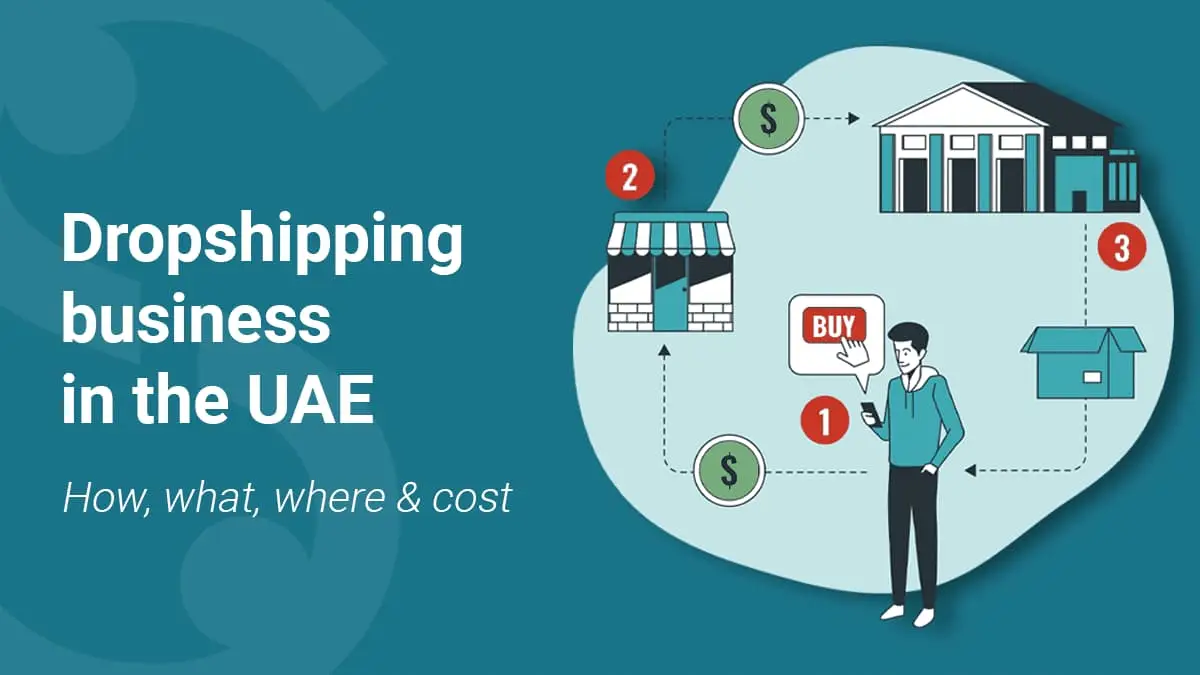
Dropshipping is an e-commerce business model where you sell products without having to carry any inventory. When a customer places an order on your website, you simply contact your supplier, who will then ship the product directly to the customer. This means that you don’t have to worry about storing products, packing and shipping orders, or dealing with returns. Dropshipping in UAE has become increasingly popular due to its low startup costs and the ability to reach a wide customer base without the need for physical storage space. With the growing e-commerce market in the region, setting up a dropshipping business in UAE can be a profitable venture.
The dropshipping in UAE is a good market for a number of reasons. The UAE has a growing e-commerce market. In 2022, the UAE e-commerce market was valued at $27.2 billion, and it is expected to grow to $46.8 billion by 2027.
Dropshipping is a great way to start an e-commerce business because it is relatively low-cost and easy to get started. You don’t need to invest in any inventory upfront, and you can start a dropshipping business from anywhere in the world.
Read on to learn how to start dropshipping in UAE. This can easily be your side hustle as it requires minimum investment and is quite easy to carry out.
What Do Dropshippers Do?
Basically, dropshippers mediate between suppliers and customers. These merchants get products shipped from third parties to buyers.
The only investment you need to make is get your license in the UAE, and perhaps, a website to showcase the products. You do not need your own inventory of products, storage spaces or arrange any supply logistics. Neither do you have to bear any staffing costs.
You, however, will be answerable to clients. Therefore, communication is key. You will have to track the orders, follow-up, deal with inquiries, grievances, and return requests.
Why the UAE is a Good Market for Dropshipping
The UAE is a great market for dropshipping for several reasons:
Growing ecommerce market: The UAE’s ecommerce market is growing rapidly, with online sales expected to increase by 60% in 2025. This growth is being driven by a number of factors, including a young and tech-savvy population, rising incomes, and increasing internet penetration.
Easy access to suppliers: The UAE is home to a number of large and reputable dropshipping suppliers, both locally and internationally. This makes it easy for dropshippers to find the products they need to sell.
Efficient logistics infrastructure: The UAE has a highly efficient logistics infrastructure, making it easy and affordable to ship products to customers worldwide.
Favorable government regulations: The UAE government is supportive of e-commerce and dropshipping. There are no major regulatory barriers to entry, and the country offers a number of incentives for businesses, such as tax breaks and free trade zones.
How to Start a Dropshipping Business in UAE
Starting a dropshipping in UAE, involves several key steps. Below is a step-by-step guide to help you launch your dropshipping business in this growing market:
Step 1: Decide your Dropshipping Business
Target unique goods. You will need to figure out what products will the expats residing in the UAE will be willing to pay for. These could be specific to their countries or even textiles, food, handicraft, jewellery found / produced only in your country.
Step 2: Legal Requirements
Register your business with the Department of Economic Development (DED) in Dubai or the relevant authority in your emirate. Also, familiarize yourself with the UAE’s import and export regulations, including customs duties and required permits for specific product categories.
Step 3: Find reliable Dropshipping suppliers
Once you have chosen a niche, you need to find suppliers who sell high-quality products at competitive prices. You can find suppliers on Alibaba, AliExpress, and other online marketplaces. Be sure to read reviews from other dropshippers before choosing a supplier.
Step 4: Create a website
Your website is your storefront, so it’s important to make a good impression. Choose a user-friendly platform like Shopify or WooCommerce to create your website.
When setting your prices, you need to factor in the cost of the product, shipping, and your profit margin. You should also offer competitive shipping rates.
Step 7: Market your online store
Once your online store is up and running, you need to start marketing it to potential customers. You can market your store through social media, search engine optimization (SEO), and paid advertising.
Where to Sell?
1. Online Stores
You can reach potential customers by creating online store on existing e-commerce websites such as Shopify and Alibaba. These platforms provide marketing, payment gateway, client engagement and shipping facilities. They can accommodate sellers from across the world.
2. Social Media
Create an attractive profile for you brand and start putting up pictures and product information on popular social media platforms such as Facebook and Instagram. Market your products on social media and lead them to your online store.
Do I Require a Dropshipping License in the UAE?
Yes, you need a dropshipping license to start a dropshipping in UAE. The dropshipping license is a type of e-commerce license that allows you to sell products online without having to carry any inventory.
You can obtain a license from the Dubai Department of Economic Development (DED) or one of the free zones in Dubai, UAE. The cost of the license varies depending on the type of business structure you choose and the free zone where you register your business.
Once you have obtained a dropshipping Dubai, UAE license, you will need to register for VAT if your annual turnover exceeds AED 375,000.
Cost of Starting a Dropshipping Business in Dubai
The cost of a dropshipping business license in the UAE ranges from AED 12,900* to AED 23,600*. However, the actual cost depends on several factors, including the type of business structure you choose, the free zone authority you register with, and the specific cost of your business license.
In addition to these initial costs, you will also need to budget for ongoing expenses such as website hosting, domain name renewal, and payment processing fees.
Please note that the costs are rough estimates, the actual cost may vary depending on individual needs. You should contact the business setup consultants in UAE for better understanding of costs and assistance in company formation in Dubai.
Ready to Dropshipping in UAE? Partner with Shuraa Today
Starting a dropshipping in UAE is a great way to start your own business with low upfront costs and risks. The UAE is a growing e-commerce market with a young and tech-savvy population. This makes the UAE a great market to target with your dropshipping business.
However, it is essential to do your research, choose a reliable niche, and find reliable suppliers. You should also obtain a dropshipping license and comply with all applicable UAE laws and regulations.
Getting in touch with a business setup consultant like Shuraa Business Setup can help you to get started on the right foot.
With over 26 years of experience and having helped more than 100,000 entrepreneurs achieve their business goals, Shuraa Business Setup can provide the guidance and support you need to overcome the complexities of business setup process in UAE.
So, what are you waiting for? Start planning your dropshipping Dubai business today!
Frequently Asked Questions (FAQs)
1. Is dropshipping Legal in UAE?
Yes, dropshipping is legal in the UAE. To start a dropshipping business, you must adhere to local regulations, including acquiring a valid trade license and registering for VAT if required. Compliance with UAE laws is crucial to operate smoothly and avoid legal complications.
2. Is dropshipping in Dubai profitable?
Yes, dropshipping in Dubai can be highly profitable. On average, profit margins in dropshipping range between 15%–20%, but Dubai offers unique advantages that can push margins even higher. Strategically located as a global trade hub connecting various countries, Dubai provides access to affordable suppliers while enabling you to cater to markets with higher purchasing power. This geographic and economic positioning gives dropshipping businesses in the UAE a competitive edge to maximise profitability.
Disclaimer: The information in this post is for general guidance only and may change due to updates in government policies or regulations.
No day in Dubai is a slow news day. In a city like Dubai, the profession of researching, gathering and imparting information can be highly exciting. If journalism is your passion, here’s all you need to know about news agency business setup in Dubai.
For news and media business setup in Dubai, you have to submit required documents and bear the relevant service charges. Thereafter, the procedure to obtain a professional trade license from the Department of Economic Department (DED) is quite simple and cost effective.
Documents required for news agency business setup in Dubai
To apply for your professional license for your news and media business setup in Dubai, you will have to prepare the following documents:
Application form
Carefully fill in the form with your details
Identity proof
Submit a passport copy of you and your business partners (if any)
Pictures
Prepare two passport-sized photographs of yourself
Primary permit
Keep handy a copy of initial approval from relevant government authority
Additional permit
Check if your business activity requires any special permit or a No-Objection Certificate (NoC) from any government agency. Get those ready on time.
Name registration
Keep your trade name registration certificate ready for your news agency business setup in Dubai.
Process of setting up a news and media agency in Dubai
Once you prepare all the documents for your news agency business setup in Dubai, follow the steps mentioned below:
Trade name
Choose a name for your company. Have at least three options ready. However, do keep in mind that you cannot choose a name with religious connotation such as Allah’s name and its synonyms. You should also refrain from including the name of any country or government entity. In case it is unavoidable, you need to take permission from the embassies or consulates concerned. Moreover, the name you choose for your business should not be offensive or obscene. Lastly, the trade name charges for non-Arabic (foreign) names or those other than the owners’ name are chargeable. The DED’s website lists complete do’s and don’t about choosing an appropriate name for your business.
Office location
The location of your news and media agency business setup is crucial in more than one way. First, the accessibility of the office via public transportation should be considered for your staff members. Next comes your brand reflection. In order to gain trust of your investors and future make affiliations, you need to ensure your office is located in an impressive area to suit your brand. Some other important considerations include, the reporters travelling. A centrally located office will allow your ground heroes to capture information and deliver faster. Further aspects to bear in mind include parking facilities and security among others.
Company structure
Obtaining a professional license for your news and media agency business setup in Dubai comes with lucrative benefits. You can own a sole establishment are get 100% ownership of your company. This means your will have full control over your business operations as well as profit. Therefore, you can focus on growing your business with ease.
Trade license for news and media business setup in Dubai
Lastly, you can receive your professional trade license from DED and get started.
How much will it cost?
There are multiple fees for governmental and corporate services that you will have to avail for your news agency business setup in Dubai. These formalities can be seamlessly done through reliable company formation experts at Shuraa Business Setup. Our corporate services help digital marketing agencies in Dubai start their companies for AED 18,500 only.
This all-inclusive package for news agency business setup in Dubai includes:
To learn more about this exclusive package, call us on +971 44081900. You can also chat with our experts over WhatsApp on +971 507775554 or drop us an email on info@shuraa.com
Digital marketing is expanding quickly in Dubai, UAE, as businesses increasingly recognise the value of a strong online presence. The Middle East and North Africa (MENA) region now has 400 million internet users. Traditional marketing methods, such as print advertisements and posters, are becoming less common.
Most companies now promote themselves through digital platforms, including search engines, websites, social media, mobile apps, and email. This shift offers significant opportunities for digital marketers in a competitive market. However, operating legally as a digital marketer in Dubai requires a digital marketing license.
As businesses rely more on digital marketing, holding a valid license distinguishes you from competitors and attracts clients seeking reliable, trustworthy services.
This guide outlines the process, benefits, and costs of obtaining a digital marketing license in Dubai.
What is a Digital Marketing License in Dubai?
A digital marketing license in Dubai is a professional license that allows full foreign ownership of your business without requiring a local sponsor or service agent. Issued by the relevant government authority, it permits individuals or entities to conduct digital marketing activities in the Emirate. This license ensures compliance with local regulations and provides industry credibility.
Scope for Digital Marketers in Dubai in 2026
Businesses in Dubai increasingly recognise the importance of digital marketing for reaching target audiences, building brand awareness, and driving sales. As a result, demand for skilled digital marketers is rising across multiple industries.
Dubai’s digital marketing sector offers diverse career opportunities, including:
SEO Specialists
Social Media Managers
Content Marketers
Content & Copywriters
PPC Specialists
Email Marketers
Digital Strategists
Data Analysts
The rapid growth of Dubai’s e-commerce industry has created strong demand for digital marketing professionals. As a result, career prospects for digital marketers in Dubai are highly promising.
Requirements for Obtaining a Digital Marketing License in Dubai
To obtain a digital marketing license in Dubai, you must meet the requirements set by the relevant government authorities. These typically include:
Eligibility Criteria:
There are no specific restrictions based on nationality.
Depending on your nationality, you may need to secure an appropriate visa, such as an investor or freelancer visa, to establish a business in Dubai.
Although not mandatory, prior experience in digital marketing can strengthen your application.
Necessary Documents:
The following documents are typically required to obtain an online marketing license in the UAE:
A valid passport and relevant visa (if applicable)
Company registration documents
A detailed business plan
Proof of financial stability
Office space, if applicable
Other required documents (depending on business activity)
We recommend consulting Shuraa for professional guidance to ensure you meet all requirements for obtaining a digital marketing license in Dubai.
How to Get a Digital Marketing License in Dubai
Below are the key steps to obtain a digital marketing license in Dubai.
Step 1. Decide on the Jurisdiction
Mainland: Permits operations throughout Dubai and the UAE, provides full ownership, and is suitable for businesses trading directly with the local market.
Prepare at least 3 potential trade names that comply with naming guidelines. Avoid terms related to religion.
An additional fee applies for foreign trade names. For guidance on selecting a trade name, consult the business experts at Shuraa.
Step 3. Secure Office Space
Depending on the jurisdiction, you may need to lease office space. Free zones often provide flexible options, such as shared workspaces or virtual offices.
Step 4. Apply for the Digital Marketing License
Submit your application to the appropriate authority, such as the Dubai Department of Economy & Tourism or the relevant Free Zone Authority, and pay the necessary fees.
Some digital marketing activities may require additional approvals from external bodies. For example, services involving digital content creation or advertising may need approval from the National Media Council.
Step 5. Visa Processing and Bank Account Opening
After obtaining the license, apply for visas for yourself and employees, based on office size and business structure. You must also open a corporate bank account in Dubai and provide your business license, MOA, and other required documents.
You must renew your digital marketing license annually to maintain its validity. It is advisable to renew at least one month before expiry.
What is the cost of obtaining a Digital Marketing License in Dubai?
Digital marketing license fees in Dubai typically range from AED 16,000* to AED 30,000*. Costs may vary based on license type, business location, and the services you intend to provide.
You can complete these formalities efficiently with the support of company formation experts at Shuraa Business Setup. Our corporate services assist marketing agencies in Dubai with company setup for approximately AED 18,500 (*T & C Apply).
Please note that final costs may vary based on jurisdiction and business activity.
Benefits of a Digital Marketing License in the UAE
Obtaining a digital marketing license in Dubai provides several key benefits:
Adherence to Regulations: A license ensures that your digital marketing activities comply with local laws and regulations, protecting you from potential legal issues.
Tax Advantages: Depending on the specific regulations, having a digital marketing license in Dubai may entitle you to certain tax benefits or incentives.
Full Business Ownership: A license typically allows you to own your digital marketing business in its entirety, offering greater control and flexibility.
Credibility and Trust: It demonstrates your commitment to operating within the legal framework, thereby enhancing your credibility and trustworthiness among clients.
Industry Validation: A license validates your expertise and skills in digital marketing, increasing your professional standing.
Networking Opportunities: A license can connect you with other industry professionals, facilitating access to new opportunities and knowledge sharing.
Secure Your Digital Marketing License Today
Obtaining a digital marketing license in Dubai is essential for leveraging the city’s dynamic digital landscape. Dubai’s strong economy and global business status make legal compliance and enhanced credibility crucial in this competitive market.
If you are ready to begin your digital marketing venture, this is an ideal time to proceed. While the licensing process may appear complex, Shuraa Business Setup simplifies it by handling all paperwork, translations, and formalities, ensuring a smooth, efficient experience.
Our cost-effective business setup packages include all the services you need to launch successfully. Contact us today at +971 4 4081900, via WhatsApp at +971 50 7775554, or by email at info@shuraa.com.
Frequently Asked Questions (FAQs)
1. What is a Dubai Digital Marketing License?
A Dubai Digital Marketing License is a government-issued permit that allows individuals or companies to fully own and operate digital marketing services in Dubai. To conduct online marketing, you must apply to the Department of Economic Development (DED) and submit the required documents.
2. Is the Digital Marketing business profitable in Dubai, UAE?
Yes, digital marketing is often highly profitable in Dubai due to tax advantages, full business ownership, and complete repatriation of profits.
3. How to Get a Digital Marketing License in the UAE?
To obtain a digital marketing license, follow these steps:
Choose a business structure (LLC or sole proprietorship)
Select a trade name
Prepare the required documents (passport copies, business plan, etc.)
Submit an application to the DED
Lease office space, if applicable
Pay the necessary fees and complete the registration process
Apply for residence visas
Receive a digital marketing license
4. Is Dubai Good for Digital Marketing Business?
Yes, Dubai is an excellent location for digital marketing due to its large, growing population, strong economy, and high internet penetration.
5. Is Digital Marketing in Demand in the UAE?
Yes, digital marketing is in high demand in the UAE. Businesses in many industries increasingly use digital channels to reach target audiences, generate leads, and drive sales.
6. How to start a digital marketing agency in Dubai?
To start a digital marketing agency in Dubai, obtain a digital marketing license, build a skilled team, develop a marketing strategy, and establish a strong online presence.
Disclaimer: The information in this post is for general guidance only and may change due to updates in government policies or regulations.
A good number of Iran nationals have been living in the Dubai, thanks to UAE residency visa for Iranians. For several years now, the UAE and Iran have shared well-established commercial ties. Moreover, Iranians have a significant community in the UAE with dedicated facilities such as schools, banks, hospitals and more. Thus, citizens of Iran can easily set up businesses in Dubai and apply for residency permit by obtaining their trade licenses.
UAE-Iran cooperation
The UAE shares crucial trade relations with Tehran. According to author Banafsheh Keynoush, the UAE accounted for 97% of the GCC exports to Iran in 2013. After two years, the Iranian investment in the UAE was recorded at USD 200 billion. Subsequently in 2017, the UAE became one of Iran’s most crucial import partner when the trade exchange between the two countries reached USD 12.9 billion.
Throughout the years, the UAE has continued to remain Iran’s top business partner. The duo is a member of several international trade alliances such as the Indian Ocean Rim Association, Eurasian Economic Union, and China’s Belt and Road Initiative.
Furthermore, the Emirati ports offer Iran the lowest rates to help connect with international markets. Therefore, making the UAE residence visa for Iranians lucrative.
Can Iranians apply for UAE residency visa?
Yes, Iranians can apply for UAE visas. The validity of your visa will depend on what type of residency permit you have. However, unlike some other countries the UAE does not issue any green card or permanent residency (PR) to anyone.
Iranians can enter Dubai on several types of visas:
Employment contract – If a UAE-based company employs you, you will be provided a two- or three-year residency permit.
Property investment – Iran nationals can invest in real estate worth at least AED 1 million and apply for a three-year Dubai residency visa.
Company formation in Dubai, UAE – By setting up a business in the UAE, you can easily apply for a three-year investor visa. Moreover, if you meet the investment criteria set by the UAE government, you can also apply for a Golden Visa. There are two types (five year and 10 year) of Golden Visas Iranian entrepreneurs can apply for, based on the amount of investment.
Listed above are the most convenient ways for Iran citizens to obtain a UAE residency visa and live in Dubai. However, one of the most important aspect is getting a security approval. The visa application must be sent to the concerned government agency for verification.
How can Iran citizens apply for Dubai visa?
Although there is a UAE Embassy in Tehran, the visa cannot be applied through the consulate. Iranians have other ways of applying for their Dubai visit visas. They can request the UAE-based airline or a travel agency or a hotel on the condition they avail the facility provider’s service for/during their visit. These providers will apply for your visa on your behalf.
For acquiring UAE residency visa for Iranians, they need to do the following:
Documents Requirement for Iranian Citizen:
Iranian entrepreneurs need to prepare the following documents to apply for a UAE visa:
Application form
Passport copy
Two recent passport-sized photographs adhering to the UAE guidelines
Aspiring Iranian entrepreneurs as well as seasoned businesspersons can begin their Dubai venture.
Here’s what you need to consider while setting up a business in Dubai:
Corporate Structure: Figure out the best suited model for your company’s structure. Based on the nature of your business activity, you can choose to form either a limited liability company or a sole establishment.
Jurisdiction: In Dubai, you can choose the area and jurisdiction to simplify your business’ functioning. You can set up shop on the mainland or one of the free zones. Again, this will also depend on what kind of activities your company will engage in.
Trade License: There are four main types of trade license categories issued in Dubai. These include – commercial, professional, industrial and tourism. This too can be determined by the type of your chosen business.
Additional approvals required to get Dubai residency visa for Iranians: As an Iran citizen, you will require security approval for your trade license application. Also, for certain business in the F&B industry, you might have to obtain permits from municipality and other civil authorities.
Get started with Shuraa’s Dubai residency visa for Iranians offer
Shuraa Business Setup’s one-of-a-kind company formation and UAE residency visa for Iranians package includes:
Professional trade license
Dubai residency visa
Medical test
Emirates ID
Change of status
Visa stamping
20-day hotel stay
Initial & name approval
LSA Notary fees
Tasheel fees
License fees
UAE agent fees
Stamp of the company
Immigration card
Bank account opening assistance
Free VAT registration & tax consultation
You can live and prosper in Dubai with Shuraa’s Dubai residency visa for Iranians package worth AED 28,000. More importantly, you can also bring your family to the world’s second safest country and have 100% ownership of your business, without worrying about paying taxes.
Within Dubai’s evolving business environment, IFZA company formation offers significant advantages for global entrepreneurs. The International Free Zone Authority provides 100% foreign ownership, zero corporate tax on qualifying income, unrestricted profit repatriation, and company setup in as little as 3 to 5 days, all without requiring physical presence.
This makes IFZA an ideal choice for startups and established firms seeking tax-efficient growth in the UAE. Whether launching a tech venture or expanding trade operations, IFZA supports scalable success in a rapidly growing economy.
What is IFZA, and Why Consider It for Company Formation in 2026?
IFZA, located in Dubai’s Fujairah region with direct access to the emirate’s markets, is a free zone authority focused on agile business setups. In 2026, with increased global interest in the UAE’s golden visa programs and recent tax reforms, IFZA processes over 20,000 registrations annually, attracting investors from Europe, Asia, and other regions.
IFZA’s popularity stems from its business-friendly environment, which aligns with Dubai’s Vision 2031 by emphasising innovation and diversification. For foreign entrepreneurs, IFZA removes barriers such as local sponsorship and enables remote incorporation through digital portals, supporting modern business practices.
What Are the Key IFZA Company Formation Benefits?
IFZA company formation benefits are designed for efficiency and profitability. Below are the key advantages, supported by practical applications:
100% Foreign Ownership
Maintain full control without a local partner. This supports independent decision-making and aligns with global investor standards, making it ideal for sectors such as fintech and e-commerce.
Zero Corporate Tax on Qualifying Income
Under the UAE’s 2023 tax regime, IFZA entities benefit from 0% tax on qualifying activities, including exports and logistics. IFZA structures also minimise tax liabilities compared to mainland setups, potentially saving businesses up to 15% annually.
Full Profit Repatriation
Transfer 100% of earnings abroad without restrictions or withholding taxes. The absence of currency controls ensures liquidity for multinationals expanding in the Middle East.
Rapid Setup Process
Complete incorporation within 3 to 5 business days, often remotely. No notary visits or embassy stamps are required, reducing costs by up to 40% compared to mainland options.
Affordable Licensing and Renewal
Packages start from AED 12,500 (approximately $3,400 USD), with flexible options for flexi-desks or virtual offices. Annual renewals of less than AED 15,000 help keep overheads low for SMEs.
Access to 2,000+ Business Activities
IFZA licenses cover a broad range of sectors, from consulting to manufacturing. Multi-activity packages enable business pivots without re-licensing, supporting agile growth in areas such as AI and green technology.
Streamlined Banking and Visas
Integration with UAE banks, such as Emirates NBD, enables account setup within 7 to 10 days. Investor visas are available for up to three family members per license, supporting talent attraction.
These benefits are reflected in client outcomes. Shuraa clients report 25% faster market entry and 30% cost savings after IFZA setup, according to 2025 case studies.
How Do You Form a Company in IFZA? A Step-by-Step Guide for 2026
Setting up in IFZA is straightforward and leverages digital tools for efficiency. Follow these steps to launch your business:
Select Business Activity and Structure
Reserve Trade Name
Submit Documents and Pay Fees
Obtain License and Lease
Open Bank Account and Register for VAT (if applicable)
Commence Operations
Recommendation: Engage certified consultants to navigate regulatory requirements and ensure full compliance from the outset.
How Does IFZA Stack Up Against Other Dubai Free Zones?
For comparison, IFZA can be evaluated alongside alternatives such as DMCC (Dubai Multi Commodities Centre) and Meydan. The following table outlines key differentiators to support informed decision-making:
Feature
IFZA
DMCC
Setup Time
3-5 days
7-10 days
Starting Cost (AED)
12,500*
35,000*
Ownership
100% foreign
100% foreign
Tax Benefits
0% on qualifying income
0% on qualifying income
Business Activities
2,000+ (flexible)
900+ (commodities focus)
Renewal Fees (AED)
15,000*
25,000* and more
Best For
Startups, remote setups
Trading, commodities
IFZA is recognised for its affordability and speed, making it suitable for startups and cost-conscious ventures. DMCC is better suited for specialised trade activities.
Yes, the entire process is digital and requires only scanned documents. A visit to the UAE is not required until the visa is activated.
2. What visa options are available with IFZA company formation?
Investor visas are available for shareholders (valid for 2 to 3 years and renewable) and include family sponsorship. Golden Visa eligibility applies to investments of AED 2 million or more.
3. Is there a minimum capital requirement for IFZA?
There is no fixed minimum capital requirement; most licenses start at AED 0 share capital, although AED 50,000 is recommended for credibility.
4. How does IFZA handle corporate tax compliance?
Qualifying income is exempt under free zone regulations. Non-qualifying activities, such as mainland sales, are subject to a 9% tax. Annual filings are required to maintain compliance.
5. What support does IFZA offer post-setup?
IFZA offers networking events, incubation programs, and 24/7 portal access for renewals and business expansions.
Conclusion: Partner with Shuraa for Seamless IFZA Business Setup
The benefits of IFZA company formation, from tax efficiencies to rapid scalability, make it a key option for global entrepreneurs in 2026. At Shuraa Business Setup, with over 26 years of experience in UAE incorporations, we have guided more than 100,000 clients through business setups. Our end-to-end services include license procurement, visa processing, PRO support, and accounting. We offer tailored packages to ensure compliance and support growth for both solo founders and scaling enterprises.
Disclaimer: All costs, fees, and timelines in this article are for reference only, based on 2026 market data and standard IFZA packages. Actual amounts may differ due to business activities, visa numbers, additional services, currency changes, or updates from IFZA or relevant authorities. For the most accurate and current quote, please contact Shuraa or IFZA directly.