Author: Ritish Sharma

  • All You Need to Know About Crowdfunding in Dubai

    All You Need to Know About Crowdfunding in Dubai

    Crowdfunding in Dubai has become a popular way for individuals and businesses to raise funds for their projects or ventures. In simple terms, crowdfunding is the practice of funding a project or venture by raising small amounts of money from a large number of people, typically via the internet.

    This method allows for a diverse group of investors to support a project, making it a great way to gather financial support without relying on traditional sources like banks or investors.

    In recent years, crowdfunding has been gaining popularity in Dubai and the UAE as more and more entrepreneurs and startups turn to this alternative form of financing. With a growing number of platforms dedicated to crowdfunding in the UAE, individuals and businesses are finding new ways to bring their ideas to life with the help of the community.

    If you’re too considering crowdfunding to start your business in Dubai, we will explain all you need to know about crowdfunding in Dubai, how it works, the benefits and challenges, popular crowdfunding platforms, and much more.

    What is Crowdfunding in Dubai?

    Crowdfunding in Dubai is the process of raising money for a project by collecting smaller contributions from a large number of people, typically through online platforms. This allows even innovative ideas with limited initial capital to get funded.

    Online platforms play a crucial role by connecting project creators with potential investors. They handle aspects like campaign creation, secure transactions, and ensure regulatory compliance. Some well-known Dubai-based platforms include Eureeca (for equity crowdfunding) and SmartCrowd (for real estate crowdfunding).

    DubaiNEXT, a government-launched platform, utilizes the “all-or-nothing” model. This model means that the entrepreneur seeking funding sets a specific fundraising goal. If the campaign reaches its target amount within the timeframe, the entrepreneur receives all the pledged funds.

    However, if the goal isn’t met, no funds are collected, and no contributions are taken from investors. This model incentivizes creators to set realistic goals and actively promote their campaigns.

    Types of Crowdfunding Available

    There are four main types of crowdfunding available, each suited to different fundraising goals and project types:

    1. Reward-Based Crowdfunding

    This is the most common type of crowdfunding, where people contribute funds to a project in exchange for a reward, such as a product, service, or experience. This is a great way for businesses to pre-sell products, validate demand, and build a community of early supporters.

    For example, a musician raising money to produce their new album might offer rewards like digital downloads, signed CDs, or even exclusive concert tickets.

    2. Donation-Based Crowdfunding

    This type of crowdfunding is used to raise money for causes or charities. Donors contribute funds without expecting anything in return. This is a great way to raise money for social causes, medical expenses, or disaster relief.

    3. Equity-Based Crowdfunding

    This type of crowdfunding allows people to invest in a company in exchange for ownership (equity) in the company. This can be a great way for startups to raise capital, but it is also a higher-risk investment for contributors. Equity crowdfunding is subject to stricter regulations than other types of crowdfunding.

    4. Debt-Based Crowdfunding

    This type of crowdfunding allows people to loan money to a business or individual. The borrower repays the loan with interest over time. This is a way for businesses to raise capital without having to give up equity in the company.

    Beside these, there can be other models like Property-based crowdfunding or real estate crowdfunding. It is a way for individuals to pool their money together to invest in real estate projects.

    This allows people with smaller investment capital to participate in the real estate market. Property Crowdfunding has particular requirements, like listing only residential properties and a cap of US$ 5 million on the value of a single property listing.

    Regulatory Authorities Overseeing Crowdfunding

    Dubai’s crowdfunding landscape is overseen by multiple regulatory authorities.

    • Securities and Commodities Authority (SCA): The SCA is the primary regulator for securities offerings in the UAE. It plays a role in ensuring compliance for equity-based crowdfunding platforms.
    • Central Bank of the UAE (CBUAE): The CBUAE plays a broader role in financial regulation, and its approval might be necessary for certain crowdfunding activities, especially those involving debt or loan-based platforms.
    • Financial Services Regulatory Authority (FSRA) in Abu Dhabi Global Market (ADGM): The FSRA governs financial activities within the ADGM free zone, including crowdfunding platforms operating there. It offers specific licenses for different crowdfunding models like investment-based, loan-based, and property-based crowdfunding.
    • Dubai Financial Services Authority (DFSA) (Dubai International Financial Center): Similar to the FSRA, the DFSA regulates financial activities within the Dubai International Financial Center (DIFC) free zone. It also offers various crowdfunding licenses tailored to specific models like investment-based, loan-based, and property-based crowdfunding.

    How to Start a Crowdfunding Platform Startup in Dubai?

    In Dubai, obtaining a crowdfunding license depends on where you choose to operate your platform, the UAE mainland or a free zone like the Dubai International Financial Center (DIFC).

    However, here’s a general of starting a crowdfunding platform in Dubai:

    1. Define Your Niche and Model

    Research existing platforms and identify a gap in the market. Choose your crowdfunding model: reward-based, donation-based, equity-based, or debt-based. Each has its own regulations and target audience.

    Choose a legal structure for your business, considering factors like liability and scalability. Consult with a business lawyer or business setup consultant like Shuraa specializing in the UAE for guidance.

    3. Regulatory Compliance & License

    Research and understand the regulations governing crowdfunding platforms in the UAE. This will depend on your chosen model and location (mainland Dubai or a free zone). Secure any necessary licenses from the relevant authorities (SCA, CBUAE, FSRA, or DFSA). This process typically involves submitting detailed documentation and business plans.

    Free zones like the DIFC offer a more established framework for crowdfunding activities. The regulatory authority in this case is the Dubai Financial Services Authority (DFSA).

    4. Develop Your Crowdfunding Platform

    Invest in secure and user-friendly technology to build your platform. Consider features like project creation tools, secure payment gateways, and communication channels.

    5. Team Building and Operations

    Assemble a team with expertise in technology, finance, marketing, and legal matters. This ensures smooth platform operation, regulatory compliance, and effective marketing campaigns to attract project creators and investors.

    Crowdfunding platforms operate within a framework of regulations designed to protect investors and ensure the integrity of the fundraising process.

    • Platforms must ensure all project creators provide clear and concise information about their ventures.
    • Platforms may need to provide educational resources or implement investor qualification requirements to ensure people understand the risks involved in certain offerings.
    • Regulations often cap the amount an individual can invest within a specific timeframe.
    • Platforms may need to register with relevant authorities like the SCA or financial services regulators in their jurisdiction.
    • Platforms need robust KYC/AML procedures to verify investor identities and prevent fraudulent activities.
    • Regulations may differ depending on the crowdfunding model (equity, debt, reward-based). Equity-based crowdfunding typically has stricter regulations.

    There are several noteworthy platforms facilitating crowdfunding within the UAE, including:

    1. DubaiNext: This government-backed platform focuses on empowering SMEs and youth-oriented projects. It operates on an “all-or-nothing” model, where campaigns must reach their target funding goal to be successful.
    2. Eureeca: A well-established platform in the MENA region, Eureeca connects startups with potential investors seeking equity in return for their funding. It emphasizes rigorous screening of projects, making it a good choice for investors seeking potentially high-growth opportunities.
    3. SmartCrowd: This platform focuses on fractional ownership of real estate projects. Investors can buy shares in properties, earning rental income and potentially benefiting from long-term appreciation.
    4. Catapult: This platform caters to the MENA region and allows for reward-based and equity-based crowdfunding. They operate with a focus on early-stage ventures and social impact projects.
    5. Beehive: This is the first and only peer-to-peer lending platform regulated in the MENA region. It operates under the Dubai Financial Services Authority (DFSA) within the Dubai International Financial Centre (DIFC) free zone. Small and medium-sized enterprises (SMEs) can list loan requests on the platform.

    Benefits of Crowdfunding for UAE Startups

    Crowdfunding allows startups to raise capital from a large pool of individual investors, bypassing the limitations of traditional bank loans or venture capitalists. This can be especially helpful for early-stage startups with limited track records.

    Here are some of the other benefits to the entrepreneurs and investors:

    • A successful crowdfunding campaign can serve as a valuable market validation tool.
    • Crowdfunding campaigns can generate significant media attention and online buzz.
    • Startups can choose reward-based campaigns (offering perks or products) or equity-based crowdfunding (giving investors ownership stakes).
    • Crowdfunding platforms typically charge lower fees compared to traditional fundraising methods like investment banking or venture capital firms.

    The Dubai government has also shown interest in supporting SMEs (small and medium-sized enterprises) through initiatives like DubaiNext. This suggests potential governmental support for the growth of crowdfunding as a viable financing alternative.

    Launch Your Business with Shuraa’s Expert Guidance

    Crowdfunding in Dubai can be a great way to raise funds for your business or project. Whether you are a startup looking for funding or an established business seeking to expand, crowdfunding can be a valuable tool. It allows you to reach a wide audience of potential investors and supporters and can help you bring your ideas to life.

    If you need assistance with your business licensing needs or have any questions about crowdfunding in Dubai, don’t hesitate to seek consultation from Shuraa Business Setup. Our team of experts can guide you through the entire process, from selecting the most suitable crowdfunding platform to handling business licensing and registration requirements.

    We offer UAE business setup services including company registration, documentation, PRO services, visa assistance, and even office rentals – all under one roof.

    Reach out to us at +971 44081900 or WhatsApp at +971 507775554 or drop an email at info@shuraa.com for a successful business setup in Dubai.

    Commonly Asked Questions

    1. Is Crowdfunding Allowed in the UAE?

    Yes, crowdfunding is legal and gaining traction in the UAE. The UAE Cabinet approved crowdfunding activity for both the public and private sectors. Regulations are still evolving, but several platforms operate under the watchful eye of authorities like the Central Bank of the UAE (CBUAE) and the Dubai Financial Services Authority (DFSA).

    2. What are the Regulations for Crowdfunding in Dubai?

    Regulations can vary depending on the type of crowdfunding and location (mainland Dubai vs. free zones). It’s advisable to consult with a legal professional like Shuraa, specializing in UAE financial regulations for the latest information.

    3. Is Crowdfunding Right for My Business Idea in Dubai?

    Crowdfunding isn’t a one-size-fits-all solution. Consider factors like your funding needs, target audience, and the long-term vision for your business. Analyze your idea and research successful crowdfunding campaigns in your industry to see if it’s a good fit.

    4. What are the Eligibility Requirements for Crowdfunding in Dubai?

    Eligibility varies depending on the platform and the type of crowdfunding. Generally, you’ll need to be a resident of the UAE or a registered business entity. Platforms might have minimum investment amounts or specific requirements for project types.

  • 16 Best Crypto Wallets in the UAE – The Complete 2026 List

    16 Best Crypto Wallets in the UAE – The Complete 2026 List

    Cryptocurrency has become increasingly popular in the UAE, with more and more people looking to invest in digital assets like Bitcoin and Ethereum. With this surge in interest comes the need for secure, reliable and the best crypto wallet in the UAE to store and manage these assets.

    Choosing the right crypto wallet is crucial when it comes to safeguarding your digital assets. With the growing popularity of cryptocurrency, the risk of cyber-attacks and scams has also increased. A secure and user-friendly crypto wallet can provide peace of mind and ensure that your investments are protected.

    That’s why we are here to explore the 16 best crypto wallets available in the UAE in 2026 so that you can make an informed decision and ensure your crypto investments are safe. Also, if you’re new to crypto world, let’s first understand the concept of cryptocurrency wallet in the UAE and how you can get Dubai crypto license to start your crypto venture in the UAE.

    What is a Crypto Wallet?

    A crypto wallet doesn’t actually store your cryptocurrency like a physical wallet holds cash. Instead, it securely stores the cryptographic keys that allow you to access and manage your crypto holdings on the blockchain, a digital public ledger.

    These keys are like passwords: one is public (like a bank account number) for receiving crypto, and the other is private (like your PIN) for spending it.

    Crypto wallets also provide an interface to send, receive, and potentially even trade your cryptocurrencies. Since your crypto holdings are essentially guarded by your private keys, security is paramount in a crypto wallet. Always look for features like strong encryption, two-factor authentication, and secure password management.

    Types of Crypto Wallet

    There are various crypto wallets to suit different needs. Here are some common types:

    • Hardware wallets: These are physical devices resembling USB drives that offer the most secure storage for your private keys. They are kept offline to minimize hacking risks.
    • Software wallets: These are downloadable programs for your computer or phone. They are convenient but can be less secure than hardware wallets if your device gets compromised by malware.
    • Mobile wallets: Similar to software wallets, these are apps for your smartphone that provide easy on-the-go access to your crypto.
    • Web wallets: These are online services accessed through a web browser. They are convenient but may be less secure than offline options as you entrust your keys to a third-party provider.

    16 Best Crypto Wallets for UAE Traders in 2026

    Here are the top 16 crypto wallets in the UAE:

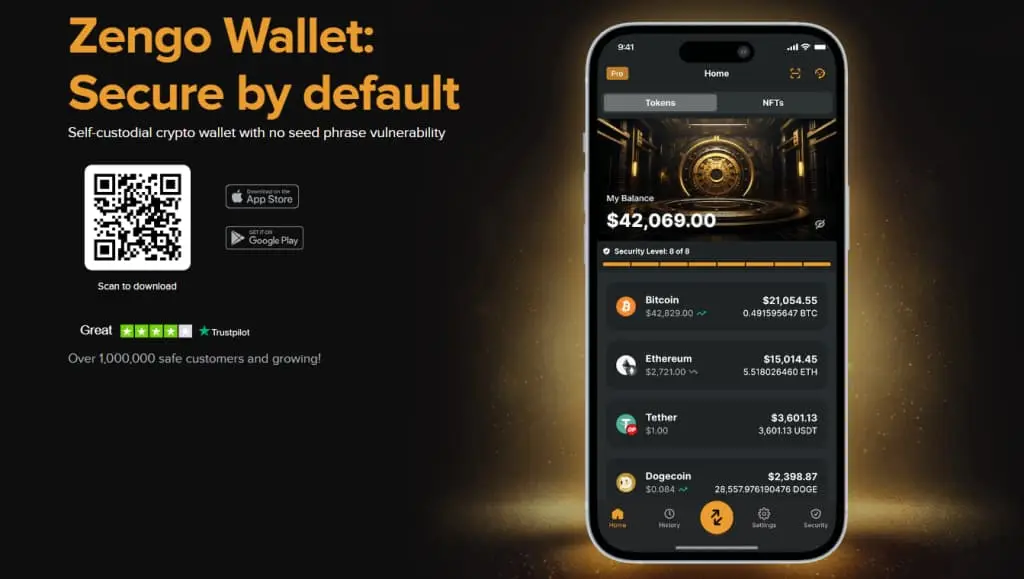
    1. Zengo

    zengo crypto wallet

    Zengo is a user-friendly mobile wallet with a focus on security and ease of use. Supports buying, selling, and trading over 120 cryptocurrencies directly within the app. Offers a built-in marketplace for NFTs.

    • Advantages for UAE users: Beginner-friendly, supports a wide range of currencies including popular ones in the UAE, built-in NFT features.
    • Disadvantages: Lower security compared to hardware wallets, might not be suitable for large holdings. (Software wallet)
    • Security features: The wallet uses multi-party computation (MPC) for private key storage and biometric authentication for added security.

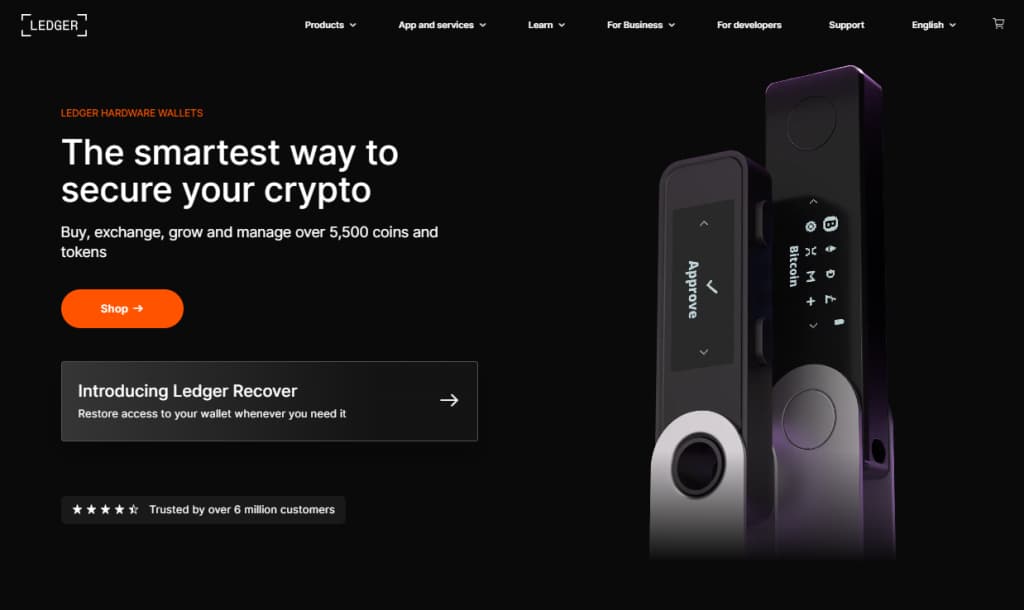
    2. Ledger Nano S Plus

    ledger hardware crypto wallet

    Ledger Nano S Plus, a leading hardware wallet known for its robust security. Stores your cryptocurrencies offline on a physical device, minimizing online hacking risks.

    • Advantages for UAE users: Top-notch security for large investments, supports various popular coins in the UAE.
    • Disadvantages: Limited storage capacity requires initial investment in purchasing the hardware wallet. (Hardware wallet)
    • Security features: Industry-leading security with secure chip element (SE) and PIN protection for offline storage of private keys.
    • Supported cryptocurrencies: A wide range of coins and tokens, including most popular ones in the UAE.
    • Additional features: Integration with Ledger Live for managing cryptocurrencies, compatibility with various third-party apps.

    3. Trezor

    trezor hardware crypto wallet

    Trezor is a hardware wallet known for its security features and ease of use. It stores users’ private keys offline, offering protection against online hacking attempts.

    • Advantages: Excellent security due to offline storage, user-friendly interface, supports a wide range of cryptocurrencies.
    • Disadvantages: Initial cost for purchasing the hardware wallet, can be less convenient for frequent trading.
    • Security features: Hardware security through offline storage, PIN protection, passphrase support.
    • Supported cryptocurrencies: Bitcoin, Ethereum, Litecoin, and over 1000 other cryptocurrencies.
    • Additional features: Secure password manager, two-factor authentication.

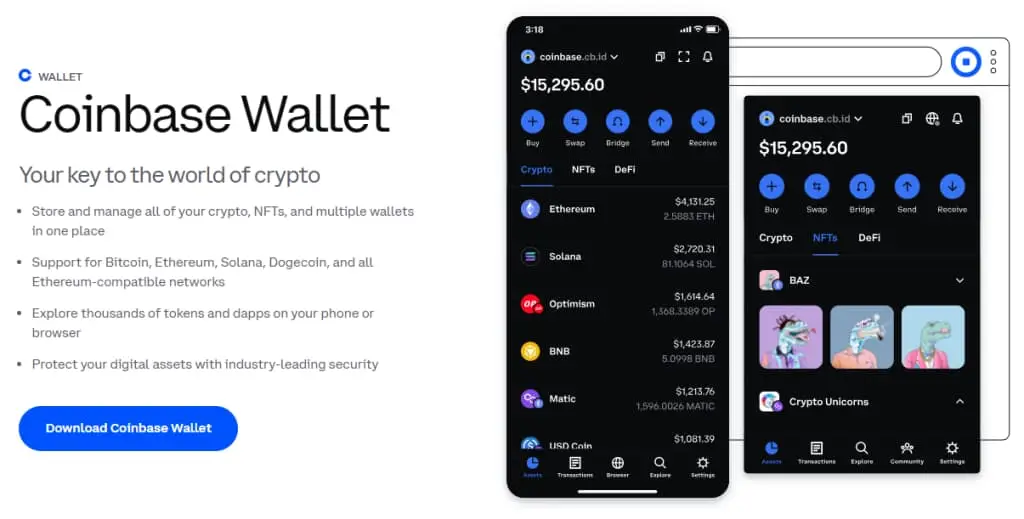
    4. Coinbase Wallet

    coinbase cryptocurrency wallet

    A secure mobile wallet from the popular cryptocurrency exchange Coinbase. Offers self-custody of your crypto holdings and integration with various DeFi applications.

    • Advantages for UAE users: Reputable brand, good security features, easy to use, integrates with DeFi platforms.
    • Disadvantages: Limited exchange options within the wallet itself, may have higher fees compared to some other options. (Software wallet)
    • Security features: Secure key storage with multi-factor authentication and optional biometric logins.
    • Supported cryptocurrencies: Thousands of crypto assets including popular ones in the UAE.
    • Additional features: Integrates with various DeFi apps and allows for staking certain cryptocurrencies.

    5. ByBit

    A user-friendly custodial wallet app from the ByBit cryptocurrency exchange. Among the best cryptocurrency wallet for UAE traders, it offers access to various features like spot trading, margin trading, and derivatives.

    • Advantages for UAE users: Easy to use, integrated with ByBit exchange for trading and other features.
    • Disadvantages: Custodial wallet (ByBit holds your private keys), may not be suitable for users who prioritize self-custody.
    • Security features: ByBit implements industry-standard security measures to protect user funds.
    • Supported cryptocurrencies: A wide range of cryptocurrencies including popular ones in the UAE.
    • Additional features: Spot trading, margin trading, derivatives, access to ByBit’s Launchpad for new token offerings.

    6. Exodus Wallet

    exodus bitcoin & crypto wallet

    Exodus is a popular software wallet known for its sleek design and user-friendly interface. It supports multiple cryptocurrencies and allows users to manage their portfolio with ease.

    • Advantages: User-friendly interface supports a wide range of cryptocurrencies, built-in exchange feature.
    • Disadvantages: Relies on the security of the device it’s installed on, may not be as secure as hardware wallets.
    • Security features: Private key encryption, optional password protection, backup seed phrase.
    • Supported cryptocurrencies: Bitcoin, Ethereum, Litecoin, and various ERC-20 tokens.
    • Additional features: Built-in exchange for swapping cryptocurrencies, portfolio tracking.

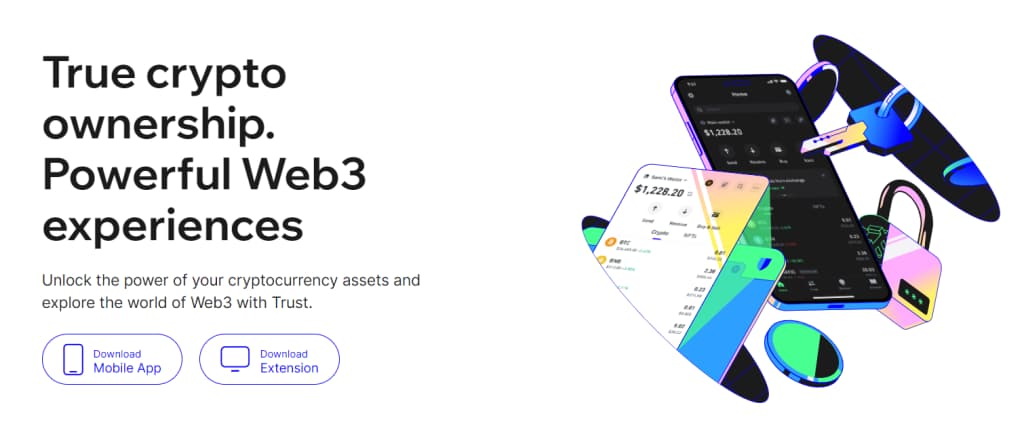
    7. Trust Wallet

    trust crypto wallet

    Trust Wallet, A popular mobile wallet known for its focus on decentralised finance (DeFi). Offers integration with various DeFi platforms and dApps, and supports staking certain cryptocurrencies.

    • Advantages: Free to use, good for exploring DeFi and dApps, supports a wide range of cryptocurrencies.
    • Disadvantages: Lower security compared to hardware wallets, might not be suitable for users who prioritize maximum security. (Software wallet)
    • Security features: Relies on user-generated passwords and optional biometric authentication for key storage.
    • Supported cryptocurrencies: Thousands of cryptocurrencies and tokens, including most popular ones in the UAE.
    • Additional features: Built-in exchange for swapping tokens, integrates with DeFi platforms and allows for staking.

    8. OKX Wallet

    A user-friendly mobile wallet app from the OKX cryptocurrency exchange. Offers support for NFTs, integrates with a DEX aggregator for finding the best swap rates, and allows access to Web3 functionalities.

    • Advantages for UAE users: Easy to use, integrated with OKX exchange for trading and other features, supports NFTs and Web3.
    • Disadvantages: Custodial wallet (OKX holds your private keys) may not be ideal for users who prioritize self-custody.
    • Security features: OKX implements industry-standard security measures to protect user funds.
    • Supported cryptocurrencies: A wide range of cryptocurrencies including popular ones in the UAE.
    • Additional features: Built-in DEX aggregator, NFT support, access to Web3 dApps.

    9. Atomic Wallet

    atomic crypto wallet

    Atomic Wallet, A non-custodial desktop wallet that offers a high degree of user control and privacy. Supports atomic swaps for directly exchanging cryptocurrencies without relying on an exchange.

    • Advantages for UAE users: Advanced features for experienced users, self-custody, atomic swaps for decentralized trading.
    • Disadvantages: Steeper learning curve compared to beginner-friendly wallets, may not be suitable for casual users. (Software wallet)
    • Security features: Relies on user-generated passwords and mnemonic phrases for private key storage.
    • Supported cryptocurrencies: Hundreds of cryptocurrencies and tokens, including most popular ones in the UAE.
    • Additional features: Built-in atomic swap exchange, staking options for some currencies.

    10. Guarda Wallet

    Guarda Wallet is a multi-currency wallet available as a desktop, web, and mobile application. The wallet supports a wide range of cryptocurrencies and offering built-in exchange services.

    • Advantages: Multi-platform support, extensive range of supported cryptocurrencies, user-friendly interface.
    • Disadvantages: Relatively new compared to more established wallets, some users may prefer hardware wallet options for higher security.
    • Security features: Private key encryption, backup phrase, biometric authentication (on supported devices).
    • Supported cryptocurrencies: Bitcoin, Ethereum, Ripple, and over 50 other cryptocurrencies.
    • Additional features: Built-in exchange, purchase cryptocurrency with bank cards, staking for some supported cryptocurrencies.

    11. Coinomi

    A versatile multicurrency wallet with a focus on security and privacy. Supports a massive range of cryptocurrencies and tokens, making it ideal for users with diverse holdings.

    • Advantages: Supports over 125 blockchains and millions of crypto assets, strong security features, built-in exchange for swapping currencies.
    • Disadvantages: Can be overwhelming for beginners due to the vast number of options, potentially higher fees for exchange services within the wallet.
    • Security features: Uses advanced encryption and multi-signature technology for private key storage.
    • Supported cryptocurrencies: Over 125 blockchains and millions of crypto assets.
    • Additional features: Built-in exchange, integrated DApp browser for interacting with decentralized applications.

    12. Blockchain.com Wallet

    Blockchain.com Crypto Wallet

    Blockchain.com Wallet is a popular non-custodial cryptocurrency wallet known for its security and simplicity. It allows users to store, send, and receive various cryptocurrencies.

    • Advantages: Non-custodial wallet, user-friendly interface, supports multiple cryptocurrencies.
    • Disadvantages: Limited customer support, some users have reported occasional syncing issues.
    • Security features: Hierarchical Deterministic (HD) wallet, two-factor authentication, backup phrase.
    • Supported cryptocurrencies: Bitcoin (BTC), Ethereum (ETH), Bitcoin Cash (BCH), and Stellar (XLM).
    • Additional features: Integration with Blockchain.com Exchange, buy and sell cryptocurrencies directly from the wallet.

    13. YouHodler

    A unique crypto wallet platform that combines features like high-yield savings accounts, crypto loans, and a built-in exchange. It is also among the best cryptocurrency wallet in the UAE, ideal for users who want to earn interest on their holdings.

    • Advantages for UAE users: Earn interest on various cryptocurrencies with attractive APY rates, access to crypto loans, built-in exchange for buying and selling crypto.
    • Disadvantages: Custodial wallet (YouHodler holds your private keys), might not be suitable for users who prioritize self-custody over earning features.
    • Security features: YouHodler implements industry-standard security measures to protect user funds, including multi-signature wallets and cold storage for a portion of assets.
    • Supported cryptocurrencies: A wide range of popular cryptocurrencies, including most popular ones in the UAE.
    • Additional features: High-yield crypto savings accounts, crypto loans, built-in exchange.

    14. MetaMask

    meta mask crypto wallet

    A popular browser extension wallet used for interacting with decentralized applications (dApps) and blockchain platforms like Ethereum.

    • Advantages: Free to use, easy to set up, good for exploring dApps and DeFi (Decentralized Finance).
    • Disadvantages: Limited security compared to hardware wallets, only supports a limited number of cryptocurrencies natively (mainly Ethereum-based tokens).
    • Security features: Relies on browser security and user-generated passwords for key storage.
    • Supported cryptocurrencies: Primarily Ethereum tokens but can be used with exchange integrations to access other cryptocurrencies.
    • Additional features: Integrates with various DeFi platforms and dApps.

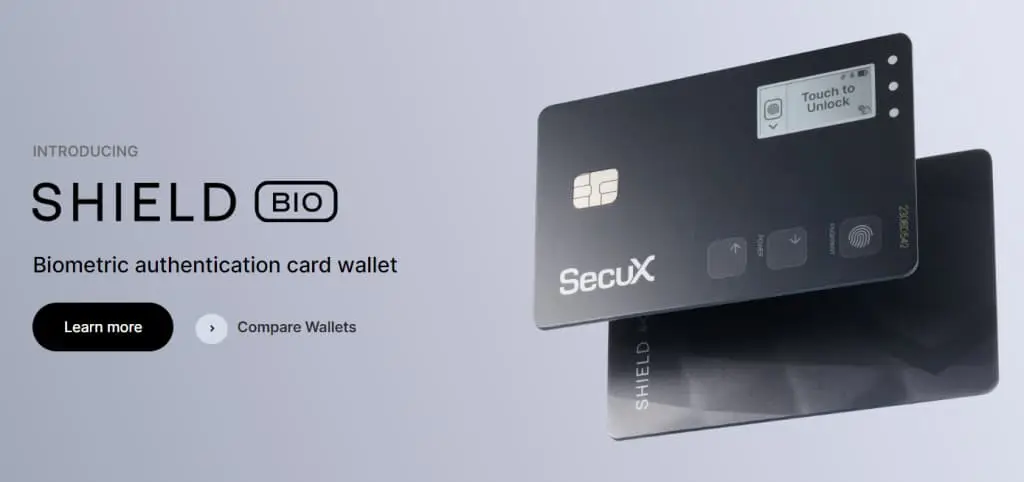
    15. SecuX W20

    secux w20 hardware crypto wallet

    A high-security hardware wallet known for its military-grade security chip and ease of use. Offers a good balance between security and user-friendliness.

    • Advantages: Top-notch security for offline storage, user-friendly interface, supports various popular coins in the UAE.
    • Disadvantages: Requires purchase of a separate hardware device, might be slightly more expensive than some other hardware wallets.
    • Security features: Military-grade SE chip for offline private key storage, PIN protection, and multi-factor authentication.
    • Supported cryptocurrencies: A wide range of coins and tokens, including most popular ones in the UAE.
    • Additional features: Secure password manager supports multi-signature transactions.

    16. Binance Wallet

    Binance Wallet is the best crypto wallet in the UAE provided by Binance and is approved by the Abu Dhabi Global Markets Financial Services Regulatory Authority (FSRA). It is one of the largest cryptocurrency exchanges globally. It supports over 300 cryptocurrencies and offers seamless integration with the Binance ecosystem.

    • Advantages: Integration with Binance exchange, supports various cryptocurrencies, user-friendly interface.
    • Disadvantages: Centralized nature, requires trust in Binance as the custodian, limited to Binance Chain-based tokens.
    • Security features: Secure password and private key encryption, two-factor authentication, anti-phishing measures.
    • Supported cryptocurrencies: Binance Coin (BNB) and tokens on the Binance Smart Chain.
    • Additional features: Integration with Binance DEX for decentralized trading, staking for certain cryptocurrencies.

    (Please note some of the information like the features, supported cryptocurrency, etc. may vary)

    How to Choose the Right Crypto Wallet in Dubai?

    Dubai has emerged as a hub for cryptocurrency enthusiasts and businesses. With this growth comes the crucial question: how to choose the right crypto in the UAE? 

    Here are some key factors to consider:

    • Hardware vs. Software Wallets – Hardware wallets like Ledger or Trezor offer the highest level of security by storing your private keys offline on a physical device. Software wallets, like mobile or desktop apps (Coinbase Wallet, MetaMask), are convenient but can be more vulnerable to hacking.
    • Beginner-friendly – If you’re new to crypto, prioritize user-friendly interfaces and clear instructions. Wallets like Zengo or Exodus offer a smooth experience.
    • Top Priority – Security should be your absolute priority. Look for wallets with robust features like multi-factor authentication (MFA), strong encryption, and secure key storage.
    • UAE Focus – Many wallets offer a wide range of cryptocurrencies, but ensure the wallet supports the specific coins you plan to use. Popular choices in Dubai include Bitcoin, Ethereum, and Ripple, alongside some Shariah-compliant coins.
    • UAE Regulations – As Dubai regulates cryptocurrency activity, ensure your chosen wallet complies with local regulations. Researching the company’s licensing and security practices is crucial.
    • Token Compatibility – If you plan to explore DeFi or invest in tokens, consider wallets that support a wide range of blockchain networks and tokens.

    There’s no “one-size-fits-all” solution. The ideal wallet depends on your individual needs and priorities.

    Secure Your Dubai Crypto Future with Shuraa

    With these top 16 top crypto wallets to consider, you’re well-equipped to find the perfect fit for your needs in the UAE. Remember, the ideal wallet prioritizes security, ease of use, supported currencies, and any desired features like DeFi integration or built-in exchanges.

    No matter your choice, entering into the exciting world of cryptocurrency requires careful planning, especially if you’re considering a business setup in Dubai. Shuraa Business Setup can be your one-stop shop for all your business establishment needs in the UAE. From crypto license acquisition and company registration to PRO services, visa assistance, and beyond, Shuraa’s experts will ensure a smooth and successful journey.

    Don’t hesitate to seek their valuable consultation, get in touch today at +971 44081900 or send a WhatsApp message to +971 507775554. You can also drop an email to info@shuraa.com. Here’s to a successful journey into the world of cryptocurrency in the UAE!

  • Police Clearance Certificate in Dubai

    Police Clearance Certificate in Dubai

    To obtain a Police Clearance Certificate (PCC) in Dubai, use the Dubai Police App, their official website, or a Smart Police Station (SPS) for quick digital application, proving no criminal record in the UAE for jobs, visas, or education, with fees varying by residency status (e.g., AED 200 for residents) and processing in a few days. Required documents typically include passport copies, a personal photo, and sometimes fingerprints or supporting documents for those outside the UAE, with online payment via card or Apple Pay.

    What is a Dubai Police Clearance Certificate?

    A Dubai Police Clearance Certificate (PCC), also called a Good Conduct Certificate, is an official document from Dubai Police confirming you have no criminal record in the UAE, proving good behaviour for jobs, visas, education, or business, and is obtained online via the Dubai Police app or website, or at police stations. It’s mandatory for many life events and requires personal details, photos, and passport copies, with fees varying for citizens, residents, and those abroad.

    Why Do You Need a Good Conduct Certificate?

    You will typically need a PCC for:

    • Employment: Many employers in Dubai require it for pre-employment screening.
    • Visa & Immigration: Essential for residency permits and certain visa applications.
    • Higher Education: Universities often require it from international students.
    • Professional Licensing: Needed to practice in regulated fields like medicine or law.
    • Business Setup: May be required for company owners and key personnel.
    • Banking & Finance: Some banks request it for account openings, especially for high-net-worth individuals.
    • Adoption Processes: To assess the suitability of prospective parents.

    Eligibility & Required Documents

    There are no strict eligibility criteria beyond having a record in the UAE’s system. The required documents differ based on your current status.

    Applicant TypeRequired Documents
    UAE Residents– Valid Passport & UAE Visa Copy
    – Emirates ID Copy
    – Recent Passport-Sized Photograph
    – Application Form & Fee Payment
    Non-Residents– Valid Passport
    – Attested Fingerprint Card from your current country’s police
    – Previous UAE Visa (if applicable)
    – Two Passport-Sized Photographs
    – Application Form & Fee Payment

    Crucial for Non-Residents: The fingerprint card must be attested by the UAE Embassy in your current country of residence.

    Step-by-Step Application Process (for Dubai Police)

    1. Access the Service:

    • Visit the official Dubai Police website: www.dubaipolice.gov.ae
    • Or download the Dubai Police Smart App (available on iOS and Android).
    • Navigate to the “Services” > “Individual Services” > “Permits and Certificates” or search for “Good Conduct Certificate” / “Police Clearance Certificate”.

    2. Log In:

    • Use your UAE Pass (recommended for seamless access) or create/register an account.

    3. Fill Out the Application:

    • Provide personal details (e.g., Emirates ID number if available, passport details, visa history, contact info).
    • Specify the purpose and whether the certificate is for use inside or outside the UAE.
    • Upload required documents (see below).

    4. Submit Fingerprints (if required):

    • If you have a valid Emirates ID and are applying from inside the UAE, fingerprints are usually not needed (biometrics are already on record).
    • If you do not have an Emirates ID or are applying from outside the UAE, you must provide a 10-fingerprint card (ten-print fingerprints). This needs to be certified by your local police and attested by the UAE Embassy/Consulate in your current country.

    5. Pay the Fees:

    • Fees vary (typically AED 100–300 depending on language, purpose, and whether for local or international use; additional charges may apply for attestation or service centers).
    • Payment is online via card.

    6. Processing and Delivery:

    • Processing time: Usually a few hours to 2–3 working days (often instant or within 24 hours for simple cases).
    • The certificate is delivered electronically (via email or downloadable from your account).
    • Validity: Typically 3 months from the date of issuance.

    Alternative: Applying via Ministry of Interior (MOI)

    • For a UAE-wide certificate, use the MOI portal: moi.gov.ae or the MOI UAE App.
    • Log in with UAE Pass.
    • Select “Issuance of Criminal Clearance Certificate.”
    • Follow similar steps (fees: ~AED 50–100 for local use, higher for international; fingerprinting may apply for some categories).
    • This is useful if your stay was not limited to Dubai.

    Additional Tips

    • If the certificate needs to be used abroad, you may require further attestation from the UAE Ministry of Foreign Affairs (MOFA) and/or the destination country’s embassy.
    • For in-person help (e.g., fingerprinting), visit Dubai Police service centers like Al Qusais, Ports, Al Rashidiya, or Jebel Ali Police Stations.
    • Track your application status online using your transaction number.
    • If you’re outside the UAE and need help with fingerprints or attestation, contact the nearest UAE Embassy.

    For the most up-to-date details, fees, or any changes (as processes can evolve), always check the official Dubai Police website or contact their helpline at 901. Avoid third-party agents unless necessary to prevent delays or extra costs. Safe travels and good luck with your application!

    Dubai Police Clearance Certificate Fees 2026

    The fees for a Dubai Police Clearance Certificate (PCC) are:

    CitizenAED 100
    ResidentAED 200
    From Outside the CountryAED 300
    Knowledge and Innovation feesAED 20
    Fingerprinting (for visitors and GCC citizens)AED 50
    MOFA Attestation (for certificates used abroad)AED 300
    Additional fee if applied through service centers in personAED 100

    Delivery Fee (Optional): An additional AED 100 might apply if you choose to receive a hard copy of the PCC through a service centre instead of electronic delivery.

    • Arabic Certificate: AED 50
    • English Certificate: AED 150

    Processing Time & Validity

    • How long does it take to get a Dubai police clearance certificate? The standard processing time is 2-3 working days. However, straightforward online applications are often approved within 24 hours.
    • Validity: A Dubai PCC is typically valid for 3 months from the date of issue for most official purposes.

    FAQs: Dubai Police Clearance Certificate

    1. How can I get a police clearance certificate in Dubai for a visit visa?

    The process is the same as for non-residents. You will need to apply from outside the UAE, providing an attested fingerprint card from your home country along with a copy of your previous UAE visit visa.

    2. Is police clearance free in Dubai?

    No, it is not free. The cost varies based on your applicant status (citizen, resident, or non-resident), as detailed in the fees table below.

    3. What is the difference between a PCC and a Good Conduct Certificate?

    There is no difference. “Police Clearance Certificate (PCC)” and “Good Conduct Certificate” are two names for the same document in Dubai.

    4. Can I apply for a Dubai PCC if I am outside the UAE?

    Yes. You can apply online through the Dubai Police or MOI portals as a “non-resident.” The key requirement is the attested fingerprint card.

    5. My application was rejected. What should I do?

    Rejections are rare but can happen if there is a criminal record, a mismatch in personal information, or incomplete documentation. Contact Dubai Police directly through their hotline (901) for specific reasons and resolution steps.

    6. How long is a Dubai PCC valid?

    A Dubai Police-issued PCC is typically valid for 3 months from the date of issuance. As of 2026, Dubai Police validity is explicitly 3 months; MOI may be 30 days in some cases (per Ministerial Decision No. 600 of 2024)—always verify with the destination authority (e.g., embassy/immigration). The validity period may vary depending on the receiving organization or country requesting it, as some (e.g., immigration authorities) accept only recent certificates.

    7. How long does it take to process a Dubai PCC application?

    Processing usually takes 1–5 working days. Online applications for current residents with Emirates ID are often instant or within 24 hours. Non-residents or cases requiring fingerprint verification may take 2–5 days. Delays can occur during peak periods, holidays, or if documents are incomplete.

    8. Do I need to get my Dubai PCC attested for use abroad?

    Yes, if the PCC is for international use (e.g., visa, immigration, employment, or education abroad), it typically requires further attestation. Start with UAE Ministry of Foreign Affairs (MOFA) attestation, followed by the embassy/consulate of the destination country. This ensures global recognition. Skip this if it’s only for UAE-internal use.

    9. Can I apply for a Dubai PCC if I never had an Emirates ID?

    Yes, but you must apply as a non-resident (even if you were a visitor). Provide a passport copy, previous UAE visa details (if any), and an attested 10-fingerprint card from your home country’s police. Fingerprints are mandatory without an Emirates ID.

    10. What happens if I have a criminal record in the UAE?

    You will not receive a PCC if there are outstanding cases, convictions, or restrictions. The application may be rejected, and the certificate will reflect the criminal status. Contact Dubai Police (901) for clarification or to resolve any issues.

    11. Can I renew or reapply for a Dubai PCC if it expires?

    Yes, the process is the same as a new application. Reapply online via Dubai Police or MOI portals. For non-residents, you may need to resubmit an updated attested fingerprint card if the previous one is outdated.

    12. Is there a difference between Dubai Police PCC and MOI Good Conduct Certificate?

    No major difference in purpose—they both confirm no criminal record in the UAE. Dubai Police handles Dubai-specific applications (often faster for Dubai residents/ex-residents). MOI covers UAE-wide (useful for multi-emirate stays). Choose based on your stay history; both are accepted broadly.

    13. What are the fees for a Dubai PCC in 2026?

    Fees vary by status and channel (approximate; always confirm on the official portal, as they can change):

    • UAE citizens: ~AED 100–200
    • Residents: ~AED 200–300 (plus AED 10–20 knowledge/innovation fee)
    • Non-residents/overseas: ~AED 300–500 (higher due to verification) MOI fees: ~AED 50–100 for local use, AED 100+ for international, plus fingerprinting if needed.

    Note: Fees include potential extras like AED 10–50 for knowledge/innovation, biometric processing (if no Emirates ID), or delivery/courier for non-residents. Additional charges may apply for in-person applications or service centers (e.g., AED 100 optional).

    14. Can I track my Dubai PCC application status online?

    Yes. Use your transaction/reference number on the Dubai Police website/app or MOI portal. Log in with UAE Pass, enter the number, and check real-time status.

    15. What are common reasons for PCC rejection or delays?

    • Incomplete or mismatched documents (e.g., wrong passport details)
    • Unattested fingerprint card (for non-residents)
    • Incorrect purpose selected
    • Active criminal cases or restrictions
    • High application volume or holidays To avoid issues, double-check details and apply during weekdays.

    16. How do I get my fingerprint card attested in India for UAE PCC?

    Get 10-fingerprints from your local Indian police station or authorized forensic lab → Attest via MEA (Ministry of External Affairs, India) → Then UAE Embassy/Consulate in India (fees ~INR 2,000–5,000 + processing time 1–4 weeks). Upload the fully attested card to the Dubai Police/MOI portal.

    Conclusion

    Navigating the process to get your Dubai police clearance certificate can be simple, especially with the online option. By following this guide, you know exactly what to expect in terms of documents, fees, and processing time.

    Focus on Your Business, Let Us Handle the Paperwork.

    If you’re using this PCC for company formation in Dubai, the experts at Shuraa Business Setup can manage this and all other documentation for you. We ensure a seamless and compliant setup, so you can focus on what matters—launching your business.

    Contact Shuraa Today for a Free Consultation

    Call: +971 44081900 | WhatsApp: +971 507775554 | Email: info@shuraa.com

  • How to Extend Your Dubai Visit Visa in 2026

    How to Extend Your Dubai Visit Visa in 2026

    The UAE government has recently introduced new Dubai visit visa extension regulations that make extending your visit visa easier than ever. Dubai attracts millions of visitors from around the world every year due to its luxurious skyscrapers, stunning beaches, and business opportunities. Furthermore, with its iconic landmarks like the Burj Khalifa and the Palm Jumeirah, Dubai offers a unique blend of modernity and tradition that makes it a popular destination among travellers.

    But what if your initial visa isn’t enough time to soak it all in? With the introduction of the new visit visa extension rules, you can explore the wonders of Dubai for longer to ensure your dream vacation becomes a reality.

    Let’s explore these new visa extension regulations and options in 2026 and understand the process to maximise your Dubai adventure!

    Type of Visit Visas in Dubai

    Visit visas are permits issued by the government of the United Arab Emirates (UAE) that allow foreign visitors to enter and stay in Dubai for a specific purpose and timeframe. Moreover, these visas are applicable to anyone who wants to visit Dubai for tourism, business meetings, visiting family or friends, or for short-term medical treatment.

    There are different types of visit visas available in Dubai, each with varying durations and limitations.

    1. Tourist Visa: This is the most common type of visit visa, issued for leisure purposes. It can be a single-entry visa valid for 30 days from arrival or a multiple-entry visa valid for 30 days from the first entry with a total stay of 90 days within a 180-day period. There’s also a new long-term single-entry visa valid for 60 days from the date of issue.
    2. On-Arrival Visa: Nationals of certain countries, including India, can obtain a visa upon arrival at Dubai airport. This visa is typically valid for 14 days and can be extended for an additional 14 days.
    3. Visit Visa for Business Meetings: This visa is intended for business visitors attending meetings or conferences in Dubai. It is usually valid for 30 days.

    Visitors to Dubai must comply with the regulations of their visa. Overstaying a visa can result in fines and even imprisonment. Visitors should also be aware of the restrictions on their visa type. For example, visitors on a tourist visa cannot work in Dubai.

    Reasons for Extending Your UAE Visit Visa

    Dubai offers so much to experience; however, with so much to see and do, a standard 30- or 60-day visit visa might feel limiting. Here are some common reasons why visitors seek extensions:

    • Extended Stay: If your initial visit visa doesn’t cover your entire desired stay in Dubai, an extension allows you to stay legally for a longer period.
    • Unexpected Circumstances: Trip delays, missed flights, or unforeseen events can cause you to overstay your visa. Extensions help avoid fines and penalties associated with overstaying.
    • Business: Maybe your business meetings took longer than expected, or new opportunities arose requiring a longer stay. An extension helps you handle these situations.
    • Change of Plans: If your plans change during your visit and you decide to stay longer than initially intended, a visa extension allows you to do so legally.
    • Visiting Family/Friends: Spending more time with loved ones might be desirable. An extension allows you to extend your visit.

    New UAE Visit Visa Extension Rules – 2026

    There are many good updates for visitors to Dubai in 2026 regarding Dubai visit visa extensions. You now have more flexibility over your extended stay options. Both 30-day and 60-day visit visas can be extended for an additional 30 days at a time. Previously, extensions might have been limited to shorter durations.

    The total duration of your stay in the UAE on a visit visa cannot exceed 180 days within a year. This means you can strategically apply for extensions throughout the year as long as you don’t go over 180 days cumulatively.

    The option to extend your visa from within the UAE has also been reinstated. This eliminates the need to exit the country and re-enter for an extension, saving you time and hassle.

    Additionally, authorities have eliminated the 10-day grace period that previously allowed visitors extra time after their visa expiration. Make sure to apply for extensions well before your current visa expires to avoid fines.

    You typically apply for extensions through the same agency that issued your initial visa. In some cases, you can also use the ICP (Immigration Control Authority) smart application.

    Dubai Visit Visa Extension Options in 2026

    In Dubai, you have a few options for extending your visit visa in 2026. Here’s what you need to know:

    Types of Visas Eligible for Extension:

    • 30-day visit visas (single or multiple entry): You can extend these for an additional 30 days at a time.
    • 60-day visit visas (single or multiple entry): You can also extend these for an additional 30 days at a time.

    Extension Options:

    • In-country Extension: This is the most convenient option. You can apply to extend your visa from within the UAE without needing to exit and re-enter the country.
    • Maximum Duration: The total duration of your stay in Dubai cannot exceed 180 days within a calendar year. This includes the initial visa validity and any extensions granted.
    • Extension Increments: You can extend your visa in 30-day increments, allowing you to utilise it to your specific needs. The most you can extend is 60 days total (across multiple applications).

    Ensure you apply for the extension before your current visa expires. There’s no longer a grace period, and overstaying incurs a fine of AED 50 per additional day.

    How to Extend a Visit Visa in the UAE: A Step-by-Step Guide

    Extending your visit visa in the UAE is a straightforward process that can typically be done entirely online or in person. To ensure a smooth experience, it’s crucial to have your documents ready and follow the correct steps for your chosen application method.

    Here is a simple step-by-step guide to extending your UAE visit visa.

    Step 1: Prepare the Required Documents

    Before starting your application, gather all the necessary documents. Having these prepared will save you significant time.

    • Original Passport: Must be valid for at least 6 months from your application date.
    • Passport-Sized Photographs: Two recent photos with a plain white background.
    • Current Visa Copy: A clear copy of your existing visit visa and the original grant notice.
    • Proof of Travel Health Insurance: Your insurance policy must be valid for the entire period of your requested extension.
    • Proof of Accommodation: A copy of your hotel reservation or tenancy agreement for your stay in the UAE.
    • Proof of Sufficient Funds: Recent bank statements or credit card details demonstrating you can financially support your extended stay.

    Please note that you will also need to pay the visa extension fee. Check the official General Directorate of Residency and Foreigners Affairs (GDRFA) website for the most current fee structure.

    Step 2: Select Your Application Method

    You can choose to apply online for convenience or visit a service center in person.

    • Online Application: The quickest and most convenient method. You will need to use the official government portal (such as the GDRFA or ICP smart services systems) or a licensed typing center website.
    • In-Person Application: Visit an authorized service center, such as an Amer Centre in Dubai or the relevant immigration authority office in other emirates.

    Step 3: Submit Your Application

    The submission process varies slightly depending on your chosen method.

    For Online Applications:

    1. Log in to the relevant smart services portal (e.g., GDRFA for Dubai) using your UAE Pass or account credentials.
    2. Navigate to the visa services section and find “Extend Visa” or a similar option.
    3. Accurately fill out the digital application form with your personal and visa details.
    4. Upload clear, scanned copies of all the required documents.
    5. Pay the visa extension fee securely using a credit or debit card.

    For In-Person Applications:

    1. Go to your chosen service center (e.g., Amer Centre).
    2. Collect a visa extension application form.
    3. Fill out the form completely and attach the required documents.
    4. Submit the package to the counter and pay the applicable fees.

    Step 4: Track Your Status and Receive Your Visa

    After submission, you can usually track the status of your application online using the reference number provided. You will receive notifications via SMS or email once a decision is made. Upon approval, you can download your e-visa or collect the physical copy as instructed.

    Dubai Visa Extension Fees in 2026

    A one-month UAE visa extension costs approximately AED 600, plus a 5% VAT. The total price can vary slightly depending on how and where you apply, as travel agents and typing centers charge additional service fees on top of the government fees. For the exact cost and official procedures, it is best to check the General Directorate of Residency and Foreigners Affairs (GDRFA) website or contact the GDRFA directly.

    Consult with a Shuraa business expert for a detailed cost breakdown.

    How To Check Overstay Fine In UAE?

    Firstly, to check overstay fines in the UAE, access the GDRFA website or the ICP website.On the GDRFA site, select the appropriate file type, provide the necessary details, and solve a captcha to view your fine details.

    There are two main ways to check for overstay fines in the UAE:

    1. Using the GDRFA Website

    • Visit the General Directorate of Residency and Foreigners Affairs (GDRFA) Website.
    • Look for the “Fines Inquiry Service.”
    • You can search using options such as file number, UDB number (unified database number), Emirates ID, or passport number.
    • Select the search type that applies to you and enter the corresponding details.
    • You’ll also need to choose the “File” Type”—either “Resident” (for residence visa holders) or “Permit” (for visit or tourist visa holders).
    • Finally, complete any additional CAPTCHA verification and submit your inquiry.
    • If you have any outstanding fines, the system will display the details, including the amount and any relevant information.

    2. Using the ICA Smart Services (Mobile App)

    • Download and install the ICA UAE Smart Services app on your smartphone. (ICA refers to the Federal Authority for Identity and Citizenship.)
    • Once installed, launch the app and look for options related to “Fines” or “Visa Inquiry.”
    • Register for an account or log in using your Emirates ID if you already have one.
    • Follow the app’s instructions to access your visa information and any potential fines associated with it.

    Simplify Your Dubai Journey

    Extending your visit visa in Dubai can be a straightforward process if you understand the options available to you. Whether you opt for a renewal, a new visa, or a change of status, it’s important to understand the requirements and procedures involved.

    For a seamless Dubai experience, team up with Shuraa Business Setup. We specialise in handling all your business setup requirements in Dubai, including expert visa support.

    Our team of experts can guide you through the entire process to ensure a smooth transition into your Emirati adventure.

    So, explore Dubai with confidence, and let Shuraa Business Setup handle the formalities. Contact us today at +971 44081900 or WhatsApp at +971 507775554 or drop an email at info@shuraa.com and get ready to make the most of your extended stay!

    Frequently Asked Questions (FAQs)

    1. Can I extend my visit visa while I’m still in Dubai?

    Yes, under the new regulations, you can extend your visit visa for an additional 30 days, twice in a row, for a total of 90 days. This can be done entirely within Dubai using the Immigration and Citizenship Platform (ICP) smartphone application.

    2. Can I apply for a visa extension after my visa has expired?

    No, unfortunately, applying for a visa extension after your visa expiry is not possible. You will need to leave the country and re-apply for a new visa if you wish to stay longer. There is a 10-day grace period after expiry, but overstaying will incur fines.

    3. How much does a visit visa extension typically cost?

    The cost of a visit visa extension in Dubai can vary depending on the processing speed and additional services used. It is generally around AED 1,100.

    4. Is there an online application for a visit visa extension?

    Yes, you can apply for a visit visa extension online through the Immigration and Citizenship Platform (ICP) smartphone application. This is the most convenient way to extend your visa.

    5. Can I work while on a Dubai visit visa extension?

    Working on a visit visa is strictly prohibited in Dubai. This rule applies to both paid and unpaid employment. If you plan to work, you must apply for a proper work visa through a sponsoring company.

    6. Is there an application fee for a same-day visa change?

    Yes, there is typically an application fee for a same-day visa change, along with any associated costs for the new visa type you’re converting to.

    Disclaimer: The information in this post is for general guidance only and may change due to updates in government policies or regulations.

  • Top 7 Restaurants for Business Dinners Dubai

    Top 7 Restaurants for Business Dinners Dubai

    When it comes to best business dinner restaurants in Dubai, there are so many options to choose from. The ambience, service, and menu selection can all contribute to creating a positive and successful dining experience. That’s why we have curated a list of the top 7 restaurants in Dubai that are perfect for business dinners.

    We understand the importance of choosing the right restaurant for such occasions, as it sets the tone for the meeting and can greatly impact the success of your business endeavours.

    When curating this list, we considered several factors. Firstly, we looked for restaurants with sophisticated and elegant ambience that display professionalism. We believe that a well-designed and tastefully decorated restaurant can create the right atmosphere for business discussions.

    Secondly, we considered the quality of service provided by each establishment. Prompt and attentive service is essential for a seamless dining experience where you can focus on your business matters without any distractions. Of course, the cuisine was also a key factor in our selection process. Additionally, we took into account the location and accessibility of each restaurant.

    7 Best Business Dinner Restaurants in Dubai

    1. Trèsind Dubai

    Trèsind Dubai is a modern Indian fine dining restaurant located in the One&Only Royal Mirage hotel. It offers an innovative take on classic Indian dishes, using seasonal ingredients and contemporary cooking techniques.

    Location: One&Only Royal Mirage, Arabian Court, Dubai

    Highlights:

    • Elegant and sophisticated ambience
    • Award-winning tasting menus
    • Impeccable service
    • Extensive wine list

    Cuisine: Indian

    Ambience: Elegant and sophisticated, with stunning views of the Arabian Gulf.

    Signature Dishes: The tasting menus are the highlight here, featuring dishes like the tandoori lamb chops with smoked eggplant raita, the chicken tikka masala with saffron yogurt, and the chocolate kulfi with rose petal jam. 

    Special Considerations: Reservations are highly recommended, especially for large groups. The restaurant is also quite pricey, so be prepared to splurge. 

    Why it’s a good choice for a business dinner?

    Trèsind Dubai is a great option for a special occasion business dinner, as it offers an impressive and unique dining experience. The elegant ambience and impeccable service will make your guests feel impressed, and the delicious food will leave them talking about it for days to come.

    2. CÉ LA VI Dubai

    CÉ LA VI Dubai is a rooftop restaurant and lounge located in the Address Sky View Hotel. It offers stunning views of the Burj Khalifa and the Dubai skyline, as well as a vibrant and stylish atmosphere.

    Location: Tower 2 – Level 54, Address Sky View Hotel, Sheikh Mohammed bin Rashid Blvd, Dubai 

    Highlights:

    • Breathtaking views 
    • Lively and stylish atmosphere 
    • Pan-Asian cuisine 
    • Extensive cocktail list 
    • Cuisine: Pan-Asian 

    Ambience: Lively and stylish, with stunning views of the city. 

    Signature Dishes: The menu features a variety of Pan-Asian dishes, including sushi, sashimi, dim sum, and wok-fried dishes. Some of the most popular items include the black cod miso, the wagyu beef tataki, and the lobster pad thai.

    Special Considerations: The restaurant can get quite loud, so it may not be the best choice for an intimate business dinner. Reservations are recommended, especially on weekends.

    Why it’s a good choice for a business dinner?

    CÉ LA VI Dubai is a great option for a fun and stylish restaurant for a business dinner. The stunning views and lively atmosphere will create a memorable dining experience for your guests. The Pan-Asian cuisine is also a crowd-pleaser, with something to suit everyone’s taste.

    3. TÀN CHÁ Restaurant

    TÀN CHÁ Restaurant Dubai is a modern Chinese restaurant located in the JW Marriott Marquis Hotel. It offers a sophisticated and elegant dining experience, with a focus on fresh, seasonal ingredients and innovative cooking techniques.

    Location: JW Marriott Marquis Hotel, Dubai

    Highlights:

    • Elegant and sophisticated ambience
    • Award-winning cuisine
    • Impeccable service
    • Extensive wine list

    Cuisine: Chinese

    Ambience: Elegant and sophisticated, with a modern twist.

    Signature Dishes: The menu features a variety of modern Chinese dishes, including dim sum, Peking duck, and seafood dishes. Some of the most popular items include the wagyu beef short ribs, the black cod in chili sauce, and the lobster noodles.

    Special Considerations: Reservations are recommended, especially for large groups. The restaurant is also quite pricey, so be prepared to splurge.

    Why it’s a good choice for a business dinner?

    TÀN CHÁ Restaurant is a great option for a sophisticated and impressive business dinner. The elegant ambience and impeccable service will make your guests feel pampered, and the delicious food will leave them wanting more.

    4. Amazónico Dubai

    Amazonico Dubai is a rainforest-themed restaurant and lounge offering Latin American cuisine with Brazilian, Peruvian, and Japanese influences. The vibrant atmosphere and lush greenery create a unique and immersive dining experience.

    Location: Gate Village Building 11, DIFC, Dubai

    Highlights:

    • Lush rainforest ambience
    • Live music and entertainment
    • Extensive Latin American menu
    • Wide selection of cocktails and beverages

    Cuisine: Latin American (Brazilian, Peruvian, Japanese influences)

    Ambience: Vibrant and lively, with a touch of the exotic.

    Signature Dishes: Grilled meats, ceviches, sushi, and Nikkei-inspired dishes. Popular items include the picanha, the black cod miso, and the tuna tataki.

    Special Considerations: Reservations are highly recommended, especially on weekends. The restaurant can get quite loud, so it may not be the best choice for an intimate business dinner.

    Why it’s a good choice for a business dinner?

    Amazonico Dubai offers a unique and memorable dining experience that is sure to impress your guests. The lively atmosphere and delicious food will create a talking point for your business meeting. 

    5. Hunter and Barrel

    Hunter & Barrel is a South African-inspired steakhouse offering a rustic and relaxed atmosphere. They emphasize dry-aged meats and grilled dishes cooked over an open flame.

    Location: Multiple locations in Dubai (Emirates Hills, Mirdif, and Yas Bay)

    Highlights:

    • Rustic and relaxed ambience
    • Dry-aged steaks and grilled specialties
    • Extensive wine list
    • South African-inspired dishes

    Cuisine: South African-inspired steakhouse

    Ambience: Rustic and relaxed, with a warm and inviting atmosphere.

    Signature Dishes: Dry-aged steaks, lamb chops, boerewors, and seafood dishes. Popular items include the Tomahawk steak, the lamb shank, and the grilled prawns.

    Special Considerations: Reservations are recommended, especially on weekends. The restaurant can get quite busy, so it may not be the best choice for a very quiet conversation.

    Why it’s a good choice for a business dinner?

    Hunter and Barrel is a great option for a casual and relaxed business dinner. The rustic atmosphere and friendly service will make your guests feel comfortable, and the delicious food will leave them satisfied.

    6. The Artisan Dubai

    The Artisan Dubai is a modern Italian restaurant located in the DIFC district. It offers a sophisticated and elegant dining experience, with a focus on fresh, seasonal ingredients and innovative cooking techniques.

    Location: Gate Village Building 11, DIFC, Dubai

    Highlights:

    • Sophisticated and stylish atmosphere
    • Modern Italian cuisine
    • Extensive wine list
    • Live piano music

    Cuisine: Italian

    Ambience: Sophisticated and elegant, with a modern touch.

    Signature Dishes: The menu features a variety of modern Italian dishes, including pasta, pizzas, and grilled meats. Some of the most popular items include the truffle pasta, the black cod, and the Fiorentina steak.

    Special Considerations: Reservations are highly recommended, especially for large groups. The restaurant is quite pricey, so be prepared to splurge.

    Why it’s a good choice for a business dinner?

    The Artisan Dubai is a great option for a sophisticated and impressive restaurant for a business dinner. The elegant ambience and impeccable service will make your guests feel pampered, and the delicious food will leave them wanting more. 

    7. La Petite Maison Dubai

    La Petite Maison Dubai is a French Mediterranean bistro offering a warm and inviting atmosphere with a focus on fresh, seasonal ingredients and classic dishes.

    Location: DIFC, Dubai

    Highlights:

    • Warm and inviting atmosphere
    • Classic French Mediterranean cuisine
    • Fresh, seasonal ingredients
    • Beautiful outdoor terrace

    Cuisine: French Mediterranean

    Ambience: Warm and inviting, with a touch of Parisian charm.

    Signature Dishes: Grilled octopus, roasted chicken, steak frites, and bouillabaisse. Popular items include the lamb shank, the grilled sea bass, and the chocolate mousse.

    Special Considerations: Reservations are highly recommended, especially on weekends. The restaurant can get quite busy.

    Why it’s a good choice for a business dinner?

    La Petite Maison Dubai offers a warm and inviting atmosphere that is conducive to conversation. The delicious food and extensive wine list will also be appreciated by your guests.

    Dinner’s Served, Now Let’s Talk Growth

    Choosing the best business dinner restaurants in Dubai can be just as crucial as the deal itself. The ambience, the cuisine, the service – all these elements contribute to creating a positive and memorable experience for your guests. However, securing a smooth and successful business venture requires more than just an impressive dinner.

    While an exceptional dining experience plays a vital role, ensuring a smooth and hassle-free business setup in Dubai is equally important for long-term success.

    This is where Shuraa, your trusted business setup advisor in Dubai, steps in. We go beyond legalities and documentation, assisting you with visa applications, PRO services, office rentals, and more. Imagine the peace of mind knowing your business foundation is rock-solid while you focus on forging connections over a delicious meal.

    So, choose your restaurant with confidence, knowing that Shuraa is by your side. Let us handle the complexities while you focus on building fruitful relationships and clinching that game-changing deal.

    Contact us today for a free expert consultation at +971 44081900 or WhatsApp at +971 507775554. For inquiries, drop an email at info@shuraa.com. Remember, a successful business dinner is just the beginning. With Shuraa as your partner, you can unlock a world of possibilities.

  • How to Start a Pharmacy Business in Dubai: Your 2026 Guide

    How to Start a Pharmacy Business in Dubai: Your 2026 Guide

    The pharmacy sector in Dubai and the wider UAE is a cornerstone of its world-class healthcare system. With a booming population, high per-capita income, and a strong government focus on health, the demand for pharmaceutical services is rising steadily. The UAE pharmacy market is projected to reach $9.5 billion by 2030, offering a significant opportunity for investors.

    This comprehensive guide will walk you through every step of how to open a pharmacy in Dubai, covering the latest legal requirements, costs, and the process for obtaining your pharmacy license in Dubai.

    Why Start a Pharmacy Business in the UAE?

    Before diving into the “how,” let’s look at the “why.” The UAE offers distinct advantages for pharmacy owners:

    • Thriving Market: An expanding population and growing focus on preventive healthcare drive continuous demand.
    • 100% Foreign Ownership: As per recent UAE law, you can now own 100% of your mainland pharmacy business, eliminating the need for a local sponsor in most cases. (Strategic sectors like oil and gas are exceptions).
    • Tax Benefits: Benefit from minimal corporate taxes and a low 5% VAT, maximizing your profit margins.
    • Strategic Hub: Dubai’s location provides access to a diverse customer base and international supply chains.
    • Government Support: Streamlined processes through authorities like the Dubai Health Authority (DHA) make setup efficient.

    Navigating the legal landscape is your first critical step. The primary regulator in Dubai is the Dubai Health Authority (DHA). Key requirements include:

    • DHA Pharmacy License: This is the core permit to operate, issued after meeting all standards.
    • Qualified Pharmacist-in-Charge: The managing pharmacist must hold a valid UAE license and have a minimum of two years of professional experience.
    • Approved Location: The physical premises must comply with DHA regulations for size, layout, and facilities.
    • Additional Licenses: You may need permits from the Ministry of Health and Prevention (MoHAP) for controlled substances or medical devices.
    • Mainland Trade License: You must obtain a commercial license from the Department of Economy and Tourism (DET)—formerly known as the DED.

    Mainland vs. Free Zone: Where Should You Set Up Your Dubai Pharmacy?

    1. Mainland (DET License):

    • Pros: Can operate directly anywhere in Dubai and the UAE mainland; sell to hospitals and other pharmacies; higher revenue potential.
    • Cons: Typically higher setup and operational costs (like rent); requires physical storefront.
    • Ideal for: Owners targeting the general retail public and B2B opportunities within the UAE.

    2. Free Zone:

    • Pros: Often faster and 100% ownership was standard; can be more cost-effective for warehousing and logistics.
    • Cons: Critical Limitation: Operations are generally restricted to the specific free zone. A free zone pharmacy cannot open a retail storefront for public walk-in sales on the mainland. Primarily suited for wholesale, manufacturing, and export.
    • Ideal for: Businesses focused on logistics, wholesale, re-export, and manufacturing, not public retail.

    The Verdict: For a community retail pharmacy serving the public in Dubai, a mainland license through the DET is the necessary and standard route.

    Choosing the Right Location for Your Dubai Pharmacy

    Your pharmacy’s location can make or break your business. The DHA has strict criteria, but you also need to consider commercial viability. Here are key factors to evaluate:

    • DHA Zoning Regulations: The authority must pre-approve your location. It typically cannot be in a purely industrial area and must be easily accessible to the public.
    • Foot Traffic & Visibility: High-traffic areas like residential communities, near hospitals and clinics, or busy commercial streets are ideal. Ground-floor units with clear signage are preferred.
    • Accessibility and Parking: Ensure customers can easily reach you. Ample parking, proximity to public transport links, and accessibility for people of determination are crucial.
    • Competitor Analysis: Is the area already saturated with pharmacies? A location with high demand and low competition is perfect. Alternatively, consider a niche (e.g., specializing in diabetic care, organic products) to differentiate yourself.
    • Demographic Fit: Align your location with your target market. A pharmacy in a family-oriented community should stock pediatric products, while one in a business district might focus on wellness and cosmetics.

    Step-by-Step Guide: How to Open a Pharmacy in Dubai

    Follow this clear, actionable plan to establish your pharmacy business.

    1. Solidify Your Plan & Structure: Conduct in-depth market research. Decide on your business model (retail, specialized, etc.) and choose a legal structure (e.g., LLC). With the new ownership laws, you can proceed with 100% ownership.
    2. Secure DHA Initial Approval: Apply for initial approval from the DHA. This involves submitting key documents, including your business plan, the pharmacist-in-charge’s credentials, and proposed location details.
    3. Finalize Your Location: Your pharmacy’s location must be inspected and approved by the DHA. It must meet specific criteria for size, cleanliness, and accessibility.
    4. Register Your Company & Get Trade License: Register your business trade name and obtain your commercial license from the Department of Economy and Tourism (DET) in Dubai.
    5. Obtain the DHA Pharmacy License: Once your location is fit-out and all staff credentials are verified, the DHA will issue the final pharmacy operating license.
    6. Procure Stock & Launch Operations: Establish relationships with authorized pharmaceutical suppliers. Set up your inventory management system, hire staff, and prepare for launch with a strong marketing plan.

    Cost of Opening a Pharmacy in Dubai

    The cost of a pharmacy license in the UAE typically ranges from AED 10,000* to AED 12,000*. However, this is just one part of the total investment. You must also budget for:

    • Company registration and trade license fees
    • Rent for your retail space
    • Fit-out and interior costs (shelving, counters, refrigeration)
    • Initial inventory investment
    • Staff salaries and visa costs

    Navigating Challenges: How to Ensure Your Pharmacy’s Success

    Starting any business has its hurdles. Being aware of these common challenges for pharmacy owners in Dubai will help you prepare and overcome them.

    Challenge 1: Stringent Regulatory Compliance

    • The Issue: The DHA has strict, non-negotiable rules on storage, documentation, and staffing. Non-compliance can result in heavy fines or license suspension.
    • The Solution: Implement a robust compliance management system from day one. Use certified software for inventory and prescriptions. Ensure all staff are thoroughly trained on DHA protocols. Many owners find that partnering with an experienced business setup consultant provides invaluable ongoing support for navigating audits and regulatory updates.

    Challenge 2: Intense Market Competition

    • The Issue: Dubai’s pharmacy market is competitive, with both large chains and independent stores.
    • The Solution: Differentiate yourself. Don’t just be another drug store. Consider specializing in a specific area (e.g., compounding, home healthcare equipment, vegan supplements). Offer superior customer service, home delivery, or medication management consultations to build a loyal customer base.

    Challenge 3: Supply Chain and Inventory Management

    • The Issue: Managing stock levels for a wide range of products with different shelf lives is complex. Shortages or expired stock can hurt both revenue and reputation.
    • The Solution: Build strong relationships with multiple authorized distributors. Invest in a modern pharmacy management system that tracks inventory in real-time, predicts demand, and automates reordering.

    Challenge 4: Recruiting and Retaining Qualified Staff

    • The Issue: Finding a licensed, experienced, and customer-focused Pharmacist-in-Charge and supporting staff is competitive and costly.
    • The Solution: Offer competitive salaries and a positive work environment. Clearly define roles and invest in your team’s continuous professional development. A happy team leads to better customer service.

    Frequently Asked Questions (FAQs)

    1. What are the requirements for opening a pharmacy in Dubai?

    The key requirements are: 1) A DHA pharmacy license, 2) A licensed pharmacist with 2+ years of experience, 3) A DHA-approved physical location, and 4) A trade license from the Department of Economy and Tourism (DET).

    2. Can a foreigner own a pharmacy in the UAE?

    Yes. Following recent law changes, foreigners can now own 100% of a pharmacy business in the UAE mainland, without the need for a local Emirati partner.

    3. How much does it cost to get a pharmacy license in Dubai?

    The government fee for the DHA pharmacy license itself is approximately AED 10,000 to AED 12,000. The total cost to start and operate a pharmacy is significantly higher, covering company setup, rent, inventory, and staff.

    4. What is the difference between DHA and MOHAP for a pharmacy license?

    The Dubai Health Authority (DHA) regulates healthcare and pharmacies within the Emirate of Dubai. The Ministry of Health and Prevention (MOHAP) is the federal authority. You primarily need a DHA license to operate in Dubai, but MOHAP may be involved for specific federal-level registrations or permits for controlled drugs.

    5. Do I need a physical store to open a pharmacy?

    Yes, to obtain a traditional retail pharmacy license, a DHA-approved physical storefront is mandatory. The rise of online pharmacy services is regulated separately and often requires a traditional pharmacy as a base.

    6. How long does it take to open a pharmacy in Dubai?

    The complete process typically takes 3-6 months, depending on document preparation, location approval, and government processing times. Working with an experienced consultant can help streamline this timeline.

    Conclusion: Your Partner in Starting a Pharmacy in Dubai

    The journey to starting your pharmacy business in Dubai is filled with opportunity but requires meticulous planning and navigation of local regulations. Partnering with an experienced business setup consultant can save you time, ensure compliance, and streamline the entire process.

    Ready to turn your pharmacy business dream into a reality? Shuraa Business Setup has the expertise to guide you from concept to grand opening.

    Get your free consultation today!

    Start your pharmacy journey in Dubai with confidence. Contact Shuraa now!

    Disclaimer: The information in this post is for general guidance only and may change due to updates in government policies or regulations.

  • 21 Top UAE Industries in 2026

    21 Top UAE Industries in 2026

    The United Arab Emirates (UAE) is composed of seven emirates, each with its own unique charm and economic strengths. The country has emerged as a major player in the global economy, attracting investors from around the world. With its strategic location, world-class infrastructure, and business-friendly policies, the UAE offers a wealth of investment opportunities across various industries in the UAE.

    For decades, the UAE’s economy was largely driven by its vast oil and gas reserves. However, recognizing the need for diversification, the government sets on a strategic shift, promoting the growth of non-oil sectors like tourism, real estate, and logistics.

    This forward-thinking approach has transformed the UAE into a regional hub for trade, innovation, and entrepreneurship, attracting investors from all corners of the globe.

    Let’s explore some of the top industries in the UAE and investment opportunities for entrepreneurs in each sector, so you can make informed decisions for your entrepreneurial journey in UAE.

    Top 21 Industries in the UAE for Investment Opportunities in 2026

    The UAE offers plenty of investment opportunities for entrepreneurs across industries in Dubai or the UAE. Here are 21 of the most promising sectors in 2026:

    1. Renewable Energy Industry

    The industry positioned UAE as a leader in renewable energy, with the potential for increased international collaborations and partnerships.

    The UAE has set ambitious targets for renewable energy penetration, with initiatives like the Dubai Clean Energy Strategy 2050 and the Energy Strategy 2050. This involves substantial investments in solar and wind projects.

    Invest in solar panel manufacturing, develop wind farms in suitable locations, explore biofuel production (e.g., algae-based), create innovative energy storage solutions like battery technologies.

    2. Technology and Innovation

    UAE government is investing heavily in technology, with a focus on artificial intelligence, blockchain, and the Internet of Things. The sector offers opportunities in software development, IT services, e-commerce, and digital marketing.

    The government’s initiatives to create smart cities and a knowledge-based economy are attracting tech companies and investors.

    Continued government support and a growing tech-savvy population also contributing to a positive outlook for this sector.

    3. Oil and Gas Industry

    Oil and gas industry plays a crucial role in the nation’s economy, contributing significantly to GDP and exports.

    The UAE is a major oil and gas producer, with vast reserves and a well-developed infrastructure. While the industry faces some long-term challenges, it remains a significant contributor to the economy and offers opportunities in exploration, production, refining, and petrochemicals.

    4. Real Estate Industry

    The real estate industry in Dubai and UAE is known for its luxury developments, high-rise towers, and world-class infrastructure. While there have been fluctuations, the market remains attractive for investors seeking rental income, capital appreciation, or diversification.

    PropTech (real estate technology), sustainable development, mixed-use projects are the booming trends in the sector.

    5. Healthcare Industry

    The healthcare industry in the UAE is one of the fastest-growing sectors in the economy. The country has a well-developed healthcare system with a growing demand for high-quality medical services. The sector offers opportunities in hospitals, clinics, medical equipment, pharmaceuticals, and healthcare IT.

    The healthcare market in the UAE is expected to grow at a CAGR of 8% by 2025. The government’s focus on medical tourism and innovation is creating further investment opportunities.

    6. Construction Industry

    The UAE is undergoing a continuous construction boom, driven by ambitious infrastructure projects and developments. This sector presents opportunities in areas like building materials, construction equipment, engineering services, and project management.

    7. Logistics and Transportation Industry

    Logistic and transportation industry in the UAE is among the top profitable sectors in UAE business landscape. The UAE’s strategic location and well-developed infrastructure make it a major logistics hub.

    Investment opportunities exist in transportation, warehousing, freight forwarding, and supply chain management.

    Consider niche areas like cold chain logistics for perishable goods, last-mile delivery solutions, and technology-driven logistics platforms for investment opportunities. The government’s focus on developing logistics hubs and infrastructure, like Jebel Ali Port, indicates continued growth in this sector.

    8. Financial Services

    The UAE is a growing financial centre, with a well-regulated and transparent financial system. Investment opportunities are available in banking, insurance, Islamic finance, asset management, and fintech.

    Explore niche areas like blockchain-based payment solutions, digital lending platforms, crowdfunding platforms for startups, and robo-advisors for wealth management. The UAE government is actively promoting FinTech innovation through initiatives like the Dubai International Financial Centre (DIFC) FinTech Hive.

    9. Retail and E-Commerce

    The retail industry in the UAE plays a significant role in country’s growing GDP, making UAE a major retail hub with a thriving luxury goods market. The sector offers opportunities in shopping malls, supermarkets, e-commerce, and convenience stores. The growing population and rising disposable incomes are driving demand in the retail sector.

    E-commerce platforms, last-mile delivery services, and innovative retail technologies are some of the booming investment opportunities for aspiring entrepreneurs.

    10. Tourism & Hospitality

    The UAE is a popular tourist destination, attracting millions of visitors annually. The sector offers investment opportunities in hotels, resorts, theme parks, airlines, and travel agencies. The UAE aims to attract 25 million annual tourists by 2025 through various government initiatives and cultural experiences.

    The government’s focus on diversification and sustainability is creating new opportunities in ecotourism and cultural experiences.

    11. Manufacturing and Industrial Production

    The Manufacturing industry in Dubai and UAE is a rapidly growing sector, with a focus on high-value products such as pharmaceuticals, food processing, and aerospace components.

    The country aims to diversify its economy by expanding the manufacturing sector and reducing dependency on oil-related industries. Strategic geographic location and government initiatives make manufacturing an attractive sector for investors.

    12. Education and E-Learning

    The UAE government prioritizes education and aims to establish itself as a global education hub. This creates demand for diverse educational institutions. For investment opportunities, consider niche areas like online education platforms, vocational training centres focused on emerging industries, and educational institutions offering specialized programs in AI, FinTech, and renewable energy.

    The government’s initiatives like the Higher Education Strategy 2030 indicate continued growth in the education sector.

    13. Media and Entertainment Industry

    Entertainment industry in UAE is expected to reach USD 4.41 billion by 2030. The UAE has a vibrant media and entertainment industry, with a growing demand for local and international content. The sector offers opportunities in television, film, music, gaming, and theme parks.

    The government’s initiatives to develop media cities and attract international production companies are creating new opportunities in this sector.

    14. Space Industry

    The space industry establishes UAE as among the key player in space exploration. The UAE’s successful Mars mission and the establishment of the UAE Space Agency highlight the country’s commitment in the sector.

    The sector offers opportunities in satellite manufacturing, space launch services, and space tourism. The government’s investment in space exploration is creating new opportunities in this sector.

    15. Agriculture and Agribusiness

    The UAE is investing in modern agriculture technologies to improve food security and reduce reliance on imports. The sector offers opportunities in greenhouses, hydroponics, vertical farming, precision agriculture, and organic farming.

    The growing population and rising demand for fresh produce are driving demand in the agriculture sector.

    16. Food and Beverage (F&B)

    The UAE has a diverse and growing F&B sector, with a mix of international and local brands. The growing population, rising disposable incomes, and increasing tourism are driving demand in the F&B sector. The sector offers opportunities in restaurants, cafes, catering, food manufacturing, and food distribution.

    As the business landscape expands, there is a growing need for legal and professional services to support various industries.  Law firms, consultancy services, and legal tech innovations are high in demand.

    The sector offers opportunities for professional services firms, outsourcing companies, and freelance professionals.

    18. Defence and Cybersecurity

    Given the geopolitical landscape, defence and cybersecurity remain crucial sectors for the UAE. The sector offers opportunities in cybersecurity solutions providers, managed security services, and security training.

    The growing threat of cyberattacks and the government’s focus on data protection are driving demand in the cybersecurity sector.

    19. Aviation and Aerospace Industry

    The aviation industry is also among the key contributors to the UAE’s economy, with major international airports like Dubai International Airport. Aircraft maintenance and repair, aerospace manufacturing, and space-related ventures are among the great investment opportunities for aspiring entrepreneurs.

    The UAE’s strategic position in air travel and continuous investments ensure the sector’s importance in the global aviation landscape.

    20. Clean Technology Industry

    The UAE is committed to sustainability and is investing in clean technologies such as renewable energy, energy efficiency, and waste management. The sector offers opportunities in clean technology companies, green building solutions, and sustainable infrastructure projects. 

    21. Emerging Technologies – Quantum Computing and AI Ethics

    The UAE recognizes the potential of emerging technologies like quantum computing and the need for ethical considerations in AI. Research and development in quantum computing, AI ethics consulting, and responsible AI solutions are suspected to gain momentum.

    As these technologies advance, there will be increasing demand for solutions that prioritize ethical considerations and responsible use.

    These are just a few of the many investment opportunities available in the UAE in 2026. It is essential to carefully research any investment opportunity before making a decision.

    If you’re considering establishing your business presence in Dubai or UAE, we highly recommend getting in touch with expert business setup consultants in Dubai for understanding the application process and assistance through business establishment.

    Partner with Shuraa and Build Your Future

    The UAE continues to thrive in the path to sustained economic growth in 2026, contributed by top business industries including Tourism and Hospitality, Logistics and Transportation Industry, real estate, construction, banking and finance, retail and e-commerce, healthcare, and oil and gas.

    As the country continues to grow and develop, now is the perfect time for entrepreneurs and investors to seize the opportunity and take advantage of the favourable business environment.

    However, starting a business in a foreign country can be complex and challenging. That’s why it is crucial to seek assistance from business setup consultants like Shuraa.

    Shuraa is a trusted and experienced business setup consultant that can guide and support entrepreneurs and investors throughout the process of setting up their businesses in the UAE.

    At Shuraa, we go beyond company registration and PRO services. We offer comprehensive guidance and support throughout your entrepreneurial journey, from market research and feasibility studies to visa processing and legal compliance.

    Our team of experts will ensure a smooth and efficient setup process, allowing you to focus on what truly matters: building your empire.

    Get in touch today for a free expert consultation at +971 44081900 or WhatsApp at +971 507775554. For inquiries, drop an email at info@shuraa.com.

    Remember, the UAE’s story is still being written, and you have the chance to be a part of its remarkable future.

    Frequently Asked Questions

    1. What are the top industries in the UAE?

    The UAE’s top industries powering its dynamic economy include oil & gas, tourism, finance, construction, healthcare, retail, and ecommerce. Thanks to smart diversification, these sectors fuel growth, innovation, and global influence—making the UAE a key player on the world stage.

    2. Which industry is booming in Dubai?

    Here are some booming UAE industries:

    • Oil and Gas industry
    • UAE Tourism and Hospitality
    • Construction and Real Estate
    • Financial Services
    • Aviation and Aerospace
    • Information Technology (IT) and Telecommunications
    • Healthcare and Pharmaceuticals
    • UAE Renewable Energy

    3. What are the most profitable industries in the UAE?

    Some of the most profitable industries in Dubai includes:

    • Real Estate industry
    • Tourism and Hospitality industry
    • E-commerce and Online Marketplaces
    • Fintech and Digital Payments
    • Health and Wellness industry 
    • Education and Training
    • Event Management
    • Renewable Energy industry

    4. What are the advantages of setting up a business in the UAE?

    The UAE offers numerous advantages, including:

    • 100% business ownership
    • Strategic location
    • Ease of doing business
    • Tax-friendly environment
    • Advanced infrastructure
    • Multicultural environment

    5. How long does it typically take to set up a business in the UAE?

    The timeframe depends on the complexity of your business and the required licenses. Shuraa’s streamlined processes can expedite the setup, often within weeks.

  • Set up a Holding Company in Dubai – Cost & Steps Involved (2026)

    Set up a Holding Company in Dubai – Cost & Steps Involved (2026)

    Entrepreneurs and investors are increasingly choosing Dubai as a leading jurisdiction for holding company registration due to its stability and efficiency. A holding company is a parent entity that owns shares in subsidiaries or holds assets such as real estate and intellectual property.

    Although a holding company usually does not manage daily operations, it provides a strategic framework for overseeing multiple companies and investments under a single corporate umbrella. Setting up a holding company in Dubai offers advantages such as strong asset protection, efficient group management, and a reliable legal framework.

    The main reason for Dubai’s growing popularity is its significant tax advantages. Many free zones offer 0% corporate tax, along with exemptions on dividends, capital gains, and withholding taxes. In addition, the UAE’s broad network of double taxation treaties makes it attractive for global structuring.

    This guide outlines the key considerations for establishing a holding company in the UAE.

    What is a Holding Company?

    A holding company is a type of business entity that doesn’t usually sell products or services on its own. Instead, it owns and controls shares of other companies or manages assets like real estate, trademarks, or investments. In simple terms, it’s like a parent company that oversees and protects the businesses and assets under its umbrella.

    Holding Company vs. Operating Company

    • A holding company owns or invests in other businesses without participating in their daily operations.
    • An operating company manages core business activities such as sales, manufacturing, or service delivery.

    For example, if a holding company owns a restaurant chain, it does not handle food preparation or service; these functions are managed by the operating company. The holding company’s role is limited to ownership.

    Common Uses of a Holding Company

    Entrepreneurs, investors, and large corporations commonly use holding companies due to their distinct advantages:

    • Asset Protection: Safeguards core assets such as property, intellectual property, and investments from business risks.
    • Tax Efficiency: Reduces overall tax liability by utilising exemptions and double taxation treaties.
    • Investment Structuring: Simplifies management of multiple businesses within a single entity.
    • Risk Management: Limits liability by separating assets from operations.
    • Long-Term Wealth Planning: Facilitates succession planning and structured transfer of assets to future generations.

    Why Set Up a Holding Company in the UAE

    Establishing a holding company in Dubai provides several strategic advantages for businesses and investors. Key benefits include:

    1. Tax Benefits & International Treaties

    Many free zone entities benefit from 0% corporate tax and exemptions on dividends, capital gains, and withholding taxes. The UAE’s network of over 140 double taxation treaties also reduces tax liabilities for international investors and supports cross-border trade.

    2. Full Foreign Ownership

    Recent legislative reforms allow foreign investors to own 100% of their company in most sectors, removing the need for a local sponsor. This ensures full control over business structure, operations, and profits.

    3. Asset Protection & Limited Liability

    A holding company structure separates core assets from the operational risks of subsidiaries. If a subsidiary encounters financial difficulties, the holding company’s assets, such as property or intellectual property, remain legally protected.

    4. Family Wealth & Succession Planning

    Dubai holding companies are often used by high-net-worth individuals to effectively structure their wealth. This approach provides a reliable mechanism for transferring ownership across generations and preserving family assets.

    5. Reputation & Global Credibility

    Incorporating a holding company in Dubai enhances a business’s international reputation. The UAE is recognised as a low-risk jurisdiction that meets international compliance standards, making it a trusted base for multinational corporations and investors.

    Permitted Activities for Holding Companies in Dubai

    Holding companies in Dubai are authorised to own and manage assets, including shares in subsidiaries, real estate, and intellectual property. They primarily serve as investment vehicles, providing funding, management, and strategic direction to subsidiaries, but do not participate directly in operational, manufacturing, or retail trading activities.

    Key Permitted Activities

    • Owning Shares: Holding shares in LLCs, private companies, or public companies.
    • Asset Management: Owning and managing residential or commercial real estate.
    • Intellectual Property: Holding and licensing patents, trademarks, and copyrights to subsidiaries.
    • Financial Activities: Providing loans and financial support to subsidiaries.
    • Investment Portfolio: Investing in stocks, bonds, or other financial instruments.
    • Management Services: Providing administrative and consulting services to subsidiaries.
    • Specialised Investments: Investing in agricultural, educational, healthcare, or industrial sectors.

    Types of Holding Companies in Dubai

    Investors can establish a holding company in Dubai under three main structures: Mainland, Free Zone, or Offshore. Each structure offers specific advantages based on business goals and target markets.

    1. Mainland Holding Company

    A Mainland company registered with the Dubai Department of Economic & Tourism (DET) offers maximum flexibility to operate throughout the UAE’s local market.

    Key Features:

    • Regulation: Licensed and regulated by the DET.
    • Investment Scope: May hold shares in both Mainland and Free Zone companies and own local assets such as real estate.
    • Market Access: Unrestricted access to the UAE market and eligibility for government contracts.
    • Real Estate: Allowed to own property in designated investment areas.
    • Taxation: Subject to 9% UAE Corporate Tax on profits over AED 375,000.

    2. Free Zone Holding Company

    Located in designated economic zones such as DMCC, DIFC, or JAFZA, this structure suits international investors focused on tax efficiency and global asset management.

    Key Features:

    • Ownership: 100% foreign ownership is permitted without a local partner.
    • Tax Benefits: Eligible for 0% corporate tax on qualifying income and exemptions on dividends, capital gains, and withholding tax.
    • Global Structuring: Ideal for holding international investments and simplifying cross-border business structures.
    • Market Limitation: Cannot trade directly within the UAE mainland without a local distributor or agent.

    3. Offshore Holding Company

    Registered in jurisdictions such as RAK ICC, JAFZA offshore or Ajman offshore, this structure prioritises confidentiality, asset protection, and international wealth management over business activities within the UAE.

    Key Features:

    • Market Limitation: Cannot conduct business within the UAE market.
    • Asset Ownership: May hold assets worldwide, including real estate, shares in other companies, and intellectual property.
    • Purpose: Best suited for asset protection, inheritance planning, and confidential global wealth structuring.
    • Physical Presence: No requirement for a physical office or local presence in the UAE.

    Requirements for a Holding Company in the UAE

    When registering a holding company in Dubai, you must comply with all UAE government requirements. If you are unfamiliar with Company Law, a consultant such as Shuraa Business Setup can guide you through the process and ensure compliance. The key requirements are as follows:

    • A management board must be established. The board is responsible for the following:
    • Rules and regulations for the subsidiaries.
    • Organisation of the subsidiaries.
    • Supervision of the activities of the subsidiaries.
    • Each subsidiary must have an appointed director.
    • The company must ensure that subsidiaries have sufficient capital to operate.
    • The company must set limits on the risks subsidiaries may assume, including foreign currency and other financial risks.
    • The holding company determines the terms of arrangements and contracts for its subsidiaries.

    Required Documents for Setting Up a Holding Company in Dubai

    The following documents are typically required:

    For individual shareholders or owners:

    • Passport copies of all shareholders and directors
    • Recent passport-size photographs
    • Proof of residential address (such as utility bill or tenancy contract)
    • CV or business profile of shareholders, if requested by the relevant free zone authority
    • Trade name reservation certificate

    For corporate shareholders (when the parent company owns the holding company):

    • Certificate of Incorporation of the parent company
    • Memorandum & Articles of Association (MOA/AOA)
    • Board resolution authorizing the establishment of the holding company in Dubai
    • Valid Trade License copy of the parent company
    • Trade name reservation certificate

    How to Register a Holding Company in Dubai (2026)

    Establishing a holding company in Dubai requires a structured process. Steps may vary by Mainland, Free Zone, or Offshore jurisdiction. The general procedure for 2026 is outlined below.

    Step 1. Choose the Jurisdiction

    Select Mainland, Free Zone, or Offshore jurisdiction based on your strategic goals, such as local market investment, global expansion, or asset protection.

    Step 2. Define Ownership Structure

    Decide if individuals or a corporate entity will own the holding company. A Limited Liability Company (LLC) is the most common structure.

    Step 3. Select a Trade Name

    Reserve your company name and ensure it complies with UAE regulations, avoiding offensive language, religious references, and duplicate names.

    Step 4. Draft and Notarise the Memorandum of Association (MOA)

    The MOA defines the company’s structure, permitted activities, and ownership. For Mainland companies, it must be notarised by a public notary.

    Step 5. Submit Documents and Pay Fees

    Submit all required documents, such as passport copies, parent company records, and board resolutions, and pay the necessary registration and licensing fees.

    Step 6. Obtain Your Business License

    After document verification, your holding company license will be issued. This license authorises you to manage subsidiaries, own shares, and hold assets.

    Step 7. Open a Corporate Bank Account

    To operate your holding company, open a corporate bank account. UAE banks require documents such as the trade license, certified incorporation documents, details of shareholders and directors, and proof of intended business activities.

    Step 8. Apply for Visas (if needed)

    After registration, you may apply for residency visas for shareholders, directors, and employees. The number of visas typically depends on the size of your leased office space.

    Cost of Setting Up a Holding Company in Dubai (2026)

    The cost of establishing a holding company in Dubai typically ranges from AED 10,000 to 30,000. The final amount depends on your chosen jurisdiction: Mainland, Free Zone, or Offshore. Each structure has distinct license fees and operational requirements.

    • Mainland holding company license costs typically range from AED 15,000 to 30,000. This covers trade license fees, government approvals, and required office space.
    • Free Zone holding companies are generally more affordable, with setup packages ranging from AED 10,000 to 25,000, depending on the free zone authority and office solution selected.
    • Offshore holding companies are the most cost-effective option, with setup costs of AED 10,000 to 15,000, as no physical office space is required in Dubai.

    In addition to license fees, budget for expenses such as visa applications, office rent if applicable, documentation processing, and government charges.

    Please note: These costs are for reference only. For a detailed and accurate breakdown tailored to your needs, please use our cost calculator.

    Further Reading

    Frequently Asked Questions

    1. What is a holding company in Dubai?

    A holding company in Dubai is a parent entity that owns shares in subsidiaries or holds assets such as real estate and intellectual property. It does not manage daily operations but provides strategic oversight, offering benefits including asset protection, tax efficiency, and simplified group management.

    2. What are the benefits of setting up a holding company in the UAE?

    Key benefits include significant tax advantages, 100% foreign ownership, strong asset protection, streamlined succession planning, and enhanced global credibility as a low-risk jurisdiction.

    3. What is the difference between a holding company and an operating company?

    A holding company owns shares in other businesses and manages assets, but does not participate in daily operations. An operating company conducts core business activities such as sales, manufacturing, or service delivery. The holding company provides ownership and oversight, while the operating company manages day-to-day business.

    4. What are the permitted activities for a holding company in Dubai?

    Permitted activities include owning shares in subsidiaries, managing real estate, holding and licensing intellectual property, providing financial support to subsidiaries, investing in financial instruments, and offering administrative or management services to group companies.

    5. What are the types of holding companies available in Dubai?

    Investors can choose from three main structures: Mainland, registered with DET for local market access; Free Zone, for tax benefits and international structuring; and Offshore, for asset protection and confidentiality without local trading.

    6. Can I set up a holding company in a Dubai Free Zone?

    Yes, you can establish a holding company in a Dubai Free Zone. Popular options include DMCC, DIFC, JAFZA, and IFZA. Free Zone holding companies offer 100% foreign ownership, 0% corporate tax on qualifying income, and exemptions on dividends and capital gains, making them ideal for international investments. However, they cannot trade directly within the UAE mainland without a local distributor or agent.

    7. Can I set up a holding company in the Dubai Mainland?

    Yes, you can establish a holding company in the Dubai Mainland. Mainland holding companies are registered with the Dubai Department of Economic & Tourism (DET) and can operate throughout the UAE. They may own shares in both Mainland and Free Zone subsidiaries, hold local assets such as real estate, and qualify for government contracts. Mainland companies are subject to a 9% corporate tax on profits exceeding AED 375,000 and must maintain a physical office.

    8. How much does it cost to set up a holding company in Dubai?

    Setup costs typically range from AED 10,000 to 30,000, depending on the jurisdiction. Mainland costs are AED 15,000 to 30,000, Free Zone packages are AED 10,000 to 25,000, and Offshore setup costs are AED 10,000 to 15,000. Additional expenses include visa fees, office rent, and government charges.

    9. What documents are required to register a holding company in Dubai?

    Required documents include copies of shareholders’ and directors’ passports, passport-sized photographs, proof of residential address, and a trade name reservation certificate. For corporate shareholders, additional documents include the Certificate of Incorporation, Memorandum of Association, and a board resolution authorising the setup.

    10. Can a foreigner own 100% of a holding company in Dubai?

    Yes, recent legislative reforms allow foreign investors to own 100% of their holding company in most sectors across Mainland and Free Zone jurisdictions, without a local sponsor or partner.

    11. What is the corporate tax rate for holding companies in the UAE?

    Mainland holding companies are subject to 9% corporate tax on profits exceeding AED 375,000. Qualifying Free Zone holding companies benefit from 0% corporate tax on eligible income, with exemptions on dividends, capital gains, and withholding taxes.

    12. How do I register a holding company in Dubai?

    The registration process includes eight steps: choose your jurisdiction, define the ownership structure, select a trade name, draft and notarise the Memorandum of Association (MOA), submit documents and pay fees, obtain your business license, open a corporate bank account, and apply for visas if needed.

    Ready to Set Up Your Holding Company in Dubai?

    Establishing a holding company in Dubai helps protect assets, simplify multi-entity management, and leverage tax benefits. The process requires careful jurisdiction selection, thorough documentation, and regulatory compliance, but you do not have to manage it alone.

    Shuraa Business Setup is a leading business setup consultant in Dubai and the UAE, with over 26 years of experience. We have established more than 100,000 companies, offering clients extensive local expertise and in-depth knowledge of UAE compliance. Our team has direct experience setting up holding companies in Mainland, Free Zone, and Offshore jurisdictions.

    We manage every step, from company registration and licensing to bank account setup and ongoing tax advisory, ensuring a smooth and efficient process. If you are ready to establish your holding company, please contact Shuraa.

    Disclaimer: The information in this blog is for general guidance only and does not constitute legal, financial, or professional advice. Although we strive for accuracy, laws, regulations, and costs related to setting up a holding company in Dubai may change without notice. Please consult qualified professionals or business setup consultants for advice specific to your situation before making any business decisions.

  • How to Become a Real Estate Agent in Dubai

    How to Become a Real Estate Agent in Dubai

    Dubai is known for its stunning architecture, luxurious properties, and booming real estate market. With its iconic skyline and world-class developments, it’s no wonder that the demand for real estate agents in Dubai is on the rise. Real estate agents play a vital role in connecting buyers and sellers, assisting in property transactions, and providing valuable insights into the market.

    However, to operate legally and ethically in Dubai’s real estate industry, agents must obtain a real estate broker license in Dubai.

    We are here to guide you on how to become a real estate agent in Dubai and how to obtain a real estate broker license.

    Market Insights: Dubai’s Real Estate in 2025

    Dubai’s real estate market continues to flourish, presenting lucrative opportunities for real estate agents. In 2024, the market experienced a 30% year-on-year growth in transactions, with annual sales volumes surpassing 151,000—a 13.4% increase over 2023. This upward trend is expected to persist, with property prices projected to rise by 5-8% on average in 2025, and luxury homes in prime locations potentially seeing even higher increases.

    The government’s investor-friendly policies, such as the Golden Visa scheme, have significantly contributed to this growth. Introduced in 2019, the Golden Visa allows individuals who invest approximately $550,000 in property to obtain a 10-year renewable residence visa, enhancing Dubai’s appeal to international investors. Additionally, Dubai’s population is expected to reach 4 million by the end of 2025, further driving demand for housing.

    For real estate agents, these developments indicate a thriving market with increasing opportunities to connect buyers and sellers, facilitate property transactions, and provide valuable market insights. Staying informed about market trends and government initiatives is essential for agents aiming to succeed in Dubai’s dynamic real estate sector.

    Role of Real Estate Agent in Dubai

    Dubai’s real estate agents are trusted advisors who play a multifaceted role in the success of any property search or sale. This includes:

    • Market Expertise: Agents possess extensive knowledge of Dubai’s diverse neighbourhoods, property types, pricing trends, and legal regulations. They help buyers identify suitable properties based on budget, needs, and lifestyle preferences.
    • Client Representation: Acting as intermediaries, real estate agents represent their clients’ best interests in transactions.
    • Property Search & Viewings: Agents efficiently source and curate property options that align with buyers’ criteria. They arrange viewings and provide detailed information to ensure informed decision-making.
    • Legal Compliance: Real estate agents ensure that all aspects of a deal comply with Dubai’s specific regulations.
    • Post-Purchase Support: Agents assist with property registration, utility connections, and offer ongoing advice on property management and investment opportunities.

    How to Become a Real Estate Agent in Dubai

    To become a real estate agent in Dubai, you’ll require a residency visa, complete a RERA-approved training program, pass the RERA exam, and obtain a real estate agent license.

    Here is a step-by-step guide to becoming a real estate agent:

    Step 1: Obtain a Residency Visa

    As a foreigner, a residency visa sponsored by your chosen real estate agency is essential. Discuss visa sponsorship with your potential employers upfront. You can also explore options like employment visas, investor visas, or family sponsorship if applicable.

    Step 2: Complete a Real Estate Course

    Enroll in the mandatory four-day “Certified Training for Real Estate Brokers” offered by the Dubai Real Estate Institute (DREI). The course covers Dubai’s real estate laws, regulations, and best practices. Passing this course is essential for taking the RERA exam. The course fee is generally around AED 3,000 and can be taken online or in person.

    Step: 3: Pass the RERA exam

    After completing the training, take the RERA registration exam conducted by the Dubai Land Department. Dedicate time to preparing thoroughly using resources like study guides or mock tests. The exam evaluates your understanding of the material covered in the DREI course.

    Step 4: License Application

    Submit your application for a real estate agent license to the Real Estate Regulatory Agency (RERA). Required documents typically include:

    Step 5: Obtain Your Real Estate Agent License

    Upon RERA approval, you will receive your real estate broker license, valid for one year. Keep in mind that renewals require completing Continuing Professional Development (CPD) courses.

    Step 6: Join a brokerage

    Partner with a reputable real estate brokerage to gain industry experience, access property listings, and connect with clients. Look for agencies that provide mentorship, training, and networking opportunities.

    Step 7: Build your Network

    Networking is critical for success. Connect with other agents, developers, lawyers, and industry professionals. Attend property expos, industry seminars, and networking events in Dubai to build a robust referral network.

    Other Considerations:

    • Stay Updated: Familiarize yourself with Dubai’s real estate laws and market trends.
    • Build Your Brand: Develop a strong personal brand by creating an online presence, using social media effectively, and showcasing your expertise.

    How to Renew Your Real Estate Broker License in Dubai

    Renewing your real estate agent license in Dubai is straightforward, but staying updated on requirements and deadlines is crucial.

    1. Register for the renewal exam online through the Dubai Real Estate Institute (DREI) website at least one month before your license expires. A minimum score of 85% is required to pass.
    2. Gather required documents such as:
      • Passport-sized photograph
      • Police clearance certificate
      • Proof of passing the RERA exam
    3. Ensure your passport is valid for at least 6 months beyond your license renewal date.
    4. Submit your renewal application online through the Dubai Land Department (DLD) website. Processing typically takes 5-10 working days.

    Cost of Obtaining a Real Estate Agent License in Dubai

    The cost of obtaining a real estate agent license in Dubai generally starts from AED 10,000. This includes:

    • DREI Training: ~AED 3,000
    • RERA Exam: ~AED 520
    • License Application Fee
    • Annual Renewal Fee
    • Government Service Fees

    Actual costs may vary based on individual circumstances.

    Dubai’s real estate market is constantly evolving. Key trends include:

    • Sustainability Goals: Demand for eco-friendly properties is rising. Specializing in sustainable properties can open a growing niche market.
    • Off-Plan Properties: These offer attractive entry points and potential for capital appreciation.
    • Emerging Neighborhoods: Areas like Jumeirah Village Circle, Dubailand, and Silicon Oasis are gaining popularity among investors.
    • Affordable Housing: The government’s focus on affordable housing projects creates opportunities to cater to middle-class families.

    Read Also: How to Purchase Property in Dubai?

    Get Shuraa’s Expert Support

    Becoming a real estate agent in Dubai may seem complex, but with dedication and the right guidance, you can achieve success. Shuraa Business Setup can simplify the process for you. From company registration to PRO services, we handle the legwork so you can focus on building your career.

    Contact Shuraa at +971 44081900 or WhatsApp at +971 507775554. For inquiries, email info@shuraa.com. Let Shuraa be your key to success in the land of opportunity.

    Frequently Ask Question (FAQs)

    1. How to become a real estate agent in Dubai, UAE?

    To become a real estate agent in Dubai, UAE you must first secure a residency visa, find employment with a registered real estate brokerage, and then complete the official RERA training and pass the RERA exam. After passing the exam, you can apply for your Broker’s Registration Number (BRN) and Broker’s Permit, which allows you to legally work in Dubai’s property market.

    2. How to get a real estate license in Dubai?

    To get a real estate license in Dubai, you need to:

    • Secure a residency visa sponsored by a real estate agency.
    • Complete the “Certified Training for Real Estate Brokers” course by DREI.
    • Pass the RERA exam conducted by the Dubai Land Department.
    • Submit your documents and application to RERA for approval.

    3. How to become a real estate agent in Abu Dhabi?

    To become a licensed real estate agent in Abu Dhabi, follow these steps:

    • Complete the Certified Broker Course & pass the RERA exam.
    • Obtain a trade license from Abu Dhabi DED.
    • Join a registered real estate brokerage.
    • Get a broker ID card through Abu Dhabi ADRR.

    Read more: How to become a real estate agent in Abu Dhabi

    4. How to become a freelance real estate agent in Dubai?

    You cannot become a freelance real estate agent in Dubai; you must be employed by a registered real estate brokerage firm to legally practice real estate in the emirate. The process involves obtaining a residency visa, completing mandatory training with the Dubai Real Estate Institute (DREI), passing the Real Estate Regulatory Agency (RERA) exam, and finally applying for your real estate broker license and Broker ID Card through your sponsoring company.

    5. What qualifications do I need to become a real estate agent in Dubai?

    There are no formal educational requirements, but you need to complete a four-day “Certified Training for Real Estate Brokers” course approved by the Dubai Real Estate Institute (DREI) and pass the Real Estate Regulatory Agency (RERA) exam.

    6. What are the job prospects for real estate agents in Dubai?

    The Dubai real estate market is growing, and the demand for skilled agents is expected to increase. However, competition can be fierce, especially in some segments. Strong networking, specialization, and excellent customer service can help you stand out.

    7. What languages do I need to speak to be a successful real estate agent in Dubai?

    English is essential. Fluency in Arabic or other languages like Hindi, Urdu, or Russian is an added advantage.

    *Disclaimer: The information in this post is for general guidance only and may change due to updates in government policies or regulations.

  • How Can I Get My PRAN Number in UAE?

    How Can I Get My PRAN Number in UAE?

    Ever dreamed of living and working under the Dubai skyline? Well, obtaining your PRAN number in UAE (Personal Registration Acknowledgment Number) is your first golden key. This unique identification number, given when you apply for an Emirates ID card, plays a crucial role in various government processes and services in the UAE including the UAE residency process, visas, job offers, and ultimately your exciting new life in Dubai.

    However, getting your PRAN can feel daunting, considering local rules and regulations. But fear not, we will guide you through the process of how to find PRAN number in UAE hassle-free, its crucial role in accessing various government services, and all the information you need.

    What is PRAN Number?

    In the UAE, a PRAN number, or Personal Registration Acknowledgment Number, is a unique identifier assigned to individuals during the Emirates ID card application process. It serves as a tracking number for the application, confirming that the application has been submitted and registered. This number is essential for tracking the application’s progress (whether it’s for a new card, renewal, or replacement). It also plays a role in various administrative and financial tasks (such as visa processing, opening bank accounts, and employment verification).

    But it’s much more than just a receipt!

    It’s like a temporary passport to the world of UAE services, acting as your official entry point for:

    • Visa Applications: Whether you’re applying for a new visa, renewing an existing one, or switching between visa types, the PRAN is often a mandatory requirement.
    • Emirates ID card: Once your visa is approved, the PRAN helps track your Emirates ID card application, which becomes your official UAE identification document. Your PRAN lets you check its progress online or at any Amer center. It is also used to renew an existing one or requesting a replacement for a lost or misplaced card.
    • Opening bank accounts: Many banks in the UAE require the PRAN to verify your identity and open an account.
    • Employment: Companies in the UAE might request your PRAN during the recruitment process to track your visa status and residency permit.
    • Manage your National Pension System (NPS) Account: If you’re employed in the UAE, your PRAN links you to your NPS account, ensuring a secure retirement future.

    What are the Benefits of Obtaining Your PRAN in the UAE?

    The PRAN number in UAE might sound like just another bureaucratic hurdle, but it actually unlocks many benefits for residents in the UAE.

    Here are just a few key advantages of securing your PRAN:

    1. Streamlined Residency Process

    Say goodbye to endless paperwork and frustrating delays. Your PRAN serves as a unique identifier, allowing you to track the progress of your Emirates ID application online or at any Amer center. No more chasing down officials or wondering if your ID is lost in the bureaucratic process.

    2. Open Door to Essential Services

    Your PRAN acts as your golden key to essential services in the UAE, including:

    • Opening bank account
    • Applying for driving license
    • Renting apartments
    • Enrolling your children in schools
    • Accessing healthcare
    • And much more

    3. Build Credit History

    Establishing a solid credit history in the UAE is crucial for financial independence. Your PRAN links you to your credit profile, for easing future loans, mortgages, and other credit-based opportunities.

    4. National Pension System (NPS) Access

    If you’re employed in the UAE, your PRAN links you directly to your NPS account. This secures your future by allowing you to contribute to your retirement savings plan and build a financially secure future.

    5. Faster and Easier Visa Renewals

    When it comes time to renew your visa, having your PRAN on hand can expedite the process. It simplifies verification and ensures a smoother transition to your next residency term.

    What are Eligibility Criteria for PRAN?

    There are some basic eligibility criteria you need to meet. Here’s a breakdown of the key requirements:

    • The PRAN is issued to individuals, not businesses or organizations.
    • Minors cannot apply for a PRAN independently.
    • You must hold a valid residence visa.
    • If you already hold a valid PRAN in the UAE, you cannot apply for another one.

    How to Get PRAN Number in the UAE?

    Securing your PRAN is a straightforward process that can be done both online and offline. Here’s the step-by-step guide to claim your PRAN:

    Options 1: Offline via Amer Centers or Typing Offices

    1. Gather the required documents:

    • Valid passport with a UAE entry stamp
    • Original visa copy (residence visa, employment visa, etc.)
    • Two passport-size photographs with a white background
    • Supporting documents requested by the Amer center

    2. Locate your nearest Amer center (also known as typing offices). Look for the “New Residents” section.

    3. You’ll be provided with the “Annexure S1 – Application Form for PRAN” document. Complete it accurately and ensure all required information is included.

    4. Pay the processing fees and submit your application

    5. You’ll receive a receipt with your PRAN number.

    Option 2: Online Via Federal Authority for Identity, Citizenship, Customs and Port Security (ICP) Website:

    1. Create an account on the ICP website. You’ll need your passport details and UAE visa information.
    2. Select the “New Pre-Registration Application” service.
    3. Fill out the online application form. Similar to the offline form, it will require your passport and visa details.
    4. Upload scanned copies of your passport and visa. Ensure good quality scans within the specified file size and format.
    5. Make the online payment for processing fees.
    6. Download your PRAN receipt with a unique reference number. This receipt helps track your application progress.
    7. Once approved, your PRAN will be displayed online, and you can print it.

    How to Check Your Emirates ID Status in the UAE?

    Visit the Federal Authority for Identity, Citizenship, Customs & Port Security. Enter your PRAN number (excluding hyphen) in the “Check ID status” section. Click “Check” and view your application status details.

    Alternatively, you can visit any Amer centre and provide your PRAN number. Staff can access your application status and update you on the progress.

    How to Manage and Secure Your PRAN?

    Keeping your PRAN safe and accessible is crucial for enjoying its benefits as a resident in the UAE. Here are some tips to manage and secure your PRAN effectively:

    Safeguarding Your PRAN

    • Don’t share your PRAN publicly or with anyone you don’t trust.
    • Resist the urge to save your PRAN in easily accessible online locations like email or cloud storage.
    • Print and store a copy of your PRAN document in a secure location.
    • Don’t click on suspicious links or emails requesting your PRAN.

    Managing Your PRAN

    • Inform the ICP or Amer center if your address changes to ensure your PRAN remains linked to your current location.
    • If you lose your PRAN document or suspect it’s been stolen, contact the ICP or visit an Amer center to report it and request a replacement.
    • Ensure your visa is valid, as expired visas lead to PRAN cancellation.
    • Occasionally, the ICP may update PRAN requirements or application procedures. Stay informed through the ICP website or official announcements.

    In a Nutshell

    Getting your PRAN in the UAE isn’t just another bureaucratic hurdle, it is a crucial step that ensures your seamless integration into the local systems. This unique identifier plays a significant role in various transactions and official processes, making it imperative to acquire and use it correctly.

    And if you’re looking to expand your horizons by setting up a business in Dubai, Shuraa Business Setup is here to guide you every step of the way. As the leading business setup consultant in Dubai, we take care of everything from company registration and licensing to PRO services and visa assistance.

    Let us handle the paperwork so you can focus on the crucial moment of your business expansion. Contact us today at +971 4 4081900, via WhatsApp at +971 50 7775554, or by sending an email to info@shuraa.com, and experience the Shuraa difference.

    Commonly Asked Questions

    1. Do I need to renew my PRAN?

    No, your PRAN is valid for as long as your Emirates ID is valid.

    2. I lost my PRAN document. What should I do?

    Contact the ICP or visit an Amer center to report the loss and request a replacement document.

    3. Can I share my PRAN number in UAE with anyone?

    No, treat your PRAN as confidential information. Do not share it publicly or with anyone you don’t trust.

    4. Are there any fees associated with obtaining a PRAN?

    Yes, there are processing fees for both offline and online applications. The exact amount may vary depending on the application type and chosen service center. Check the ICP website or inquire at an Amer center for current fee details.

    5. Can I apply for a PRAN if I’m on a tourist visa?

    No, unfortunately, you cannot apply for a PRAN on a tourist visa. You need a valid residence visa, such as an employment visa, family visa, or investor visa, to be eligible.

    6. I recently changed my job and residence visa. Do I need to update my PRAN information?

    It’s best practice to update your PRAN information with the ICP whenever your residency status changes, including a new job or visa category.

    Disclaimer: The information in this post is for general guidance only and may change due to updates in government policies or regulations.