Author: Kajol Kanojia

  • The Top 8 International Banks in Dubai 2026

    The Top 8 International Banks in Dubai 2026

    Are you establishing a business in the United Arab Emirates? Opening a bank account is essential! We’ve curated a list of the top 8 International Banks in Dubai.

    The UAE boasts a significantly higher than the global average in terms of total early-stage entrepreneurial activity and job creation expectations. Establishing a business in Dubai presents an enticing opportunity for entrepreneurs worldwide.

    From obtaining debit and credit cards to managing finances, UAE banks cater to every financial requirement. Continue reading to discover which bank aligns best with your needs and explore the available banking options. This blog by Shuraa Business Setup offers insights into the top 8 international banks in Dubai for 2026. Dive in to learn more.

    Top 8 International Banks in Dubai

    If you’re seeking an offshore bank that offers investment banking services, personal loans, credit cards, debit cards, and top-tier banking amenities, you’ve come to the right place.

    When selecting an international bank in UAE, you have numerous options. Whether you’re establishing an offshore company in the UAE or have recently relocated to the Emirates, consider choosing a bank from the following list:

    1. HSBC Middle East

    HSBC Middle East Bank

    HSBC Middle East, a subsidiary of HSBC Holdings, is a prominent bank in the UAE and GCC region, offering a range of services:

    • Extensive Regional Network: HSBC operates across key Middle Eastern countries and financial centres, providing localised services with global reach.
    • Wealth Management and Private Banking: Specialised services tailored to high-net-worth individuals include investment advice and exclusive banking solutions.
    • Corporate and Investment Banking: Support businesses with corporate finance, advisory services, trade finance, and treasury solutions.
    • Trade and Infrastructure Financing: The key player in financing trade and infrastructure projects, supporting regional economic development.
    • Digital Innovation: Focus on digital banking tools to enhance customer experience and streamline operations.
    • Sustainable Finance: Commitment to supporting environmentally sustainable projects and initiatives.
    • Local and International Expertise: Blending global expertise with local knowledge to provide tailored financial solutions.

    HSBC’s operations in the Middle East align strongly with the region’s economic landscape, emphasising innovation and comprehensive service offerings for individuals, businesses, and corporations.

    2. Citibank

    Citibank UAE

    Citibank’s private banking services, offered through its Citigold Private Client division, present several advantages:

    • Global Reach: Citibank’s operations in over 100 countries provide access to international markets and diverse investment opportunities.
    • Tailored Wealth Management: Customised solutions, including investment advice, portfolio management, and financial planning to meet individual goals.
    • Diverse Investment Portfolio: A wide array of investment products across various asset classes, including Islamic banking options for Muslim clients.
    • Personalised Support: Access to dedicated advisors for personalised assistance and expertise.
    • Comprehensive Financial Solutions: Exclusive banking solutions such as premium accounts and special lending rates.
    • Estate Planning and Trust Services: Guidance with estate planning, trust services, and wealth transfer strategies.
    • Exclusive Benefits: Access to exclusive events, lifestyle benefits, and bespoke experiences.
    • Cutting-Edge Digital Tools: Advanced digital banking tools for convenient account access and portfolio management.

    Citibank combines tailored financial services with global resources, making it an appealing choice for sophisticated wealth management and exclusive banking benefits.

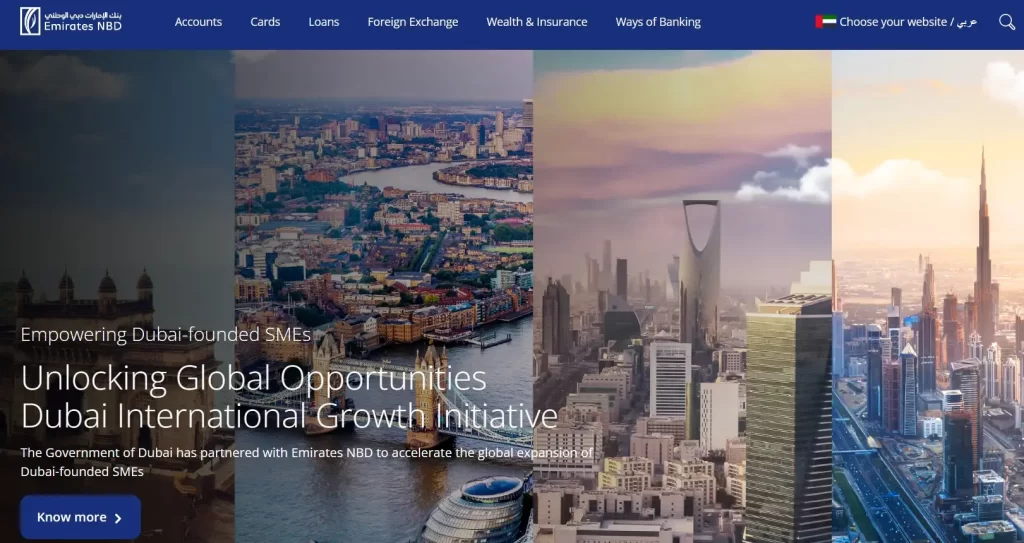
    3. Emirates NBD

    Emirates NBD

    Emirates NBD, a leading bank in the Middle East, specialises in private banking services designed for high-net-worth individuals:

    • Shariah-Compliant Options: Emirates NBD provides Shariah-compliant banking products and services, catering to specific Islamic finance needs.
    • Customised Wealth Management: Tailored solutions include investment advisory, portfolio management, and financial planning to meet individual client objectives.
    • Diverse Investment Opportunities: Access to a wide range of investment products across various asset classes and geographies, ensuring adequate portfolio diversification.
    • Dedicated Relationship Management: Personalised attention from dedicated relationship managers, offering expert advice and support aligned with clients’ financial goals.
    • Estate and Succession Planning: Assistance in estate and succession planning to manage and transfer wealth across generations effectively.
    • Exclusive Banking Solutions: Private banking clients enjoy elite bank accounts, preferential loan rates, and customised financing solutions, along with access to exclusive events, luxury experiences, and premium concierge services.
    • Strong Local and International Presence: With a robust presence in the UAE and an expanding global footprint, Emirates NBD caters to local and global financial needs.

    Emirates NBD’s private banking services blend personalised wealth management with exclusive client benefits, making it the preferred choice for high-net-worth individuals seeking comprehensive financial services and advice in the Middle East.

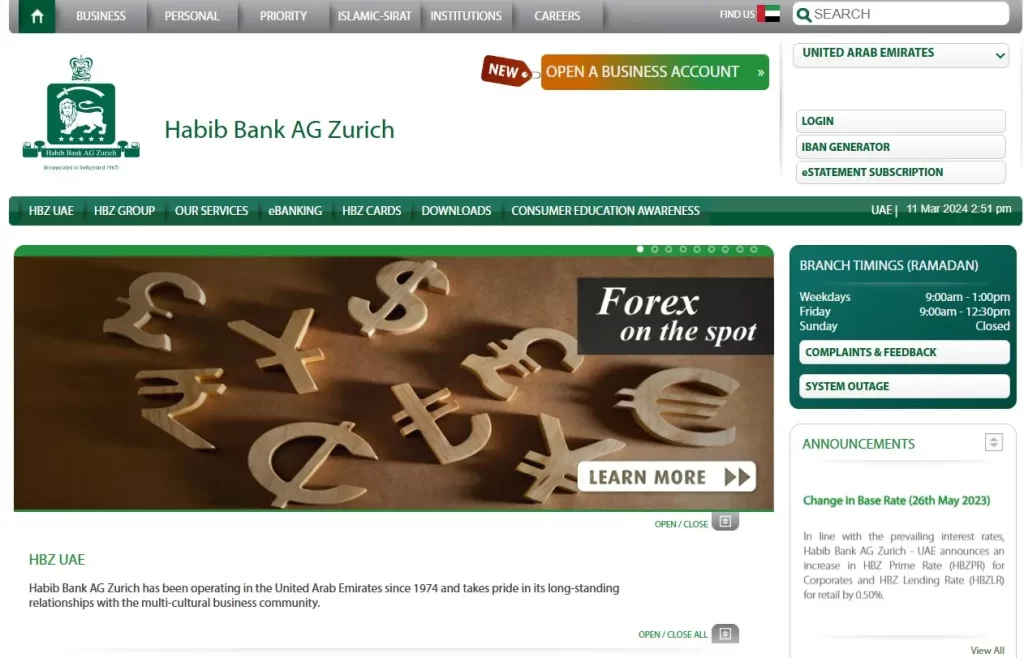
    4. Habib Bank AG Zurich

    Habib Bank AG Zurich

    Habib Bank AG Zurich (HBZ) is a leading international bank in UAE with a diverse range of financial services: 

    • Comprehensive Suite of Services: Offers personal and commercial banking, corporate finance, trade finance, and wealth management, including Islamic banking products.
    • Global Presence: Headquartered in Zurich, operates in key financial centers globally, serving various clients.
    • Tailored Banking Solutions: Robust personal and business banking offerings provide customised solutions to meet customer needs.
    • Digital Innovation: Committed to advanced online and mobile banking services for client convenience and efficiency.
    • Trade Finance Focus: Expertise in trade finance, particularly in regions like the Middle East and Asia.
    • Compliance and Security: Emphasis on regulatory compliance and security for trust and reliability.
    • Community Engagement: Actively involved in community development and social responsibility initiatives.

    HBZ’s approach combines personalised service, innovative solutions, compliance, and community involvement, establishing itself as a trusted global banking partner.

    5. Royal Bank of Canada

    Royal Bank of Canada

    The Royal Bank of Canada (RBC), Canada’s largest bank and a global financial giant, offers a wide array of services:

    • Comprehensive Financial Solutions: Personal and commercial banking, wealth management, insurance, investor services, and global capital market offerings.
    • Global Footprint: RBC serves clients worldwide from its Toronto headquarters, with access to a vast network of ATMs across 30+ countries.
    • Tailored Wealth Management: Renowned expertise in crafting customised solutions for high-net-worth individuals and institutional investors.
    • Cutting-Edge Digital Banking: A pioneer in digital innovations, offering advanced tools for seamless banking and investment management.
    • Community and Environmental Commitment: Prioritising sustainability and community impact while delivering responsible banking practices.
    • Capital Market Leadership: Robust presence in global capital markets, providing corporate and investment banking solutions.

    RBC’s approach combines comprehensive services, innovation, sustainability, and client-centricity, positioning it as a trusted leader in Canada and beyond.

    6. Noor Bank

    Explore the key features of Noor Bank’s Shariah-compliant financial services:

    • Specialised Islamic Banking: Noor Bank offers Shariah-compliant personal and corporate banking solutions, wealth management, and treasury services.
    • Islamic Finance Principles: Dedicated to upholding Islamic finance principles, ensuring compliance with Shariah law and ethics.
    • Personal and Corporate Finance: Provides Islamic mortgages, personal and business finance, and asset-based financing aligned with Islamic finance principles.
    • Tailored Wealth Management: Bespoke services catering to high-net-worth individuals with Shariah-compliant investment options.
    • Wide Client Base: A strong UAE presence serves individuals, large corporations, and SMEs with tailored financial solutions.
    • Global Network: Branches in Abu Dhabi, Sharjah Free Trade Zone, Al Ain, and an international presence in the UK, North Africa, and Saudi Arabia.
    • Digital Banking Innovations: Prioritises digital innovation, offering advanced online and mobile banking platforms for convenience.
    • Community Engagement: Actively engages in community development and corporate social responsibility initiatives, contributing to UAE’s socio-economic development.

    Noor Bank’s approach combines adherence to Islamic banking principles with innovation and customer service, establishing it as a prominent Islamic banking institution in the UAE and beyond.

    7. Dubai Islamic Bank

    Dubai Islamic Bank

    Dubai Islamic Bank (DIB), the inaugural Islamic bank globally and a significant player in the UAE provides an extensive array of Shariah-compliant financial services. Central facets of DIB’s operations encompass:

    • Trailblazing Islamic Banking: As the world’s first Islamic bank, DIB sets standards in Shariah-compliant banking, guided by stringent adherence to Islamic finance laws and ethical standards.
    • Personalised Financial Solutions: From Islamic mortgages to investment banking, DIB offers tailored services for individuals and corporations, ensuring ethical and interest-free banking solutions.
    • Robust Retail Network: DIB’s extensive retail banking network in the UAE caters to a diverse clientele with a suite of Sharia-compliant products and services.
    • Digital Innovation: DIB embraces digital transformation with advanced online and mobile banking services, enhancing accessibility and customer experience.
    • Community Engagement: Actively involved in community development and corporate social responsibility initiatives, contributing to the UAE’s social and economic progress.

    DIB’s commitment to Islamic banking principles, innovative financial solutions, and community service solidifies its position as a leader in Shariah-compliant finance locally and globally.

    8. Standard Chartered Bank

    Standard Chartered Bank

    Standard Chartered Bank, a prominent global banking group with robust operations in Asia, Africa, and the Middle East, provides diverse financial services. Below are some pivotal aspects of its operations and offerings:

    • Global Network with Local Expertise: Operating in multiple countries, with a strong foothold in emerging markets such as the UAE, providing a combination of worldwide accessibility and regional expertise.
    • Strategic Focus on Emerging Markets: Providing specialised services tailored to the unique financial needs of fast-growing and dynamic regions.
    • Innovative Digital Banking Solutions: Recognised for cutting-edge digital platforms, enhancing the banking experience for individual and corporate clients.
    • Tailored Wealth Management: Offering customised financial solutions for high-net-worth individuals and families.
    • Sustainable Finance and Responsible Banking: Supporting projects and initiatives contributing to sustainable economic growth and environmental conservation.
    • Community Engagement and CSR: Actively participating in community development initiatives focusing on education, health, and environmental sustainability.
    • Corporate and Institutional Banking Expertise: Comprehensive services for corporate and institutional clients, including trade finance and risk management solutions.

    Standard Chartered Bank’s commitment to empowering global finance through innovation and sustainability makes it a valuable banking partner worldwide.

    Dubai International Financial Centre (DIFC)

    The DIFC is a crucial financial hub in Dubai, accommodating numerous top International Banks in Dubai like Citibank, Standard Chartered, and Emirates NBD, among others. This internationally acclaimed financial zone provides a distinctive environment with multiple advantages:

    • Hub for Leading Banks: Houses top global banks like Citibank, Standard Chartered, and Emirates NBD, making it a pivotal financial hub.
    • Tax Benefits: Offers a 50-year tax-free guarantee on income and profits, fostering business growth and profitability for international financial institutions.
    • Full Foreign Ownership: Allows banks to have 100% foreign ownership, granting them control over regional operations without local partnership requirements.
    • Strategic Location: Serves as a strategic location for central banks, providing access to a wide range of international banking services and expertise in the Middle East.
    • Regulatory Environment: Governed by the Dubai Financial Services Authority (DFSA) under English common law, ensuring a stable legal framework for international businesses.
    • Gateway to Emerging Markets: Provides access to emerging markets in the Middle East, Africa, and South Asia, facilitating expansion opportunities for banks like Emirates NBD.
    • Robust Infrastructure: Equipped with state-of-the-art infrastructure and business-friendly services, enabling efficient banking operations and client service delivery.

    By establishing themselves in the DIFC, banks leverage these benefits to offer comprehensive services to businesses and individuals locally and globally. The DIFC’s blend of tax efficiency, full foreign ownership, regulatory practices, and strategic location cements its status as a cornerstone of Dubai’s financial landscape and an attractive destination for global banking institutions.

    Choosing the Right International Banks in Dubai for Business

    When selecting the best international banks in Dubai for your business, consider the following factors:

    • Industry-Specific Expertise: Seek a bank with experience in your sector to ensure tailored financial solutions that meet your industry’s unique needs.
    • Reputation in the OFC Market: Evaluate the bank’s reputation, stability, customer service quality, and regulatory compliance within the offshore financial centre market.
    • Competitive Exchange Rates and Fees: Compare exchange rates and fees for international transactions to minimise costs associated with cross-border business activities.
    • Additional Services: Assess the range of supplementary services the bank offers, such as mobile banking, trade finance solutions, and asset management, to enhance your business operations.
    • Ease of Doing Business: Consider account opening procedures, digital banking services, and dedicated customer support to ensure a seamless banking experience.
    • Network and Global Reach: Look for a bank with a robust global network to facilitate international transactions and access a wide range of financial services essential for businesses with international reach.

    By carefully evaluating these factors, you can choose an international bank in Dubai that effectively aligns with your business objectives and supports your growth strategies.

    Is a Bank Account Necessary for a Dubai Visa?

    When applying for a business visa in Dubai, having a bank account in the United Arab Emirates is crucial, although not directly mandated for the visa application itself. It’s essential in setting up and registering your business in the UAE

    The company registration process in Dubai typically involves: 

    1. Determining the legal entity type for your Dubai business.
    2. Choosing a trade name.
    3. Applying for a business license.
    4. Securing office space through rental or purchase.
    5. Obtaining necessary pre-approvals.
    6. Officially registering your business.

    While opening a local bank account isn’t explicitly listed as a step, it’s implicitly required since you’ll need to manage your UAE business’s finances. Moreover, you can open an account with offshore banks, offering flexibility and potential tax advantages for companies seeking to optimise financial management within legal frameworks. 

    Guide to Opening a Bank Account in Dubai

    Below are the points which will help you to open a Bank Account in Dubai:

    • Physical Presence: Schedule an appointment with your chosen bank and plan a visit to the UAE, as most banks require your physical presence for account opening.
    • Required Documentation: Prepare essential documents, including your passport, address, and income proof. Banks will conduct a credit check and identity verification during the appointment.
    • Selecting the Right Account Type: Choose from various offshore banking options based on your needs. Options include offshore trusts or foundations for tax advantages and numbered accounts for anonymity.
    • Getting Started: Reach out to a bank in Dubai to arrange an appointment and ensure all necessary paperwork is ready for a smooth process.
    • Ease of Setup: With adequate preparation and the necessary documents, setting up an account in Dubai can be simple and effective.

    Remember to consult with a business solutions specialist or financial advisor for the best choice tailored to your financial needs. With careful planning, your offshore bank account in Dubai can be operational quickly.

    Benefits & Pitfalls of Offshore Banking:

    Here are the benefits of Offshore Banking, along with the associated drawbacks: 

    Advantages:

    • Offshore financial centres offer favourable tax regimes and confidentiality protections, reducing taxable income and protecting privacy.
    • Offshore banks often provide higher interest rates due to less regulation and competition, benefiting savers.
    • Different legalities and regulations can make obtaining loans and structuring transactions easier, minimising taxes for account holders.
    • Access to a broader range of investment options, including foreign currencies and stocks, helps diversify portfolios and hedge against risks.

    Pitfalls:

    • Offshore banks have faced scrutiny for facilitating tax evasion and money laundering.
    • They are subject to different regulations than banks in developed countries, making them riskier investments.

    Considerations:

    • Evaluate the risks and benefits of offshore banking before deciding.
    • While they offer advantages, offshore banks require careful consideration, particularly for high-net-worth individuals.

    Open Your Bank Account in Dubai

    Exploring Dubai’s banking scene, featuring prominent institutions like HSBC, Citibank, Emirates NBD, and Standard Chartered, highlights the city’s stature as a premier financial centre. The Dubai International Financial Centre (DIFC) stands out for its tax advantages and global banking presence, providing substantial benefits for businesses and individuals.

    If you seek assistance in selecting the ideal bank in Dubai, feel free to reach out and schedule a consultation. Shuraa Business Setup, Dubai’s leading business setup expert, caters to entrepreneurs and skilled professionals throughout the United Arab Emirates. We offer comprehensive business setup and bank account opening services.

    Contact us at +971 4 4081900, WhatsApp at +971 50 7775554, or email info@shuraa.com for expert guidance.

    Disclaimer: The information in this post is for general guidance only and may change due to updates in government policies or regulations.

  • How Do I Register and Apply for a Dubai Customs Code?

    How Do I Register and Apply for a Dubai Customs Code?

    Dubai stands as a modern global business hub, welcoming foreign investors and enterprises with open arms. Situated within the United Arab Emirates (UAE), this city-state offers abundant business opportunities. However, akin to any nation, Dubai enforces specific regulations for business operations. Therefore, the need for Dubai Import Code becomes crucial.

    To operate a business in Dubai, one essential requirement is obtaining an Import Code Dubai, also known as a Dubai Customs Code. In this blog, crafted by Shuraa Business Setup, we delve into the significance of having an Import Code Dubai and highlight its indispensability. Additionally, we outline the step-by-step procedural requirements for acquiring this code.

    What is an Import Code Dubai?

    For businesses aiming to import goods into Dubai, having an import code is crucial. The approval process for this code is managed by Dubai Customs, which meticulously reviews applications from interested enterprises. Possessing this Dubai Customs code ensures a smooth and legal clearance process for imported goods through customs.

    The UAE is widely recognized as a premier global business hub by investors and businesses worldwide. This reputation is attributed to its transparent and straightforward taxation policies, robust infrastructure, and advantageous geographical positioning. Additionally, the UAE government consistently introduces initiatives to enhance business activities, particularly through the establishment of free zones.

    Who Is Eligible to Apply for an Import Code?

    A valid trade license is fundamental for applying for and acquiring an import code in Dubai. To be eligible for a customs code application, you must possess one of the following types of trade licenses:

    Applicants may also utilise a governmental notification to apply for an import code Dubai in certain exceptional circumstances.

    If you currently lack a trade license, it is imperative to obtain one before initiating the import code application process. You can swiftly acquire your trade license by submitting the requisite documents and fees through the Dubai Economy & Tourism Department (DED) website.

    What’s the Purpose of a Dubai Customs Code?

    Dubai Customs rigorously adheres to the regulations outlined in the Gulf Cooperation Council (GCC) Customs Tariff Codes and policies. The customs authorities in Dubai and the UAE remain vigilant in enforcing import regulations and preventing the importation of prohibited goods.

    A Dubai customs code serves as a specialised import license for your business. This code enables authorities to track your business’s imports, oversee your compliance with customs regulations, and verify the accurate payment of import duties.

    Benefits of Obtaining Dubai Import Code

    Below are the advantages of obtaining an import code in Dubai:

    • Compliance with Legal Requirements: Acquiring an import code in Dubai is imperative to fulfil legal obligations. While the UAE government welcomes businesses and foreign investors, adherence to regulations is strictly enforced, making possessing an import code essential for compliance.
    • Mitigation of Customs Penalties: Possessing a valid import code in Dubai reduces the risk of facing costly customs penalties. This code is evidence of legal importation practices, ensuring smooth transactions within the customs framework.
    • Streamlined Customs Clearance:  A valid import code in Dubai expedites customs clearance, which can otherwise be time-consuming and intricate. With this code, the customs authority efficiently processes imported goods, eliminating the need for separate approvals and saving valuable time and resources.
    • Enhanced Supply Chain Management: Utilising a Dubai customs code enables efficient tracking of imported goods through customs, thereby enhancing overall supply chain management capabilities.
    • Access to Dubai’s Free Zones: Access to Dubai’s Free Zones, offering various benefits such as foreign ownership, tax exemptions, and profit transfer flexibility, requires an import code Dubai. This code is a prerequisite for establishing businesses within these economic zones and availing their advantages.

    Understanding the significance of possessing a valid Dubai customs code, let’s explore the process of obtaining one upon establishing a new import-export business in Dubai.

    Step-by-Step Guide to Obtain Your Import Code

    Initiating your application for an Import Code in Dubai with Dubai Customs is a straightforward process through the eService portal. You can anticipate approval within one business day, assuming all documents are in order. Here’s a breakdown of the procedure to obtain your Dubai Customs code. It’s noteworthy that the process is similar to the renewal of the Dubai Customs code, a topic we’ll also cover. 

    Step 1: Gather Required Documents for Applying for an Import Code Dubai

    Ensure you have all necessary documents before applying for your customs code to prevent procedural delays. Here’s what you’ll need:

    • Valid Copy of Trade or Commercial License: Obtain a valid copy of your trade or commercial license from the Dubai Economy & Tourism Department (DED).
    • Copy of Valid Passport: Provide a copy of your valid passport. If your business has multiple partners, include copies of their passports.
    • Emirates Post License (Optional): If you wish to receive documents via courier service, include a copy of your Emirates Post License.

    Note:

    • Submitting passport copies is mandatory for new import code Dubai applications. 
    • For Dubai customs code renewal, passport copies are not required. However, ensure you have valid copies of your trade and Emirates Post licenses. 

    Step 2: Application Fees for Your Import Code

    When submitting your application for a Dubai Customs code, it’s crucial to be aware of the following fees:

    New Application:

    • Total Fee: AED 120
    • Application Fee: AED 100
    • Knowledge and Innovation Fees: AED 20

    Dubai Customs Code Renewal:

    • Fee: AED 25

    Step 3: Applying Online

    Access the online service portal of Dubai Customs through the Dubai Trade website. Head to the Service section of the website and select “New Business Registration” under the Dubai Customs tab.

    Here, you’ll discover the prerequisites and cost details for applying for your Import Code Dubai.

    Upon receiving your unique customs code, it remains valid for 60 days (about 2 months). Therefore, renewing it within this period is crucial to ensure its continued functionality.

    To register your business with the Dubai Customs portal, ensure you provide the following details:

    Business Information:

    • Business name in English and Arabic (optional)
    • Select “Dubai-based company” from the registration category drop-down menu
    • Specify the number of employees by selecting a range

    License Details:

    • License number and type
    • Issuing authority
    • Issue date and validity period

    Business Contact Details:

    • Phone and fax numbers (mandatory fields)
    • Email address
    • Business website and NOC for the applicant applying for the customs code.

    After entering all the required information, you can save your application as a draft for later completion or proceed to the next step. The system will prompt you to upload relevant documents. Once uploaded, click “Next” to proceed to the payment page and submit your application.

    Step 4: Monitoring Your Application

    Once you’ve submitted your application, expect approval within one business day if all documents are in order. Subsequently, you can utilise the same portal for renewals or amendments.

    Furthermore, if you have any inquiries regarding your application or the process itself, you can submit them through the portal. Each query will be assigned a Request ID, enabling you to track its status at your convenience.

    How to Renew Your Dubai Customs Business Code

    Before initiating the Business Code Renewal process, ensure your contact details are up-to-date and verified through the e-Service “Manage Contact Details.”

    Follow these steps for the renewal of your Dubai Customs Business Code:

    • Visit www.dubaitrade.ae.
    • Navigate to the Service Centre and select Dubai Customs > Registration Tools > Renew Business Code.
    • Enter the Business Code and the system-generated captcha, then click OK.
    • Adjust the expiry date to align with your trade license validity and set the renewal date as the current date.
    • Upload copies of your trade license and passport.
    • Save the changes by entering the system-generated captcha and submit the renewal request for approval.

    Prohibited Items in Dubai: Regulations and Approval Requirements

    Here are the regulations and approval requirements:

    • The International Trade Administration of Dubai enforces restrictions on certain items for import or export.
    • Prohibited items are not covered by your import code Dubai.
    • Approval from specific regulatory bodies is necessary before trading these items.

    Examples of prohibited items include:

    • Agro products like plants, live animals, and fertilisers require additional permission from the Ministry of Climate Change and Environment.
    • Pharmaceutical or medical products need approval from the Ministry of Health & Prevention.
    • Telecommunication and wireless communication equipment necessitate approval from the Telecommunications Regulatory Authority.
    • Alcoholic beverages, demanding permission from Dubai Police.
    • Processed food and personal hygiene products mandate prior approval from Dubai Municipality. Additionally, obtaining approval for these items may involve submitting a product sample and paying for a lab test.

    Streamlining Procedures with Expert Guidance

    Acquiring an import code in Dubai is essential for legally importing goods into Dubai or the UAE for your trading or commercial activities. Fortunately, the process of obtaining or renewing a Dubai Customs code is streamlined when all necessary documents are prepared for your export-import business in Dubai.

    Leveraging investor-friendly economic policies and robust infrastructure support, the UAE emerges as an appealing destination for trading businesses. Not sure where to start? Obtain professional assistance from Shuraa Business Setup today. Contact us at +971 4 4081900, reach out via WhatsApp at +971 50 7775554, or email us at info@shuraa.com for comprehensive support in launching your business ventures in Dubai.

    Frequently Asked Questions (FAQs)

    1. What is the purpose of the Dubai Customs Code?

    The Dubai Customs Code ensures compliance with regulations set forth by the Gulf Cooperation Council (GCC) Customs Tariff Codes and policies. It facilitates legal importation while preventing the entry of prohibited goods.

    2. What are the advantages of obtaining an Import Code Dubai?

    Acquiring an Import Code Dubai ensures compliance with legal requirements, mitigates customs penalties, expedites customs clearance, enhances supply chain management, and provides access to Dubai’s Free Zones.

    3. How can I apply for an Import Code Dubai?

    You can initiate your application online through the Dubai Customs portal, ensuring all required documents are prepared and fees are paid.

    4. How do I renew my Dubai Customs Business Code?

    To renew your Dubai Customs Business Code, update and verify your contact details, then follow the renewal process outlined on www.dubaitrade.ae, ensuring compliance with your trade license validity.

    Disclaimer: The information in this post is for general guidance only and may change due to updates in government policies or regulations.

  • How to Open a Typing Center in Dubai 2026

    How to Open a Typing Center in Dubai 2026

    Dubai’s position as a global hub drives ongoing demand for essential business services. This environment presents a strong opportunity to open a successful typing centre.

    Typing centres connect Dubai’s diverse population with government digital systems, processing visas, IDs, license renewals, and legal documents. This business meets ongoing demand in a rapidly growing city.

    Starting requires navigating Dubai’s licensing requirements, selecting a suitable location, and establishing efficient operations, all of which can be complex.

    This guide outlines the entire process:

    • The Strategic Advantage: Why a typing centre is a resilient and lucrative business model in the UAE.
    • Step-by-Step Setup: From mandatory GDRFA registration and securing a Local Service Agent to finalising your commercial license.
    • Operational Mastery: How to recruit certified typists, choose the perfect location, and implement marketing that attracts clients from day one.

    With 26 years of experience and over 100,000 business setups in the UAE, Shuraa Business Setup has developed this guide to help you establish a compliant and profitable business.

    Read on to learn how to turn this opportunity into your next business success.

    Key Benefits of Opening a Typing Centre in Dubai

    A typing centre in Dubai is a high-demand, essential service that benefits from the city’s unique business environment.

    1. Recession-Resistant & Essential Service Demand

    Typing centres offer essential services for new residents, employees, business visitors, and companies, including government transactions such as visas, IDs, licenses, and attestations. This ensures a steady customer base that is less affected by economic changes.

    2. Recurring Revenue Streams

    Clients return for renewals, amendments, and new applications. Developing a portfolio of corporate clients through PRO services ensures consistent monthly revenue.

    3. Low Operational Overhead with High-Value Services

    Overhead costs are lower than in retail or F&B, with certified staff and a strategic location as primary assets. Standardised service fees for government transactions support strong profit margins.

    4. Gateway to a Broader Business Services Hub

    A typing centre provides an effective foundation for expanding into related high-demand services, such as PRO services, document clearing, attestation, legal translation, and corporate secretarial services. This expansion can significantly increase your average transaction value.

    5. Direct Benefit from Dubai’s Growth & Policy

    • Population Growth: Every new resident is a potential customer for visa and ID services.
    • Business Influx: Each new company setup requires trade license processing and employee visa services, providing direct business opportunities.
    • Government Digitisation: Although many processes are online, the demand for expert assistance in navigating systems such as GDRFA’s Tasheel continues to grow.

    6. Strategic Positioning in the Community

    A well-located centre becomes a trusted community hub, fostering long-term relationships with individuals and businesses. This leads to loyalty and valuable word-of-mouth referrals within the expatriate community.

    In summary, a typing centre leverages Dubai’s administrative framework and demographic growth to establish a stable, scalable, and profitable business with clear opportunities for expansion.

    Legal Requirements for Opening a Typing Centre in Dubai

    The Dubai Department of Economy and Tourism (DET), specifically the Commercial Registration & Licensing Sector, is the primary authority. All typing centres must also be registered with the General Directorate of Residency and Foreigners Affairs (GDRFA).

    Required Documents for Opening a Typing Centre in Dubai

    To open your typing centre in Dubai, please prepare and organise the following documents:

    A. Company Formation & Legal Documents

    1. Application Forms: DET initial application and license application forms.
    2. Trade Name Reservation Certificate: Issued by DET for a name that includes “Typing Centre.”
    3. Passport Copies: For all proposed partners or owners.
    4. Visa Copies: UAE residence visa copies, if applicable.
    5. Local Service Agent (LSA) Agreement: Notarised contract with the required UAE national partner (51% shareholder).
    6. Memorandum of Association (MoA): Notarised company formation document.
    7. Tenancy Contract: Commercial office lease registered with Ejari.

    B. Personnel & Security Documents

    1. Typist Credentials (for each typist):
      • Passport and visa copies.
      • GDRFA Typist Certificate/Approval (post-exam).
      • Police Good Conduct Certificate: Issued by the home country or the UAE police.
    2. Dubai Police No Objection Certificates (NOCs):
      • One for the business activity.
      • Separate NOCs for each employee and typist.

    C. Premises & Technical Documents

    1. Ejari Certificate: Proof of tenancy contract registration with the Dubai Land Department.
    2. Office Layout Plan: Detailed floor plan submitted to DET.
    3. Technical Compliance Proof: Documentation confirming hardware and software compatibility with the GDRFA Tasheel system.

    D. Government Approvals & Licenses

    1. DET Initial Approval Certificate.
    2. GDRFA Registration Application with typist details.
    3. Final Licenses to Obtain:

    Contact us today for a free, no-obligation consultation. We will help you organise your documents and secure your license approval.

    8 Critical Steps to Open a Typing Centre in Dubai

    Opening a typing centre requires compliance with government regulations. Adhering to each step below will help ensure a successful setup.

    Begin by partnering with a UAE National who will hold a 51% ownership stake as your Local Service Agent. Prepare a notarised LSA Agreement that clearly defines roles and profit sharing. This legal requirement is mandatory.

    • Submit your initial application to the Department of Economy and Tourism (DET).
    • Reserve a trade name ending with “Typing Centre” or “Business Services Centre” for DET approval.

    Secure a physical commercial office, as virtual offices are not permitted. Obtain an Ejari (tenancy contract) registered with Dubai Municipality. Choose a location that is easily accessible and has high foot traffic, such as near residential complexes or business districts.

    • Recruit typists and ensure they pass the required GDRFA certification exam.
    • Obtain Police Good Conduct Certificates and Dubai Police NOCs for all employees.
    • Operation is not permitted without GDRFA-certified staff.

    • Dubai Police NOC: Apply for the business activity clearance.
    • GDRFA Registration: Register your centre and each certified typist with the General Directorate of Residency and Foreigners Affairs to be integrated into the “Tasheel” system.
    • DET License Application: Submit all required documents (LSA agreement, MoA, Ejari, staff certificates, and approvals) to DET to obtain the Commercial License.

    Expand your services beyond basic typing by offering:

    • Core: Visa processing, renewal, cancellation.
    • Extended: PRO services, document attestation, translation, Emirates ID assistance, and court paperwork.
    • Corporate: Dedicated account management for business clients.

    • Install software and hardware that comply with GDRFA standards.
    • Set up a secure document management system.
    • Develop standard operating procedures (SOPs) for each service to maintain accuracy and compliance.

    • Claim and optimise your Google Business Profile as soon as possible.
    • Utilise hyper-local marketing channels, such as community Facebook groups and local directories.
    • Network with business consultants, freelancers, and small businesses to generate B2B referrals.

    Final Note: This is a compliance-intensive business. Partnering with experts such as Shuraa Business Setup can streamline the process from securing your LSA to completing GDRFA registration, ensuring a smooth and error-free launch.

    Costs of Opening a Typing Centre in Dubai

    The cost of obtaining a typing centre license in Dubai varies. The initial trade license fee typically ranges from AED 10,000 to AED 18,000. Total setup costs, including rent, technology, and approvals, can reach AED 50,000 to AED 150,000 or more, depending on location and services offered. Major expenses include the DET license, office rent (Ejari), government approvals (such as GDRFA), smart portal access (Amer, Tasheel), and equipment.

    Key Cost Factors

    • Trade License: Primary expense from DET, approximately AED 10,000 to AED 18,000.
    • Location: Mainland locations are generally more expensive than free zones.
    • Office Space: Rent and Ejari contribute significant annual costs, typically AED 20,000 to AED 50,000 or more.
    • Government Approvals: Special approvals from GDRFA and MOHRE, along with related fees.
    • Technology: Costs for smart portal access (Amer, Tasheel) and software fees.
    • Staff: Salaries for experienced typists and PROs.

    Breakdown of Costs (Estimates)

    • Trade License: AED 10,000 – AED 18,000
    • Office Rent & Ejari: AED 20,000 – AED 50,000 (Annual)
    • Govt Fees/Approvals: AED 5,000 – AED 8,000+
    • Software/Portals: AED 5,000 – AED 10,000
    • Equipment/Setup: AED 10,000 – AED 30,000
    1. Initial Setup Total: AED 50,000 to AED 150,000 or more, depending on specific requirements.
    2. Annual Renewal Costs: Typically, AED 6,000 to AED 15,000 or more for renewals (DET and related fees).

    Typing Centre License Cost in Sharjah

    Opening a typing centre in Sharjah involves several costs. These include initial trade license fees, which may range from AED 1,000 to AED 5,000 for a basic license; a mandatory AED 6,000 fee for ICP Smart Services (AED 1,000 subscription and AED 5,000 deposit); and operational expenses such as office rent, setup, and staff salaries.

    Costs vary depending on location (mainland or free zone, such as SHAMS) and the services provided. For precise figures, consult the Sharjah Economic Development Department (SEDD) or a qualified service provider.

    Note: All costs are reference only.

    Pro Tip: Consult a business setup expert, such as Shuraa, for accurate and up-to-date cost estimates tailored to your business plan and preferred location.

    Staffing and Operational Strategies for a Dubai Typing Centre

    1. Strategic Recruitment & Team Assembly

    Prioritise hiring GDRFA-certified typists to meet legal requirements. In addition to certification, seek candidates with the following qualifications:

    • Technical Proficiency: Candidates should demonstrate speed, accuracy, and expertise in using government portals such as Tasheel, Dubai Police, and RTA.
    • Cultural and Linguistic Agility: Fluency in Arabic and English is essential. Proficiency in additional languages such as Urdu, Hindi, Tagalog, or Russian is highly valued to serve Dubai’s diverse population.
    • Customer Service Skills: Select individuals who demonstrate patience, clear communication, and professionalism when handling sensitive documents and assisting clients.

    2. Continuous, Government-Focused Training

    Initial GDRFA certification is only the beginning. Establish a recurring training program that includes the following areas:

    • Procedure Updates: Conduct weekly briefings on changes to visa regulations, government fees, and document requirements.
    • Soft Skills: Provide training in managing challenging customer interactions, cross-cultural communication, and setting client expectations.
    • Advanced Services: Offer training for processing specialised transactions such as court attestations, license renewals, and PRO services to expand service offerings.

    3. Rigorous Operational Protocols

    Standardise all client interactions to maintain efficiency and ensure compliance.

    • Document Checklists: Develop clear, step-by-step checklists for each service type, such as new visas, renewals, and cancellations, to minimise errors.
    • Digital File Management: Implement a secure and organised system to track client documents and monitor transaction statuses.
    • Double-Verification Protocol: Require all applications to be reviewed by a second typist before submission to prevent errors.

    4. Exceptional, Culturally-Tuned Customer Service

    In a trust-based service environment, customer experience is the primary differentiator.

    • Clarity and Transparency: Offer clear price lists and explain all steps and fees to clients in advance.
    • Proactive Communication: Use SMS or WhatsApp to update clients on application status, reducing incoming inquiries.
    • Premium Service for Corporations: Provide dedicated account managers and offer pickup and delivery services for business clients, including PRO services.

    5. Digital Presence & Local Marketing

    • Google Business Profile (GBP): Fully optimise your profile with services, operating hours, photos, and active review management. This is the primary source for local lead generation.
    • Hyper-Local SEO and Content: Target keywords such as “Typing Centre near Deira,” “Visa Renewal Dubai,” and “GDRFA Services.” Develop straightforward blog guides, for example, “Step-by-Step Guide to Renewing a Residence Visa.”
    • Targeted Social Media: Use Facebook and Instagram for targeted advertisements in specific residential and commercial areas, and to highlight client testimonials.

    6. Strategic Networking & Partnerships

    • B2B Focus: Network with small business owners, startup hubs, and freelancers who require regular PRO or typing support. Offer tailored corporate packages.
    • Complementary Partnerships: Establish referral agreements with neighbouring businesses such as travel agencies, courier services, and printing shops.
    • Community Integration: Sponsor local events or provide free informational workshops to build brand trust.

    7. Competitive Positioning: Beyond Price

    While competitive pricing is important, focus on delivering value rather than competing solely on cost.

    • Service Guarantee: Emphasise accuracy, speed, and a seamless service experience.
    • Extended Hours: Consider operating beyond standard government hours, such as evenings or weekends, to better accommodate clients.
    • Loyalty Programs: Introduce discounts or priority services for returning customers.

    Start Your Typing Centre Venture with Confidence

    Starting a typing centre in Dubai involves more than launching a business. It requires integration into the city’s dynamic ecosystem and becoming a key service provider for its diverse community. By understanding regulations, choosing a strategic location, and delivering exceptional, reliable service, your venture will be well-positioned for success.

    In this competitive market, your success will depend on attention to detail, a customer-centric approach, and the ability to adapt to Dubai’s rapidly changing environment.

    Consider seeking expert guidance throughout this process.

    Establishing a typing centre requires careful attention to legal, governmental, and operational procedures. Working with experienced professionals can simplify and streamline this process.

    With over 26 years of experience and more than 100,000 successful business setups across the UAE, we have the local expertise to guide your typing centre from concept to grand opening and beyond.

    We look forward to supporting your venture.
    Shuraa Business Setup is ready to provide clarity on licensing, costs, and every critical step.

    Contact us today for a comprehensive consultation and take your first step toward success in Dubai.

    Frequently Asked Questions (FAQs)

    1. What is the main license required to open a typing centre in Dubai?

    To operate legally, you must obtain a Commercial License from the Dubai Department of Economy and Tourism (DET) and register with the General Directorate of Residency and Foreigners Affairs (GDRFA). GDRFA registration authorises you to process official visa and residency transactions.

    2. Do I need a UAE partner to open a typing centre?

    Yes, this is mandatory. The typing centre must be established as a local company with a UAE National serving as the Local Service Agent (LSA), holding at least 51% of the shares. A notarised legal agreement is required for this partnership.

    3. What are the requirements for typists in a Dubai typing centre?

    All typists must be certified by the GDRFA, pass a specialised exam, obtain a Police Good Conduct Certificate, and secure individual No Objection Certificates (NOCs) from Dubai Police. The owner or manager is often required to be certified as well.

    4. How much does it cost to set up a typing centre in Dubai?

    Setup costs typically range from AED 50,000 to AED 150,000 or more. This includes licensing fees, office rent (Ejari), security deposits, GDRFA system setup, salaries for certified staff, and initial marketing. A detailed business plan is essential for accurate budgeting.

    5. Can a typing centre operate from a home or virtual office?

    No. Dubai authorities require a physical commercial office in an approved location. A registered tenancy contract (Ejari) is mandatory for licensing. Virtual offices and home setups are not permitted.

    6. What other services can a typing centre offer?

    In addition to document typing, many centres offer PRO (Public Relations Officer) services, document attestation and legalisation, translation, Emirates ID registration, and corporate license renewal. Diversifying services can significantly increase revenue.

    7. How long does it take to get a typing centre license in Dubai?

    With all documents prepared, the process usually takes 4 to 8 weeks. The timeline depends on the speed of approvals from DET, GDRFA, and Dubai Police, as well as staff certification. Engaging a professional business setup consultant can help streamline the process.

    Disclaimer: This information is for general guidance only. Licensing rules are subject to change. We strongly recommend consulting with the relevant authorities (DET, GDRFA) or a licensed business setup consultant for the most up-to-date and accurate advice tailored to your specific case.

  • Top Visa-Free Countries for UAE Residents in 2026

    Top Visa-Free Countries for UAE Residents in 2026

    As a UAE resident, your gateway to the world is wider than you think. And while your passport nationality is the primary key, your UAE residency unlocks dozens of additional doors. Imagine spontaneous weekends in Baku, beach holidays in the Maldives, or cultural tours of Serbia—all without the tedious visa process. This is the reality afforded by your status as a UAE resident.

    This comprehensive guide is your passport to planning easier, more flexible travel in 2026. We’ve compiled the definitive list of visa-free countries for UAE residents, with crucial details on stay duration, entry requirements, and how to make the most of your travel freedom.

    What Does “Visa-Free” Really Mean for UAE Residents?

    Visa-free travel means you can enter a country without obtaining a visa in advance. However, it does not mean there are no entry requirements. You must always meet the following conditions:

    • Valid Passport: Typically valid for at least 6 months from your date of entry.
    • Emirates ID: Your valid residency proof is essential.
    • Proof of Onward/Return Travel: A flight ticket showing you intend to leave.
    • Proof of Accommodation: Hotel bookings or a host’s invitation.
    • Sufficient Funds: Evidence you can financially support your stay.

    Why This is a Game-Changer for Travelers

    • Spontaneous Travel: Book last-minute deals and weekend getaways without visa delays.
    • Significant Cost Savings: Eliminate visa application fees.
    • Simplified Business Trips: Attend meetings and conferences across the globe with ease.
    • Expanded Horizons: Easily explore new cultures and destinations.

    Visa-Free vs. Visa-On-Arrival: Understanding the Difference

    Many travelers confuse these terms. Understanding the distinction is crucial for hassle-free travel.

    • Visa-Free: Walk directly to passport control.
    • Visa-On-Arrival: Queue at a separate counter before passport control.
    • eVisa: Get pre-approval online before you travel.

    Always carry your Emirates ID to prove residency for VOA eligibility.

    List of Visa-Free Countries for UAE Residents in 2026

    Here is our curated list of top visa-free destinations, categorized for easy planning. Always double-check with the embassy before travel, as policies can change.

    Top Visa-Free Destinations in Asia

    CountryStay DurationKey Highlights
    Maldives90 DaysOverwater villas, pristine reefs, ultimate relaxation
    Thailand30 DaysBustling cities, stunning islands, world-famous cuisine
    Malaysia90 DaysModern KL, historic Malacca, lush highlands
    Indonesia30 DaysBali’s beaches, ancient temples, vibrant culture
    Sri LankaETA RequiredTea plantations, ancient ruins, wildlife safaris
    Azerbaijan30 DaysFuturistic Baku, medieval old city, the Fire Mountains of Gobustan
    Kazakhstan30 DaysVast steppes, modern architecture, unique landscapes
    Turkey90 DaysContinental bridge, Istanbul bazaars, Cappadocia landscapes

    Top Visa-Free Destinations in Europe & Caucasus

    CountryStay DurationKey Highlights
    GeorgiaUp to 1 YearCaucasus Mountains, Tbilisi old town, renowned hospitality
    Armenia180 DaysAncient monasteries, Mount Ararat views, rich culture
    Serbia90 DaysVibrant Belgrade, historic sites, beautiful national parks
    Albania90 DaysAlbanian Riviera beaches, historic castles, hidden gem
    Bosnia & Herzegovina90 DaysCharming Sarajevo, stunning Stari Most bridge

    Visa-on-Arrival Countries for UAE Residents

    While not truly visa-free, these countries offer quick visa issuance upon landing:

    CountryStay DurationCost (Approx.)Requirements
    Kenya90 days$50Passport, return ticket, hotel booking
    Tanzania90 days$50Yellow fever certificate, sufficient funds
    Zambia90 days$50Business/tourism purpose, return ticket
    Bangladesh30 days$51Available at international airports

    Read More: Visa-on-Arrival Countries for UAE Residents

    Easy eVisa Countries for UAE Residents

    These countries offer simplified online visa applications:

    • Australia (Electronic Travel Authority)
    • Sri Lanka (ETA – Electronic Travel Authorization)
    • Azerbaijan (Simplified e-visa process)
    • Turkey (Quick online application)
    • Cambodia (Tourist e-visa available)

    Comprehensive Regional Lists

    Visa-Free European Countries for UAE Residents

    Albania, Armenia, Azerbaijan, Belarus, Bosnia and Herzegovina, Georgia, Moldova, Montenegro, North Macedonia, Russia, Serbia, Ukraine, United Kingdom, Vatican City.

    Note: The Schengen Area (e.g., France, Germany, Italy, Spain) generally requires a visa for UAE residents, though applications may be streamlined for some nationalities.

    Visa-Free Asian Countries for UAE Residents

    Cambodia, East Timor, Hong Kong, Indonesia, Japan, Kazakhstan, Kuwait, Kyrgyzstan, Laos, Macau, Malaysia, Maldives, Mongolia, Myanmar, Nepal, Oman, Philippines, Qatar, Saudi Arabia (restrictions apply), Singapore, South Korea, Sri Lanka (ETA), Thailand, Uzbekistan, Vietnam.

    Visa-Free American Countries for UAE Residents

    Antigua and Barbuda, Argentina, Bahamas, Barbados, Belize, Bolivia, Brazil, Chile, Colombia, Costa Rica, Dominica, Ecuador, El Salvador, Grenada, Guatemala, Haiti, Honduras, Jamaica, Mexico, Paraguay, Peru, Saint Kitts and Nevis, Saint Lucia, Saint Vincent and the Grenadines, Suriname, Trinidad and Tobago, Uruguay.

    Visa-Free Travel Based on Your Passport Nationality

    A critical point many residents miss is that your passport nationality often determines visa-free access, not just your UAE residency.

    Visa-Free Countries for UAE Residents with Indian Passport

    Your UAE residency unlocks destinations not visa-free for Indian passport holders in India:

    CountryStay DurationSpecial Notes
    Serbia90 daysDirect access with UAE residency
    Mauritius90 daysVisa-free stamp on arrival
    Seychelles30 daysRequires Visitor’s Permit on arrival (free)
    Jordan90 daysRich history, Petra, Dead Sea
    Oman14 daysLand entry possible with Emirates ID

    Visa-Free Countries for UAE Residents with Pakistani Passport

    Pakistani passport holders with UAE residency can enjoy:

    CountryStay DurationSpecial Notes
    Qatar30 daysModern architecture, desert safaris
    Sri Lanka30 daysETA required before travel
    Maldives30 daysLuxury resorts, crystal waters
    Rwanda30 daysWildlife safaris, mountain gorillas
    Dominica180 daysNature island, extended stay

    Essential Documents Checklist for Visa-Free Travel

    Before traveling to any visa-free country, ensure you have:

    1. Valid Passport – 6+ months validity with 2-4 blank pages
    2. Emirates ID – Physical, valid ID (mandatory for return)
    3. Return/Onward Ticket – Confirmed booking out of the country
    4. Accommodation Proof – Hotel confirmations or host letter
    5. Sufficient Funds – Recent bank statements/credit cards
    6. Travel Insurance – Highly recommended for all travel
    7. Vaccination Certificates – If required (e.g., Yellow Fever)

    Is ICA Approval required? No, the mandatory ICA/GDRFA approval was lifted post-pandemic.

    Recent Updates & Changes for 2026

    Visa policies are dynamic. To maintain your edge as a well-informed traveller, here are the key confirmed and significant updates for 2026 that affect UAE residents:

    • Extended Stays in Kazakhstan: Effective from late 2024, the visa-free period for UAE residents visiting Kazakhstan has been doubled from 15 days to 30 days, making it a more viable option for extended exploration.
    • Saudi Arabia’s Streamlined Tourism: Saudi Arabia has significantly simplified its tourist eVisa process, with faster approvals and a more user-friendly online portal, further easing travel for UAE residents.
    • Sri Lanka’s ETA Enhancements: To boost tourism, Sri Lanka has improved its Electronic Travel Authorization (ETA) system, reducing processing times for the mandatory pre-travel authorization.
    • Schengen Digitalization: The European Union is rolling out the Entry/Exit System (EES) and the European Travel Information and Authorisation System (ETIAS). While not a visa, ETIAS will soon be a mandatory pre-travel authorization for visa-free nationals to the Schengen Area. UAE residents who are passport holders of visa-free countries (e.g., the UK, Canada) should monitor ETIAS implementation dates closely.
    • Health Protocols Normalized: Most post-pandemic health requirements, such as PCR tests and vaccine certificates, have been lifted for the destinations on this list, returning travel to pre-2020 norms.

    5 Pro Tips for Visa-Free Travel from a Business Setup Expert

    1. Leverage Your Residency for Business: Visa-free travel isn’t just for tourism. Use it to attend international conferences, meet potential clients in Europe or Asia, and scout new markets without delay. This is a hidden business advantage of your UAE status.
    2. Understand the “90/180” Schengen Rule: This is the most common pitfall. You can only stay 90 days within any 180-day period in the Schengen Area. Track your stays meticulously to avoid overstaying and future bans.
    3. Carry Your Physical Emirates ID & Residence Visa: While your passport is key, immigration officers may ask for proof of your UAE residency. Always have these documents on hand when traveling.
    4. Check for “Visa-on-Arrival” vs. “Visa-Free”: Some countries on these lists (e.g., Sri Lanka) require an Electronic Travel Authorization (ETA) or a visa-on-arrival. The former is not technically “visa-free.” Always confirm the exact process.
    5. Consider the Long Game with a Golden Visa: If you’re a high-net-worth individual or investor, the UAE Golden Visa not only provides long-term security but also can come with even more visa-free access and privileges. It’s the ultimate key to global mobility.

    Benefits of UAE Residency for Global Travel

    Your UAE residence visa transforms global mobility:

    • Enhanced Passport Power: Access countries typically restricted for your nationality
    • 80+ Destinations: Travel visa-free across Asia, Europe, and the Americas
    • Business Ready: Attend meetings spontaneously without visa delays
    • Cost Effective: Save on visa fees and agency costs
    • Time Saving: Eliminate lengthy application processes
    • Family Friendly: Simplify travel planning for everyone
    • Investment Access: Explore global markets with ease

    Ready to unlock these travel benefits? Shuraa Business Setup makes obtaining your UAE residency straightforward through our expert company formation in Dubai services.

    Links Selected for People in the UAE

    Your Gateway to UAE Residency with Shuraa Business Setup

    At Shuraa, we understand that obtaining UAE residency is the first step toward unlocking these incredible travel benefits. As experts in business setup in Dubai, we’ve helped thousands of entrepreneurs and investors establish their presence in the UAE.

    Why choose Shuraa for your UAE business setup?

    • 26 Years of Expertise – Leading business setup consultants in Dubai
    • End-to-End Solutions – From company registration to visa processing
    • Golden Visa Specialists – Secure long-term residency for you and your family
    • Cost-Effective Packages – Transparent pricing with no hidden fees
    • Dedicated Relationship Manager – Personalized support throughout your journey

    Whether you’re looking to start a mainland company, free zone establishment, or offshore entityShuraa Business Setup makes the process seamless, allowing you to focus on what matters most growing your business and enjoying the travel freedoms that come with UAE residency.

    Unlocking Your UAE Residency

    The freedom of visa-free travel begins with obtaining UAE residency. Whether through employment, family sponsorship, or investment, establishing your life in the UAE opens global opportunities.

    For entrepreneurs and investors, the UAE Golden Visa offers long-term residency (5-10 years) with enhanced benefits and stability. Shuraa Business Setup specializes in helping qualified professionals and investors secure their Golden Visa through proper company formation in Dubai and strategic business planning.

    FAQs About UAE Residents Visa-Free Countries

    1. Which countries are visa-free for UAE residents in 2026?

    UAE residents can travel 80+ countries visa-free including Mauritius, Seychelles, Malaysia, Thailand, Maldives, Georgia, Armenia, Serbia, and most of South America.

    2. Can Pakistani nationals with UAE residence visa travel visa-free?

    Yes, Pakistani passport holders with UAE residency can visit Qatar, Sri Lanka (with ETA), Maldives, Rwanda, and several other countries without advance visas.

    3. What documents are required for visa-free travel from UAE?

    Essential documents include valid passport (6+ months), Emirates ID, return flight ticket, accommodation proof, and sufficient funds for your stay.

    4. Is ICA approval still required for UAE residents travelling abroad?

    No, the mandatory ICA/GDRFA approval was discontinued post-pandemic and is no longer required for international travel.

    5. Which European countries can UAE residents visit without a visa?

    UAE residents can visit several European countries visa-free including Georgia, Armenia, Serbia, Albania, and Bosnia. Schengen Area countries require advance visas.

    6. Is Turkey visa-free for UAE residents?

    Yes, UAE residents enjoy visa-free access to Turkey for up to 90 days within any 180-day period.

    7. Which countries near Dubai are visa-free for UAE residents?

    Nearby visa-free destinations include Oman (14 days), Qatar (30 days), Saudi Arabia (with restrictions), Bahrain (14 days), and Kuwait (90 days).

    8. Can I enter GCC countries with my Emirates ID?

    UAE nationals can enter all GCC countries with just their Emirates ID. UAE residents have varying access—Oman allows land entry with Emirates ID, while others may require passports.

    9. Do UAE residents need a visa for Georgia or Armenia?

    No. These are two of the most popular visa-free destinations for UAE residents. Georgia offers an impressive stay of up to one year, while Armenia allows up to 180 days, making them ideal for extended visits or digital nomads.

    10. How many countries can UAE residents visit without a visa?

    UAE residents can access 80+ countries through visa-free, visa-on-arrival, and e-visa arrangements, making global travel remarkably accessible.

    11. What’s the difference between visa-free and visa-on-arrival?

    Visa-free requires no visa at all, while visa-on-arrival requires obtaining a visa at the destination airport by completing forms and paying fees upon landing.

    12. How can Shuraa Business Setup help me obtain UAE residency?

    Shuraa Business Setup provides comprehensive services for business setup in Dubai, including company registration, licensing, and residency visa processing. Our experts guide you through the entire process of company formation, ensuring you meet all requirements for UAE residency and can start enjoying visa-free travel benefits.

    13. How long does it take to get UAE residency through business setup?

    With Shuraa Business Setup, the process typically takes 2-4 weeks for complete business setup and residency visa processing, depending on the emirate and business activity.

    Conclusion: Your Global Journey Begins Here

    Your UAE residency transforms global travel from a complicated process into an accessible reality. With this comprehensive guide, you’re equipped to confidently explore dozens of incredible destinations—from Southeast Asian beaches to Balkan historic cities and South American wonders.

    The world is more accessible than ever for UAE residents. Pack your bags, grab your passport and Emirates ID, and embark on your next adventure with the confidence that comes from being prepared.

    Disclaimer: Visa policies are subject to change at short notice due to diplomatic relations and government decisions. The information in this article is for guidance only. Shuraa Business Setup is not liable for any travel disruptions based on this content. Always verify entry requirements with the official embassy before booking travel.

  • UAE’s Renewable Energy Revolution

    UAE’s Renewable Energy Revolution

    The UAE spearheads pioneering initiatives in renewable energy and energy efficiency. Recognising the gravity of climate change, the UAE is actively exploring alternative avenues for powering its economy. Pioneering the Net Zero by 2050 Strategic Initiative, the UAE becomes the first in the Middle East to commit to this goal, aligning with the objectives of the Paris Agreement. This initiative harmonises with the UAE’s vision for development, fostering the creation of new knowledge, green industries, and opportunities for skills and employment. 

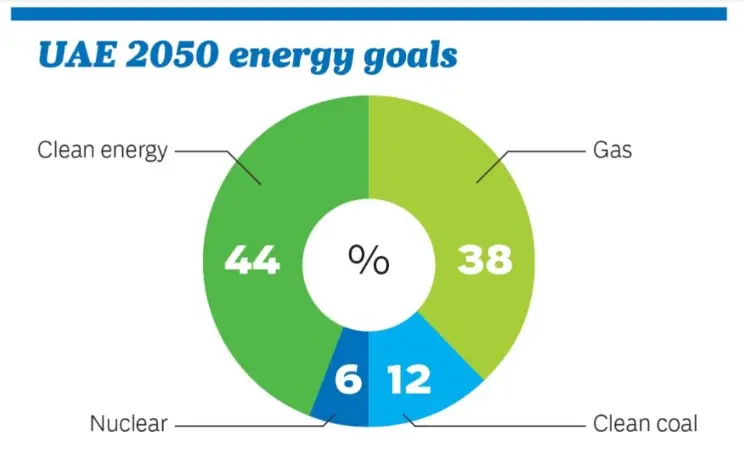
    UAE 2050 Energy Goals

    The UAE’s 2050 Energy Goals aim for a diverse energy portfolio, blending renewable, nuclear, and clean sources to fulfil economic needs and environmental aspirations. The breakdown is as follows:

    • 44% clean energy
    • 38% gas
    • 12% clean coal
    • 6% nuclear

    In 2023, the UAE revised its National Energy Strategy to introduce new objectives:

    • Generate 50,000 fresh green jobs by 2030
    • Triple renewable energy capacity to 14 GW by 2030
    • Increase the proportion of clean energy in the overall mix to 30% by 2031
    • Attain carbon neutrality by 2050
    Image source: www.uae-embassy.org

    Renewable Energy and Sustainability Initiatives

    In the heart of the hydrocarbon industry, the UAE has been at the forefront of renewable energy. After more than 15 years dedicated to research and policy initiatives, solar energy is now accessible at a remarkable rate of 1.35 cents per kilowatt hour. With three of the globe’s largest solar plants already operational, the UAE is swiftly expanding its solar infrastructure. 

    1. UAE’s Renewable Energy Leadership

    • Pioneered renewable energy in UAE amidst a hydrocarbon-centric industry.
    • Over 15 years of research and development (R&D) and policy initiatives.
    • Solar energy now costs 1.35 cents per kilowatt hour.
    • Boasts three of the world’s largest solar plants, with more rapid development.

    2. Impactful Solar Projects

    • Noor Abu Dhabi solar park will slash UAE’s carbon footprint by 1 million metric tons annually, equivalent to removing 200,000 cars from roads.
    • Mohammed bin Rashid Al Maktoum Solar Park in Dubai, spanning 4,000 acres, will power 800,000 homes by 2030.

    3. Masdar’s Contribution

    •  Abu Dhabi’s commitment of over $20 billion to renewable energy programs via Masdar.
    • Masdar has expanded UAE’s renewable energy portfolio by 400% in the last decade.
    • Focus on developing and commercialising renewable energy, energy efficiency, carbon management, water usage, and desalination technologies.

     4. Energy Efficiency Initiatives

    • Emirates Green Building Council’s Energy Efficiency Program targets reducing UAE’s carbon footprint by retrofitting inefficient buildings.
    • Dubai’s “Smart City” strategy optimises energy, transportation, and recreational areas.
    • Enforcement of “Green Building Regulations” since 2011 for private sector construction to cut energy and resource consumption.

    5. Sustainable Development Initiatives

    • Abu Dhabi’s Estidama initiative promotes green standards in building and community construction.
    • Includes the Pearl Building Rating System for evaluating sustainable building practices.
    • Development of a waste-to-energy plant in Abu Dhabi to power 20,000 households using organic waste.

    Carbon Capture and Reduction

    The UAE acknowledges the vital role of carbon capture technologies in achieving climate goals. ADNOC’s 2016 establishment of the region’s first industrial-scale CCUS facility, currently capturing 800,000 tons of CO2, is set to expand sixfold by 2030. Additionally, the UAE is committed to planting 100 million mangroves by 2030 for carbon offsetting. ADNOC, with its low carbon intensity and reliance on zero-carbon nuclear and solar power for electricity, aims to reduce its carbon intensity by 25% in the next decade.

    Nuclear Energy

    Nuclear energy is pivotal in the UAE’s pursuit of a net-zero strategy, underscoring its commitment to diversifying energy sources and diminishing reliance on fossil fuels. As the first Middle Eastern nation to operate zero-carbon nuclear power alongside renewable energy, the UAE aims to generate 14 GW of clean capacity by 2030. Integral to the UAE’s Energy Strategy 2050, developing a civilian nuclear energy sector aligns with these objectives. In December 2009, a bilateral agreement between the UAE and the US, known as the “123 Agreement,” was established, emphasising international nonproliferation, safety, and security standards.

    This landmark pact, hailed as exemplary by US officials and nonproliferation experts, facilitates the legal framework for nuclear energy technology commerce between the two nations. Upholding peaceful objectives, the UAE Government has enshrined its nuclear energy policy in various laws and accords, including the UAE Nuclear Law signed in October 2009.

    123 Agreement: Key Points

    The following are the key points of the 123 agreements:

    1. Role in Barakah Nuclear Energy Plant Development

    A crucial supporting factor for the development of the UAE’s Barakah Nuclear Energy Plant by the Emirates Nuclear Energy Corporation (ENEC).

    2. Commercial Operation and Impact

    • Unit 1 was declared commercially operational in March 2021, delivering clean electricity to the UAE grid around the clock.
    • Units 2 and 3 will be successfully connected to the national grid in 2022.

    3. Impact on Electricity Production and Carbon Emissions

    • Upon full operation of all four units, the Barakah Nuclear Energy Plant will meet up to 25% of the UAE’s electricity needs.
    • Expected to prevent the release of 21 million tons of carbon emissions annually, equivalent to removing 3.2 million cars from the roads yearly.

    4. International Oversight and Reviews

    • The International Atomic Energy Agency (IAEA) and the World Association of Nuclear Operators (WANO) conducted over 42 missions and reviews to ensure alignment with international best practices.

    5. Involvement of US Firms

    • Westinghouse, part of a consortium led by Korea Electric Power Corporation, provided major components and technical support services.
    • Lightbridge Corporation offered consulting services on design and development.
    • CH2M Hill secured a 10-year contract to support the UAE’s nuclear program.
    • Paul C. Rizzo Associates contributed to site placement and engineering.

    Key Entities in the UAE Nuclear Energy Program

    • Federal Authority for Nuclear Regulation (FANR): Regulates and licenses nuclear energy activities focusing on public safety.
    • Emirates Nuclear Energy Corporation (ENEC): Develops nuclear energy plants and fosters the local nuclear energy sector.
    • Barakah One Company: Manages commercial and financial interests as a subsidiary of ENEC and KEPCO.
    • Nawah Energy Company: Operates and maintains the Barakah Nuclear Energy Plant as a subsidiary of ENEC and KEPCO.

    Hydrogen: A Sustainable Energy Solution

    Hydrogen, a clean fuel derived from diverse domestic resources like natural gas and renewables, holds promise for various applications, from transportation to residential use. In the UAE, initiatives like the Hydrogen Leadership Roadmap and the Abu Dhabi Hydrogen Alliance signify a commitment to advancing low-carbon hydrogen technologies. Dubai’s inauguration of the Middle East’s first hydrogen filling station in 2017 demonstrates proactive steps towards a greener future.

    Concluding thoughts!

    In conclusion, the UAE demonstrates an unwavering commitment to sustainable development through pioneering initiatives in renewable energy, energy efficiency, and carbon reduction. The UAE aligns with global climate objectives while driving economic growth and job creation by spearheading the Net Zero by 2050 Strategic Initiative and investing in diverse energy sources, including solar, nuclear, and hydrogen. With ambitious goals outlined in the UAE’s 2050 Energy Strategy and proactive measures such as the Hydrogen Leadership Roadmap, the nation emerges as a leader in green innovation, setting a model for sustainable development worldwide.

    For the latest updates on Dubai and setting up a business in the UAE, reach out to Shuraa Business experts. We provide comprehensive assistance for all your business needs. Contact us at +97144081900 or send a WhatsApp message to +971507775554. You can also email us at enquiry@shuraa.com for prompt responses to your inquiries.

  • Guide to Traffic Fines in Dubai 2026

    Guide to Traffic Fines in Dubai 2026

    Acquiring a car in Dubai may seem straightforward, but adhering to strict laws and regulations is crucial to avoid traffic penalties. The Roads and Transportation Authority (RTA) prioritises the enforcement of traffic rules, making it impossible to evade fines for violations. To circumvent these penalties, staying informed about the regulations to abide by while driving in the Emirate is essential. This guide, presented by Shuraa Business Setup, offers an initial glimpse into traffic fines in Dubai and associated black points, providing valuable insights to help you navigate the city’s traffic regulations effectively. Keep reading to delve deeper into the specifics of traffic fines in Dubai. 

    Understanding Dubai’s Black Points System 

    In Dubai, the black point system serves as a mechanism for authorities to monitor traffic law violations. The city is equipped with cameras and radars strategically placed to capture infractions. When drivers breach specified rules, Dubai Police assign black points to their traffic file, with the severity of the offence determining the number of issues. Each violation carries a distinct point value. Notifications are sent via text message for each added point, and individuals can track their current black point tally on the Dubai Police website. Accumulating 24 black points empowers traffic police to revoke the driver’s license and impose a one-year driving ban. Depending on the gravity of the violations recorded, vehicle confiscation may also occur. 

    Traffic Fines in Dubai for Speeding

    Traffic Fines in Dubai incur fines and may result in the accumulation of black points on your driving record: 

    • Exceeding the specified speed limit by 80 km/h leads to a fine of AED 3000, 23 black points and potential vehicle and license confiscation for 60 days. 
    • Driving exceeding the specified limit by more than 60 km/h results in an AED 3000 fine, 12 black points, and vehicle impoundment for 30 days. 
    • Breaking the speed limit by less than 60 km/h leads to an AED 1500 fine, 6 black points, and vehicle impoundment for 15 days. 

    Additional speed-related fines without black points include: 

    • AED 1000 for driving under the speed limit of less than 50 km/h. 
    • AED 700 for exceeding the speed limit by less than 40 km/h. 
    • AED 600 for exceeding the speed limit of less than 30 km/h. 
    • AED 300 for driving under the speed limit of less than 20 km/h. 

    Penalties For Reckless Driving in Dubai 

    Traffic fines in Dubai for reckless driving, resulting in 23 black points, encompass the following offences: 

    • Causing severe injury to another person due to reckless driving. 
    • Endangering someone’s life through reckless driving. 
    • Operating a vehicle without a proper number plate.
    • Driving under the influence of alcohol. 

    If a driver jeopardises someone’s life on the road, they will incur a fine determined by the court and have their vehicle impounded for 2 months. Likewise, driving without a car number plate results in 23 black points, an AED 3000 fine, and vehicle confiscation for 90 days. However, being apprehended for drunk driving entails a substantial penalty of AED 20,000, along with vehicle confiscation for 60 days. Court-imposed jail sentences ranging from several days to months are also conceivable. 

    Penalties for Traffic Violations with Black Points in Dubai

    Offences that may incur fines and less than 23 black points include the following: 

    • Disregarding the red light: This infraction results in 12 black points, an AED 1000 fine, and vehicle confiscation for 30 days. 
    • Blocking traffic with your vehicle: If your vehicle obstructs traffic flow, you will be fined AED 1000 and receive 6 black points. 
    • Failure to maintain a safe distance from other vehicles: Neglecting to keep a safe space between your vehicle and others may result in an AED 400 fine and 4 black points. 

    Traffic Violations for Overtaking and Parking in Dubai

    Below are the penalties for overtaking and parking violations in Dubai: 

    • Parking violations (e.g., parking before a fire hydrant, in spaces for people with disabilities, or sudden stops) result in AED 1,000 fines and 6 black points each. 
    • Stopping in a yellow box junction incurs an AED 500 fine. 
    • Parking on the left shoulder of public roads leads to an AED 1,000 fine. 
    • Stopping vehicles at pedestrian crossings, parking behind vehicles obstructing movement, or stopping without a safe distance result in AED 500 fines each. 
    • Improper parking warrants an AED 500 fine. 
    • Parking on pavements or stopping in a manner endangering pedestrians incurs AED 400 fines each. 
    • Wrong overtaking with a light vehicle leads to a AED 600 fine and 6 black points. 
    • Overtaking from the road shoulder incurs a AED 1,000 fine and 6 black points. 
    • Overtaking from a prohibited area results in a AED 600 fine. 

    Additional Traffic Violation Leading to Fines in Dubai

    The regulations concerning traffic fines in UAE serve a broader purpose beyond merely ensuring road and vehicle safety within the city. These stringent rules aim to maintain a safe environment for all residents and visitors. Consequently, drivers are urged to adopt a responsible attitude and behaviour towards consistently adhering to traffic regulations in Dubai. 

    Below are additional violations that incur penalties: 

    • Driving without a seat belt: AED 400 fine and 4 black points. 
    • Discarding garbage from the vehicle: AED 1,000 fine and 6 black points. 
    • Operating a car that pollutes the environment: AED 1,000 fine and 6 black points. 
    • Driving a noisy vehicle: AED 2,000 fine and 12 black points. 
    • Allowing a child to sit in the front seat: AED 1,000 fine (Children under 10 years should sit in the back seat, and toddlers under 4 years must use a child seat). 
    • Using a phone while driving: AED 800 fine and 4 black points. 
    • Jaywalking: AED 400 traffic fine. 
    • Driving with old or expired tyres: AED 500 fine, 4 black points, and vehicle impoundment for 7 days. 
    • Driving without proper car registration or insurance: AED 500 fine, 5 black points, and vehicle confiscation for 7 days. 
    • Driving without lights during foggy or nighttime conditions: AED 500 fine and 4 black points. 
    • Reckless vehicle reversing: AED 500 fine and 4 black points. 
    • Riding a motorcycle without a helmet: AED 500 fine and 4 black points (The driver and passenger are fined if they do not wear helmets). 
    • Parking on pedestrian crossings: AED 500 traffic fine. 

    Latest Traffic Penalties in Dubai

    Alongside the current traffic fines in UAE, authorities implemented new traffic penalties on July 6th, 2023. Here are the particulars of the newly introduced fines: 

    Traffic Offenses resulting in AED 10,000 Fines 

    Violations include: 

    • Unauthorised vehicle modifications cause increased noise or speed. 
    • Operating vehicles without valid number plates. 
    • Evading or eluding law enforcement. 
    • Involvement in illegal activities like street racing or public display of cars. 
    • Window or windshield tinting exceeding approved limits or needing proper authorisation. 

    Traffic Offenses Resulting in AED 50,000 Fines 

    Violations include: 

    • Riding recreational bikes on paved roads. 
    • Reckless driving poses a danger to others. 
    • Ignore traffic signals or run red lights. 
    • Driving with a fraudulent or illegal Dubai driving license. 
    • Intentionally colliding with a police vehicle, potentially resulting in vehicle impoundment. 
    • Underage driving (under 18 years old). 

    Traffic Offense Resulting in AED 100,000 Fines 

    Engaging in illegal racing without official permission and any behaviour endangering other vehicles, individuals, or road infrastructure may lead to vehicle impoundment and fines of up to AED 100,000. 

    How to Settle Traffic Fines

    If you’ve received a traffic violation in Dubai, you can conveniently access and pay fines by searching for registered fines linked to your vehicle on the RTA website. When attempting to view and pay Dubai traffic fines, you’ll need to provide one of the following: 

    • Plate details
    • License number 
    • Fine number 
    • Traffic file number 

    Traffic Fine Discounts in Dubai

    The RTA offers discounts on traffic fines in UAE at various times. In 2020, for UAE’s 49th National Day, a 50% discount was given on fines before December 2020, with waived impoundments and black points until January 2021. In 2019, as part of the Year of Tolerance, motorists received up to 100% discounts by maintaining a clean driving record for specific periods. This aimed to encourage law-abiding behaviour and resulted in a 14% decrease in accidents. However, these discounts don’t apply to parking or Salik fines. 

    Traffic Fine Notification 

    Once a violation is recorded, Dubai Police will promptly send you a notification. Alternatively, you can visit the RTA website and complete a simple form to check if any fines have been registered against your vehicle. 

    Paying Dubai Police Traffic Fines in Installments

    Since February 2019, motorists in Dubai have had the option to pay traffic fines in interest-free instalments. Banks like First Abu Dhabi Bank and Noor Bank offer credit card holders a 0% Installment Plan for 3, 6, 9, and 12 months, provided the traffic fine is at least AED 500. Payment can be made through the Dubai Police app, website, or at dedicated centres for paying traffic fines. 

    Driving Tips for Dubai

    In addition to understanding local laws, consider these practical driving tips for navigating Dubai’s roads: 

    • Ensure you possess a valid UAE driver’s license before operating any vehicle. 
    • Check if your home country’s driving license is transferable to a UAE license on www.dubai.ae
    • Avoid driving on beaches as it’s prohibited. 
    • Hand gestures may be misunderstood; use caution. 
    • Electronics and food won’t withstand the hot climate; avoid leaving them in your car. 
    • Eating, drinking, or leaving animals/children unattended in vehicles is prohibited. 
    • Using a mobile phone while driving is illegal. 
    • Respect red flashing lights; they indicate no entry. 
    • Tint car windows within the permissible limit of 30%.
    • Obtain a Salik card to drive on Sheikh Zayed Road. 
    • Police often monitor violations; be vigilant. 
    • Many speed cameras are positioned along roads. 
    • Dial 999 or 112 in emergencies. 
    • Your UAE residency visa is required for license exchange. 
    • You must be at least 18 years old to obtain a driving license. 

    Note: Contact Shuraa Business Setup for assistance with residency visa applications. 

    Concluding Thoughts

    Empower yourself to manage traffic fines in Dubai effectively. Apart from your traffic fines, our dedicated team ensures your business operates within the bounds of UAE laws and regulations, minimising the risk of penalties and legal complications. From navigating licensing requirements to ongoing compliance support, we offer comprehensive solutions tailored to your needs. 

    Count on Shuraa Business to guide you through the intricacies of UAE regulations, providing peace of mind and confidence in your business operations. Contact our experts today via phone at +971 4 4081900, WhatsApp at +971 50 7775554, or email info@shuraa.com for personalised assistance and proactive compliance strategies. Let us help you steer your business towards success while staying on the right side of the law.

  • How to Get ISO Certification in Dubai

    How to Get ISO Certification in Dubai

    Securing ISO certification in the UAE underscores a pledge to superior performance and alignment with global benchmarks for quality and effectiveness. This esteemed accreditation enhances a company’s standing amidst the fiercely competitive UAE marketplace, providing clients with the assurance of tireless commitment to upholding an unyielding standard of excellence.

    Acquiring ISO certification entails a meticulous progression, commencing with a comprehensive evaluation to gauge compliance with ISO requisites, followed by implementing requisite modifications, and culminating in a formal assessment and certification process. For enterprises in the UAE, navigating the journey toward ISO certification is a strategic voyage that not only enhances credibility but also unlocks avenues for international expansion, furnishing a significant edge in today’s fluid market milieu.

    Shuraa Business Setup stands poised to facilitate your attainment of ISO certification in the UAE. Explore further to delve into the details.

    What is ISO Certification?

    ISO certification in the UAE is endorsed by an impartial entity, confirming a company’s adherence to internationally recognised ISO management systems. It serves as a validation of credibility, enabling companies to compete for contracts and instilling confidence in potential clients regarding the company’s reliability.

    These certifications, such as ISO 9001:2015, are governed by the International Organisation for Standardisation (ISO) and apply to a wide range of industry sectors. They are designed to enhance organisational efficiency and improve the quality of products and services.

    Rather than imposing cumbersome procedures, ISO certifications offer a customisable framework to facilitate operations and foster continuous improvement. This framework encompasses various aspects, from product and service quality to data security reliability.

    Why do we need ISO standards in the UAE?

    ISO standards are essential in the UAE as they symbolise a company’s dedication to upholding global standards of excellence. ISO certification in the UAE boosts credibility and reputation in this competitive market while optimising operations and ensuring consistent quality. They also aid in regulatory compliance and foster a culture of continuous improvement. Moreover, ISO certifications facilitate international trade opportunities by adhering to global standards.

    Common ISO Standards in the UAE

    • ISO 9001:2015: Sets criteria for quality management systems, emphasising customer focus and continuous improvement.
    • ISO 14001:2015: Manages environmental responsibilities systematically, supporting sustainability efforts.
    • ISO 27001:2015: Establishes information security management systems for safeguarding information assets.
    • ISO 45001:2018: Ensures employee health and safety through occupational health and safety management systems.
    • ISO 13485:2016: Tailors quality management system requirements for medical device manufacturers.
    • ISO 22000: Safeguards food safety across the entire food chain, from producers to retailers.
    • ISO 22301: For business continuity, ISO 50001 for energy management, ISO 21001 for education, and ISO 17025 for testing labs also play vital roles in meeting industry needs in the UAE.

    How to Get ISO Certification in UAE?

    The following are the points to apply for ISO certification in the UAE:

    Gap Analysis

    • Evaluate existing operations against ISO standards.
    • Engage with experienced consultants for objective evaluation.
    • Generate a comprehensive report outlining necessary actions.

    Implementation

    • Implement recommended modifications to bridge gaps.
    • Adapt processes, introduce new procedures, and educate team members.
    • Thoroughly document changes and monitor progress.

    Certification

    • Prepare for a certification audit after successful implementation.
    • Choose a reputable ISO certification body for evaluation.
    • Resolve non-conformities identified during the audit.
    • Obtain an ISO certificate to enhance business credibility.

    The following are the popular ISO certifications in the UAE:

    ISO 9001 Certification

    • This certification is widely recognised across major cities in the UAE, including Sharjah, Abu Dhabi, and Dubai.
    • It ensures that organisations adhere to internationally recognised Quality Management Systems (QMS), promoting consistency and efficiency in operations.
    • Enhances market presence by meeting customer expectations.
    • Compliance with ISO 9001:2015 instills best practices and boosts credibility.

    ISO 14001 Certification

    • Focuses on Environmental Management Systems (EMS).
    • Demonstrates commitment to environmental responsibility.
    • It leads to significant cost reductions and enhances overall operational efficiency.

    ISO 22000 Certification

    • This certification is essential for the food industry, as it ensures the highest standards of food safety.
    • Updated to ISO 22000:2018 to harmonise global requirements.
    • It plays a vital role in controlling safety hazards in food products, ensuring compliance with global safety standards.

    ISO 22301 Certification

    • It provides a robust framework for implementing Business Continuity Management Systems (BCMS), ensuring organisational resilience.
    • Standardises processes for business continuity.
    • It enables organisations to recover quickly from disruptions while safeguarding against reputational harm and financial losses.

    Business Benefits of ISO Certification

    Below are the business benefits of ISO certification:

    • Strategic Asset: ISO certification simplifies operations and enhances customer trust, positioning UAE businesses favourably in the international marketplace by adhering to rigorous ISO standards.
    • Increased Customer Confidence: Certification demonstrates dedication to quality and dependability, leading to heightened customer satisfaction and loyalty. ISO standards, like ISO 9001, prioritize customer requirements, fostering repeat patronage.
    • Increased Efficiency: ISO standards clarify processes and responsibilities, boosting employee performance and overall productivity. Continuous improvement principles promote regular refinement, potentially yielding operational cost savings and increased profitability.
    • Risk Mitigation: Adherence to ISO standards, such as ISO 31000 for risk management, enables proactive identification and mitigation of potential risks. This approach safeguards reputation ensures compliance with legal mandates and prevents financial penalties and loss of clientele.
    • Elimination of Trade Barriers: ISO certification simplifies global expansion for UAE businesses by facilitating international trade. Globally recognised ISO standards ease entry into new markets, dismantle trade obstacles, and foster trust among potential partners and suppliers, enhancing opportunities for collaboration.
    • Accessing New Markets and Clients: ISO certification serves as a passport for businesses to expand globally. It assures potential clients of adherence to recognised standards, which is crucial for building trust abroad and meeting diverse regulatory requirements. In the UAE, ISO certification goes beyond compliance, fostering stakeholder trust, operational excellence, and market expansion. Embracing ISO as a strategic investment is essential for staying ahead in evolving landscapes.

    With Shuraa Business Setup

    ISO certification in the UAE transcends mere compliance, symbolising an organisation’s unwavering commitment to excellence and a gateway to global success. Cultivating a culture of continuous improvement, prioritising customer satisfaction, and fostering efficiency are fundamental to this esteemed certification.

    By navigating the ISO certification process diligently, your business can attain recognition for quality and a catalyst for growth and industry leadership. Adopt the expedition towards ISO certification with confidence, knowing it positions your enterprise to excel in the competitive landscape of the Emirates and beyond, resonating trust with clients and partners alike.

    Our business experts are here to guide you every step of the way towards ISO certification in Dubai. Contact us at +971 4 4081900, WhatsApp at +971 50 7775554, or email info@shuraa.com for assistance.

    Frequently Asked Questions (FAQs)

    1. How long is an ISO certificate valid?

    The majority of ISO certifications are valid for 3 years. Maintenance & Recertification: Once awarded, an ISO certification remains valid for 3 years. To maintain compliance and achieve intended objectives, the Quality Management System (QMS) established for accreditation must be regularly maintained. This ensures both continuous improvement and eligibility for recertification.

    2. How much does ISO certification cost?

    The cost of ISO certification varies depending on the type.

    For example: ISO 9001 certification costs in the UAE range from 3000* to 4770* AED. ISO 45001 Certification cost in Dubai ranges from 4580* to 5470* AED.

    3. How can I obtain ISO certification in Dubai?

    Here are the essential steps to becoming an ISO-certified business:

    • Develop your management system and identify core or business processes.
    • Implement your system, ensuring procedures align with documented processes.
    • Verify the effectiveness of your system through internal audits.
    • Register your plan to achieve certification.

    Disclaimer: The information in this post is for general guidance only and may change due to updates in government policies or regulations.

  • How to Start an Online Business in Abu Dhabi – 2026 Guide

    How to Start an Online Business in Abu Dhabi – 2026 Guide

    Starting an online business in Abu Dhabi isn’t simple or easy, but with the right guidance and a clear strategy, you can turn your entrepreneurial vision into reality. The capital of the UAE is a dynamic hub where tradition meets innovation, offering a unique blend of opportunities for businesses willing to navigate its competitive landscape.

    Abu Dhabi’s vibrant markets, cutting-edge tech infrastructure, and business-friendly policies make it a strategic launchpad for online ventures. Whether you’re eyeing e-commerce, digital services, or innovative tech solutions, this emirate provides the ideal environment to thrive.

    We’ll guide you through the complexities and unlock the compelling advantages of setting up an online business in this global hotspot. Let’s explore how you can harness the potential of Abu Dhabi to kickstart your entrepreneurial journey.

    Benefits of Start an Online Business in Abu Dhabi

    Starting an online business in Abu Dhabi comes with several advantages that make it an attractive option for entrepreneurs. Here’s why:

    • Strategic Location: Abu Dhabi connects global markets across the Middle East, Africa, Asia, Europe, and the Americas, making it a prime hub for trade and business.
    • Tax Benefits: Enjoy tax exemptions in free zones, including no personal or corporate taxes and no import/export duties, creating a cost-effective business environment.
    • World-Class Infrastructure: With advanced technology and a robust IT ecosystem, Abu Dhabi offers the perfect foundation for online businesses.
    • Rapid Growth Opportunities: A booming economy attracts global companies, creating a fertile ground for businesses to thrive and grow.
    • Tech-Savvy Population: Abu Dhabi’s digitally engaged and internet-savvy population provides an ideal customer base for online businesses.
    • Global Connectivity: Positioned as a trade hub, Abu Dhabi connects businesses to global markets, facilitating international trade and growth.
    • Affordable Setup and Renewal Costs: Setting up a business in Abu Dhabi is cost-effective, with lower trade license renewal fees compared to other emirates.
    • Entrepreneurial Ecosystem: Abu Dhabi fosters opportunities for startups and SMEs, providing a supportive environment for entrepreneurs to start and scale ventures
    • Tourism and Business Hub: Its status as a regional hub attracts tourists and businesses, enhancing opportunities for online services in various sectors.

    Launch your online business in Abu Dhabi to leverage these advantages and establish a successful business in a thriving market.

    How to Start an Online Business in Abu Dhabi

    To start an online business in Abu Dhabi, you’ll need to obtain an e-commerce license, which can be done through the Abu Dhabi Department of Economic Development (ADDED) or a free zone authority. You’ll need to choose your business structure, register a trade name, and potentially secure additional approvals depending on your specific activities. It’s also crucial to develop a user-friendly website, secure payment gateways, and comply with UAE consumer protection laws.

    Here’s a more detailed step by step breakdown:

    Step 1: Choose Your Business Structure and Activities:

    • Decide whether to operate on the mainland (Abu Dhabi) or in a free zone.
    • Consider the benefits of each jurisdiction (e.g., mainland offers broader market access, while free zones may have more flexibility).
    • Determine the specific online services or products you’ll offer.
    • Research the market to identify your target audience and potential gaps.

    Step 2. Register Your Trade Name:

    • Select a unique and compliant trade name for your business.
    • Submit your trade name application to the relevant authority (DED or free zone).

    Step 3. Obtain Necessary Approvals and Licenses:

    Step 4. Build Your Online Presence:

    • Develop a user-friendly website that is mobile-responsive.
    • Set up secure payment gateways to facilitate online transactions.
    • Create engaging social media profiles to promote your business.

    Step 5. Secure Your Workspace:

    • If you choose the mainland, you’ll likely need an office space, which can be a physical office, business center, or virtual office.
    • For free zones, your options may vary depending on the specific zone.

    Step 6. Consider Additional Requirements:

    • Obtain necessary visas for yourself and any employees.
    • Secure a corporate bank account.
    • Comply with UAE consumer protection laws.
    • Establish reliable logistics and delivery services.
    • Develop a comprehensive marketing strategy to reach your target audience.

    Step 7. Seek Professional Guidance:

    • Consult with a business setup experts to ensure a smooth and compliant process.
    • They can help you navigate the legal and regulatory requirements, choose the right jurisdiction, and secure the necessary licenses and approvals, according to experts on company registration.

    By following these steps and utilizing the resources available, you can successfully launch your online business in Abu Dhabi.

    Cost of Starting an Online Business in Abu Dhabi

    The starting cost for an e-commerce license in Abu Dhabi is AED 5,500*. However, the final cost depends on several factors, including your chosen business activities, the selected jurisdiction (mainland or free zone), and specific business requirements.

    Key factors influencing the cost include:

    • Licensing Fees: The base cost for obtaining your business license.
    • Administrative Expenses: Charges for paperwork and government approvals.
    • Trademark Registration: Optional fees to secure your brand identity.
    • Agent Fees: Costs for local sponsor or agent services if required.
    • Government Fees: Includes cultural and other mandatory charges.

    Your business location—mainland or free zone—also impacts the pricing. Each jurisdiction has unique benefits, so it’s essential to choose one that aligns with your business goals.

    For accurate pricing tailored to your requirements, contact Shuraa Business Setup for expert advice and a customised consultation.

    Start Your Online Business in Abu Dhabi With Shuraa!

    Our commitment to supporting your business establishment in Dubai goes beyond the initial setup. In addition to facilitating the setup process, we offer various services such as tax preparation, legal counsel, and HR management. As a valued client, you gain entry into our booming community of like-minded entrepreneurs. Engage with the broader business community in the region through Shuraa Business Setup Connect, our networking tool designed to foster meaningful connections.

    Seize the opportunity for FREE consultations today and discover tailored solutions for your free zone or mainland company formation in Dubai. Let us guide you towards a successful and well-supported business journey. For business setup in Dubai, you can contact Shuraa by phone at +971 4 4081900, via WhatsApp at +971 50 7775554, or by emailing info@shuraa.com.

    Frequently Asked Questions (FAQs)

    1. Do I need a license to sell online in Abu Dhabi?

    Yes, you need an online business license to legally sell products or services online in Abu Dhabi. You can obtain this license through the Department of Economic Development (DED) or set up in one of Abu Dhabi’s free zones for additional benefits.

    2. Is it legal to do online business in the UAE?

    Yes, it is completely legal to operate an online business in the UAE. However, you must obtain the necessary licenses and adhere to regulations specific to your business activity and jurisdiction.

    3. How to start an online business in the UAE?

    To start an online business in the UAE, choose a business activity that meets market demand and select the appropriate jurisdiction (mainland or free zone). Register your business and obtain the necessary license, then create a professional website with secure payment options. Finally, develop a marketing strategy to attract and engage your target audience.

    4. How to start an ecommerce company in Abu Dhabi?

    Starting an e-commerce business in Abu Dhabi requires deciding on your business activity and products or services. Choose a suitable jurisdiction (mainland or free zone) and register your business with the Department of Economic Development (DED) or a free zone authority to obtain an e-commerce license. Build a user-friendly website with a secure payment gateway and promote your business through effective digital marketing strategies.

    Disclaimer: The information in this post is for general guidance only and may change due to updates in government policies or regulations.