Author: Kajol Kanojia

  • How to Apply a Maid Visa in Dubai, UAE: Costs & Requirements

    How to Apply a Maid Visa in Dubai, UAE: Costs & Requirements

    If you’re planning to work as a domestic helper in Dubai, start with securing a maid visa. This visa enables you to legally live and work in Dubai, providing access to a range of opportunities in one of the most vibrant regions in the Middle East.

    The process involves several key steps: collecting necessary documents and undergoing a health checkup are just the beginning. It’s equally vital to understand the roles and responsibilities of a maid in Dubai to fully prepare for this career path.

    Let’s explore how you can streamline your journey to obtaining a maid visa in Dubai and turn your aspirations into reality.

    Advantages of Hiring a Maid in Dubai, UAE

    For busy entrepreneurs and business owners, time is a valuable asset. Many opt to hire domestic help, such as a nanny or maid, to manage household tasks efficiently. In the UAE, employing a maid is a common practice due to several benefits:

    • Cost-Effectiveness: Contrary to popular belief, hiring a maid in Dubai or the UAE is more affordable than expected. While employers must comply with minimum wage regulations, the overall cost is often lower than hourly agency rates. Securing a Dubai maid visa also ensures legal employment, avoiding unnecessary fines or complications.
    • Building Trusting Relationships: Employing a live-in maid under a housemaid visa in Dubai promotes a strong bond of trust. Many maids become cherished household members, offering stability and reducing disruptions in daily life.
    • Enhanced Focus on Business: By hiring a maid and obtaining a maid visa in Dubai, business owners can delegate household responsibilities, freeing time to focus on professional growth and personal well-being. This balance leads to improved productivity and a better work-life dynamic.
    • Versatile Domestic Assistance: A maid holding a valid Dubai visa offers a versatile range of services, including cleaning, cooking, and childcare. This all-in-one solution is both convenient and cost-effective, eliminating the need to hire multiple specialists.
    • Job Creation: Hiring a maid not only benefits your household but also supports job creation. Many individuals seek employment in domestic roles to provide for their families, making this a socially responsible choice.
    • Compliance with Legal Requirements: Securing a maid visa Dubai ensures adherence to UAE labour laws, protecting both the employer and employee. Hiring workers informally can lead to legal repercussions, reinforcing the importance of lawful employment practices through a Dubai maid visa. 

    By following the legal process and securing a housemaid visa in Dubai, you can enjoy the convenience of professional domestic assistance while ensuring a smooth, lawful hiring experience.

    Rules for Housemaid Visa in UAE

    Hiring a housemaid in the UAE requires compliance with specific regulations set by the government. Whether you’re applying for a Dubai maid visa, a housemaid visa in the UAE, or a nanny visa, here are the key rules to follow:

    Eligibility for Sponsoring a Housemaid

    To apply for a maid sponsorship in Dubai, the sponsor must meet these criteria:

    • The sponsor must be a UAE resident with a valid residence visa.
    • Minimum salary requirement: AED 25,000* per month (varies by emirate).
    • The sponsor must live in suitable accommodation to house the maid.

    Conditions for Obtaining a Housemaid Visa in UAE

    • The maid must be from an approved country (e.g., India, Nepal, Philippines, Sri Lanka, Indonesia).
    • Age requirement: Between 18 and 58 years.
    • Employers must sign a contract that specifies the salary, duties, and benefits.

    Documents Required for a Housemaid Visa in UAE

    • Sponsor’s passports copy & UAE residence visa.
    • Maid’s passport copy & passport-sized photos.
    • Sponsor’s Ejari (tenancy contract) and latest utility bill.
    • Copy of the employment contract & salary certificate.
    • Maid’s medical fitness test results.

    Maid Visa Renewal & Cancellation

    • The housemaid visa in the UAE is typically valid for one year and must be renewed before expiration.
    • If terminating employment, sponsors must arrange to cancel the servant visa in the UAE and provide a return flight ticket.

    Employment Rights & Responsibilities

    • The maid is entitled to one day off per week, paid annual leave, and a return ticket every two years.
    • The sponsor must comply with UAE labour laws regarding fair wages, working hours, and benefits.

    Following these rules for a housemaid visa in the UAE ensures a smooth sponsorship process and compliance with UAE regulations. Before applying, check for updates from GDRFA (Dubai) or ICA (UAE).

    New law by MoHRE

    The Ministry of Human Resources and Emiratisation (MoHRE) has introduced a new law, Federal Decree-Law No. 9 of 2022, which came into effect on December 15, 2022. This law outlines regulations regarding the recruitment and employment of domestic workers in the UAE. According to the new decree-law, individuals seeking to hire domestic workers must obtain a license from the MoHRE before proceeding with the recruitment process.

    Employer Responsibilities Towards Domestic Workers

    Employers must adhere to the UAE’s regulations when hiring domestic workers. This entails honouring the terms outlined in the employment contract and fulfilling various obligations, such as:

    • Providing necessary facilities for the worker to carry out their duties efficiently
    • Ensuring suitable accommodation
    • Supplying meals and clothing as required
    • Making timely payments of remuneration
    • Offering medical care or health insurance coverage
    • Respecting the worker’s rights and ensuring a safe working environment

    Duties of Domestic Workers

    Domestic workers must follow the terms outlined in their employment contracts and ensure they:

    • Perform assigned tasks under the supervision of the employer and by the terms of the contract.
    • Maintain a high level of care and diligence in carrying out their responsibilities.
    • Avoid absenteeism without a valid explanation.
    • Respect the customs and traditions of the UAE community.
    • Follow the employer’s instructions regarding the completion of agreed-upon tasks.
    • Care for and responsibly manage personal belongings, following appropriate safety procedures for disposal when necessary.
    • Respect the privacy of the workplace.
    • Store work tools and items in their designated places at the workplace.
    • Assist in emergencies or hazards that endanger the workplace and its occupants.

    Read more: Labour Contract in UAE: All you need to know

    Which Categories Are Exempt from Regulation?

    Under the UAE’s recent domestic worker legislation, hiring maids and nannies is restricted to licensed agencies. However, particular residents, such as those holding Golden Visas, can sponsor domestic help directly.

    Dubai Maid Visa: Eligibility Requirements & Application Process

    Hiring a domestic helper in Dubai offers convenience, but it’s crucial to understand the maid visa Dubai process, requirements, and eligibility criteria. If you plan to sponsor a housemaid visa in Dubai, here’s everything you need to know.

    Eligibility Criteria for a Maid Visa in Dubai

    Requirements for Domestic Helpers in Dubai (Maid/Housemaid) 

    To qualify for a maid visa in the UAE, the domestic helper must meet the following conditions:

    • Must be at least 18 years old.
    • Domestic workers must not hold any other valid work permits in the UAE.
    • Applicants must pass a medical fitness test, which includes screenings for infectious diseases.
    • Must be from an approved country: India, the Philippines, Nepal, Bangladesh, Indonesia, or Sri Lanka.

    Requirements for Sponsors/Employers

    The employer (sponsor) applying for a housemaid visa in the UAE must meet these conditions:

    • Earn a minimum salary of AED 25,000 per month.
    • Hold a valid UAE residency visa and Emirates ID.
    • Rent or own an apartment in Dubai with at least two bedrooms.
    • Provide medical insurance for the maid.
    • Pay the necessary visa fees, including security deposits and processing charges.

    Important Note: Bachelors cannot sponsor a maid visa in Dubai.

    Dubai Maid Visa Requirements: Step-by-Step Process

    The Dubai maid visa requirements are as follows:

    • Apply for the Entry Permit: Submit the maid’s passport, sponsor’s Emirates ID, and salary certificate to obtain an entry permit for the housemaid visa Dubai.
    • Medical Fitness Test: The domestic worker must undergo a mandatory medical fitness test at an approved UAE medical centre.
    • Emirates ID & Biometrics: After passing the test, the maid must register for biometric scanning and apply for an Emirates ID.
    • Maid Visa Stamping: Once the maid fulfils the requirements, authorities will stamp the visa on her passport.
    • Labour Contract & Residency Permit: The sponsor must sign a labour contract and complete the residency permit process.

    Renewal & Cancellation of a Maid Visa in Dubai

    Learn the key considerations for renewing or cancelling a maid visa in Dubai.

    Renewal Process

    • Employers must renew a maid’s visa in Dubai before it expires, which is valid for one or two years.
    • The renewal process includes another medical fitness test and Emirates ID renewal.

    Cancellation Process

    • If you no longer require a maid’s services, you must formally cancel the maid visa Dubai through GDRFA and provide a return flight ticket to your home country.

    How to Get a Maid Visa in Dubai, UAE

    Hiring a domestic helper in the UAE requires obtaining a maid visa in Dubai, which legally allows you to sponsor a housemaid or nanny. This guide will walk you through securing a housemaid visa in Dubai, ensuring compliance with all legal requirements.

    Step 1: Check Eligibility

    Before applying for a maid visa in the UAE, you must meet the government’s eligibility criteria for sponsoring a domestic worker. The sponsor must:

    • Be a resident of the UAE with a valid residence visa.
    • Earn the minimum salary required by UAE law (usually AED 25,000+ per month for bachelors and AED 6,000+ for married couples).
    • Have a two-bedroom apartment or larger to accommodate the maid.

    Step 2: Choose a Method

    There are two primary ways to apply for a housemaid visa in the UAE:

    1. Through a Tadbeer Centre: These government-authorised service centres provide sponsorship services, recruitment, and employment contracts.
    2. Direct Sponsorship: You can sponsor a maid by following the legal procedures of the General Directorate of Residency and Foreigners Affairs (GDRFA).

    Tadbeer Centres provides flexible service packages, including part-time and full-time employment contracts for domestic helper visas in Dubai.

    Step 3: Bring the Maid to Dubai & Start Visa Processing

    Once you have chosen your domestic worker, initiate the process of obtaining a nanny visa in Dubai or a housemaid visa in the UAE:

    1. Apply for a maid’s work permit via GDRFA or a Tadbeer centre.
    2. Conduct a medical fitness test at an approved UAE medical centre.
    3. Register for Emirates ID at an authorised typing centre.
    4. Obtain the Domestic Worker Identity Card to complete the formalities.

    This step ensures the successful issuance of a servant visa in the UAE or a domestic helper visa in Dubai.

    Step 4: Obtain the maid’s Emirates ID.

    After the visa is approved, the employer must acquire the maid’s Emirates ID, mandatory for all UAE maid visa holders, either through an authorised typist or the official GDRFA portal.

    By following these steps, you can successfully sponsor a housemaid visa in Dubai while complying with UAE laws. Whether you need a nanny visa for the UAE or a domestic helper visa for Dubai, this guide will help simplify the process.

    Documents Required to Apply for a Maid Visa in Dubai

    To get a maid visa in Dubai, you’ll need to provide the following documents:

    • Application form: A completed application form for the maid visa
    • Passport: The passport copies of the maid and the sponsor
    • Photographs: Three passport-sized color photos of the maid with a white background
    • Sponsor’s documents: The original passport, residence visa, and Emirates ID of the sponsor
    • Employment contract: An attested employment contract or recent salary slip of the sponsor
    • Tenancy agreement: A copy of the attested house tenancy agreement (EJARI) of the sponsor
    • Marriage certificate: An attested marriage certificate of the sponsor, translated into Arabic and attested by the Ministry of Foreign Affairs. (for married applicants)
    • No relation certificate: If the maid and sponsor are from the same country
    • Medical insurance: Health insurance for the maid, provided by the employer
    • Bank statement: (last three months) to verify salary.

    Ensuring these documents are ready will streamline your maid sponsorship in Dubai.

    1-Year Maid Visa Dubai

    A one-year maid visa in Dubai is a residency visa that allows domestic workers to live and work in the country. It’s also known as a Domestic Worker Visa. 

    Employers must renew a 1-year maid visa annually to maintain valid sponsorship. The renewal process is similar to the initial application and requires medical tests, Emirates ID renewal, and fee payment. Failure to renew on time can lead to fines and visa.

    How to Renew a Maid Visa in Dubai, UAE

    To renew your maid’s visa, follow these steps:

    • Get a renewal application and an online medical request form from an authorised typist.
    • Fill out the forms completely.
    • Pay the required fees.
    • Submit the forms to any General Directorate of Residency and Foreigners Affairs (GDRFA) office near you.

    Dubai Maid Visa Age Limit

    The age limit for maid visa UAE applicants is between 18 and 58 years. The UAE government has specific regulations regarding the nationality and age of housemaids to ensure fair working conditions.

    Maid Visa Cost in Dubai:

    The cost of a 2-year maid visa in Dubai starts from AED 8,500* when applying through Tadbeer Centres. This package includes a fully sponsored visa, medical fitness test, health insurance, Emirates ID, free WPS bank account, PRO services, and more. Opting for private sponsorship, the cost is approximately AED 17,000*, requiring an additional deposit of AED 2,000*.

    General Expenses for a Maid Visa in Dubai:

    • Visa application fees
    • Typing centre fees
    • Health insurance
    • Medical fitness test fees
    • Labour contract charges
    • Emirates ID and worker ID fees
    • Renewal and cancellation charges, if applicable

    For a detailed cost estimate tailored to your needs, consult with our professional consultants at Shuraa Business Setup. Contact us today for expert guidance!

    Get a Maid Visa Through Shuraa Business Setup

    Located in the heart of Dubai, Shuraa Business Setup assists with maid visas for individuals whose sponsors possess a business license and visa issued by Shuraa. In addition to guiding, you through the maid visa process, we offer efficient and adaptable business setup solutions in the UAE. 

    Shuraa Business Setup offers various support services, including assistance with house help visas. Whether you require assistance obtaining new visas, renewing existing ones, or cancelling visas for multiple categories, such as drivers and domestic helpers, we’ve got you covered.

    Frequently Asked Questions (FAQs)

    1. What exactly is a maid visa in Dubai?

    A maid visa in Dubai is a visa that allows UAE residents to sponsor their domestic workers. Commonly known as a housemaid or nanny visa in Dubai, it grants permission for individuals to sponsor their household staff.

    Typically, the maid visa in Dubai lasts two years; the visa requires annual renewal by the sponsor to maintain the maid’s employment. Moreover, the sponsor must cancel the visa after a set period, usually around four years. After this time, the aid must exit the UAE for at least six months before being eligible to reapply for a fresh visa.

    2. Can I Employ a Maid Using Her Own Visa?

    UAE regulations require that licensed agencies hire domestic workers.

    3. Can I hire a maid directly in Dubai without an agency?

    It’s feasible to employ a maid without agency involvement, but this must comply with UAE laws and regulations on domestic worker employment.

    4. Is it possible for a single man to hire a maid?

    No, Dubai, UAE, does not permit bachelor’s to sponsor maids.

    5. What are the age restrictions for domestic workers in Dubai?

    The age limit for domestic workers is 60 years. But they can continue working in the UAE if they meet specific criteria:

    • They must be medically fit per a certificate issued by UAE government authorities.
    • The family or employer hiring the worker is responsible for covering all medical expenses related to the worker’s treatment.

    6. What are the responsibilities of a sponsor?

    Being fully responsible for the maid’s benefits, salary, and well-being.

    7. What is the purpose of a maid visa?

    To ensure that domestic workers operate within the legal framework of the country.

    Disclaimer: The information in this post is for general guidance only and may change due to updates in government policies or regulations.

  • How to Sell on Amazon UAE – A Beginner’s Guide

    How to Sell on Amazon UAE – A Beginner’s Guide

    Hey there, future Amazon seller! Ready to jump into the exciting world of e-commerce and create your very own Amazon seller account in the UAE? You’re in for a thrilling ride! Whether you’ve got an excellent product idea or are keen on turning your passion into profit, starting an Amazon seller account is your first big step. Don’t worry if it sounds overwhelming right now – Shuraa Business Setup is here to guide you. In this complete beginner’s guide, we’ll break down the process of setting up your Amazon seller account, navigating the platform, and how to sell on Amazon UAE. So, grab a cup of your favourite brew, settle in, and let’s start on your Amazon UAE selling adventure together!

    Getting Started with Amazon: Key Considerations Before Selling

    Before you take the plunge into selling on Amazon, there are a few key things you’ll want to consider, starting with setting up your Amazon seller account. The registration process is pretty straightforward. You’ll just need to enter some basic details about your business and choose between two types of seller plans:

    • Individual Plan: This plan is perfect for beginners who don’t need fancy selling tools or extras.
    • Professional Plan: This plan is ideal for those planning to sell a lot and want access to Amazon’s suite of selling tools. The cool part? You don’t pay anything upfront! Instead, a small percentage of your sales goes towards the Professional Plan. It’s a pay-as-you-go setup that’s budget-friendly for new entrepreneurs.

    Requirements to Start Selling on Amazon UAE

    • For Businesses: Trade License (if you’re the owner) and a Power of Attorney (if you’re a legal rep or account manager).
    • For Individuals: A recent bank statement (within 3 months), credit card statement, or utility bill.
      • National ID
      • A bank account to receive your sales proceeds.
      • A business email or Amazon customer account.
      • Phone number

    Choosing a product line that’s interesting to you and profitable online is essential. Need some ideas? Here are some popular categories to consider:

    • Apparel and Textiles
    • Handmade Products
    • Electronics

    So, take your time and research; soon, you’ll be on your way to becoming a successful Amazon seller!

    Is Amazon the Right Stage for Your Business?

    So, you’re considering entering the Amazon marketplace—exciting, right? With all our discussed advantages, an Amazon seller’s account seems like a promising platform. But let’s take a moment to ask: Is Amazon the perfect fit for every business?

    To make an informed decision, it is essential to consider a few key factors. Firstly, only some products are automatically suited for Amazon’s platform. Your products must meet specific guidelines and criteria before they can be listed. Some items may even require special permissions or fall under restricted categories. Additionally, some products may have shipping restrictions, limiting their reach to specific regions.

    If your products require customisation to cater to diverse customer preferences, it’s good to note that while Amazon offers this for select items, it’s not a universal feature.

    Logistics can also present challenges. Products that are large, fragile, or have a limited shelf life can complicate storage and shipping processes.

    And then there’s the competition. Amazon is a bustling marketplace with numerous sellers offering similar products. Standing out can be challenging if your product doesn’t have a unique selling proposition. However, Amazon does provide various marketing tools to help elevate your products and capture customer attention.

    Why Selling on Amazon UAE is a Game-Changer

    Selling on Amazon UAE comes with a host of advantages that can give your business a significant boost. As a global retail powerhouse, Amazon enjoys unparalleled traffic, making it a magnet for sellers and shoppers. With online shopping gaining momentum, it’s no surprise that about 65% of UAE residents consider Amazon their go-to shopping destination. Let’s dive into the key benefits:

    • Easy Entry and Low Initial Investment: Amazon provides a welcoming platform for budding entrepreneurs, even those with limited capital. Listing fees are budget-friendly, and you only pay when you have a sale. Plus, there’s a thriving market for second-hand and refurbished items.
    • Instant Access to Millions of Customers: Amazon’s popularity makes it a top choice for online shoppers, giving you immediate exposure to a vast customer base.
    • Tap into Amazon’s Trusted Reputation: Building trust from scratch can be challenging for new businesses. By selling on Amazon, you can leverage its esteemed global reputation, enhancing your brand’s credibility.
    • Boost Your Brand Visibility:  With Amazon’s expansive reach, your products can gain widespread visibility without hefty investments in marketing.
    • Scalability Without the Skyrocketing Costs: Amazon allows your business to scale up without substantial infrastructure investments.
    • Efficient Shipping with Fulfilment by Amazon (FBA): Opting for FBA means Amazon picks, packs, and ships your products. This streamlines logistics and enables you to offer Prime shipping to attract more customers.
    • Increase Sales with Global Reach: With millions of monthly visitors worldwide, including a significant UAE audience, Amazon can significantly boost your sales. Choosing Amazon can also lend your new brand added credibility.

    Launching your Amazon UAE seller account requires a few essential legal steps to ensure you comply with both Amazon’s requirements and those of your chosen free zone. Here’s what you’ll need to have in order:

    • Business Name: Choosing a business name is one of the initial steps in setting up your Amazon UAE account. Remember that the UAE has stringent naming guidelines prohibiting names with profane, offensive, or obscene content.
    • Contact Information: Amazon mandates that sellers provide their contact information, including legal names. While this information remains private, it’s essential for customer and Amazon communication.
    • E-commerce License: Operating an e-commerce business in the UAE necessitates obtaining a valid e-commerce license.
    • Valid Visa: If you’re a foreign resident in the UAE, you’ll need a valid visa to register and sell on Amazon.
    • Corporate Bank Account: This account is the gateway for your sales proceeds, which Amazon typically disburses every 14 days. Once you’ve secured your e-commerce license and visa, you can set up a corporate bank account in the UAE.
    • Billing Address: Amazon requires a verifiable address during account setup as part of its identity verification process.

    What is the Cost of an E-commerce License in Dubai?

    An e-commerce license cost in Dubai mainland can be as low as AED 11,500*. Therefore, you should make the most of this lucrative business opportunity and contact the business professionals at Shuraa, who will help you secure an e-commerce license.

    Remember, the actual cost of an e-commerce license in Dubai can vary depending on the type of license you choose, the emirate you operate in, and the complexity of your business operations.

    In addition to the license fees, you will also need to pay for other expenses, including:

    • Physical store registration (if required)
    • Office rent
    • Visa costs
    • Specialised permits
    • Investor’s medical and Emirates ID costs
    • Foreign name charges, if any
    • Medical insurance fee of Investor
    • Any other government fees

    Whereas the cost of the cheapest e-commerce license in Dubai Freezone is generally around AED 12,500*. However, the cost can vary depending on several factors, including the type of business, business model, size, and structure. Each Freezone has its own licensing fees and administrative charges.

    Getting an e-commerce license in a Dubai Freezone can offer several advantages for your online business, including 100% foreign ownership, tax exemptions, and easy access to a global market.

    It’s advisable to consult with a business setup expert for an accurate assessment of the total costs for your specific business needs.

    Guide to Opening Your Amazon Seller Account in UAE

    Setting up your Amazon seller account in UAE is straightforward once your documents are ready. Here’s a simplified guide broken down into five easy steps:

    • Step 1: Go to www.amazon.ae
    • Step 2: Click on ‘Sell on Amazon
    • Step 3: Click on ‘Sign Up
    • Step 4: Enter your name and email, choose a password, and click ‘Submit.’
    • Step 5: Input your business details
    • Step 6: Upload the necessary documents for verification

    After submitting your application, you must wait for Amazon UAE to review and approve your account. Approval times can vary, ranging from 24 hours to a few weeks. Once your account is approved, you’re all set to start selling.

    Understanding Selling Costs

    Selling on Amazon involves various fees based on the type of products you sell and how orders are fulfilled. One of these costs is the referral fee, which sellers pay for each item sold. The amount varies by product category and is deducted by Amazon.

    Accessing Seller Central

    Once your documents are verified and your account is approved, you’ll gain full access to Seller Central. This dashboard is your hub for managing all aspects of your seller account. From updating inventory and adding product details to handling payments, Seller Central has covered you.

    How to Obtain an E-commerce License in Dubai, UAE

    Securing an e-commerce license in Dubai is a structured process to ensure your business meets all regulatory requirements and operates legitimately. Here’s a step-by-step guide to help you navigate through it:

    Step 1: Select the Appropriate License Type

    Identify the best e-commerce license with your business model and operational needs.

    Step 2: Prepare the Required Documents

    While specific document requirements can vary based on the emirate of operation, the general essentials for all e-commerce licenses include:

    • Valid Emirates ID for all business partners and managers
    • Passport copies of all business partners and managers
    • Detailed business plan
    • Proof of UAE residency (if applicable)

    Step 3: Register Your Business with the DED

     After choosing your license type and gathering the necessary documents, you must apply to the Dubai Department of Economic Development (DED) for approval. The application will ask for basic business details like company name, activities, and shareholder information.

    Step 3: Obtain Your E-commerce License 

    Upon approval, the DED will issue your e-commerce license, typically within a few days. 

    Step 4: Adhere to Regulatory Requirements

    With your e-commerce license in hand, it’s crucial to comply with all UAE laws and regulations related to online commerce. This includes registering with the UAE Federal Tax Authority and securing any additional permits or licenses as required.

    Should you face any challenges or need assistance throughout this process, don’t hesitate to contact business setup consultants in Dubai, such as Shuraa Business Setup, for expert guidance.

    Your E-commerce Success Journey with Shuraa

    In Dubai’s dynamic e-commerce landscape, obtaining the proper e-commerce license is crucial to combining legal compliance with strategic business growth. With the proper license, you’re not just opening doors to sell on platforms like Amazon – you’re building a foundation for trust with customers and gaining access to invaluable government support services.

    At Shuraa Business Setup, navigating the licensing process and how to sell on Amazon UAE can feel overwhelming. That’s why our dedicated team is here to guide you every step of the way. We offer comprehensive support tailored to your needs, ensuring you have the knowledge, resources, and confidence to establish a thriving e-commerce business in Dubai.

    Ready to transform your e-commerce dreams into reality? Contact us today at +971 4 4081900, WhatsApp: +971 50 7775554, or Email info@shuraa.com. We’re excited to partner with you on your journey to success in Dubai’s vibrant market. 

    Frequently Asked Questions (FAQs)

    1. Can You Sell on Amazon Without a License?

    No, selling on Amazon in the UAE requires a valid e-commerce license. Operating without one can led to administrative and financial penalties, as Article 335 of the Commercial Companies Law (CCL) outlines.

    2. How do you manage shipping and delivery on Amazon?

    As an Amazon seller, you have two primary options for product delivery:

    • Merchant-Fulfillment: You manage your inventory and handle packaging and shipping directly to customers.
    • Amazon Fulfilment (FBA): Amazon takes charge of packaging, labeling, and shipping your products for you.

    Yes, selling on Amazon in the UAE is generally legal. However, you must hold a valid e-commerce license to conduct online trading in the region. Both mainland and free zone e-commerce licenses are available, with free zone licenses offering additional benefits.

    Disclaimer: The information in this post is for general guidance only and may change due to updates in government policies or regulations.
  • Overview of the Manufacturing Industry in UAE

    Overview of the Manufacturing Industry in UAE

    The Manufacturing Industry in the UAE sector is multifaceted and covers vital areas like chemicals, rubber, plastics, metals, and food production. It plays a pivotal role in the country’s GDP.

    The chemicals, rubber, and plastics sectors are essential to the UAE’s manufacturing value. With ambitions to amplify its petrochemical capacity, the UAE is keen to boost this sector, with Dubai housing many plastic manufacturing facilities.

    Metals manufacturing is also a substantial contributor to the UAE’s manufacturing landscape. The market for metal fabrication equipment will see steady growth in the coming years. Notably, the UAE stands as one of the prominent global aluminium producers.

    The food manufacturing sector is another cornerstone of the UAE’s manufacturing industry. The country has many food and beverage manufacturing establishments, drawing in substantial investments.

    In this blog post, Shuraa Business Setup will explore the various sides of the UAE’s manufacturing industry.

    Manufacturing Industry in UAE

    Key Sectors Powering Dubai’s Manufacturing Success

    Dubai’s manufacturing scene is alive and buzzing, thanks to various key industries driving its growth. For instance, the chemicals, rubber, and plastics sector play a crucial role by adding a significant chunk to the country’s manufacturing value. It’s fascinating to see Dubai turning into a bustling hub for plastic manufacturing, showcasing the sector’s vitality and growth.

    Then there’s metals manufacturing, which is an absolute powerhouse. The UAE has earned its stripes as a top global producer of aluminium. With the metal fabrication equipment market on the upswing, there’s a lot of excitement and potential in this area.

    Let’s remember the food manufacturing sector, the true heart and soul of the UAE’s manufacturing landscape. With so many food and beverage manufacturing units, it’s no wonder this sector is attracting significant investments. It speaks to its importance and the love people have for good food!

    These key industries are more than just sectors; they’re the beating heart of Dubai’s manufacturing industry. Each adds flavour to the mix and is vital to the city’s growth and success.

    Contribution to the UAE Economy

    Manufacturing Industry in UAE isn’t just a sector—it’s a vital part of the country’s heartbeat, pumping life into its economy. It’s fantastic that manufacturing is the third-largest contributor to the nation’s nominal GDP behind mining, retail, and wholesale trade. In 2023, manufacturing made up almost 10% of the UAE’s GDP, which is no small feat!

    While Dubai and Abu Dhabi might have a slightly smaller slice of this manufacturing pie, other Emirates like Ras Al Khaimah and Sharjah step in to boost the numbers with their solid industrial bases. It’s a team effort that makes the UAE’s manufacturing story compelling.

    Speaking of stories, let’s talk about Operation 300bn, the UAE’s ambitious vision for its manufacturing future, announced in March 2021. Led by the Ministry of Industry and Advanced Technology (MoIAT), this 10-year plan aims to increase the industrial sector’s contribution—from USD 36.2 billion to a whopping USD 81.7 billion by 2031. And it’s not just about big numbers; the strategy focuses on nurturing key sub-sectors like food, beverage and pharmaceuticals, showing a thoughtful approach to growth.

    So, when we talk about manufacturing in the UAE, we’re not just about statistics but about a thriving community, innovative ideas, and a bright future.

    Dubai’s Manufacturing

    Dubai’s manufacturing scene is buzzing with energy! While the UAE’s manufacturing real GDP soared by 8.75% in 2022—way above the 2.8% average from 2017 to 2019—Dubai’s growth was a bit steadier at 0.26%. Sure, it’s a modest climb compared to earlier years, but there’s still plenty of excitement in the air. 

    Despite some ups and downs since 2013, the outlook is sunny. All manufacturing sub-sectors are gearing up for growth. Take the food and beverage sector, for instance—it’s set to nearly triple in value by 2031, highlighting its growing importance to the UAE’s global trade. 

    Regarding global trade, the operation 300bn strategy makes UAE exports more competitive. Dubai’s exports are diverse and vibrant, from pearls and precious metals to rubber, plastics, and food. 

    Investment-wise, we’re talking big numbers—around USD 9.7 billion in planned or ongoing projects. The ‘other manufacturing’ sector is leading the charge, but there’s also a noticeable boost in funding for food and beverage, aligning with Operation 300bn’s focus. 

    The Emirates Development Bank also contributes USD 8.17 billion to support the sector’s growth, aiming to assist around 13,500 SMEs. Manufacturing is unique in Dubai’s economic heart, and the future looks promising! 

    Top Manufacturing Industry in UAE

    The Top Manufacturing Industry in Dubai are as follows: 

    Plastic

    Dubai’s not just a city of skyscrapers; it’s also a hotspot for plastic manufacturing! Thanks to its strategic location and top-notch infrastructure, Dubai has become a go-to hub for producing and exporting plastic goods. With plenty of raw materials and a business-friendly vibe that encourages investment, the plastic industry here is all about pushing boundaries and sparking innovation.

    Chemicals

    Dubai’s chemical industry covers everything from simple substances to intricate compounds. What sets our manufacturers apart is their commitment to international standards and quality. Whether for construction, pharmaceuticals, or agriculture, you can trust Dubai-made chemicals to be top-notch and reliable.

    Rubber

    Rubber manufacturing is more than just a sector; it’s an essential thread in Dubai’s industrial fabric. With growing demand from industries like automotive and construction, our local producers are stepping up their game. By embracing the latest technologies, they’re not just keeping pace—they’re setting it, making Dubai a force to be reckoned with in the global rubber scene.

    Metals

    Dubai’s metal manufacturers have it all: Aluminium, steel, and steel. Serving diverse sectors, from construction to aerospace, they benefit from Dubai’s stellar logistics and transportation network. That means efficient distribution to our neighbours or halfway around the world.

    Food

    Let’s talk food! Companies like Global Food Industries and Al Islami Foods are making waves here. Take Global Food Industries, for example. Part of the Albatha Group since ’92, they’ve been bringing us tasty, Halal frozen foods from their base in Sharjah. Brands like Healthy Farm, Al Areesh, and Arctic Gold offer everything from seafood to veggies in the UAE and beyond. The next time you’re enjoying a meal, it might be a taste of Dubai’s manufacturing excellence!

    Starting a Manufacturing Industry in Dubai

    To start a manufacturing Industry in Dubai, you must follow the basic steps given below:

    Pick the Perfect Name

    First, choose a catchy name for your company compliant with UAE’s naming rules. Your name should represent your business and resonate with the local culture. So, let’s keep it respectful and steer clear of anything that might raise eyebrows!

    Get Your Trade License

    Once you’ve sorted your name, it’s time to get a trade license. This is your golden ticket to manufacturing in Dubai! The type of license you’ll need can vary depending on where you set up shop—in Dubai or one of its free zones. But don’t worry—these licenses cover many manufacturing activities, ensuring you’re all set to thrive in Dubai’s vibrant industrial scene.

    Sort Out Your Visa

    You can only run a business if you are there, right? So, you’ll need a visa to operate in Dubai. The Green visa is an excellent option for investors like you keen to contribute to the UAE’s economy. It even offers a more prolonged stay compared to other residence visas. Ensure you’ve got all your investment proofs and the nod from the ICP and local authorities, and you’re good to go!

    Open Your Corporate Bank Account

    Lastly, it’s time to open a corporate bank account. This isn’t just about keeping your money safe—it’s about managing your finances like a pro! With a local bank account, you’ll be all set to receive payments and handle expenses smoothly in Dubai’s bustling business landscape.

    And there you have it—four straightforward steps to kickstart your manufacturing dream in Dubai. Are you ready to make it happen?

    Cost of a manufacturing license in Dubai

    The cost of Getting a manufacturing license in Dubai starts at around USD 3,760*. Think of it as your ticket to the UAE’s bustling manufacturing scene. It’s an initial investment that opens doors to opportunities in the UAE’s vibrant industrial landscape. Ready to take the plunge? 

    Documents required to open a manufacturing company in Dubai

    To set up your manufacturing company in Dubai, you’ll need a solid stack of documents. It’s all about making sure everything’s in shape right from the start. Here’s what you’ll need:

    • A detailed factory report covering
    • Factory layout
    • Machinery details
    • Production costs
    • Funding sources

    Remember, you’ll also need the green light from the Ministry of Health, Environment, and Water. They’ll ensure you meet UAE health, safety, and environmental standards. So, gather up those papers and start this exciting journey!

    What You Can Do with a Manufacturing License in Dubai

    So, you’ve got your manufacturing license from the Department of Economic Development (DED) in Dubai—great move! This little piece of paper opens up possibilities for your business and helps enrich the emirate’s diverse economic tapestry. 

    What can you do with this licence? Well, the sky’s the limit! Here’s a taste of the wide range of activities you’re permitted to engage in: 

    • Making Appliances and Machinery 
    • Crafting Bags, Shoes, and Leather Goods 
    • Working with Blocks and Building Stones 
    • Creating Carpets and Mats 
    • Producing Coatings, Insulations, Seals, and Protective Materials 
    • Manufacturing Equipment and Engines
    • Delving into Food Industries and Food Packaging 
    • Crafting Glassware and Chinaware 
    • Cutting Gold and Precious Stones 
    • Building and Maintaining Light Aircraft 
    • Making Lighting Equipment 
    • Producing Chemicals 
    • Processing Meat 
    • Manufacturing Medicines 
    • Creating Metal Containers and Boxes 
    • Making Ovens and Stoves 
    • Crafting Paper and Paper Products 
    • Producing Petroleum Products 
    • Diving into Plastic Industries 
    • Building and Repairing Ships 
    • Making Stationery 
    • Running a Steel Workshop 
    • Producing Textiles and Textile Products 
    • Crafting tyres and Rubber Goods 
    • Bottling Water 

    And the list goes on! From woodworking to electricity generation and precision activities like lens cutting to ship construction, Dubai’s vibrant industrial landscape has something for everyone.

    The Bright Future of Manufacturing in Dubai

    Dubai is gearing up for exciting changes, aiming to attract more foreign investment with its strategic plans. One big move? The new energy policy will be launched in 2024 as part of D33. Managed by DEWA, this policy encourages sectors like data centres and agri-tech to use solar power. It’s a win-win: businesses save on energy costs and help the environment, earning them a leg up with i-RECs for net-zero emissions.

    The buzz around this policy is expected to boost manufacturing, logistics, and trade services, showing Dubai’s commitment to a green and resilient industrial sector. Since February 2022, the IDB has been gearing up for this, focusing on automating and improving factory operations.

    And for American companies eyeing the UAE market? The U.S. Commercial Service in the UAE is here to help with matchmaking and market research, making it easier to tap into Dubai’s vibrant manufacturing scene.

    Speaking of growth, let’s remember Operation 300bn! Launched in 2021, this 10-year plan by MoIAT aims to more than double the industrial sector’s contribution to AED 300bn by 2031. With a focus on sub-sectors like food, beverage and pharmaceuticals, and a new flexible industrial law, the UAE is set to boost its manufacturing game. Ready to join the ride?

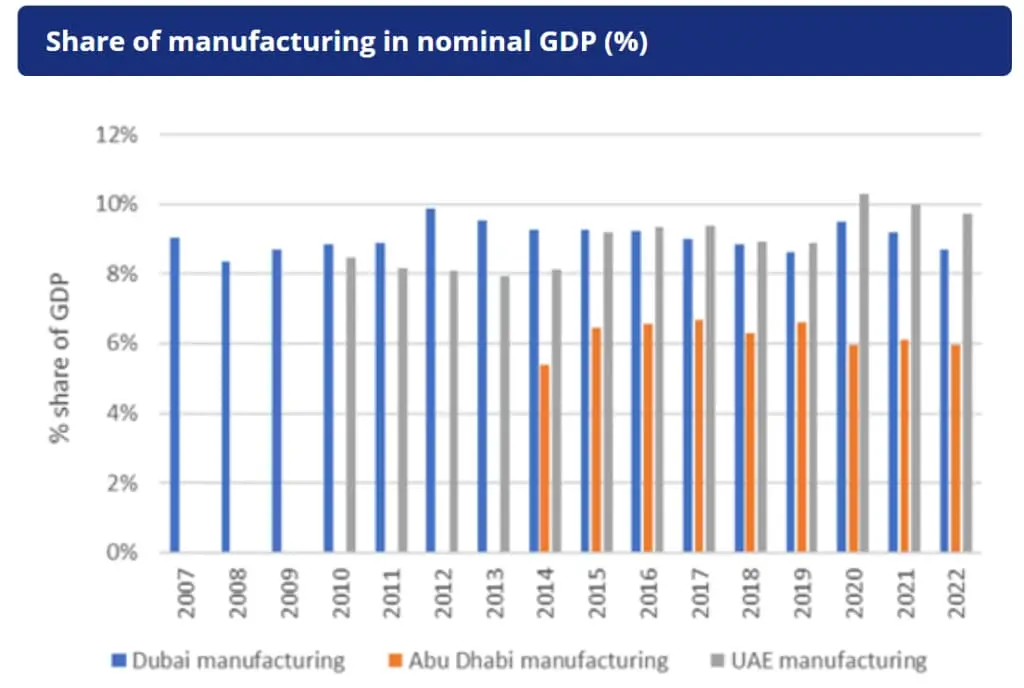
    Share of manufacturing in nominal GDP
    Source: FCSA, DSC, SCAD, ENBD Research

    Manufacturing: A Big Player in UAE’s Economy

    Manufacturing isn’t just making things—it’s making a mark on the UAE’s economy! As the third largest sector after mining and retail, it contributed nearly 10% to the UAE’s GDP in 2022. While Dubai and Abu Dhabi contribute slightly less, around 8.7% and 6%, respectively, places like RAK and Sharjah help pick up the slack with their bustling industrial scenes.

    And here’s some good news: UAE manufacturing is picking up steam! In 2022, it grew by a whopping 8.75%, leaving the 2017-2019 average of 2.8% in the dust. So, whether you’re a local business or an international player, there’s plenty of room to grow in the UAE’s thriving manufacturing landscape. Ready to jump in?

    Diverse Activities in the Manufacturing Sector

    In the manufacturing world of the UAE, heavy industries have traditionally taken the lead, making the most enormous contribution to value added. Following closely behind are sectors like chemicals, rubber and plastics, machinery and equipment, and food and beverage, all playing their part in the vibrant manufacturing landscape.

    value added in manufacturing sub-sectors
    Source: FCSA, DSC, SCAD, ENBD Research

    Across all manufacturing sub-sectors, we’re looking at substantial growth ahead. However, the food and beverage (F&B) sector takes the cake, with a whopping expected growth of 210% by 2031.

    Post-COVID, the F&B sector has been in the spotlight, especially with the UAE’s growing population and its focus on long-term food security. To give it an extra boost, a UAE F&B digital platform was launched in September 2023. This platform connects investors, manufacturers, banks, and trade partners, making supporting and growing the sector easier. 

    Manufactured Goods Boost UAE’s Non-Oil Exports

    Manufactured products are vital to the UAE’s non-oil exports. Operation 300 bn’s strategy aims to increase the UAE’s export competitiveness on the global stage.  

    As the UAE shifts its focus from oil, non-oil exports have gained momentum. While it’s tricky to pinpoint the exact types of goods, a significant chunk of these exports likely come from the manufacturing sector. The top categories for non-oil exports are pearls, stones, and precious metals (40.2%), followed by base metals at 21.3%.  

    It’s important to note that while some of these exports might be raw materials, the current trade codes don’t let us distinguish between raw, semi-manufactured, and entirely manufactured goods.

    share of non-oil exports (full year 2021)
    Source: MoIAT Industrial Investment Guide

    Non-Oil Exports: Plastic, Rubber, and Food & Beverage Lead the Way

    In 2021, plastic and rubber products and food and beverage exports were significant players, making up 7.8% and 7.7% of non-oil exports, respectively. If we put aside the dominant categories like pearls, stones, precious metals, and base metals, the priority sub-sectors under Operation 300bn seem to align with these smaller export groups.

    Recent data show that plastic and rubber products and food and beverage exports have grown enormously among these smaller categories. Between Q3 2021 and Q3 2022, exports in the rubber and plastics category jumped by 24%, while food and beverage exports grew by 22%.

    Despite this impressive growth in 2022, the food and beverage sector has yet to reach its 2018 and 2019 export levels.

    Dubai Manufacturing: Where Innovation Meets Opportunity

    Dubai’s manufacturing scene is more than just factories and production lines—a hub of innovation and forward-thinking. It’s been the driving force behind the region’s economic growth and diversity, proving resilient even in a changing global landscape. Investors, entrepreneurs, and business leaders can’t help but be drawn to its magnetic charm.

    Thanks to game-changers like Operation 300bn, the future looks even brighter. We’re discussing a future where sustainability and cutting-edge tech go hand in hand. With Dubai investing in top-notch infrastructure, nurturing talent, and creating a business-friendly vibe, our manufacturing industry is all set to shine on the world stage.

    So, if you love being part of something big and exciting, Dubai is where you want to be. We’re not just keeping up with the future but shaping it. Come join Shuraa as we embrace the challenges and seize the opportunities of tomorrow’s manufacturing world!

  • Best Phone Under 300 AED – Top Picks for 2026

    Best Phone Under 300 AED – Top Picks for 2026

    Worry not if you’re in the market for a new smartphone in 2026 but need to stick to a budget. This complete guide showcases the best phone under 300 AED, guaranteeing you maintain features, quality, and performance. Even within this affordable range, you’ll find models that present 5G connectivity, a crucial feature for future-proofing your investment, with some even boastful built-in style functionality.

    Whether you’re a photography buff, a gaming enthusiast, or a busy professional juggling multiple tasks, we’ve got you covered. Discover our curated selection of budget-friendly yet high-performing smartphones to find the perfect match for your needs.

    In this blog, Shuraa Business Setup shares its expertise to help you find the ideal smartphone for your budget constraints. Keep reading to find the best value for your money.

    What is the Best Phone Under 300 AED?

    If the Google Pixel 6A isn’t available at a sale price, the OnePlus Nord N30 SE 5G is a standout choice. Boasting a 50-watt charging capability, this phone can recharge from 0% to 100% in just 45 minutes, ensuring minimal downtime. With 128GB of storage and 8GB of RAM, coupled with a spacious 6.72-inch 1,080p display featuring a smooth 120Hz refresh rate, it offers ample performance and visual clarity.

    Powered by the Qualcomm Snapdragon 695 chip, the OnePlus Nord N30 SE 5G easily handles most apps. While its 108-megapixel primary camera captures decent photos, it must deliver awe-inspiring results. This is where the appeal of the Pixel 6A lies, especially during promotional periods, as its Tensor chip and advanced photo processing elevate its 12.2-megapixel camera to produce sharp, detail-rich images.

    However, if the OnePlus Nord N30 SE 5G fits your budget constraints, it remains one of the most feature-rich options for under AED629.

    Best Phone Under 300 AED

    Get the best smartphones available for under 300 AED below:

    1.OnePlus Nord N30 SE 5G

    OnePlus Nord N30 SE 5G
    Source: https://www.oneplus.com/ae/n30-se

    Packed with many features at an attractive price point, the OnePlus Nord N30 SE 5G stands out, particularly for its outstanding 50-watt charging capability. Charging from 0% to 100% in just 45 minutes, it outpaces most other smartphones in this price range, typically taking 90 minutes (about 1 and a half hours) to two hours for a full charge. It’s expensive 6.72-inch 1,080p display boasts a smooth 120Hz refresh rate, guaranteeing seamless animation for apps, games, websites, and streaming video.

    While the phone’s 108-megapixel primary camera may sound impressive on paper, it only delivers marginally better photo quality than other smartphones in this price bracket. It performs well in well-lit outdoor settings, taking detailed photos, but needs to improve in darker environments, resulting in washed-out or blurry indoor shots. Additionally, the OnePlus Nord N30 SE 5G is slated to receive only one software update to Android 14, along with three years of security updates, which, although average for this price range, may disappoint some users.

    Despite facing tough competition from Google’s Pixel 6A, especially during promotional periods when the Pixel is discounted to $299, the OnePlus Nord N30 SE 5G offers an array of functionalities for its price.

    Pros:

    • Rapid charging capability
    • Spacious 120Hz refresh-rate display
    • NFC support for contactless payments

    Cons:

    • Mixed performance in photography
    • Limited software-update timeline

    2. Moto G Power 5G (2023)

    The Moto G Power 5G is the most affordable phone, with 256GB of internal storage. This wide storage capacity is ideal for individuals who frequently download movies and music for offline enjoyment, especially in areas with defective internet connections. The phone’s 6.5-inch 1,080p display also operates at a silky-smooth 120Hz refresh rate, enhancing the viewing experience for movies, applications, websites, and games.

    A microSD card can expand storage even more for those who require it. Like many smartphones within the $200 to $300 price range, the Power 5G retains the convenience of a headphone jack.

    While Motorola positions the Power 5G as a media powerhouse within its price bracket, it compromises camera performance. Like other phones in this price range, its outdoor photography capabilities are commendable, but it struggles to capture details in low-light conditions.

    Pros:

    • Impressive screen quality considering its price
    • Extensive 256GB storage capacity
    • Compatible with all three major US carriers

    Cons:

    • Mediocre camera performance
    • Slow charging speed
    • Lack of NFC for mobile payments

    3. TCL Stylus 5G

    Source: https://www.tcl.com/us/en/products/mobile/stylus/tcl-stylus-5g-lunar-black

    The TCL Stylus 5G offers a blend of affordability and functionality in mid-range smartphones. Its combined style makes the device attractive to users who prioritising productivity and creativity. Equipped with 5G connectivity, it ensures swift data speeds and smooth multimedia streaming, enhancing the overall user experience.

    The TCL Stylus 5G also features a sizable display, making it well-suited for tasks such as note-taking, sketching, and steering applications. While its camera capabilities and software performance may not reach the heights of flagship models, its value proposition lies in if essential features and stylus functionality at an accessible price point, catering to a varied range of user needs.

    Pros:

    • Generously sized screen, enhanced by HDR mode
    • An uncluttered version of Android 12
    • Convenient magnetic stylus integration

    Cons:

    • Frequent software bugs hamper usability
    • Preinstalled T-Mobile bloatware
    • Subpar video quality

    4. Light Phone 2

    The Light Phone 2 represents a departure from conventional smartphones, catering to individuals seeking respite from incessant notifications while desiring an aesthetically pleasing device. Despite its somewhat restricted functionality, this unique phone costs $299.

    Featuring an E Ink screen, the Light Phone 2 supports important functions such as texts, phone calls, music playback, podcasts, mobile hotspot capabilities, and limited GPS support for steering. Notably, it must include features like a camera, web browser, email access, and standard apps such as news or messaging applications.

    Pros:

    • E Ink display
    • Lack of cameras
    • Lack of Internet connectivity

    Cons:

    • Absence of cameras
    • Absence of internet connectivity

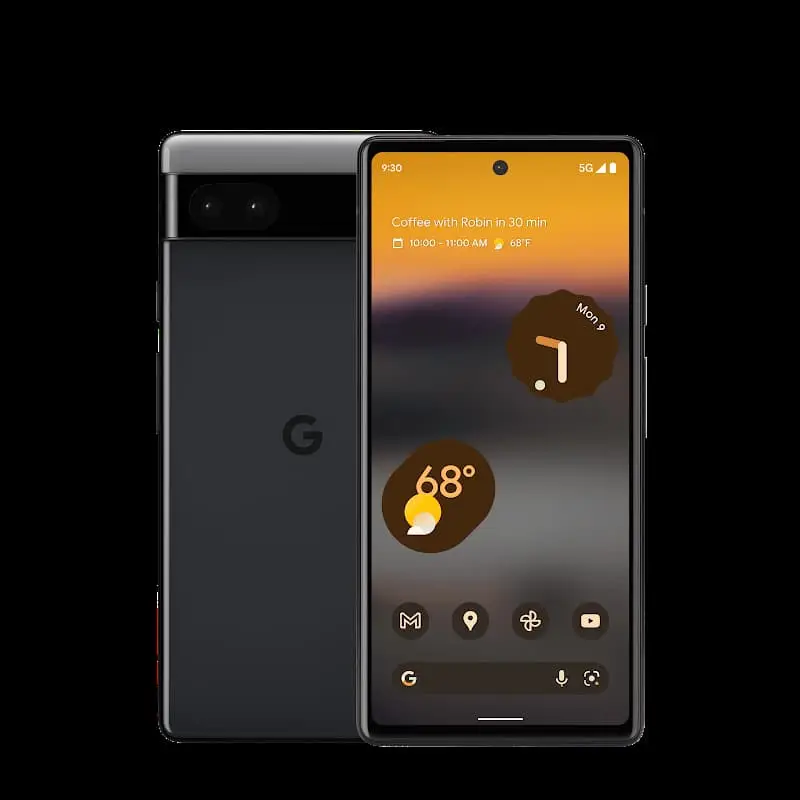
    5. Google Pixel 6A

    Source: https://fi.google.com/about/phones/pixel-6a

    The Google Pixel 6A epitomises Google’s commitment to delivering exceptional smartphone experiences at an affordable price point. Building upon the success of its predecessors, the Pixel 6A offers a convincing combination of cutting-edge features, refined design, and supreme software integration.

    At the heart of the Pixel 6A is its famous camera system, which captures stunning photos and videos with remarkable clarity and detail. Powered by Google’s advanced computational photography technology, users can expect vibrant colours, crisp textures, and impressive low-light performance, safeguarding every moment is beautifully preserved.

    Beyond its exceptional camera capabilities, the Pixel 6A boasts a sleek and modern design, with a vibrant OLED display that brings content to life with vibrant colours and deep blacks. With a smooth and responsive user interface, courtesy of Google’s latest Android iteration, directing through apps, multitasking, and accessing essential features is effortless and intuitive.

    Furthermore, the Pixel 6A stands out for its commitment to privacy and security, with regular software updates and robust built-in security features safeguarding user data and confirming peace of mind. Whether staying connected with lightning-fast 5G connectivity, enjoying immersive multimedia experiences, or releasing creativity with innovative Pixel-exclusive features, the Pixel 6A empowers users to do more without compromise.

    Pros:

    • Outstanding camera performance
    • Attractive price point
    • Premium design for a mid-range device

    Cons:

    • Display brightness may be lacking
    • There is not as extensive guaranteed Android update support as some Samsung models
    • The video quality may not match the excellence of its photos

    How Shuraa Business Setup can help?

    • Market Research Expertise: Shuraa Business setups have extensive market research capabilities, enabling them to understand consumer preferences and trends in Dubai, including popular consumer electronics such as smartphones.
    • Client Needs Assessment: As part of their consultancy services, we thoroughly assess our clients’ needs and preferences. This could include considerations for personal or business use of smartphones.
    • Budget Considerations: Given their expertise in financial planning and budgeting for business setups, we can advise clients on cost-effective solutions, including budget-friendly smartphones under 300 AED.
    • Local Market Knowledge: A deep understanding of the local Dubai market allows them to recommend smartphones that are not only affordable but also cater to the specific needs and preferences of consumers in the region.
    • Value-added Services: In addition to setting up businesses, we offer additional value-added services, such as recommendations for essential tools and technologies, including smartphones, to support clients’ business operations. 

    Concluding Thoughts with Shuraa

    This guide on finding the best phone under 300 AED has given you insights to make an informed decision. Should you have any inquiries regarding business setup or visa processes in the UAE, Shuraa is at your service. Feel free to reach out to us for assistance and guidance. You can contact us directly at +97144081900 or via WhatsApp at +971507775554. Alternatively, you can reach us via email at info@shuraa.com for prompt support.

    Frequently Asked Questions

    1. What distinguishes the Google Pixel 6A from other smartphones in its price range?

    The Google Pixel 6A offers exceptional camera performance, a sleek design, and regular software updates, delivering a premium smartphone experience at an affordable price.

    2. Does the TCL Stylus 5G come with a headphone jack?

    Yes, the TCL Stylus 5G retains the convenience of a headphone jack, catering to users who prefer wired audio connections.

    3. What are the key features of the Moto G Power 5G?

    The Moto G Power 5G stands out for its extensive 256GB internal storage capacity, smooth 120Hz refresh-rate display and compatibility with all three major US carriers.

  • How to Sponsor Your Parents in the UAE

    How to Sponsor Your Parents in the UAE

    Considering how to sponsor your parents in UAE and obtain a parent’s visa in Dubai is supreme for expats eager to unite their families under one roof. This process, governed by specific eligibility criteria and legal prerequisites, allows residents to bring their parents to reside with them in the Emirates. From meeting financial standards to arranging suitable accommodation and directing application procedures, careful planning and adherence to the UAE’s immigration policies are essential.

    This complete guide provided by Shuraa Business Setup plans the requirements, application process, legal considerations, and frequently asked questions to facilitate a unified sponsorship experience for your loved ones. Whether you’re planning a long-term stay or renewable residency visa, the information furnished here will facilitate your parents’ arrival and stay in the UAE.

    Family members’ residence visas

    Employers and employees with valid UAE residence visas can sponsor residence visas for their families. Unlike previous regulations, employees can now sponsor their families irrespective of their job titles if they meet the minimum salary requirement of AED 20,000 plus accommodation. All newcomers over 18 sponsoring parents in UAE must undergo a medical fitness examination.

    Sponsoring Parents in UAE Criteria

    Expatriate residents in Dubai can obtain parents’ visas for their families to reside in the UAE, provided they hold a valid residence permit/visa. 

    To sponsor parents in the UAE, individuals must meet a minimum salary requirement of AED 20,000 plus accommodation. 

    Family members, regardless of gender, who are over 18 years old and are being sponsored, must undergo and pass medical fitness tests at approved health centers in the UAE. 

    Notes: 

    • In exceptional circumstances approved by the ICP, a mother can sponsor her children.
    • A resident sponsor must apply for their dependents’ residence visa within 60 days of entry into the UAE under an entry permit.
    • Residents can sponsor their parents, and the residence visa is issued annually regardless of the sponsor’s visa duration.
    • The profession of an expatriate worker is no longer a requirement for sponsoring family visas.
    • Individuals deemed medically unfit will not be eligible for a residence visa.
    • Residents diagnosed with dormant or inactive pulmonary tuberculosis are considered medically fit. They can obtain a one-year ‘Health Fitness Certificate for Residence’ contingent upon treatment and follow-up by the relevant health authority.
    • These conditions are subject to change periodically. It is advisable to consult the Federal Authority for Identity and Citizenship (ICP) or GDRFA for the latest updates.

    Find official medical fitness centres run by the government for:

    Helpful resources:

    Sponsoring your Spouse and Children

    An expatriate resident can sponsor the residence visas for his wife and children if he meets the sponsorship as mentioned earlier requirements. To sponsor a wife, the expatriate resident must provide evidence of a valid marital relationship by submitting a duly attested marriage certificate or a certified translation into Arabic.

    • Sponsoring two wives: In exceptional circumstances, a Muslim resident may be permitted to sponsor two wives, provided they meet specific terms and conditions established by the ICP.
    • Sponsoring daughters: An expatriate resident can sponsor his unmarried daughter(s) without age restrictions.
    • Sponsoring sons: A male or female resident can sponsor their son(s) until age 25. Sons with special needs can be sponsored without any age restrictions.
    • Sponsoring newborns: For babies born in the UAE, a residence visa must be applied for within 120 days of birth to avoid penalties.
    • Sponsoring stepchildren: An expatriate resident can sponsor stepchildren, subject to conditions set by the GDRFA. This entails placing a deposit for each child and procuring a written no-objection certificate from the biological parent. The residence visas granted are valid for one year and are renewable annually.

    Documents Needed for Sponsoring Wife and Children

    The following documents are necessary to sponsor your wife and children:

    • The completed application form is available online or through a registered typing office.
    • Passport copies of the wife and children.
    • Photographs of the wife and children.
    • Medical clearance certificate for wife and children aged 18 and above.
    • A copy of the husband’s employment contract or company agreement.
    • Salary certificate from the employer indicating the husband’s monthly salary.
    • Attested marriage certificate.
    • Registered tenancy contract.

    Cancellation

    The residence permits of family members are tied to the sponsoring family member’s residence permit. If the sponsoring family member’s visa is cancelled, the dependents’ visas must be cancelled.

    Dependents are given a 6-month grace period from visa expiry or cancellation to get a new residence permit. Failure by the sponsor to renew or cancel their dependents’ visas could result in fines.

    Sponsoring Parents in UAE

    An expatriate employee can sponsor both parents for a year’s stay by depositing a guarantee for each parent, as required by the respective immigration department. Sponsoring only one parent is prohibited; both parents must be sponsored together. Additionally, the expatriate employees must demonstrate that they are the sole provider for their parents and that no one else is available to care for them in their home country.

    In cases where one parent has passed away or if the parents are divorced, relevant official documents are required to justify sponsoring only one parent. To sponsor parents in UAE, the employed expatriate resident must meet the minimum salary requirement and get a medical insurance policy for each parent, with coverage meeting the stipulated minimum, to be renewed annually.

    Residence Visa for a Spouse, Parent, or Child of a UAE Citizen

    A foreign passport holder who is the spouse, parent, or child of a UAE citizen can get a UAE residence visa for 5 years without the requirement of employment in the UAE. The UAE citizen will serve as the sponsor in this scenario.

    Additionally, a foreign widow or divorced woman who is the mother of a UAE citizen can get a residence visa without the necessity of employment in the UAE. In this case, the oldest child will act as the sponsor.

    Discovering the Duration and Renewal Procedure for Parent Residency Visas

    The initial validity period of a parent’s residency visa may differ based on regulations. It’s crucial to renew the parent’s residency visa upon its expiration. The renewal process entails submitting updated documents, such as evidence of ongoing financial stability, accommodation details, and maintaining a valid relationship with the sponsored parents.

    Parent Visa Fees

    To sponsor parents, the employed expatriate resident must meet the minimum salary requirement and obtain a medical insurance policy for each parent, as stipulated. The cost of residential visa services in Dubai varies depending on the duration and the sponsor’s visa type. However, the visa charges for sponsoring parents fall under the family visa category charge. The residency visa validity is granted for 1 year. Alternatively, if the sponsor holds a golden visa, they can apply for a 10-year golden visa for their parents, which aligns with their golden visa duration. Ordinary residency visa holders can only apply for a 1-year residency visa for their parents, renewable annually.

    The specific cost of residential visa services in Dubai may also depend on the sponsor’s circumstances, such as being a UAE citizen or a valid residence visa holder and meeting minimum income requirements. Additionally, when applying for a parent residency visa, every sponsor must pay a warranty fee of AED 5000.

    Rules for a Parent Residency Visa Application Process

    1. Acquaint yourself with all the prerequisites.
    2. Compile thorough documentation.
    3. Verify that all necessary documents are meticulously prepared and current.
    4. Stay informed about associated fees.
    5. Commence the process well before the visa expiry date to preempt any eleventh-hour hurdles.
    6. Arrange for medical assessments.
    7. Monitor visa validity and utilise online tools offered by immigration authorities.
    8. Seek expert counsel from a reputable Amer Center if required.

    Remember, the visa application process may take some time. Exercise patience and promptly address any concerns that arise. 

    90-Day Visit Visa for Family Members

    Instead of a standard 60-day visa, UAE residents can apply for 90-day entry permits for their family members before sponsorship is formalised. The entry permit fee amounts to Dh1,020, and the following documents need to be provided: 

    • Passport-size photograph of the family member
    • Copy of the family member’s valid passport
    • Copy of the resident’s Emirates ID
    • Proof of residence, such as a lease contract or hotel reservation
    • Copy of a return ticket

    Safeguarding Your Family’s Future in the UAE

    Supervising the Sponsoring Parents in UAE requires responsibility and careful attention to detail. Your dedication demonstrates your respect for the UAE’s laws and traditions and your love for the family members you wish to bring closer. You will guarantee a smooth and successful application by thoroughly preparing all required documents, understanding the legal implications, and adhering to residency regulations. 

    Stay active, stay informed about legislative updates, and don’t hesitate to seek expert leadership when necessary. Hold the expedition of reunifying with your loved ones and value the opportunity to create new memories in the UAE. For prompt assistance, contact us at +97144081900 or send a WhatsApp message to +971507775554. Alternatively, reach out via email at info@shuraa.com

    Frequently Asked Questions

    1. Can you sponsor your parents in UAE?

    You can sponsor your parents in the UAE; you must check the basic eligibility before sponsoring. One of the main requirements is that your minimum monthly salary should be qualified enough to sponsor.

    2. Can I sponsor my spouse in Dubai?

    You can sponsor your spouse in Dubai; you must check the basic eligibility before sponsoring. One of the main requirements is that your minimum monthly salary should be qualified enough to sponsor.

    3. Are there any warranty fees required to sponsor parents in the UAE?

    Yes, a warranty fee of AED 5000 is necessary for each residency visa holder who wishes to submit an application for their parents’ residency visa.

    4. Can I still sponsor my parents in the UAE if the tenancy contract is not under my name?

    No, applying for a family visa in the UAE is impossible without a tenancy contract in your name. This document is essential for ensuring your application is approved.

    5. Is applying for a Parent’s Visa feasible if the individual is outside the country?

    No, applying for a family visa is impossible if the person is outside the country. Their physical presence is required within the UAE during the residency proceedings, and they are not permitted to travel during this process.

  • All You Need to Know about Escrow Accounts in Dubai

    All You Need to Know about Escrow Accounts in Dubai

    Curious about how high-value transactions, particularly in Dubai’s real estate sector, proceed smoothly and securely? One crucial component of the UAE’s financial infrastructure responsible for this is the Escrow Account. But what exactly is an Escrow account in Dubai? Dive in to uncover its significance!

    Escrow accounts defense buyers and sellers, guaranteeing all parties fulfil their transactional obligations. This blog will separate the definition, purposes, operation, and potential risks associated with escrow accounts in Dubai. Additionally, we’ll discover their role in easing online transactions and real estate acquisitions.

    Whether you’re watching an extravagance apartment purchase in Dubai or just fascinated by safe financial dealings, this blog by Shuraa Business Setup offers valuable insights into understanding escrow accounts in Dubai. Keep reading to dig deeper into this topic.

    Understanding Dubai Escrow Account

    An Escrow Account in Dubai functions as a protected repository where funds are deposited by one party (or multiple parties) to expend to another party (or parties) depending upon fulfilling specific conditions outlined within the Escrow account arrangement.

    The regulatory authorities of each Emirate oversee the operational conditions for real estate Escrow accounts. Every end user contributes to the project’s Escrow account when purchasing off-plan properties within a development. These funds are only kept for project-related expenses such as construction, consultancy, sales and marketing, and land payments.

    Payments from the Escrow account is exclusively directed to the project contractor and advisor upon the completion of each construction phase, subject to verification by pre-determined experienced engineers. Any other disbursements from the Escrow account adhere strictly to the terms outlined in the Escrow Agreement and comply with regulatory directives.

    Typical Applications of Escrow Accounts

    Escrow accounts in Dubai are commonly utilised in real estate transactions to safeguard the interests of both buyers and sellers. In the home-buying process, your purchase agreement classically involves a good faith deposit held in an escrow account until the transaction is completed, demonstrating your genuine intention to purchase the property.

    The loan lender found another escrow account to cover taxes and insurance after the purchase. A portion of your monthly mortgage payment is allocated to this account until tax and insurance obligations arise. This arrangement protects your initial deposit and guarantees that funds are allocated correctly under the sale terms.

    However, escrow accounts extend beyond real estate transactions and find applications in various other contexts, such as online transactions, banking, intellectual property taxes and insurance, mergers and acquisitions, and legal proceedings.

    Significance of Escrow in Financial Transactions

    Escrow accounts play a pivotal role in transactions dealing with substantial money. They instil a sense of security and facilitate monthly payments towards insurance premiums and taxes rather than a single large payment. This arrangement proves advantageous for both parties involved, particularly in transactions concerning high-value items.

    An escrow agent oversees the escrow process, serving as a neutral intermediary. They guarantee that all parties adhere to the terms outlined in the contract or agreement. This impartial oversight offers assurance and peace of mind to all parties involved. Escrow arrangements can be applied to nearly any contract exchanging money or property.

    Escrow is a preferred method for mitigating risks and guarding against potential non-performance of obligations by the counterparty. It is a valuable tool applicable across diverse transactions, including joint ventures, mergers and acquisitions, real estate transactions and leasebacks, share sales, asset sales, cryptocurrency exchanges, inter-insurer disputes, and construction projects.

    How Do You Establish an Escrow Account in Dubai?

    Setting up an escrow account for an off-plan project involves specific steps, varying by Emirate. Here’s a breakdown of the process in Dubai:

    1. Access the “Oqood” portal and navigate the “Escrow Account Link.”
    2. Select the desired service and complete the application submission.
    3. The appointed trustee will review the application, upload necessary documents, and forward it to the TAS system.
    4. The escrow account department will then assess the application for approval or rejection. Upon approval, the system is updated automatically.

    Note: This process applies exclusively to developers in Dubai. Developers in other Emirates should adhere to the procedures specified on the respective land authorities’ websites.

    Why Are Real Estate Escrow Accounts Essential?

    In the UAE, purchasing off-plan properties entails numerous checklists, but securing transactions is paramount. Enter the escrow account: a secure third-party entity that safeguards funds until the transaction’s completion. Here’s why it’s indispensable:

    1. Protection of Rights: Escrow ensures impartial management of funds, safeguarding the interests of both parties and facilitating smooth transactions.
    2. Secure transactions process: Depositing funds in an escrow account assures developers of buyers’ financial capability, enhancing transaction security.
    3. Assurance of payment: Managed independently, escrow accounts eliminate financial discrepancies, assuring both parties have secure finances.
    4. Legal Track Record: Escrow accounts provide a legal record of payments, serving as crucial evidence in potential legal disputes.

    In the UAE, governmental initiatives mandate escrow accounts for off-plan property purchases, further enhancing real estate investment appeal. Explore available properties in the UAE to seize investment opportunities today.

    Primary Advantages of Escrow Accounts

    Key benefits of an escrow account comprise:

    1. Competitive terms and pricing.
    2. Competitive profit rates on account balances and the option to establish fixed deposits.
    3. Strict adherence to Sharia principles.
    4. Provision of value-added services, enabling outsourcing of administrative duties to the Bank.
    5. Comprehensive account-level Management Information Systems (MIS) and real-time access to account information.
    6. Experienced in-house engineers verify payment certificates per RERA requirements.
    7. Dedicated customer service centre for developers, offering a single point of contact with the Bank.
    8. Our network of 90 branches across the UAE ensures convenient access to our services.

    Functionality of an Escrow Account

    Escrow accounts have played a vital role in Dubai’s financial landscape for over fifteen years, primarily protecting investors in real estate. They are notably employed in off-plan projects, facilitating secure deposit of payments.

    1. The Role of the Escrow Agent

    In this scenario, the bank acts as the escrow agent, managing the account under the Dubai Land Department’s and RERA’s watch. It’s essential to note that the account is created for the project’s benefit, not the developer’s, with funds designated solely for construction purposes.

    The agreement between the developer and the bank delineates the key construction milestones linked to disbursements from the account. The bank oversees construction progress, validates completion of each stage, and directly pays contractors accordingly.

    2. Handling Funds in Escrow

    When committing to buy an off-plan property, a down payment and monthly instalments must be made to the escrow account. This action assures the developer of adequate finances to cover the entire cost, ensuring a safe transaction for all involved. Managed by a third party, the escrow account minimises the risk of financial discrepancies. Moreover, it is legally mandated to maintain a comprehensive record of payments, serving as crucial evidence in legal matters.

    3. Release Criteria for Funds

    Funds within the escrow account are allocated to settle contractor and project consultant invoices. However, certain developer expenses are excluded. Marketing and general overheads are limited to a maximum of 5%, while land purchase funds cannot be withdrawn from the account. Developers may only request funds from the escrow payment account per conditions specified by the accounts management authorities.

    Escrow Accounts in Real Estate Deals

    For more than ten years, Escrow Accounts have been vital in Dubai’s real estate transactions. They were introduced to safeguard investor interests in off-plan projects. Funds deposited into these accounts are strictly designated for project construction, not for the developer’s personal use. Each off-plan property sale in Dubai requires establishing a separate escrow account.

    1. Utilisation of Escrow Accounts in Home Buying

    The functionality of escrow accounts in home purchases is regulated by Law No. 8 Concerning Escrow Accounts for Real Property Development in the Emirate of Dubai, established in 2007. Oversight of these accounts falls under the purview of the Dubai Land Department and RERA.

    To initiate an escrow account, developers must furnish various documents, including a license, plot title deed, contracts with contractors, project documentation, drawings, and additional requisite paperwork.

    2. Roles of Buyer and Seller

    The responsibilities of both buyer and seller regarding the escrow account are defined. The buyer’s payments for the off-plan project are deposited into the escrow account, where they continue until specific conditions are met.

    The seller or developer is banned from managing the escrow account, as the funds are primarily owed for settling contractors’ and project consultants‘ invoices. However, it’s important to note that not all developer expenses can be covered by funds from the account.

    3. The Importance of Escrow in Mortgage Payments

    Escrow plays a key role in facilitating monthly mortgage payments. Funds from the escrow account are sent directly to the project contractor and consultant upon the completion of each construction stage and validated by experienced engineers. Progress Payment Certificates (PPCs) are utilised to bill each stage of mortgage insurance.

    Utilising Escrow Accounts for Online Transactions

    Escrow Accounts in Dubai protects online marketplaces. In Dubai, they operate as holding accounts where funds are deposited by one party and transferred to another party upon meeting specific conditions. This process is supervised by RERA and governed by Escrow Law, which outlines the protocols for managing real estate escrow accounts.

    Guaranteeing Online Protection for Buyers and Sellers

    The core purpose of an escrow account is to provide safety for both the buyer and the seller throughout a transaction. For instance, in purchasing an off-plan property within a development, the buyer’s payment is directed to the project’s escrow account, where stringent controls are in place.

    These funds are strictly reserved for expenses directly linked to project construction, consultancy, sales, marketing, and land payments, preventing the developer from accessing them for other purposes. This guarantees the proper allocation of funds and assures the seller of payment once the agreed-upon conditions are met.

    Secure Guidelines for Online Escrow Usage

    To establish an escrow account in Dubai, several documents are required. These include RERA approval, a signed Escrow Account Agreement, a mortgage escrow account, and opening forms.

    Additional documents needed encompass:

    • A Land Title Deed or Sales and Purchase Agreement under the developer’s name
    • A Trade License
    • Commercial Registration & Chamber of Commerce Certificate or Offshore company documents
    • Passport copies of authorised signatories
    • Cash flows or Audited Statements of the Project
    • Technical documents associated with construction and consultancy contracts

    Following these guidelines and regulations empowers buyers and sellers to guarantee a safe and transparent transaction process. Incorporating escrow accounts in online transactions improves security and fosters trust and confidence in the digital marketplace.

    Possible Challenges and Risks Associated with Escrow Accounts

    Although escrow accounts provide a secure transactional environment, they are open to potential challenges and pitfalls. Acting as intermediaries, they safeguard funds or assets until specific conditions are fulfilled, exposing them to inherent risks and possible fraudulent activities.

    1. Potential Hazards Associated with Escrow Accounts

    One significant risk associated with escrow accounts is the potential misuse of funds. For example, insurance brokers are mandated to establish dedicated escrow accounts to safeguard client assets and funds. These accounts are structured to ensure transparency of insurance funds and protect homeowners’ insurance policyholders.

    However, improper management of these accounts can lead to exploitation for illicit activities such as money laundering.

    Regulatory frameworks mandate that escrow accounts be solely utilised to deposit premiums or insurance funds, settle dues to insurance companies, and disburse payments to third parties to mitigate these risks. Strict adherence to these regulations is essential in preventing the misuse of escrow accounts.

    2. Potential Fraudulent Practices

    Despite stringent security protocols, escrow services remain susceptible to fraudulent activities. Scammers frequently impersonate legitimate escrow agents and services, utilising the names of reputable firms to deceive individuals. They advertise enticing offers on popular online platforms and manipulate narratives to exploit emotions.

    Additionally, these fraudsters craft counterfeit websites mirroring authentic ones. Their objective is to persuade victims of the seller’s credibility, ultimately resulting in financial losses for unsuspecting individuals.

    3. Ways to Prevent Escrow Fraud

    To safeguard against escrow fraud, stay vigilant and familiarise yourself with how escrow services operate. Conduct thorough research on both parties involved and suggest alternative options or reputable escrow services.

    In Dubai, the Dubai Financial Services Authority (DFSA) offers directions on scam prevention. They advise verifying a person’s regulatory status and location before engaging in transactions and conducting business with trusted entities. It’s important to exercise caution with unsolicited communications and seek independent professional advice before committing to any investment or transaction.

    Furthermore, the DFSA cautions against false claims made by fraudulent escrow services, such as Hershel Escrow, which falsely asserted DIFC location and demanded all escrows were deposited in a “DFSA-insured bank.”

    Documentation for Escrow Account in Dubai

    Required documents for opening an Escrow account include:

    1. RERA approval
    2. Signed Escrow Account Agreement and Account Opening forms
    3. Land Title Deed / Sales & Purchase Agreement in the name of the developer
    4. Trade License, Commercial Registration & Chamber of Commerce Certificate, or Offshore company documents
    5. Passport copies of authorised signatories
    6. Cash Flows/Audited Statements of the Project
    7. Technical documents for construction and consultancy contracts needed post-account opening.
    8. If applicable: Memorandum/Articles of Association, Power of Attorney, Board resolution, Partnership deed

    Concluding Thoughts: The Impact of Escrow in Dubai

    Escrow accounts have emerged as a pivotal component within Dubai’s financial and real estate realms, offering a trusted mechanism for transaction transparency and security.

    With diverse applications spanning real estate purchases to online transactions, they provide a safeguard, ensuring all parties fulfil their commitments. While potential risks exist, adherence to regulatory standards and vigilant practices can mitigate concerns.

    Ultimately, escrow accounts in Dubai embody a proactive approach to secure financial transactions, fostering trust and bolstering confidence in the market. Understanding their significance is essential for investors, property buyers, and those interested in Dubai’s economic landscape.

    For further assistance, contact Shuraa Business Setup at +97144081900 or via WhatsApp at +971507775554. You can also email us at info@shuraa.com for prompt support.

    Frequently Asked Questions (FAQs)

    1. What is escrow account Dubai?

    An escrow account in Dubai is a dedicated, third-party-controlled bank account used for off-plan real estate purchases, safeguarding the buyer’s funds by ensuring they are released to the developer only when predefined construction stages are completed, as mandated by the Dubai Land Department (DLD) and the Real Estate Regulatory Agency (RERA). This system prevents fraud and misuse of funds, offering significant security and transparency for property investors by ensuring the money is used solely for the specific project.

    2. What is the role of an Escrow account in Dubai?

    Escrow accounts play a vital role in ensuring secure transactions, especially in Dubai’s real estate sector, by holding funds until specific conditions are met.

    3. How does an Escrow account benefit buyers and sellers?

    Escrow accounts protect the interests of both buyers and sellers by ensuring that funds are only released when agreed-upon terms are fulfilled, promoting trust and transparency.

     4. What are the typical uses of Escrow accounts in Dubai?

    Escrow accounts are commonly utilized in real estate transactions, online transactions, banking, intellectual property transactions, mergers and acquisitions, and legal proceedings.

    5. How do you set up an Escrow account in Dubai?

    To establish an Escrow account, one needs to access the “Oqood” portal, submit the application, and await approval from the escrow account department, adhering to specific regulatory criteria.

    6. Why are Escrow accounts essential in real estate deals?

    Escrow accounts provide security for both parties involved in real estate transactions by ensuring proper fund allocation and smooth transaction processes, minimizing risks.

    Disclaimer: The information in this post is for general guidance only and may change due to updates in government policies or regulations.
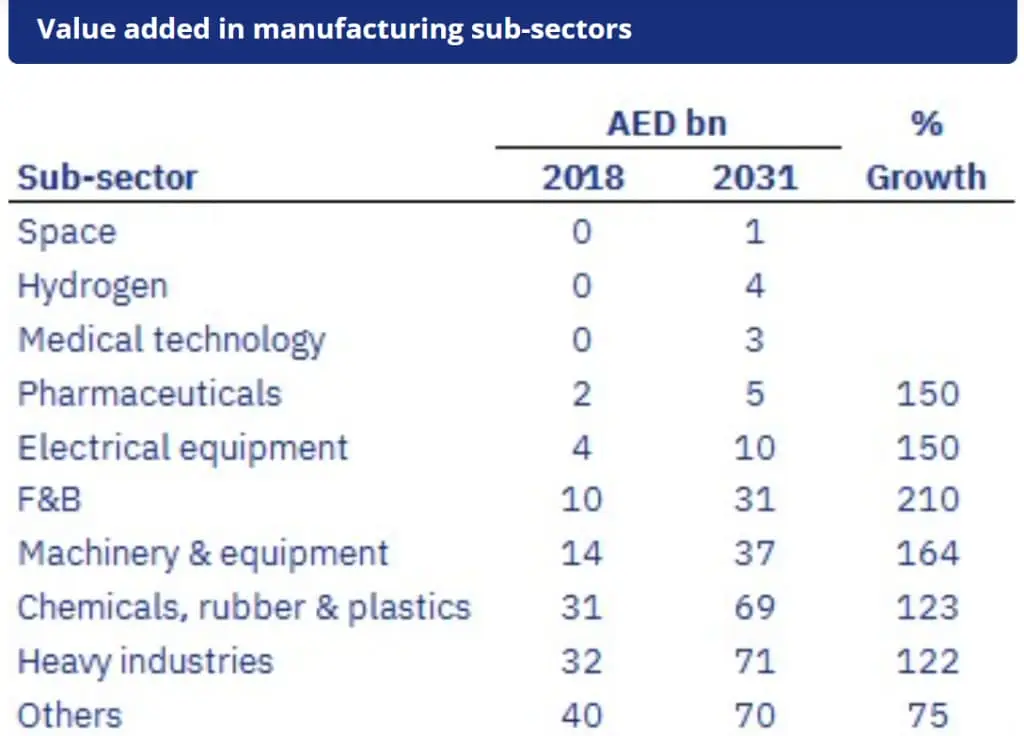
  • The DED Payment Voucher: How to get it

    The DED Payment Voucher: How to get it

    Starting a business in the United Arab Emirates (UAE) demands careful attention to administrative procedures and getting the Dubai Economic Department (DED) Payment Voucher is a vital step for a smooth setup process. Recognising the meaning of this document, Shuraa is dedicated to guiding you through professionally procuring your DED payment voucher.

    This blog serves as your complete source for understanding and learning the difficulties of the DED payment voucher system. From its benefits to the process of getting and reviving it, we provide actionable visions to allow your business and safeguard compliance in the dynamic UAE market. Shuraa Business Setup will shorten the voyage to success together by connecting the power of the DED payment voucher.

    What Does DED Stand for in Dubai?

    The Department of Economic Development (DED) plays a key role in shaping and steering economic policies within Dubai. Its main aim is to propel Dubai into a global financial powerhouse. This objective is pursued by applying six strategic pillars, each geared towards fostering the necessary infrastructure, regulations, and technology to attract local and foreign investors, businesses, and SMEs to operate within Dubai’s vibrant economic landscape.

    These six pillars encompass:

    • Economic Growth
    • Economic Competitiveness
    • Business Community Happiness
    • Economic Foresight and Planning
    • Advance DED
    • Financial Sustainability

    Moreover, the DED is trusted with granting, amending, and overseeing company licenses throughout Dubai. It has the authority to issue trade licenses for up to 2,100 business activities categorised under industrial, commercial, professional, and tourist sectors.

    What is a DED Payment Voucher in the UAE?

    In the United Arab Emirates (UAE), a payment voucher is critical for recording your business’s daily financial activities. It is essential for preserving accurate financial records and guaranteeing compliance with regulations. One specific type of payment voucher is the DED payment voucher, generated by the Department of Economic Development (DED) upon successfully submitting all necessary documents for trade license renewal. This voucher acts as proof of payment for the renewal fees and guarantees the timely renewal of your trade license.

    How Can I Get a DED Voucher?

    Securing your DED voucher can be achieved through several avenues. Firstly, you can receive it directly on your mobile phone via SMS, visit designated service centres such as Ta-sheel or Amer, or generate it online from the official DED website.

    Receive Payment Voucher Via SMS

    Through SMS, you can get your DED payment voucher in the quickest and easiest way possible. Encrypt your trade license number and send it to 6969 via text message. Within approximately 20 seconds, you’ll receive a web link to download the payment voucher in PDF format instantly.

    Alternatively, if you prefer personal assistance or have the time for face-to-face interaction, head to the nearest Amer or Ta-sheel service centre; upon providing your Trade License Number, an advisor will print out the voucher for you, enabling immediate payment. However, a service charge may be applicable for this option.

    Lastly, for the online generation, access the DED website at https://www.dubaipulse.gov.ae/organisation/ded and log into your account. From there, navigate through the renewal process to obtain your payment voucher. Further details on the renewal procedure will be provided later in this guide.

    How Can I Check My DED Fines?

    You must access the DED website and log into your account to ascertain your DED fines. Once logged in, follow these straightforward steps to determine if there are any penalties and proceed to clear them:

    • Direct to the business dashboard and locate the ‘My Transactions’ section. Click on ‘Pay Fines’.
    • In the ‘View Fines’ section, input your license number into the provided text box and click ‘View’.
    • The system will produce an inspection report, displaying any penalties imposed on your license.
    • You’ll then be directed to the payment gateway to settle the outstanding amount.

    The DED issues fines related to trade licenses and their renewals. For example, failing to renew your trade license on time can result in a fine of AED 250. Additionally, operating a company in Dubai without a valid license may incur a further penalty of AED 5,000.

    What are the Advantages of Possessing a Payment Voucher?

    Below are the following benefits of having a payment voucher:

    • The DED payment voucher serves as evidence of payment for various transactions, such as license renewals, fines, fees, and other business-related payments.
    • By using the voucher, businesses can maintain accurate financial records and guarantee compliance with regulations set by the DED.
    • The DED payment voucher invoice clearly records all financial transactions, facilitating audits and demonstrating compliance with financial regulations.
    • Using the payment voucher helps ensure businesses make timely payments for licenses, fines, fees, and other responsibilities, thereby avoiding financial penalties, operational disruptions, and potential blacklisting by the government.

    How Do I Verify My DED Fines?

    Below are the following procedures for verifying the DED fines:

    • Individuals can verify their DED fines through both online and offline channels, ensuring accessibility and convenience.
    • Visit the official DED website or access the DED e-services section. Within this platform, locate the fines verification option.
    • The fines verification section provides a straightforward interface, allowing users to input their trade license details easily.
    • Upon entering license details, the system retrieves and displays all outstanding fines, clearly outlining each violation and the corresponding amount due.
    • After reviewing fines, users can settle them directly through the online platform, ensuring a secure and straightforward payment process.
    • Upon successful payment, the system generates a confirmation, providing assurance that fines have been addressed.
    • Alternatively, individuals can visit a DED service centre for personalized assistance from knowledgeable staff, combining online accessibility with face-to-face support for efficient fine management.

    Steps to Renew Your DED Trade License

    Steps to Renew Your DED Trade License

    Below are the following steps to renew your DED trade license:

    1. Initiate Renewal Process: Begin the renewal process at least one month before the expiration date. Access the DED’s online portal or visit a DED service centre to kick-start the journey.
    2. Access Online Portal: Log into the DED’s e-services platform and navigate to the license renewal section. Follow the prompts to select the renewal option and initiate the systematic process.
    3. Document Submission: Provide the necessary documents for verification, ensuring compliance with regulatory standards and ethical business practices. Submit the required documents through the online portal.
    4. Payment Phase: Generate a DED payment voucher specific to the renewal fees securely through the online platform. The system calculates fees based on business nature, providing a transparent breakdown of costs.
    5. Complete Transaction: Proceed to complete the transaction securely online, utilizing the DED payment voucher. Ensure precise and informed payment, adhering to regulatory requirements.
    6. Receive Renewed License: Upon successful payment, the system electronically issues the renewed trade license. Enjoy uninterrupted business activities, facilitated by the seamless integration of online and offline elements provided by the DED.

    What is the cost of a DED License?

    The cost for a DED license begins at AED 12,000*, varying depending on the nature of your business. For an accurate quote tailored to your specific business activities, reach out to one of our experienced business setup managers. They will provide you with an up-to-date price reflecting the activities you intend to undertake.

    What is The DED in UAE?

    The Department of Economic Development (DED) in the UAE holds the responsibility of shaping and guiding economic policies in Dubai. Its primary objective is to position Dubai as a leading global economic hub.

    To get a DED payment voucher, individuals can opt to receive it via SMS, visit or contact service centres like Ta-sheel or Amer, or generate it online from the DED website.

    Additionally, the DED plays a critical role in implementing the UAE VAT Law and Regulations. These regulations introduce considerations for businesses, particularly regarding the use of vouchers. Vouchers have become essential for businesses across various industries in the UAE, offering customers opportunities for goods, services, or discounts. Effectively navigating the UAE VAT landscape necessitates a thorough understanding of the VAT implications associated with vouchers.

    How to Lower Your Payment Voucher Amount in the UAE

    While the DED payment voucher remains a vital document for Dubai businesses, there are strategies to potentially reduce the amount you need to pay. Submitting your Dubai Residential Ejari and the most recent DEWA bills to the DM Revenue Department is one avenue that could potentially lead to discounts on the voucher amount.

    Another approach is to request an instalment cashback facility for the license renewal fee. This can be accomplished by providing specific documents, including a copy of the last voucher issued for previous renewal or incorporation, a letter requesting instalment payments, and a copy of the Emirates ID of the license holder.

    Exploring other potential discounts and benefits during DED license renewal is also worthwhile. These may include reduced market fees, sales, and discounts on chamber of commerce fees.

    Engaging with Shuraa

    By now, you should have a clear understanding of what a DED payment voucher involves and how to get it. Should you still have any inquiries, feel free to reach out to one of our business setup advisors, who will gladly assist you. Shuraa Business Setup stands as the UAE’s premier and most reliable business setup authority. With a track record spanning since 2001, we’ve supported over 50,000 entrepreneurs in successfully starting their ventures.

    Our expertise lies in providing custom-made solutions that precise match your requirements when boarding on a business venture. We pride ourselves on bringing prompt, dependable, hassle-free, and seasoned assistance. Our services extend beyond just setting up your business in Dubai. Through Shuraa Business Setup, our networking tool, you can engage with the broader business community in the region.

    To connect with us, you can dial +97144081900 or send a WhatsApp message to +971507775554. Alternatively, reach out via email at info@shuraa.com for swift assistance.

    The DED issues trade licenses across four categories: industrial, commercial, professional, and tourist/instant licenses.

    Frequently Asked Questions (FAQs)

    1. How Can I obtain a payment voucher from DED?

    You can obtain a DED payment voucher by submitting your license application or renewal online through the DED portal, service centers, or typing centers. The system generates the voucher automatically, which may be downloaded or printed.

    2. How Can I pay a payment voucher online?

    To pay your DED payment voucher online, log in to the DED e-services site or DubaiNow app, input the voucher number, and pay with a debit or credit card. When the payment is completed, you will receive a confirmation receipt.

    Disclaimer: The information in this post is for general guidance only and may change due to updates in government policies or regulations.
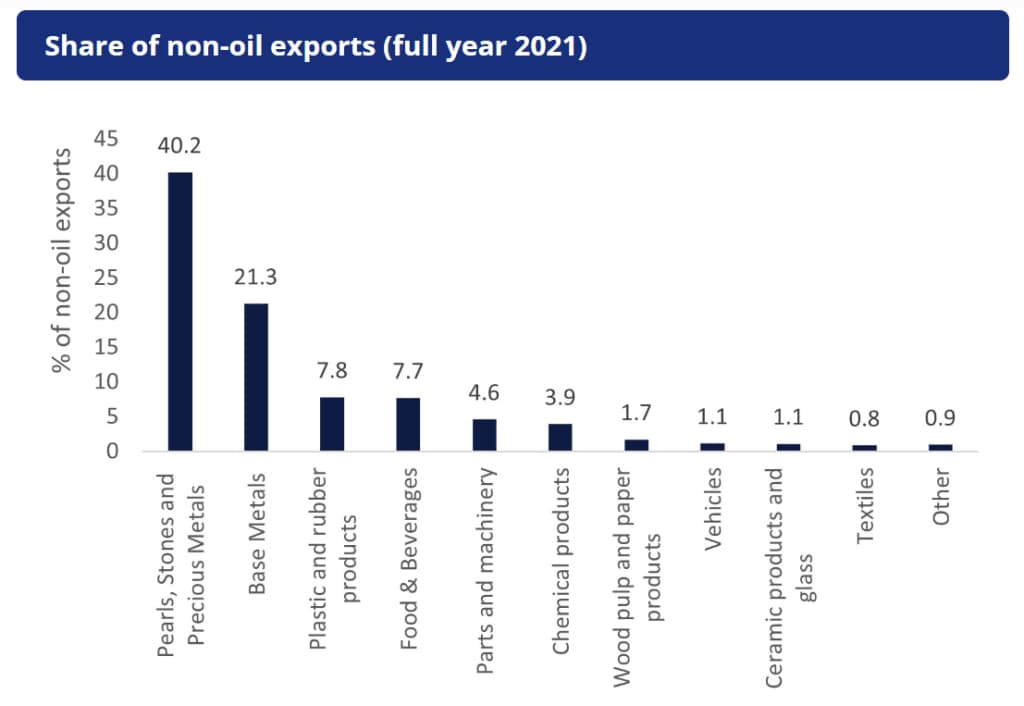
  • Overview of Textile Industry in the UAE

    Overview of Textile Industry in the UAE

    The textile industry in UAE stands as a lively witness to the nation’s commitment to economic change and invention. Amidst the towering skyscrapers and active cityscapes, this often-overlooked sector quietly succeeds, intertwining a rich textile of ritual, technology, and trade. From the ancient art of intertwining to cutting-edge fabric technologies, the textile industry in the UAE has evolved into a dynamic ecosystem, an amalgamation of heritage with modernity, to carve out a niche in the global marketplace. In this blog, Shuraa Business Setup, we research the intricacies of this fascinating industry, discovering its historical roots, current landscape, and promising prospects.

    What Is the Textile Industry?

    The textile industry in UAE encompasses all features of generating, producing, and distributing fabric, garments, and related materials. Traditionally reliant on natural fibers, technological advancements now allow for the manufacture of synthetic textiles using artificial compounds.

    Over the past few decades, the textile sector has undergone significant alteration, and the acceptance of modern equipment and techniques to improve efficiency. This development has led to the production of durable materials and technical textiles while prioritizing environmentally sustainable practices. By employing greener manufacturing processes, such as reducing energy consumption and minimising carbon emissions, industry is adapting to meet contemporary demands.

    The Dubai textile industry is a prime example of rapid technological advancement. In recent years, substantial investments have been made to improve environmental sustainability nationwide, focusing on bolstering the local textile sector.

    Understanding Textile Industry of the UAE  

    Despite minimal marketing efforts, the United Arab Emirates (UAE) hosts a vigorous textile sector, producing a range of items including child safety seats, curtains, luggage, and high-end fashion pieces tailored for local preferences. Woven goods like knitwear stand out as top sellers, propelling the industry to second place in the country’s economy, just behind oil. While serving over 50 international markets, local demand, particularly from male consumers in cities like Dubai, significantly contributes to growth in the high fashion segment.

    Moreover, the UAE’s Fujairah “free zone” has attracted considerable business relocation, offering tax exemptions and repatriation benefits. This strategic advantage has spurred the establishment of a major textile mill in 2012, surpassing any other in the Middle East. Notably, its operational efficiency is enhanced by employees maneuvering on roller skates, confirming swift productivity.

    Advantages of Textile Industry

    The United Arab Emirates (UAE) benefits from strategic advantages that fuel its textile industry’s growth. Its prime location as a shipping hub increases trade opportunities, while booming economies attract businesses looking for tax incentives, expanding the customer base. Initiatives like the International Textile Fair (ITF) in Dubai foster industry collaboration and global visibility. Additionally, the UAE’s expansion into Africa leverages lower production costs and central shipping routes, enhancing competitiveness and market reach.

    Challenges Faced by the UAE Textile Industry

    One of the primary challenges confronting the United Arab Emirates (UAE) textile industry is its limited marketing efforts. Products are mainly distributed through existing channels or to customers already familiar with them, impeding international exposure. While initiatives like the ITF have been launched to address this, international advertising remains insufficient.

    Furthermore, the industry faces stiff competition, notably from Turkey, which benefits from a central location and produces similar goods. This direct rivalry poses a significant threat to the UAE’s market share.

    Another pressing concern is the energy crisis. While the situation has improved, many Middle Eastern countries still grapple with power outages and soaring prices of natural gas and other energy sources. This drives up manufacturing costs, leading to higher prices for textile products and eroding competitiveness.

    Exploring Dubai Textile City

    Dubai Textile City (DTC) is a venture between TEXMAS and the Dubai Port and Customs Authority to allow textile traders in Dubai and beyond. This innovative free zone provides a platform for storing textile fabrics over long periods without experiencing customs duties, mainly catering to traders engaged in re-export activities.

    Backed by comprehensive support from Dubai Ports and Customs, DTC offers support in directing visa requirements for its members and rationalising the operational landscape for traders. TEXMAS imagines DTC as a compound for imparting correction within the trade while forecasting its potential to attract global attention, thereby accompanying new markets and customers for Dubai-based traders.

    Crucially, obedience to international standards is authoritative within DTC and its affiliated cities, necessitating the utilisation of the metric system for measuring textile capacities. Additionally, vendors must guarantee their products meet national safety regulations, as non-compliance poses significant barriers to business growth and development.

    Types of Corporate Structures

    Below are the following types of corporate structures:

    1. Free Zone Limited Liability Company (FZ-LLC): A FZ-LLC is an independent legal entity with a single owner or shareholder, an individual or a corporate entity. This structure provides stakeholders with limited liability, dropping their risk. However, the risk-to-reward ratio tends to be lower.
    2. Free Zone Company: A Free Zone Company is a corporate entity comprising two or more shareholders, akin to the FZ-LLC structure. Shareholders may be individuals or corporate entities. This structure is widely adopted as the primary form of company formation within free zones.
    3. Branch of a UAE or Foreign Company: A branch operates under the name of its parent company and represents an existing entity. The parent company may be located elsewhere in the country or a different jurisdiction.

    Once the appropriate business entity type is selected, the next step is determining the specific business activities.

    Permissible Business Activities

    Like other free zones in Dubai, this location maintains a roster of authorised business activities. This entails diverse opportunities across various sectors, enabling companies to leverage the advantages and perks available. These activities encompass industries such as:

    1. Trading
    2. Textile
    3. Fashion

    The free zone fosters an environment conducive to entrepreneurial growth and sectoral diversification by offering a broad spectrum of permissible business activities.

    Why Invest in the Dubai Textile Industry?

    Here are the reasons why you should consider investing in the textile industry in UAE:

    1. Popularity Surge: The textile industry in UAE has experienced a surge in popularity, fueled by social media and modern marketing, particularly in fashion apparel.
    2. Fast Fashion Dominance: The rise of fast fashion, joined with online shopping trends, presents a lucrative opportunity for investment in the textile sector.
    3. Online Store Advantage: Investing in an online store requires less capital and offers a convenient way to tap into the UAE and global markets.
    4. Dubai’s Strategic Location: Dubai is one of the world’s most efficient transportation and logistics centres. Its airport handles millions of passengers annually, facilitating global trade.
    5. Access to Global Markets: Setting up a warehouse and manufacturing facility in Dubai enables easy access to global sales opportunities.
    6. Online Selling Platforms: Various online platforms, including Shopify, offer marketing and brand-building tools, shortening the procedure of selling textile products online.

    Steps to Starting an eCommerce Business in Dubai

    Making an online store or eCommerce business in Dubai has become increasingly straightforward, thanks to healthy online tools that eliminate the need for coding. Below are a few steps to set up your online store:

    • Step 1: Define Your Product: Begin by finalising your product. Given the competitive online landscape, investing time in refining your product is crucial to distinguish it from competitors. Professional photography can meaningfully improve your product presentation and make it stand out on your website.
    • Step 2: Start Your Online Store: Utilise user-friendly platforms like Shopify to set up your online store flawlessly. These platforms mix eCommerce solutions into website builders, allowing you to purchase a domain, design your website, and manage your inventory all within one interface. Moreover, such platforms offer affordable packages, making them accessible for businesses of all sizes.
    • Step 3: Invest in Marketing: Marketing plays a pivotal role in the success of your eCommerce business. Beyond promoting individual products, focus on marketing your entire online venture. Study leveraging social media ads and applying SEO strategies to improve your website’s search engine ranking.

    How to Start a Business in the UAE?

    Going on board a business venture in the UAE is an efficient procedure that can be accomplished within a few weeks, particularly with the help of professional consultants. Here’s an essential step to start a business in the United Arab Emirates:

    • Step 1: Choose a Memorable Name: Begin by selecting a convincing and straightforward name for your business. Opt for something catchy yet easy to remember, as this lays the foundation for creating a recognisable brand that resonates with customers.
    • Step 2: Start a Business Bank Account: Next, open a business bank account to manage your finances effectively. Modern business banking solutions automate statement generation, facilitating efficient financial management and providing real-time insights into your company’s financial health.
    • Step 3: Get a Business License: Once your preparations are complete, proceed to apply for a business license. Depending on your business type, you may need to approach either the Department of Economic Development or the Municipality in the Emirate. Given the details of the process, engaging a professional consultant is advisable. These experts possess local knowledge and language proficiency, expediting the licensing procedure and guaranteeing compliance with relevant regulations.

    Documents Needed for Business Incorporation

    Below are the mentioned documents which are needed to start a business:

    • Passport copies of the owner and shareholder.
    • Passport and CV of the manager.
    • The UAE Embassy authenticates the notarised Memorandum of Association and Articles of Association.
    • Physical address details.
    • Evidence of trade name reservation.
    • Initial approval documentation for business incorporation.
    • Proof of capital investment.
    • Board resolution from the parent company (for branch office setups).

    What are the Benefits of Starting a Business in the UAE?

    There are numerous benefits to starting a business in the UAE, including:

    1. Favorable Business Environment: The UAE offers a business-friendly environment with minimal organisation and efficient procedures for company formation.
    2. Strategic Location: Situated at the crossroads of Europe, Asia, and Africa, the UAE is a doorway to lucrative markets, facilitating global trade and accessibility to diverse consumer bases.
    3. Tax Advantages: The UAE imposes no personal income tax and provides favourable corporate tax rates, offering critical financial incentives for businesses.
    4. World-Class Infrastructure: The UAE boasts state-of-the-art infrastructure, including modern transportation networks, advanced telecommunications systems, and cutting-edge facilities conducive to business growth and development.
    5. Political Stability: With a stable political climate and robust legal framework, the UAE provides a protected environment for business operations, instilling confidence among investors and entrepreneurs.

    How to Get a Long-Term Visa in Dubai

    Safeguarding a long-term visa in Dubai knowingly benefits investors and entrepreneurs contributing substantial investments to the UAE. Here’s an essential guide to the procurement a long-term visa through investment in Dubai:

    • Step 1: Entry into the Country: Begin by entering the UAE, which can be done on any visa, including a tourist visa. Once in the country, you can initiate the process of applying for an investor visa.
    • Step 2: Investor Visa Application: Submit your investor visa application custom-made to the specific visa type you’re seeking. Typically, this requires documentation such as proof of health insurance, a good conduct certificate from Dubai police, a current UAE visa, a no-objection letter from the bank, a passport, and recent bank statements.
    • Step 3: Medical Examination: Undergo mandatory medical examinations, including X-rays and blood tests, conducted at a certified medical centre. While this process usually takes a few days, it’s a requirement for all visa types.
    • Step 4: Submission of Supporting Documents: Finally, submit all required supporting documents, including company registration papers and bank statements, to demonstrate adequate funds. The investment amount varies based on the visa category pursued, with the Golden Visa option necessitating a minimum investment of AED 10 million.

    Investing in the Textile Industry in Dubai

    The textile industry presents profitable investment opportunities, especially in Dubai, which is well-known for its booming economy and favourable tax environment. By investing in Dubai, you position yourself for success and cover safeguarding a long-term visa for yourself and your family. For comprehensive guidance on setting up a textile business in the UAE, consult Shuraa Business Setup. To learn more about the benefits of starting your business in Dubai or for any inquiries, contact us at +97144081900 or send a WhatsApp message to +971507775554. Alternatively, reach out via email at info@shuraa.com for prompt assistance.

    Frequently Asked Questions about Textile Industry

    1. Which Freezone is Dedicated to the Textile Industry?

    Dubai Textile City helps as the designated free zone for the garment industry.

    2. How to Establish a Garment Company in Dubai?

    In brief, select your desired location, compile and submit all necessary documents for licensing, and register your business with approvals from relevant authorities.

    3. Who Grants Business Licenses in Dubai?

    The Department of Economic Development issues the business license upon receiving approvals from the relevant authorities.

    4. What License is Required to Sell Clothes Online in the UAE?

    An E-trade license is required to sell clothes online or via social media.

    5. What is the Cost of Establishing a Textile Company in the UAE?

    The cost varies depending on the chosen location and the nature of the business activity.

  • Labour Contract in UAE: Your Simple Guide to Rights & Rules

    Labour Contract in UAE: Your Simple Guide to Rights & Rules

    Starting or renewing a job in the UAE? Your labour contract is your key document, and recent legal changes have made understanding it more crucial than ever. This guide cuts through the complexity, explaining the different contract types, your rights, and how to get your contract online. At Shuraa Business Setup, we help make this process smooth and compliant, so you can focus on your career with confidence.

    What is a Labor Contract in the UAE?

    In simple terms, a UAE labour contract is a legally binding deal between you and your employer. Once you both sign it, you are agreeing to the terms set out in the document.

    What does it cover? Your contract clearly outlines your job duties, work schedule, and performance goals. It also binds your employer to provide you with the benefits and compensation promised.

    These contracts, which are easily accessible online, can be of different types, all falling under the official UAE Labour Law. The main categories include Limited (fixed-term), Unlimited, Part-time, Full-time, and Temporary contracts.

    Limited vs. Unlimited Contracts: What’s the Difference?

    Knowing which contract you have is vital, as they differ in three key ways: your legal responsibilities, your job security, and the rules for ending the employment.

    • UAE Fixed-Term Contracts (Limited)
      These contracts are for a specific period, with a clear start and end date. Recent laws now cap this period at three years. A crucial update mandates that all employees must be on fixed-term contracts.
    • UAE Flexible Contracts (Unlimited)
      Under the new law, these contracts do not have a fixed end date. They only terminate by mutual agreement or when a notice period is served. If you wish to resign, you must give at least 30 days’ notice.

    Part-Time vs. Full-Time vs. Temporary Contracts in the UAE

     The law categorizes work based on your hours:

    • Full-time: The standard contract, requiring up to 48 hours of work per week.
    • Part-time: You work for one employer but for fewer than 48 hours a week. You can take on other part-time jobs without your main employer’s permission, but you may need a permit from MoHRE.
    • Temporary: This is for a specific, short period, often used for the initial 90-day probation.

    After the temporary period, employers typically extend the contract as part-time or full-time. Employees under a part-time contract can take on additional part-time work with other employers without permission. However, those seeking to work part-time for multiple employers need a permit from the Ministry of Human Resources.

    Understanding Your Work Hours and Overtime

    For most industries, your workday cannot legally exceed eight hours. If you work more than 48 hours a week, you are entitled to overtime pay—your hourly rate plus an extra 25%. For night work (between 9 pm and 4 am), this increases to your hourly rate plus 50%.

    Navigating the New UAE Labour Law: Key Changes You Must Know

    Federal Decree-Law No. 33 has updated the rules, generally giving employees more rights while offering employers some flexibility. Here’s a breakdown of the most important changes.

    1. The Move to Fixed-Term Contracts

    The recent legislation mandates a shift to fixed-term contracts for all employees, with HR professionals primarily tasked with communication. Employers must complete this transition by February 2023.

    2. Updated Probation & Notice Periods

    Employers have the authority to impose a probation period of up to six months for addressing performance issues or for new hires. If termination occurs during probation, the employer must give the employee at least 14 days’ notice.

    Similarly, employees on probation must give their employer a 14-day notice if leaving the UAE. However, if seeking employment with a different UAE employer, a 30-day notice is required.

    3. Official Recognition of Flexible Work

    The recent legislation officially recognises flexible work contracts, allowing employees to determine their work hours. Alternatively, employers may request varying work schedules from employees across different weeks throughout the year. Employers must adhere to workload regulations and overtime laws despite the fluctuating hours.

    4. Non-Compete Clauses

    Employers have the right to incorporate non-compete clauses in labour contracts. However, part-time employees cannot seek additional work with non-competing employers. Employees working for multiple employers need approval from MoHRE.

    5. Rest Day Policies

    Employers must ensure every employee has a weekly rest day, although Friday is no longer mandatory. Compensation, such as overtime pay or a substitute rest day, must be provided for employees working on their designated rest days.

    6. Currency Arrangements

    Employers and employees can agree on payment in any currency, but payments made through the Wages Protection System must be in UAE Dirham, requiring conversion for processing.

    7. Leave Benefits

    Employees must utilise accrued leave within the same year of earning it or may be eligible for encashment by year-end.

    Employees accrue two days per month for the initial six months, with a guaranteed 30-day leave entitlement after one year of service. The law also recognises specific leave categories:

    • Maternity leave
    • Compassionate leave
    • Study leave

    Maternity leave encompasses 45 days at full pay and 15 days at half pay. In childbirth complications, employees are entitled to an additional 30 days of full-pay leave. Compassionate leave extends to 3-5 days of paid leave for bereavement within the immediate family.

    Study leave grants ten days at an approved UAE educational institution, available to employees with at least two years of tenure, and may be unpaid.

    8. New Termination and End-of-Service Rules

    Notice periods for terminating a fixed-term contract now depend on your tenure:

    • Less than 5 years: 30 days’ notice.
    • 5-10 years: 60 days’ notice.
    • Over 10 years: 90 days’ notice.

    Furthermore, all employees are now eligible for full end-of-service gratuity after completing at least one year of service.

    9. Important Workplace Protections

    Under the new law, employers are required to adhere to specific workplace policies, encompassing:

    • Non-discrimination against protected classes
    • Gender-based equal pay
    • Prevention of physical, verbal, and sexual harassment
    • Provision of an employee handbook

    Are There Exceptions to the Law?

    Yes. Employees in the Dubai International Financial Centre (DIFC) and the Abu Dhabi Global Market (ADGM) are governed by their own distinct labour laws.

    How to Get Your Labour Contract Online

    Need a copy of your contract? It’s a simple process through the Ministry of Human Resources and Emiratisation (MOHRE), the government body that regulates the job market.

    Via the MOHRE Website:

    • Visit the MOHRE website.
    • Find the “Services” menu and select “View Approved Contract.”
    • Choose one of the available options: [details not provided] 
    • You can search using your Transaction Number or your Personal Details (like Emirates ID).
    • Follow the prompts and enter the required information (e.g., OTP sent to your phone) to view and download your contract.

    Via the MOHRE App:

    • Download the MOHRE app from the iOS or Android store.
    • Log in to your account.
    • Go to “Services” and select “My Contract.”
    • Enter your details to pull up your contract instantly.

    Wrapping up with Shuraa?

    Whether you’re an employee checking your rights or a business ensuring compliance, getting expert advice makes all the difference. At Shuraa Business Setup, we provide tailored support to help you navigate the UAE’s legal landscape seamlessly.

    Contact us for a free consultation today!

    Frequently Asked Questions (FAQs)

    1. What is the difference between a limited and unlimited contract in the UAE?

    A limited (or fixed-term) contract has a specific start and end date, typically lasting up to 3 years. An unlimited contract does not have a fixed end date and continues until it is terminated by either the employer or employee by serving the required notice period.

    2. Can I switch from an unlimited to a limited contract in the UAE?

    Yes. With the implementation of the new UAE Labour Law (Federal Decree-Law No. 33), all new contracts and renewals are now issued as fixed-term (limited) contracts. If you were on an unlimited contract, your employer should have transitioned you to a fixed-term contract upon renewal.

    3. What is the notice period for resigning in the UAE?

    The legal minimum notice period is 30 days, unless your contract specifies a longer period. This applies to both limited and unlimited contracts after the probation period.

    4. How can I download my UAE labour contract online?

    You can easily access your labour contract online through the Ministry of Human Resources and Emiratisation (MOHRE) website or their smart app. You will need your Emirates ID, transaction number, or passport details to log in and view or download the contract.

    5. What are my rights if my employer terminates my contract?

    If your employer terminates your contract, they must provide a notice period (30, 60, or 90 days based on your tenure) or pay you in lieu of notice. They are also legally required to pay all your end-of-service benefits, settle any outstanding dues, and provide your repatriation ticket within 14 days of the contract’s end.

    6. What is the probation period in the UAE?

    The probation period can be up to a maximum of 6 months. If you wish to leave during probation to join another company in the UAE, you must give a 30-day notice. If you are leaving the country, a 14-day notice is required.

    7. Am I eligible for end-of-service gratuity if I resign?

    Yes, you are eligible for end-of-service gratuity after completing at least one year of continuous service, whether you resign or your contract is terminated. The calculation is based on your basic salary and the length of your service.

    8. Is a labour contract and a work permit the same thing?

    No, they are related but distinct documents. A labour contract is the agreement between you and your employer outlining the terms of employment. A work permit (or labour card) is the official document issued by MOHRE that grants you legal permission to work for that specific employer in the UAE.

    Disclaimer: The information in this post is for general guidance only and may change due to updates in government policies or regulations.
  • UID Number in the UAE: 2026 Guide to the Unified Identification Number

    UID Number in the UAE: 2026 Guide to the Unified Identification Number

    If you live, work, or plan to move to the UAE, your Unified Identification Number (UID) is essential for all administrative processes. Without it, you may encounter delays and confusion. Understanding your UID ensures efficient access to visas, government services, and business setup.

    This guide from Shuraa Business Setup simplifies the UID process. We explain its importance, how to locate it in various situations, and how to address issues such as duplicates. With over 26 years of experience and more than 100,000 businesses established, we provide the knowledge you need to navigate the UAE’s system confidently.

    What is a UID Number in the UAE?

    The Unified Identification Number (UID) is a unique 9–15-digit code assigned to every individual entering the UAE on a visa. Issued by the GDRFA (General Directorate of Residency & Foreigners Affairs) and the ICA (Federal Authority for Identity, Citizenship, Customs & Port Security), it acts as your permanent reference number within the government’s immigration system.

    The UID number serves as your permanent identification record in the UAE. Unlike your visa or Emirates ID number, it does not change, regardless of job changes, visa renewals, or changes in residency status.

    Key Facts About the UID Number:

    • Issued by: GDRFA and ICA.
    • Format: A unique 9–15-digit code.
    • Permanence: Created once and remains the same for life.
    • Core Purpose: Connects all your immigration, visa, and Emirates ID records under a single reference number.

    The “Why” Behind the UID: A System Perspective

    The UID is not a random number; it is fundamental to the UAE’s goal of a streamlined, secure, and efficient digital government. Previously, individual emirates and government departments often isolated records within their own systems. The UID system now consolidates these records into a single federal digital identity for each resident and visitor.

    This change supports initiatives such as UAE Vision 2021, which seek to streamline service access, strengthen national security, and prevent identity fraud. Your UID serves as your unique identifier within this digital framework, improving efficiency and reliability for all users.

    Understanding the Differences Between UID, Emirates ID, and Visa Number

    These numbers are often confused. Below is a clear explanation of each.

    IdentifierPurposeWhere to Find ItDoes It Change?
    UID NumberYour master file number. Tracks all immigration & residency records across your lifetime in the UAE.Visa sticker, GDRFA/ICA portals, entry stamps.No. It is permanent.
    Emirates ID NumberYour official proof of identity for daily services (banking, telecom, government transactions).Physical Emirates ID card.Yes. A new number is issued with each card renewal (typically every 5-10 years).
    Visa NumberSpecific to a single visa issuance or permit.Printed on the specific visa document (often near the UID).Yes. You get a new one with every new visa or renewal.

    The Importance of Your UID Number

    Your UID forms the foundation of your digital identity in the UAE. You require it for the following purposes:

    1. Government Services: Access healthcare (HAAD/DHA), register children for school, and file taxes.
    2. Visa and Residency Processes: Apply for, renew, amend, or cancel your residence visa and Emirates ID.
    3. Business Setup and Compliance: Register a company, obtain trade licenses, and process employee visas under your company file.
    4. Security and Record Integrity: Maintain a secure, unified record to prevent identity confusion and fraud across government platforms.

    UID Scenarios: Quick Reference Table

    Your use of the UID will vary based on your specific situation. Please review the following information:

    ScenarioWhen You Get ItPrimary Use Cases
    New Employee from OverseasUpon your first entry visa or employment visa issuance.All visa renewals, Emirates ID application, labor card processing, opening a bank account.
    Dependent Family MemberUpon issuance of the family sponsorship visa.Linking to the sponsor’s file, accessing healthcare, school registration.
    Investor / Business OwnerUpon receiving your investor visa.All business licensing, corporate bank accounts, investor-specific services.
    Newborn Child in the UAEDuring the birth certificate and first residency visa process.Creating their lifelong government record, linking to parents’ files.

    Where to Find Your UID Number

    You can find your UID number in the following locations:

    1. Residence Visa Sticker or E-Visa: The UID appears at the top, near or above the “File Number.”
    2. Emirates ID Application Slip: Government authorities reference the UID during the application process.
    3. GDRFA/ICA Smart Services: Official government portals and apps, such as ICA or GDRFA, display your UID in your profile.
    The UID number location on a UAE residence visa.
    The UID number location on a UAE residence visa.

    How to Check Your UID Number Online

    If you do not have your physical visa, you can retrieve your UID instantly through the official GDRFA service.

    1. Visit the official GDRFA Unified Number Inquiry page.
    2. Enter your details accurately:
      • Passport Number
      • Nationality
      • Date of Birth
      • Gender
    3. Complete the security check by solving the CAPTCHA.
    4. Click “Submit.” Your UID number will appear on the screen. Please save it securely.

    How to Get a UID Number

    You do not need to apply for a UID separately. It is automatically generated and assigned when you apply for your first UAE visa, whether for employment, family sponsorship, or tourism.

    Proactive UID Management: Best Practices

    Manage your UID carefully to prevent future complications.

    • Store It Securely: Save a digital copy of your visa page, including the UID, in a secure cloud folder as soon as possible. Include it in your list of important documents.
    • Verify Accuracy Early: When you first receive your UID, confirm that your personal details, such as name spelling and nationality, on the visa are completely accurate. Any discrepancies may cause problems.
    • Use as Your Primary Reference: When contacting any government authority, such as GDRFA, ICA, or MOHRE, lead with your UID so they can locate your file more efficiently.
    • Keep Records: Maintaining a personal log of your UID, visa issue dates, and Emirates ID numbers is particularly useful for business owners managing multiple employee files.

    Solving Common UID Number Problems

    1. Problem: Multiple UID Numbers

    In rare cases, prior system entries or the use of multiple passports may result in multiple UIDs for a single individual. This can cause significant processing delays.

    Solution: How to Merge UID Numbers

    1. Visit the nearest GDRFA office or access their online service portal.
    2. Prepare the required documents, including passport copies, all visa copies (old and new), and Emirates IDs.
    3. Submit a formal request to merge the UIDs into a single primary number.
    4. Pay any applicable fees and wait for official confirmation.

    2. Problem: Lost or Forgotten UID

    While a UID cannot be lost, it may be forgotten or inaccessible if the relevant documents are unavailable.

    Solution:

    • First, use the online inquiry service detailed above.
    • If that fails, call the GDRFA at 8005111 (within UAE) or +971 4 313 9999.
    • If necessary, visit a GDRFA customer happiness center in person with your passport for assistance.

    Common Pitfalls and How to Avoid Them

    • Pitfall: Mistaking an old “File No.” for the UID.
    • Avoidance: The official UID is 9-15 digits and is now clearly labeled “UID” or “Unified Number” on newer documents. When in doubt, use the online inquiry tool.
    • Pitfall: Not checking for multiple UIDs after passport renewal.
    • Avoidance: If you entered the UAE on an old passport and now use a new one, do a proactive UID check online with both passport numbers to ensure your record is unified.
    • Pitfall: Businesses mis-filing employee documents.
    • Avoidance: Companies should use the employee’s UID as the primary identifier in their PRO files. This prevents confusion with common names and ensures smooth processing with government portals.

    You May Also Like

    Frequently Asked Questions (FAQ)

    Get clear, immediate answers to the most common questions we receive about the UID.

    1. Is the UID number the same as the Emirates ID?

    No. Your UID is your permanent immigration file number. The Emirates ID number appears on your physical ID card and changes with each renewal.

    2. Where is the UID number on a Dubai visa?

    On Dubai and most other emirate visas, the UID number appears at the top of the visa sticker or e-visa copy, usually above your personal details and near the “File Number.”

    3. Can a person have two UID numbers in the UAE?

    No. Each individual should have one permanent UID. However, system errors or previous entries may create duplicates. If this occurs, contact the GDRFA to merge them.

    4. What is the UID number used for?

    The UID links all your UAE immigration records, including visa applications, renewals, and entry-exit history. It is also essential for accessing government services such as healthcare, education, and business licensing.

    5. How can I find my UID number without a visa copy?

    Use the online GDRFA Unified Number Inquiry Service with your passport details. If you are unable to retrieve your UID, contact the GDRFA call center for assistance.

    6. I entered on a tourist visa. Do I have a UID?

    Yes. A UID is generated for anyone entering the UAE, regardless of visa type, including short-term visit visas. This creates your initial record in the system.

    7. Is the UID number confidential?

    Yes. Treat your UID as sensitive personal information. Share it only with authorized government entities, your employer or sponsor, and licensed professional partners for official purposes.

    How Shuraa Business Setup Can Assist You

    Understanding your UID is essential. Managing the related processes requires expertise. With over 26 years of experience in the UAE and a record of forming more than 100,000 businesses, Shuraa is a trusted partner. We simplify complex procedures.

    • End-to-End Business Setup & Licensing: We manage the entire process, from mainland to free zone. We ensure your company is properly registered with all relevant authorities using the correct identifiers, such as your UID.
    • Hassle-Free Visa Processing: Our experts handle applications, renewals, and amendments for employment, residence, investor, and family visas. We ensure your UID is accurately recorded at each stage to prevent future issues.
    • Direct Government Liaison & Compliance: We represent you with GDRFA, ICA, MOHRE, and DET/DED. Our services include resolving administrative challenges, such as merging duplicate UIDs, to ensure compliance and save you time.

    Ready to move forward with confidence? Schedule a free consultation with our experts. Contact Shuraa by phone at +971 4 4081900, WhatsApp at +971 50 7775554, or email info@shuraa.com.

    Disclaimer: The information in this post is for general guidance only and may change due to updates in government policies or regulations. We recommend consulting with official authorities or professional advisors for the most current and personalized advice.