Category: Tax Accounting & Finance

  • 16 Best Crypto Wallets in the UAE – The Complete 2026 List

    16 Best Crypto Wallets in the UAE – The Complete 2026 List

    Cryptocurrency has become increasingly popular in the UAE, with more and more people looking to invest in digital assets like Bitcoin and Ethereum. With this surge in interest comes the need for secure, reliable and the best crypto wallet in the UAE to store and manage these assets.

    Choosing the right crypto wallet is crucial when it comes to safeguarding your digital assets. With the growing popularity of cryptocurrency, the risk of cyber-attacks and scams has also increased. A secure and user-friendly crypto wallet can provide peace of mind and ensure that your investments are protected.

    That’s why we are here to explore the 16 best crypto wallets available in the UAE in 2026 so that you can make an informed decision and ensure your crypto investments are safe. Also, if you’re new to crypto world, let’s first understand the concept of cryptocurrency wallet in the UAE and how you can get Dubai crypto license to start your crypto venture in the UAE.

    What is a Crypto Wallet?

    A crypto wallet doesn’t actually store your cryptocurrency like a physical wallet holds cash. Instead, it securely stores the cryptographic keys that allow you to access and manage your crypto holdings on the blockchain, a digital public ledger.

    These keys are like passwords: one is public (like a bank account number) for receiving crypto, and the other is private (like your PIN) for spending it.

    Crypto wallets also provide an interface to send, receive, and potentially even trade your cryptocurrencies. Since your crypto holdings are essentially guarded by your private keys, security is paramount in a crypto wallet. Always look for features like strong encryption, two-factor authentication, and secure password management.

    Types of Crypto Wallet

    There are various crypto wallets to suit different needs. Here are some common types:

    • Hardware wallets: These are physical devices resembling USB drives that offer the most secure storage for your private keys. They are kept offline to minimize hacking risks.
    • Software wallets: These are downloadable programs for your computer or phone. They are convenient but can be less secure than hardware wallets if your device gets compromised by malware.
    • Mobile wallets: Similar to software wallets, these are apps for your smartphone that provide easy on-the-go access to your crypto.
    • Web wallets: These are online services accessed through a web browser. They are convenient but may be less secure than offline options as you entrust your keys to a third-party provider.

    16 Best Crypto Wallets for UAE Traders in 2026

    Here are the top 16 crypto wallets in the UAE:

    1. Zengo
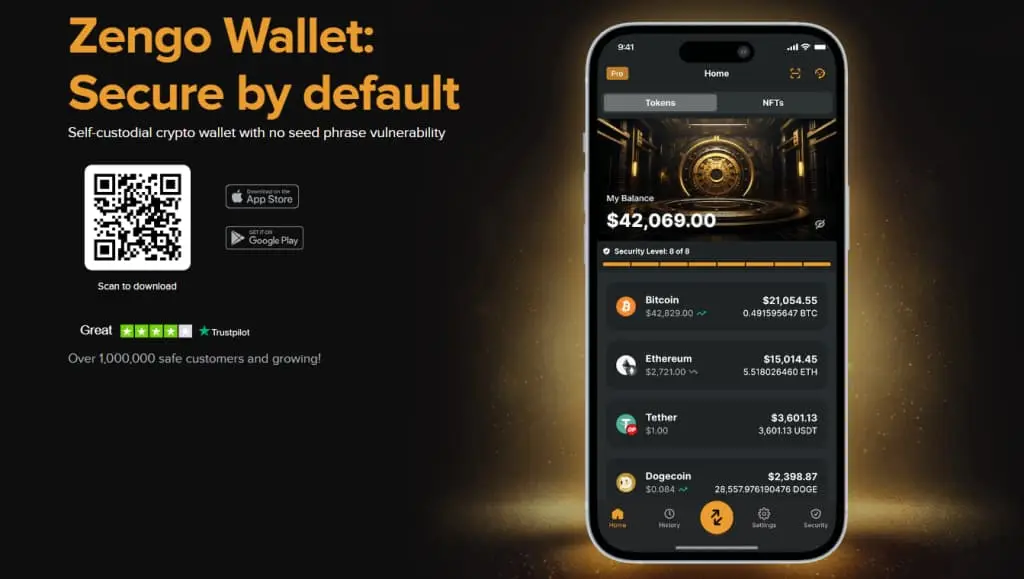
    zengo crypto wallet

    Zengo is a user-friendly mobile wallet with a focus on security and ease of use. Supports buying, selling, and trading over 120 cryptocurrencies directly within the app. Offers a built-in marketplace for NFTs.

    • Advantages for UAE users: Beginner-friendly, supports a wide range of currencies including popular ones in the UAE, built-in NFT features.
    • Disadvantages: Lower security compared to hardware wallets, might not be suitable for large holdings. (Software wallet)
    • Security features: The wallet uses multi-party computation (MPC) for private key storage and biometric authentication for added security.

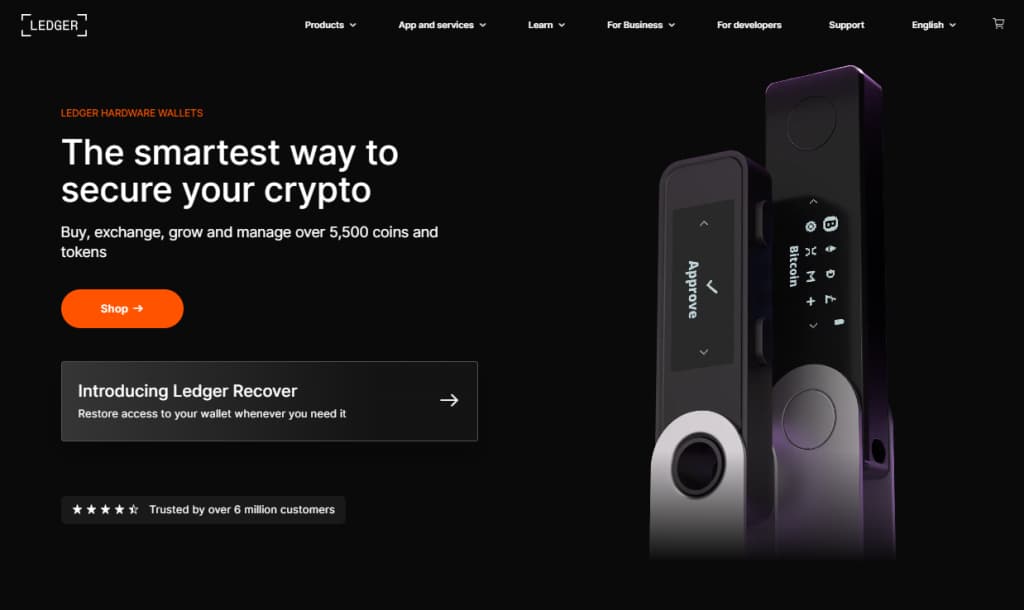
    2. Ledger Nano S Plus
    ledger hardware crypto wallet

    Ledger Nano S Plus, a leading hardware wallet known for its robust security. Stores your cryptocurrencies offline on a physical device, minimizing online hacking risks.

    • Advantages for UAE users: Top-notch security for large investments, supports various popular coins in the UAE.
    • Disadvantages: Limited storage capacity requires initial investment in purchasing the hardware wallet. (Hardware wallet)
    • Security features: Industry-leading security with secure chip element (SE) and PIN protection for offline storage of private keys.
    • Supported cryptocurrencies: A wide range of coins and tokens, including most popular ones in the UAE.
    • Additional features: Integration with Ledger Live for managing cryptocurrencies, compatibility with various third-party apps.

    3. Trezor

    trezor hardware crypto wallet

    Trezor is a hardware wallet known for its security features and ease of use. It stores users’ private keys offline, offering protection against online hacking attempts.

    • Advantages: Excellent security due to offline storage, user-friendly interface, supports a wide range of cryptocurrencies.
    • Disadvantages: Initial cost for purchasing the hardware wallet, can be less convenient for frequent trading.
    • Security features: Hardware security through offline storage, PIN protection, passphrase support.
    • Supported cryptocurrencies: Bitcoin, Ethereum, Litecoin, and over 1000 other cryptocurrencies.
    • Additional features: Secure password manager, two-factor authentication.

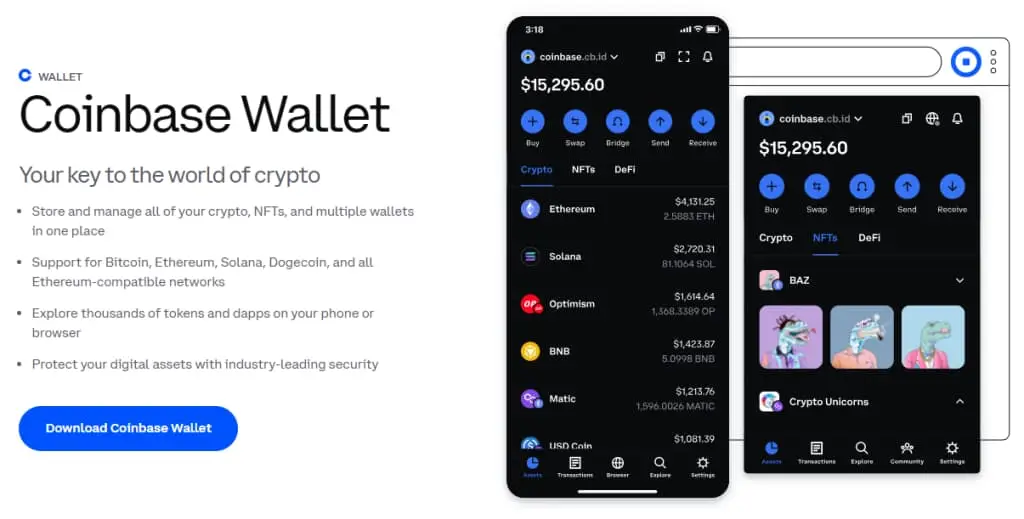
    4. Coinbase Wallet
    coinbase cryptocurrency wallet

    A secure mobile wallet from the popular cryptocurrency exchange Coinbase. Offers self-custody of your crypto holdings and integration with various DeFi applications.

    • Advantages for UAE users: Reputable brand, good security features, easy to use, integrates with DeFi platforms.
    • Disadvantages: Limited exchange options within the wallet itself, may have higher fees compared to some other options. (Software wallet)
    • Security features: Secure key storage with multi-factor authentication and optional biometric logins.
    • Supported cryptocurrencies: Thousands of crypto assets including popular ones in the UAE.
    • Additional features: Integrates with various DeFi apps and allows for staking certain cryptocurrencies.

    5. ByBit

    A user-friendly custodial wallet app from the ByBit cryptocurrency exchange. Among the best cryptocurrency wallet for UAE traders, it offers access to various features like spot trading, margin trading, and derivatives.

    • Advantages for UAE users: Easy to use, integrated with ByBit exchange for trading and other features.
    • Disadvantages: Custodial wallet (ByBit holds your private keys), may not be suitable for users who prioritize self-custody.
    • Security features: ByBit implements industry-standard security measures to protect user funds.
    • Supported cryptocurrencies: A wide range of cryptocurrencies including popular ones in the UAE.
    • Additional features: Spot trading, margin trading, derivatives, access to ByBit’s Launchpad for new token offerings.

    6. Exodus Wallet
    exodus bitcoin & crypto wallet

    Exodus is a popular software wallet known for its sleek design and user-friendly interface. It supports multiple cryptocurrencies and allows users to manage their portfolio with ease.

    • Advantages: User-friendly interface supports a wide range of cryptocurrencies, built-in exchange feature.
    • Disadvantages: Relies on the security of the device it’s installed on, may not be as secure as hardware wallets.
    • Security features: Private key encryption, optional password protection, backup seed phrase.
    • Supported cryptocurrencies: Bitcoin, Ethereum, Litecoin, and various ERC-20 tokens.
    • Additional features: Built-in exchange for swapping cryptocurrencies, portfolio tracking.

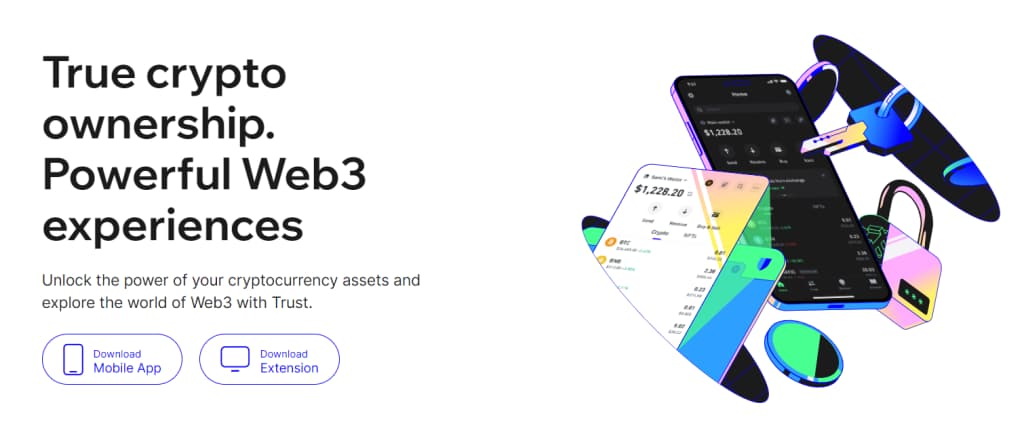
    7. Trust Wallet
    trust crypto wallet

    Trust Wallet, A popular mobile wallet known for its focus on decentralised finance (DeFi). Offers integration with various DeFi platforms and dApps, and supports staking certain cryptocurrencies.

    • Advantages: Free to use, good for exploring DeFi and dApps, supports a wide range of cryptocurrencies.
    • Disadvantages: Lower security compared to hardware wallets, might not be suitable for users who prioritize maximum security. (Software wallet)
    • Security features: Relies on user-generated passwords and optional biometric authentication for key storage.
    • Supported cryptocurrencies: Thousands of cryptocurrencies and tokens, including most popular ones in the UAE.
    • Additional features: Built-in exchange for swapping tokens, integrates with DeFi platforms and allows for staking.

    8. OKX Wallet

    A user-friendly mobile wallet app from the OKX cryptocurrency exchange. Offers support for NFTs, integrates with a DEX aggregator for finding the best swap rates, and allows access to Web3 functionalities.

    • Advantages for UAE users: Easy to use, integrated with OKX exchange for trading and other features, supports NFTs and Web3.
    • Disadvantages: Custodial wallet (OKX holds your private keys) may not be ideal for users who prioritize self-custody.
    • Security features: OKX implements industry-standard security measures to protect user funds.
    • Supported cryptocurrencies: A wide range of cryptocurrencies including popular ones in the UAE.
    • Additional features: Built-in DEX aggregator, NFT support, access to Web3 dApps.

    9. Atomic Wallet

    atomic crypto wallet

    Atomic Wallet, A non-custodial desktop wallet that offers a high degree of user control and privacy. Supports atomic swaps for directly exchanging cryptocurrencies without relying on an exchange.

    • Advantages for UAE users: Advanced features for experienced users, self-custody, atomic swaps for decentralized trading.
    • Disadvantages: Steeper learning curve compared to beginner-friendly wallets, may not be suitable for casual users. (Software wallet)
    • Security features: Relies on user-generated passwords and mnemonic phrases for private key storage.
    • Supported cryptocurrencies: Hundreds of cryptocurrencies and tokens, including most popular ones in the UAE.
    • Additional features: Built-in atomic swap exchange, staking options for some currencies.

    10. Guarda Wallet

    Guarda Wallet is a multi-currency wallet available as a desktop, web, and mobile application. The wallet supports a wide range of cryptocurrencies and offering built-in exchange services.

    • Advantages: Multi-platform support, extensive range of supported cryptocurrencies, user-friendly interface.
    • Disadvantages: Relatively new compared to more established wallets, some users may prefer hardware wallet options for higher security.
    • Security features: Private key encryption, backup phrase, biometric authentication (on supported devices).
    • Supported cryptocurrencies: Bitcoin, Ethereum, Ripple, and over 50 other cryptocurrencies.
    • Additional features: Built-in exchange, purchase cryptocurrency with bank cards, staking for some supported cryptocurrencies.

    11. Coinomi

    A versatile multicurrency wallet with a focus on security and privacy. Supports a massive range of cryptocurrencies and tokens, making it ideal for users with diverse holdings.

    • Advantages: Supports over 125 blockchains and millions of crypto assets, strong security features, built-in exchange for swapping currencies.
    • Disadvantages: Can be overwhelming for beginners due to the vast number of options, potentially higher fees for exchange services within the wallet.
    • Security features: Uses advanced encryption and multi-signature technology for private key storage.
    • Supported cryptocurrencies: Over 125 blockchains and millions of crypto assets.
    • Additional features: Built-in exchange, integrated DApp browser for interacting with decentralized applications.

    12. Blockchain.com Wallet
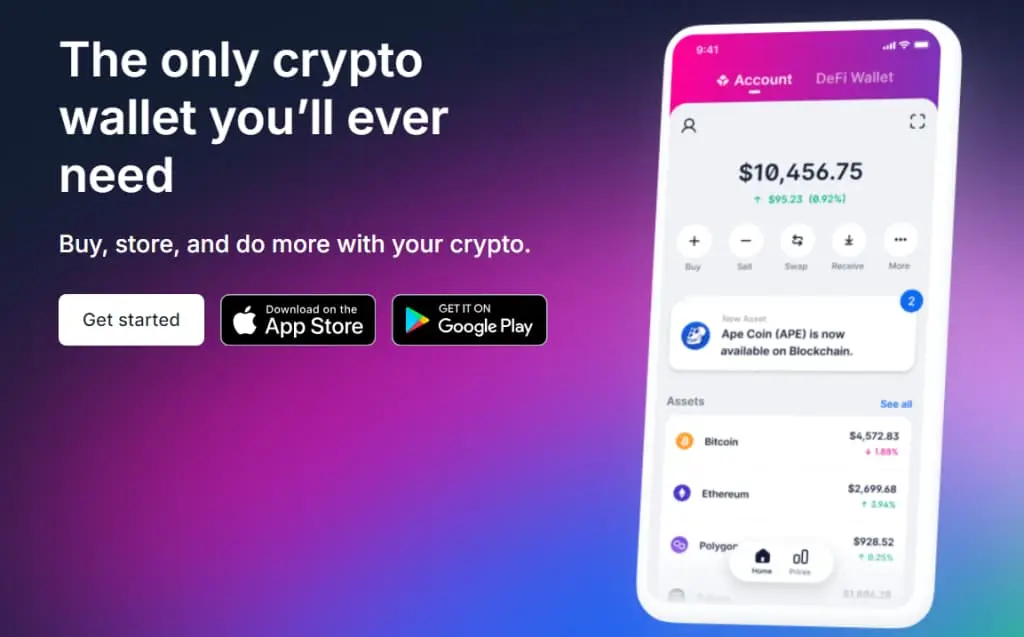
    Blockchain.com Crypto Wallet

    Blockchain.com Wallet is a popular non-custodial cryptocurrency wallet known for its security and simplicity. It allows users to store, send, and receive various cryptocurrencies.

    • Advantages: Non-custodial wallet, user-friendly interface, supports multiple cryptocurrencies.
    • Disadvantages: Limited customer support, some users have reported occasional syncing issues.
    • Security features: Hierarchical Deterministic (HD) wallet, two-factor authentication, backup phrase.
    • Supported cryptocurrencies: Bitcoin (BTC), Ethereum (ETH), Bitcoin Cash (BCH), and Stellar (XLM).
    • Additional features: Integration with Blockchain.com Exchange, buy and sell cryptocurrencies directly from the wallet.

    13. YouHodler

    A unique crypto wallet platform that combines features like high-yield savings accounts, crypto loans, and a built-in exchange. It is also among the best cryptocurrency wallet in the UAE, ideal for users who want to earn interest on their holdings.

    • Advantages for UAE users: Earn interest on various cryptocurrencies with attractive APY rates, access to crypto loans, built-in exchange for buying and selling crypto.
    • Disadvantages: Custodial wallet (YouHodler holds your private keys), might not be suitable for users who prioritize self-custody over earning features.
    • Security features: YouHodler implements industry-standard security measures to protect user funds, including multi-signature wallets and cold storage for a portion of assets.
    • Supported cryptocurrencies: A wide range of popular cryptocurrencies, including most popular ones in the UAE.
    • Additional features: High-yield crypto savings accounts, crypto loans, built-in exchange.

    14. MetaMask
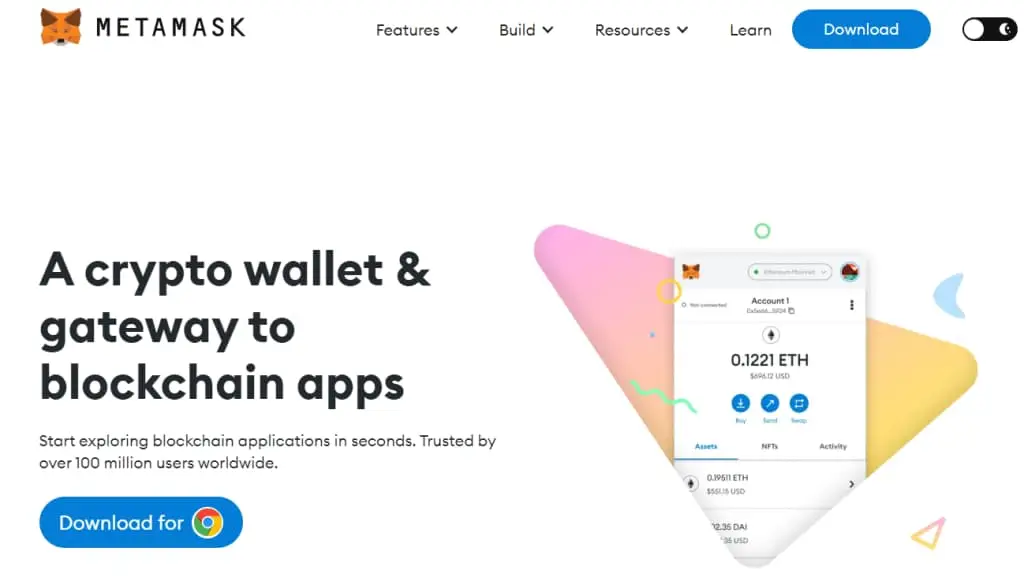
    meta mask crypto wallet

    A popular browser extension wallet used for interacting with decentralized applications (dApps) and blockchain platforms like Ethereum.

    • Advantages: Free to use, easy to set up, good for exploring dApps and DeFi (Decentralized Finance).
    • Disadvantages: Limited security compared to hardware wallets, only supports a limited number of cryptocurrencies natively (mainly Ethereum-based tokens).
    • Security features: Relies on browser security and user-generated passwords for key storage.
    • Supported cryptocurrencies: Primarily Ethereum tokens but can be used with exchange integrations to access other cryptocurrencies.
    • Additional features: Integrates with various DeFi platforms and dApps.

    15. SecuX W20
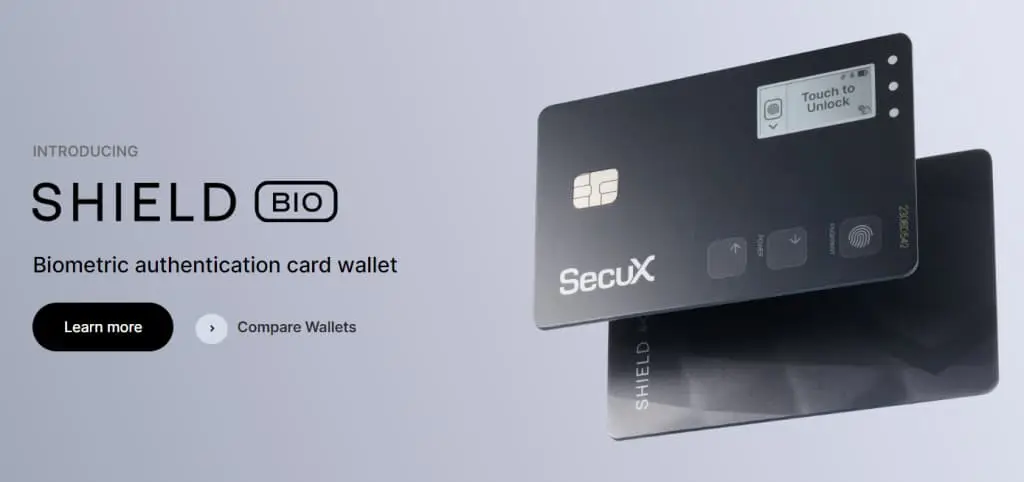
    secux w20 hardware crypto wallet

    A high-security hardware wallet known for its military-grade security chip and ease of use. Offers a good balance between security and user-friendliness.

    • Advantages: Top-notch security for offline storage, user-friendly interface, supports various popular coins in the UAE.
    • Disadvantages: Requires purchase of a separate hardware device, might be slightly more expensive than some other hardware wallets.
    • Security features: Military-grade SE chip for offline private key storage, PIN protection, and multi-factor authentication.
    • Supported cryptocurrencies: A wide range of coins and tokens, including most popular ones in the UAE.
    • Additional features: Secure password manager supports multi-signature transactions.

    16. Binance Wallet

    Binance Wallet is the best crypto wallet in the UAE provided by Binance and is approved by the Abu Dhabi Global Markets Financial Services Regulatory Authority (FSRA). It is one of the largest cryptocurrency exchanges globally. It supports over 300 cryptocurrencies and offers seamless integration with the Binance ecosystem.

    • Advantages: Integration with Binance exchange, supports various cryptocurrencies, user-friendly interface.
    • Disadvantages: Centralized nature, requires trust in Binance as the custodian, limited to Binance Chain-based tokens.
    • Security features: Secure password and private key encryption, two-factor authentication, anti-phishing measures.
    • Supported cryptocurrencies: Binance Coin (BNB) and tokens on the Binance Smart Chain.
    • Additional features: Integration with Binance DEX for decentralized trading, staking for certain cryptocurrencies.

    (Please note some of the information like the features, supported cryptocurrency, etc. may vary)

    How to Choose the Right Crypto Wallet in Dubai?

    Dubai has emerged as a hub for cryptocurrency enthusiasts and businesses. With this growth comes the crucial question: how to choose the right crypto in the UAE? 

    Here are some key factors to consider:

    • Hardware vs. Software Wallets – Hardware wallets like Ledger or Trezor offer the highest level of security by storing your private keys offline on a physical device. Software wallets, like mobile or desktop apps (Coinbase Wallet, MetaMask), are convenient but can be more vulnerable to hacking.
    • Beginner-friendly – If you’re new to crypto, prioritize user-friendly interfaces and clear instructions. Wallets like Zengo or Exodus offer a smooth experience.
    • Top Priority – Security should be your absolute priority. Look for wallets with robust features like multi-factor authentication (MFA), strong encryption, and secure key storage.
    • UAE Focus – Many wallets offer a wide range of cryptocurrencies, but ensure the wallet supports the specific coins you plan to use. Popular choices in Dubai include Bitcoin, Ethereum, and Ripple, alongside some Shariah-compliant coins.
    • UAE Regulations – As Dubai regulates cryptocurrency activity, ensure your chosen wallet complies with local regulations. Researching the company’s licensing and security practices is crucial.
    • Token Compatibility – If you plan to explore DeFi or invest in tokens, consider wallets that support a wide range of blockchain networks and tokens.

    There’s no “one-size-fits-all” solution. The ideal wallet depends on your individual needs and priorities.

    Secure Your Dubai Crypto Future with Shuraa

    With these top 16 top crypto wallets to consider, you’re well-equipped to find the perfect fit for your needs in the UAE. Remember, the ideal wallet prioritizes security, ease of use, supported currencies, and any desired features like DeFi integration or built-in exchanges.

    No matter your choice, entering into the exciting world of cryptocurrency requires careful planning, especially if you’re considering a business setup in Dubai. Shuraa Business Setup can be your one-stop shop for all your business establishment needs in the UAE. From crypto license acquisition and company registration to PRO services, visa assistance, and beyond, Shuraa’s experts will ensure a smooth and successful journey.

    Don’t hesitate to seek their valuable consultation, get in touch today at +971 44081900 or send a WhatsApp message to +971 507775554. You can also drop an email to info@shuraa.com. Here’s to a successful journey into the world of cryptocurrency in the UAE!


  • The Top 8 International Banks in Dubai 2026

    The Top 8 International Banks in Dubai 2026

    Are you establishing a business in the United Arab Emirates? Opening a bank account is essential! We’ve curated a list of the top 8 International Banks in Dubai.

    The UAE boasts a significantly higher than the global average in terms of total early-stage entrepreneurial activity and job creation expectations. Establishing a business in Dubai presents an enticing opportunity for entrepreneurs worldwide.

    From obtaining debit and credit cards to managing finances, UAE banks cater to every financial requirement. Continue reading to discover which bank aligns best with your needs and explore the available banking options. This blog by Shuraa Business Setup offers insights into the top 8 international banks in Dubai for 2026. Dive in to learn more.

    Top 8 International Banks in Dubai

    If you’re seeking an offshore bank that offers investment banking services, personal loans, credit cards, debit cards, and top-tier banking amenities, you’ve come to the right place.

    When selecting an international bank in UAE, you have numerous options. Whether you’re establishing an offshore company in the UAE or have recently relocated to the Emirates, consider choosing a bank from the following list:

    1. HSBC Middle East

    HSBC Middle East Bank

    HSBC Middle East, a subsidiary of HSBC Holdings, is a prominent bank in the UAE and GCC region, offering a range of services:

    • Extensive Regional Network: HSBC operates across key Middle Eastern countries and financial centres, providing localised services with global reach.
    • Wealth Management and Private Banking: Specialised services tailored to high-net-worth individuals include investment advice and exclusive banking solutions.
    • Corporate and Investment Banking: Support businesses with corporate finance, advisory services, trade finance, and treasury solutions.
    • Trade and Infrastructure Financing: The key player in financing trade and infrastructure projects, supporting regional economic development.
    • Digital Innovation: Focus on digital banking tools to enhance customer experience and streamline operations.
    • Sustainable Finance: Commitment to supporting environmentally sustainable projects and initiatives.
    • Local and International Expertise: Blending global expertise with local knowledge to provide tailored financial solutions.

    HSBC’s operations in the Middle East align strongly with the region’s economic landscape, emphasising innovation and comprehensive service offerings for individuals, businesses, and corporations.

    2. Citibank

    Citibank UAE

    Citibank’s private banking services, offered through its Citigold Private Client division, present several advantages:

    • Global Reach: Citibank’s operations in over 100 countries provide access to international markets and diverse investment opportunities.
    • Tailored Wealth Management: Customised solutions, including investment advice, portfolio management, and financial planning to meet individual goals.
    • Diverse Investment Portfolio: A wide array of investment products across various asset classes, including Islamic banking options for Muslim clients.
    • Personalised Support: Access to dedicated advisors for personalised assistance and expertise.
    • Comprehensive Financial Solutions: Exclusive banking solutions such as premium accounts and special lending rates.
    • Estate Planning and Trust Services: Guidance with estate planning, trust services, and wealth transfer strategies.
    • Exclusive Benefits: Access to exclusive events, lifestyle benefits, and bespoke experiences.
    • Cutting-Edge Digital Tools: Advanced digital banking tools for convenient account access and portfolio management.

    Citibank combines tailored financial services with global resources, making it an appealing choice for sophisticated wealth management and exclusive banking benefits.

    3. Emirates NBD

    Emirates NBD

    Emirates NBD, a leading bank in the Middle East, specialises in private banking services designed for high-net-worth individuals:

    • Shariah-Compliant Options: Emirates NBD provides Shariah-compliant banking products and services, catering to specific Islamic finance needs.
    • Customised Wealth Management: Tailored solutions include investment advisory, portfolio management, and financial planning to meet individual client objectives.
    • Diverse Investment Opportunities: Access to a wide range of investment products across various asset classes and geographies, ensuring adequate portfolio diversification.
    • Dedicated Relationship Management: Personalised attention from dedicated relationship managers, offering expert advice and support aligned with clients’ financial goals.
    • Estate and Succession Planning: Assistance in estate and succession planning to manage and transfer wealth across generations effectively.
    • Exclusive Banking Solutions: Private banking clients enjoy elite bank accounts, preferential loan rates, and customised financing solutions, along with access to exclusive events, luxury experiences, and premium concierge services.
    • Strong Local and International Presence: With a robust presence in the UAE and an expanding global footprint, Emirates NBD caters to local and global financial needs.

    Emirates NBD’s private banking services blend personalised wealth management with exclusive client benefits, making it the preferred choice for high-net-worth individuals seeking comprehensive financial services and advice in the Middle East.

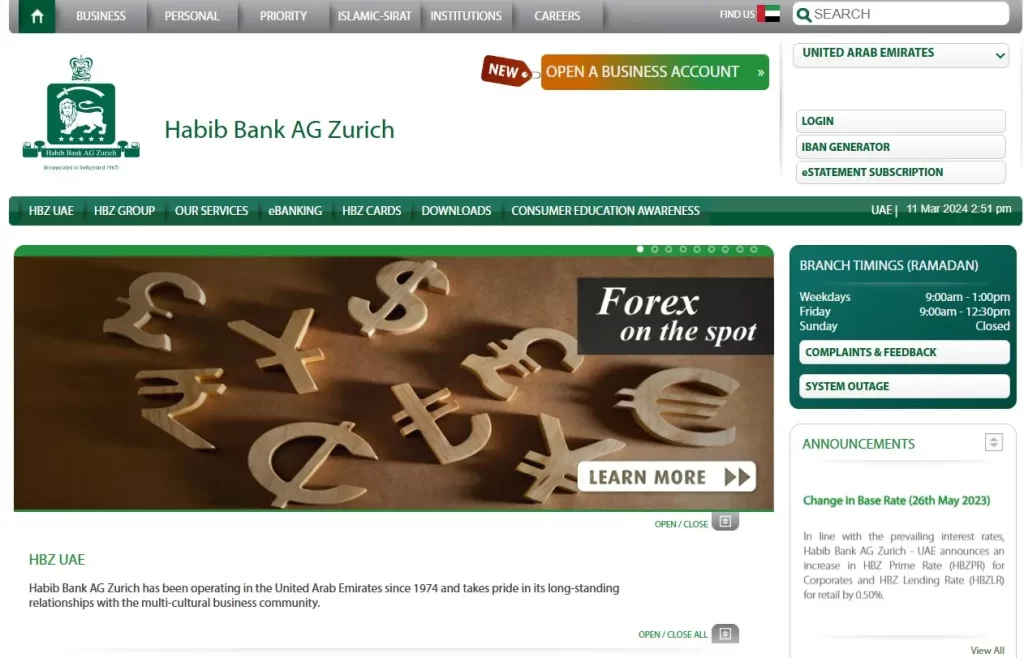
    4. Habib Bank AG Zurich

    Habib Bank AG Zurich

    Habib Bank AG Zurich (HBZ) is a leading international bank in UAE with a diverse range of financial services: 

    • Comprehensive Suite of Services: Offers personal and commercial banking, corporate finance, trade finance, and wealth management, including Islamic banking products.
    • Global Presence: Headquartered in Zurich, operates in key financial centers globally, serving various clients.
    • Tailored Banking Solutions: Robust personal and business banking offerings provide customised solutions to meet customer needs.
    • Digital Innovation: Committed to advanced online and mobile banking services for client convenience and efficiency.
    • Trade Finance Focus: Expertise in trade finance, particularly in regions like the Middle East and Asia.
    • Compliance and Security: Emphasis on regulatory compliance and security for trust and reliability.
    • Community Engagement: Actively involved in community development and social responsibility initiatives.

    HBZ’s approach combines personalised service, innovative solutions, compliance, and community involvement, establishing itself as a trusted global banking partner.

    5. Royal Bank of Canada

    Royal Bank of Canada

    The Royal Bank of Canada (RBC), Canada’s largest bank and a global financial giant, offers a wide array of services:

    • Comprehensive Financial Solutions: Personal and commercial banking, wealth management, insurance, investor services, and global capital market offerings.
    • Global Footprint: RBC serves clients worldwide from its Toronto headquarters, with access to a vast network of ATMs across 30+ countries.
    • Tailored Wealth Management: Renowned expertise in crafting customised solutions for high-net-worth individuals and institutional investors.
    • Cutting-Edge Digital Banking: A pioneer in digital innovations, offering advanced tools for seamless banking and investment management.
    • Community and Environmental Commitment: Prioritising sustainability and community impact while delivering responsible banking practices.
    • Capital Market Leadership: Robust presence in global capital markets, providing corporate and investment banking solutions.

    RBC’s approach combines comprehensive services, innovation, sustainability, and client-centricity, positioning it as a trusted leader in Canada and beyond.

    6. Noor Bank

    Explore the key features of Noor Bank’s Shariah-compliant financial services:

    • Specialised Islamic Banking: Noor Bank offers Shariah-compliant personal and corporate banking solutions, wealth management, and treasury services.
    • Islamic Finance Principles: Dedicated to upholding Islamic finance principles, ensuring compliance with Shariah law and ethics.
    • Personal and Corporate Finance: Provides Islamic mortgages, personal and business finance, and asset-based financing aligned with Islamic finance principles.
    • Tailored Wealth Management: Bespoke services catering to high-net-worth individuals with Shariah-compliant investment options.
    • Wide Client Base: A strong UAE presence serves individuals, large corporations, and SMEs with tailored financial solutions.
    • Global Network: Branches in Abu Dhabi, Sharjah Free Trade Zone, Al Ain, and an international presence in the UK, North Africa, and Saudi Arabia.
    • Digital Banking Innovations: Prioritises digital innovation, offering advanced online and mobile banking platforms for convenience.
    • Community Engagement: Actively engages in community development and corporate social responsibility initiatives, contributing to UAE’s socio-economic development.

    Noor Bank’s approach combines adherence to Islamic banking principles with innovation and customer service, establishing it as a prominent Islamic banking institution in the UAE and beyond.

    7. Dubai Islamic Bank

    Dubai Islamic Bank

    Dubai Islamic Bank (DIB), the inaugural Islamic bank globally and a significant player in the UAE provides an extensive array of Shariah-compliant financial services. Central facets of DIB’s operations encompass:

    • Trailblazing Islamic Banking: As the world’s first Islamic bank, DIB sets standards in Shariah-compliant banking, guided by stringent adherence to Islamic finance laws and ethical standards.
    • Personalised Financial Solutions: From Islamic mortgages to investment banking, DIB offers tailored services for individuals and corporations, ensuring ethical and interest-free banking solutions.
    • Robust Retail Network: DIB’s extensive retail banking network in the UAE caters to a diverse clientele with a suite of Sharia-compliant products and services.
    • Digital Innovation: DIB embraces digital transformation with advanced online and mobile banking services, enhancing accessibility and customer experience.
    • Community Engagement: Actively involved in community development and corporate social responsibility initiatives, contributing to the UAE’s social and economic progress.

    DIB’s commitment to Islamic banking principles, innovative financial solutions, and community service solidifies its position as a leader in Shariah-compliant finance locally and globally.

    8. Standard Chartered Bank

    Standard Chartered Bank

    Standard Chartered Bank, a prominent global banking group with robust operations in Asia, Africa, and the Middle East, provides diverse financial services. Below are some pivotal aspects of its operations and offerings:

    • Global Network with Local Expertise: Operating in multiple countries, with a strong foothold in emerging markets such as the UAE, providing a combination of worldwide accessibility and regional expertise.
    • Strategic Focus on Emerging Markets: Providing specialised services tailored to the unique financial needs of fast-growing and dynamic regions.
    • Innovative Digital Banking Solutions: Recognised for cutting-edge digital platforms, enhancing the banking experience for individual and corporate clients.
    • Tailored Wealth Management: Offering customised financial solutions for high-net-worth individuals and families.
    • Sustainable Finance and Responsible Banking: Supporting projects and initiatives contributing to sustainable economic growth and environmental conservation.
    • Community Engagement and CSR: Actively participating in community development initiatives focusing on education, health, and environmental sustainability.
    • Corporate and Institutional Banking Expertise: Comprehensive services for corporate and institutional clients, including trade finance and risk management solutions.

    Standard Chartered Bank’s commitment to empowering global finance through innovation and sustainability makes it a valuable banking partner worldwide.

    Dubai International Financial Centre (DIFC)

    The DIFC is a crucial financial hub in Dubai, accommodating numerous top International Banks in Dubai like Citibank, Standard Chartered, and Emirates NBD, among others. This internationally acclaimed financial zone provides a distinctive environment with multiple advantages:

    • Hub for Leading Banks: Houses top global banks like Citibank, Standard Chartered, and Emirates NBD, making it a pivotal financial hub.
    • Tax Benefits: Offers a 50-year tax-free guarantee on income and profits, fostering business growth and profitability for international financial institutions.
    • Full Foreign Ownership: Allows banks to have 100% foreign ownership, granting them control over regional operations without local partnership requirements.
    • Strategic Location: Serves as a strategic location for central banks, providing access to a wide range of international banking services and expertise in the Middle East.
    • Regulatory Environment: Governed by the Dubai Financial Services Authority (DFSA) under English common law, ensuring a stable legal framework for international businesses.
    • Gateway to Emerging Markets: Provides access to emerging markets in the Middle East, Africa, and South Asia, facilitating expansion opportunities for banks like Emirates NBD.
    • Robust Infrastructure: Equipped with state-of-the-art infrastructure and business-friendly services, enabling efficient banking operations and client service delivery.

    By establishing themselves in the DIFC, banks leverage these benefits to offer comprehensive services to businesses and individuals locally and globally. The DIFC’s blend of tax efficiency, full foreign ownership, regulatory practices, and strategic location cements its status as a cornerstone of Dubai’s financial landscape and an attractive destination for global banking institutions.

    Choosing the Right International Banks in Dubai for Business

    When selecting the best international banks in Dubai for your business, consider the following factors:

    • Industry-Specific Expertise: Seek a bank with experience in your sector to ensure tailored financial solutions that meet your industry’s unique needs.
    • Reputation in the OFC Market: Evaluate the bank’s reputation, stability, customer service quality, and regulatory compliance within the offshore financial centre market.
    • Competitive Exchange Rates and Fees: Compare exchange rates and fees for international transactions to minimise costs associated with cross-border business activities.
    • Additional Services: Assess the range of supplementary services the bank offers, such as mobile banking, trade finance solutions, and asset management, to enhance your business operations.
    • Ease of Doing Business: Consider account opening procedures, digital banking services, and dedicated customer support to ensure a seamless banking experience.
    • Network and Global Reach: Look for a bank with a robust global network to facilitate international transactions and access a wide range of financial services essential for businesses with international reach.

    By carefully evaluating these factors, you can choose an international bank in Dubai that effectively aligns with your business objectives and supports your growth strategies.

    Is a Bank Account Necessary for a Dubai Visa?

    When applying for a business visa in Dubai, having a bank account in the United Arab Emirates is crucial, although not directly mandated for the visa application itself. It’s essential in setting up and registering your business in the UAE

    The company registration process in Dubai typically involves: 

    1. Determining the legal entity type for your Dubai business.
    2. Choosing a trade name.
    3. Applying for a business license.
    4. Securing office space through rental or purchase.
    5. Obtaining necessary pre-approvals.
    6. Officially registering your business.

    While opening a local bank account isn’t explicitly listed as a step, it’s implicitly required since you’ll need to manage your UAE business’s finances. Moreover, you can open an account with offshore banks, offering flexibility and potential tax advantages for companies seeking to optimise financial management within legal frameworks. 

    Guide to Opening a Bank Account in Dubai

    Below are the points which will help you to open a Bank Account in Dubai:

    • Physical Presence: Schedule an appointment with your chosen bank and plan a visit to the UAE, as most banks require your physical presence for account opening.
    • Required Documentation: Prepare essential documents, including your passport, address, and income proof. Banks will conduct a credit check and identity verification during the appointment.
    • Selecting the Right Account Type: Choose from various offshore banking options based on your needs. Options include offshore trusts or foundations for tax advantages and numbered accounts for anonymity.
    • Getting Started: Reach out to a bank in Dubai to arrange an appointment and ensure all necessary paperwork is ready for a smooth process.
    • Ease of Setup: With adequate preparation and the necessary documents, setting up an account in Dubai can be simple and effective.

    Remember to consult with a business solutions specialist or financial advisor for the best choice tailored to your financial needs. With careful planning, your offshore bank account in Dubai can be operational quickly.

    Benefits & Pitfalls of Offshore Banking:

    Here are the benefits of Offshore Banking, along with the associated drawbacks: 

    Advantages:

    • Offshore financial centres offer favourable tax regimes and confidentiality protections, reducing taxable income and protecting privacy.
    • Offshore banks often provide higher interest rates due to less regulation and competition, benefiting savers.
    • Different legalities and regulations can make obtaining loans and structuring transactions easier, minimising taxes for account holders.
    • Access to a broader range of investment options, including foreign currencies and stocks, helps diversify portfolios and hedge against risks.

    Pitfalls:

    • Offshore banks have faced scrutiny for facilitating tax evasion and money laundering.
    • They are subject to different regulations than banks in developed countries, making them riskier investments.

    Considerations:

    • Evaluate the risks and benefits of offshore banking before deciding.
    • While they offer advantages, offshore banks require careful consideration, particularly for high-net-worth individuals.

    Open Your Bank Account in Dubai

    Exploring Dubai’s banking scene, featuring prominent institutions like HSBC, Citibank, Emirates NBD, and Standard Chartered, highlights the city’s stature as a premier financial centre. The Dubai International Financial Centre (DIFC) stands out for its tax advantages and global banking presence, providing substantial benefits for businesses and individuals.

    If you seek assistance in selecting the ideal bank in Dubai, feel free to reach out and schedule a consultation. Shuraa Business Setup, Dubai’s leading business setup expert, caters to entrepreneurs and skilled professionals throughout the United Arab Emirates. We offer comprehensive business setup and bank account opening services.

    Contact us at +971 4 4081900, WhatsApp at +971 50 7775554, or email info@shuraa.com for expert guidance.

    Disclaimer: The information in this post is for general guidance only and may change due to updates in government policies or regulations.

  • How to Get an Audit License in the UAE

    How to Get an Audit License in the UAE

    As the United Arab Emirates (UAE) continues to solidify its position as a global business hub, the demand for qualified auditors who can ensure the accuracy and reliability of financial information is on the rise. However, UAE has strict regulations governing the practice of auditing. 

    To obtain an audit license in UAE, you must meet certain requirements, such as having a relevant qualification, relevant experience, and passing an exam. Furthermore, this blog post will provide you with an overview of the steps involved in getting an audit license in Dubai, UAE.

    In this guide, we detail exactly how to obtain an audit license in UAE by explaining the critical requirements, step-by-step application process, necessary certifications, governing regulations, and total investment involved.

    What is an Audit License?

    An audit license is a permission granted by a regulatory body to an individual or organization to conduct audits. Moreover, audits are a systematic examination of financial records and other documents to ensure that they are accurate and compliant with applicable laws and regulations.

    Audit License in UAE is issued by the Ministry of Economy (MoE). The requirements for obtaining an audit license vary depending on the jurisdiction.

    In general, however, the requirements for getting an audit license in the UAE include:

    • A bachelor’s degree in accounting, finance, mathematics, or a related field.
    • A master’s degree in accounting or business administration with a major in accounting.
    • Having passed the mandatory exams in international financial reporting standards (IFRS), international standards in auditing (ISAs), and UAE tax and regulation.
    • Having at least 5 years’ experience in auditing.
    • Having a valid practicing certificate from a recognized professional body.
    • Certificate of equivalency.

    Benefits of Having an Audit License in UAE

    There are several benefits to having an audit license in Dubai or UAE. It allows you to:

    • Perform audits for public companies, private companies, and government entities.
    • Issue audit reports that are accepted by regulators and investors.
    • Gain access to a wider range of clients and opportunities.
    • Enhance your professional credibility and reputation.

     To start an audit firm in Dubai, UAE, begin by researching and meeting the requirements. You can also find more information on the MoE website. 

    Steps to get an Audit License in UAE

    Starting an audit company in Dubai involves several key steps to ensure legal compliance and operational readiness. No doubt, Dubai offers a conducive environment for businesses, but it’s important to follow the proper procedures to establish your company.

    To start an audit company in Dubai, these 6 steps will help you to get your audit license in the UAE.

    Step 1: Choose a business name & structure

    Your business name must be unique and cannot be the same as any other business name already registered in Dubai.

    There are several different business structures available in Dubai, such as a sole proprietorship, a partnership, a limited liability company (LLC), or a free zone company. The best business structure for you will depend on your specific circumstances.

    Among the two categories of business jurisdictions (Freezone or Mainland) in Dubai, free zone companies stand out as the favored and economically efficient choice. These entities permit foreign individuals to retain complete ownership (100%) of their businesses.

    However, for an auditing company to engage in lawful trading within the UAE, supplementary measures such as establishing a branch might be obligatory.

    Step 2: Obtain the audit license and permits

    You will need to obtain an audit business license from the Department of Economic Development (DED) and a professional services license from the Ministry of Economy (MoE). These licenses will allow you to trade as either an auditor, accountant or tax consultant in the UAE.

    You may also need to obtain other licenses or permits, depending on the specific activities of your business.

    Step 3: Location and Office Space

    Depending on your chosen business structure, select an office space that meets DED or free zone regulations. Also, obtain the necessary approvals for your office location.

    Step 4: Financial Requirements and Bank Account

    Fulfil the minimum capital requirements if applicable to your chosen business structure. Open a business bank account in Dubai to manage your company’s financial transactions.

    Step 5: Recruitment and Training

    Recruit and train your team of auditors, ensuring they are well-versed in local regulations, international auditing standards, and ethical guidelines.

    Step 6: Launch and Marketing

    Launch your audit company and promote your services through various marketing channels. Additionally, network with potential clients, business partners, and industry professionals to build your company’s reputation.

    Starting an audit firm in Dubai involves legal, regulatory, and administrative procedures. Therefore, it’s recommended to work with legal advisors, business consultants, and authorities to ensure that you follow all the necessary steps accurately and efficiently.

    Cost of starting an auditing, accounting or tax consultancy firm in UAE

    The license cost of starting an audit firm in the UAE can start from AED 25,000*. However, the exact cost will depend on several factors, including:

    • The type of business setup you choose (free zone or mainland)
    • The location of your business
    • The size of your business
    • The number of employees you hire
    • The type of services you offer
    • The fees charged by the government and other regulatory bodies

    * The actual cost may vary depending on the factors mentioned above. 

    If you want to start an accounting, auditing firm in Dubai or UAE, we highly recommend get in touch with business setup consultants in Dubai at Shuraa on how to get audit license in Dubai and a complete cost breakdown to establish a brand-new business in UAE.

    New UAE Audit License Rules for Accounting Firms in UAE

    The Ministry of Economy (MoE) issued Ministerial Resolution No. 111-2 of 2022, introducing the new UAE audit license rules for firms.

    The new rules aim to improve the quality of auditing in the UAE by raising the standards of education and experience required for auditors. The new rule also aims to strengthen the regulatory framework for auditing firms.

    Some of the key changes introduced by the new rules include:

    • Auditors must now have a bachelor’s degree in accounting, finance, or a related field. They also must have passed the mandatory exams in international financial reporting standards (IFRS), international standards in auditing (ISAs), and UAE tax and regulation.
    • Auditors must now have at least three years of experience in auditing. They also must have a valid practicing certificate from a recognized professional body.
    • Audit firms must now also have a minimum of two partners, and each partner must have at least five years of experience in auditing. Moreover, Audit firms must also have a risk management framework in place.
    • The MoE has gained new powers to enforce the new rules, including the authority to suspend or revoke audit licenses.

    Ready to Start Your Audit Firm in UAE?

    Although the procedures to start an accounting firm in UAE are not complex, they do demand a certain degree of familiarity with the business setup process.

    Also, please note that the application process remains uncomplicated if your business application is complete and free of errors upon submission. For a hassle-free UAE company formation, consider partnering with a specialist.

    When it comes to open a company in Dubai, Shuraa Business Setup is your trusted partner. With over two decades of experience helping more than 50,000 entrepreneurs in realizing their business dreams in the UAE.

    With a dedicated team of specialists including UAE company formation consultants, legal experts, PRO executives, and more, Shuraa is committed to providing comprehensive support for every step of your journey.

    For a free consultation regarding Dubai business establishment with one of our well-informed experts, reach out to Shuraa by phone at +971 4 4081900, via WhatsApp at +971 50 7775554, or by sending an email to info@shuraa.com.

    Together, let’s walk on the path to success and unlock the remarkable opportunities that await in the dynamic business landscape of the UAE.

  • How to Trade in Dubai?

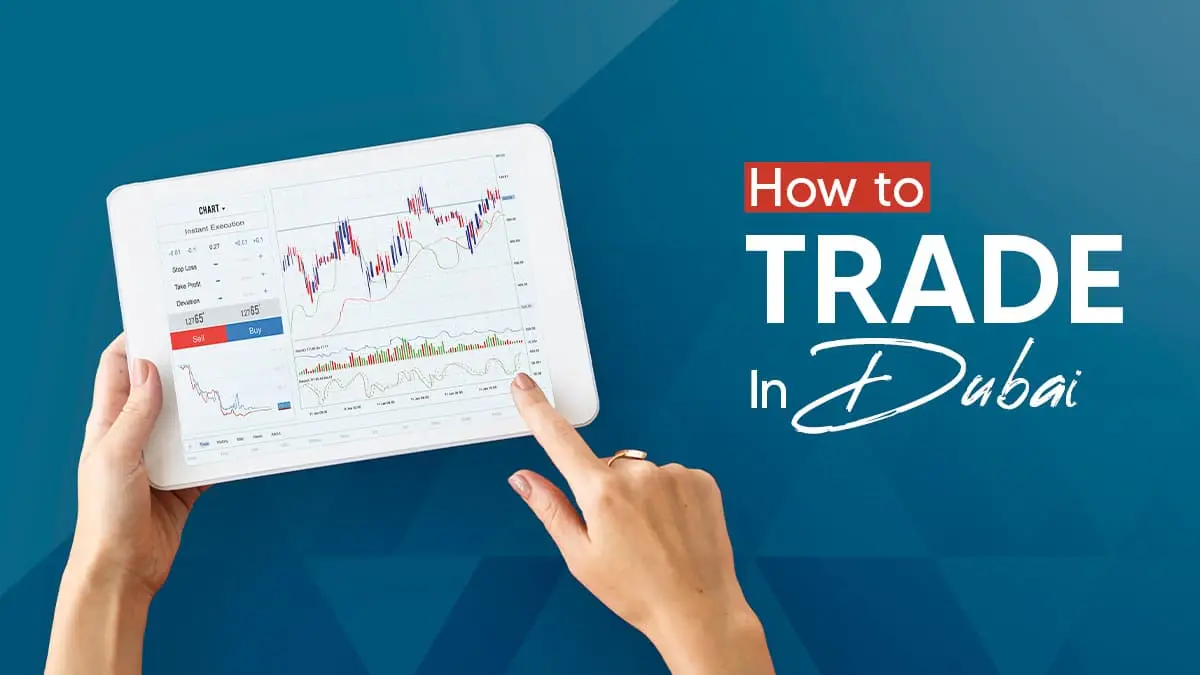
    How to Trade in Dubai?

    Did you know that Dubai is home to one of the most advanced and powerful stock exchange markets in the world? However, there are a few things you need to consider if you are thinking about trading in Dubai.

    The Dubai Financial Market (DFM) started in 2000. One of the best-regulated markets in the Middle East and North Africa (MENA) region exists. The UAE authority helps potential investors start their journey. They assist with documentation and trading accounts. The UAE also offers a well-regulated and friendly business environment.

    Today, we will cover what you need to know to start trading in the United Arab Emirates. This will help you begin your business on the DFM trading floor.

    Reasons to Trade in Dubai

    Explore the compelling reasons why trade in Dubai stands as a beacon for traders and investors in the global market.

    1. A Robust Economy

    Dubai and the broader UAE boast one of the most diversified economies globally, with approximately 72% of GDP generated from non-oil sectors. This contrasts sharply with other Middle Eastern nations and positions the UAE as a rapidly emerging global business hub. The UAE also ranks among the top nations worldwide in terms of income per capita, thanks to significant infrastructural developments.

    2. Pro-Business Climate

    The UAE is renowned for its business-friendly environment, making trade in Dubai particularly appealing, evidenced by its high ranking (16th out of 190 countries in 2020) in the World Bank’s International Doing Business Index. The country offers minimal taxation, straightforward company setup processes, and state-of-the-art infrastructure, supporting both online and offline business activities across all trading hours.

    3. Welcoming Foreign Investors

    Recent government initiatives have further liberalized investment policies to attract foreign capital:

    • Ownership: Foreign investors can now 100% own their businesses in the UAE without local sponsorship.
    • Workforce: The expatriate workforce constitutes 80% to 90% of the total workforce.
    • Workweek Alignment: To synchronize with global markets, the UAE shifted the official workweek from Sunday-Thursday to Monday-Friday (four-and-a-half-day work week ending at midday Friday).
    • Taxation: The UAE maintains a lax taxation regime, with no personal income taxes and only a flat 5% VAT.

    Trading in Dubai: Markets and Indexes Available

    Trade in Dubai benefits from two major financial markets:

    • Dubai Financial Market (DFM): Primarily features local companies and includes three key stock indices:
    1. DFM General Index
    2. DFM Shariah Index
    3. UAE ESG Index
    • Nasdaq Dubai: Offers a platform for trading both local and international securities.

    Market Information for Trading UAE Shares

    When engaging in trade in Dubai, you can find clear pricing and industry data. You can access this information through your broker’s app or website. The best and most reliable source for stock trading data in the UAE is the DFM App. Available on Google Play and the Apple App Store.

    Each month, the Dubai Financial Market updates the rankings of brokers. This ranking relies on trading volume and quantity. You can always see how your broker is performing in the market.

    Accurate and up-to-date market data is crucial for trading, available through tools like the DFM App on Google Play and the Apple App Store. Monthly broker rankings based on trading volume and activity are also accessible, helping traders monitor and evaluate broker performance.

    Dubai’s Basic Requirements for Trading 

    To trade in Dubai stocks:

    • Obtain a National Investor Number (NIN) by submitting an investor number request form along with the required documentation to the Dubai Financial Market.
    • Open a trading account with a broker listed on the DFM.

    These streamlined processes make Dubai an attractive destination for trading within the global financial landscape.

    Step-by-Step Guide: How to Start Trading in UAE?

    The United Arab Emirates offers a robust platform for trading in the stock market, designed to promote a welcoming business environment. Here’s a simplified guide to starting trade in Dubai in the stock market.

    1. Define Your Investment Objectives

    Before entering the UAE stock market, it’s crucial to define your investment goals and understand your risk tolerance. Decide whether you aim for short-term gains or long-term wealth accumulation. Familiarize yourself with different asset classes like stocks, bonds, and Sukuk, and understand the associated risks. This preparation will help you navigate the market complexities and align your investments with your financial goals.

    2. Obtain Your NIN or Investor Number

    The Investor Number (NIN) is essential for trading in Dubai, acting as both your identification and a regulatory requirement. You can obtain a NIN through one of three methods:

    • Option 1: DFM App: The easiest and fastest method is via the DFM mobile app. Submit the required documents and take a selfie using the app. The process can be completed in about three minutes, and your NIN will be sent to you via SMS.
    • Option 2: Dubai CSD: For those preferring traditional methods, visit the Dubai CSD Investor Affairs Help Desk at the Dubai World Trade Centre. You can complete your application in person and receive your NIN via SMS.

    You can sign and submit the paper-based or electronic application form. The authority will quickly verify and issue your NIN via SMS.

    • Option 3: Registered Broker: Alternatively, you can apply through a broker listed on DFM’s authorized brokerage firms. The paperwork remains the same as applying directly.

    3. Open a Trading Account with a Broker

    After obtaining your NIN, the next step is to select a registered broker. Research thoroughly before choosing one. Consider the following when selecting a broker:

    • Services Offered: Brokers may offer varying services including equities trading, margin trading, and online trading. Some may provide advanced features like direct market access and derivatives trading.
    • Technology: Ensure the broker provides a robust online trading platform that includes real-time and historical data, and a functional mobile app.
    • Fee Structure: Understand all related fees including transaction, account opening, maintenance, and portfolio management fees by visiting their websites.

    4. Start Trading in Dubai

    Once your account is set up, you can start trading using platforms like the DFM app or DFM e-services portal, which provide real-time data updates. Here are the trading options available:

    • Listed Equities: Trade from 116 stocks listed on DFM and Nasdaq Dubai, using detailed market profiles available on DFM’s website.
    • Derivatives: For seasoned investors, derivatives and futures are available to diversify portfolios and hedge against price fluctuations.
    • Market-Traded Funds (ETFs): ETFs offer advantages like lower management fees, lower minimum investments compared to mutual funds, and high liquidity.
    • Sukuk and Bonds: If you prefer safer, long-term investments, consider Sukuk (Islamic bonds) and conventional bonds, which can offer returns between 3% to 7%.

    5. Monitor Your Portfolio

    With your broker and trading account set up, you can trade stocks and other investment tools in Dubai. It is crucial to regularly monitor your investment portfolio to manage and adjust according to market conditions and your financial goals.

    This streamlined approach will help you embark on your trading journey in the UAE with clarity and confidence.

    Conclusion

    No matter when you engage in trading in Dubai, you’ll find the environment favourable and business-friendly as soon as you start. Local authorities strongly support the trading process, which uses the latest technologies to streamline operations.

    Besides stock trading, Dubai and the UAE also offer other innovative investments like Web 3 technologies.

    Interested in learning how to start a businessobtain a trade licence, and engage in commerce in Dubai right away? Please contact us immediately.

    We are a core team of business consultants with in-depth knowledge of UAE company registration & business licensing. Investors entering the UAE can select from a variety of tailored company formation packages to meet all their needs.

    For assistance, please call us at +971 44081900, send a WhatsApp message to +971 507775554, or email info@shuraa.com.

  • Complete Guide to Corporate Tax in the UAE

    Complete Guide to Corporate Tax in the UAE

    The United Arab Emirates (UAE) has attracted global businesses with its strategic location, advanced infrastructure, and supportive business environment. The introduction of the federal corporate tax in 2023 marked a significant change, aligning the UAE with international tax standards while preserving its competitiveness. As of 2026, the corporate tax regime has evolved with minor updates to enhance compliance and transparency.

    This guide provides essential information on corporate tax in the UAE, including rates, exemptions, filing requirements, and recent changes. Understanding these rules is crucial for both new and established businesses.

    What is Corporate Tax in the UAE?

    Corporate tax (CT) is a federal tax levied on the net income or profits of corporations and businesses operating in the UAE. Introduced under Federal Decree-Law No. 47 of 2022, it applies to financial years starting on or after June 1, 2023. The tax aims to diversify the economy, support sustainable development, and adhere to global best practices, such as those of the OECD. Unlike the value-added tax (VAT), which is an indirect tax, corporate tax is a direct tax on business earnings.

    Key objectives include:

    • Promoting transparency and fairness in taxation.
    • Encouraging investment while ensuring large multinationals contribute appropriately.
    • Maintaining the UAE’s appeal as a low-tax jurisdiction compared to global averages.

    Who is Subject to Corporate Tax?

    Corporate tax applies to various entities, though not all businesses are subject to it. The following outlines the main categories:

    Taxable Persons

    • Juridical Persons: This includes UAE-incorporated companies (e.g., LLCs, PSCs), foreign companies with a permanent establishment (PE) in the UAE, and free zone entities.
    • Natural Persons: Individuals conducting business activities with an annual turnover exceeding AED 1 million.
    • Foreign Entities: Those managed and controlled in the UAE or with a PE, such as a fixed place of business or dependent agent.

    Exempt Persons

    Certain entities are exempt from corporate tax, including:

    • Government entities and public benefit organisations.
    • Extractive businesses (e.g., oil and gas) and non-extractive natural resource companies are subject to emirate-level taxation instead. Note: In February 2025, Sharjah introduced a 20% emirate-level tax on extractive and non-extractive natural resources activities.
    • Qualifying investment funds and pension funds.

    If you are uncertain about your status, it is advisable to consult a tax advisor.

    Corporate Tax Rates and Thresholds in 2026

    The UAE’s corporate tax rates remain unchanged in 2026, supporting small businesses while applying progressive rates to higher earners.

    • Standard Rates:
      • 0% on taxable income up to AED 375,000.
      • 9% on taxable income exceeding AED 375,000.
    • Domestic Minimum Top-up Tax (DMTT): For multinational enterprises (MNEs) with global consolidated revenues over €750 million, a 15% effective minimum tax applies under OECD Pillar Two rules, effective from January 1, 2025. If the effective tax rate falls below 15%, a top-up tax is imposed.

    Example: A company with AED 1 million in taxable income pays 0% on the first AED 375,000 and 9% on the remaining AED 625,000, resulting in AED 56,250 in tax.

    Exemptions and Reliefs

    Several reliefs are available to support smaller entities and specific sectors:

    • Small Business Relief (SBR): Businesses with annual revenue below AED 3 million may elect SBR, which treats them as having no taxable income. This relief is available for tax periods ending on or before December 31, 2026. Businesses must elect SBR on their tax return to benefit.
    • Other Reliefs:
      • Tax losses can be carried forward indefinitely and offset up to 75% of future taxable income.
      • Foreign tax credits are available to avoid double taxation.
      • Proposed R&D tax incentive: Expected to take effect for tax periods starting on or after January 1, 2026, offering additional deductions or credits for qualifying research activities.

    Free Zone Corporate Tax Regime

    Free zones continue to play a key role in the UAE’s business landscape, and the tax regime maintains their appeal:

    • Qualifying Free Zone Persons (QFZPs): Eligible entities enjoy 0% tax on “Qualifying Income” (e.g., from qualifying activities like manufacturing, logistics, or trading with non-UAE entities).
    • Non-Qualifying Income: Taxed at 9%.
    • De Minimis Rule: If non-qualifying income is below 5% of total revenue or AED 5 million (whichever is lower), the entire income may qualify for 0% tax.

    To qualify as a QFZP, businesses must maintain sufficient presence in the free zone, including adequate employees and assets. The FTA’s guide on Free Zone Persons outlines the detailed criteria.

    Calculating Taxable Income

    Taxable income is based on accounting income under IFRS or equivalent standards, adjusted for tax purposes.

    • Starting Point: Net profit from financial statements.
    • Additions: Non-deductible expenses (e.g., fines, bribes, certain entertainment costs).
    • Deductions: Allowable expenses (e.g., interest up to limits, depreciation).
    • Exempt Income: Dividends from UAE residents and certain capital gains are exempt.

    Refer to the FTA’s guide, “Determination of Taxable Income,” for case studies and adjustment details.

    Registration Process

    All taxable persons must register with the Federal Tax Authority (FTA) via the EmaraTax portal.

    • Timeline: Within 3 months of incorporation or becoming taxable.
    • Requirements: Trade license, financial statements, and identification documents.
    • Groups: Tax groups (e.g., holding companies and subsidiaries) can register as a single entity if 95% owned.

    Failure to register incurs penalties up to AED 20,000.

    Filing and Payment Deadlines

    • Tax Return Filing: Due within 9 months after the end of the financial year. For a December 31 year-end, file by September 30 of the following year.
    • Payment: Tax is due by the filing deadline. Advance payments are voluntary but recommended to avoid late penalties.
    • Audits: The FTA conducts risk-based audits. Businesses should retain records for seven years.

    New in 2026: The amended Tax Procedures Law introduces tighter deadlines, including reduced response times to FTA queries from 40 to 30 business days.

    Penalties for Non-Compliance

    Penalties are strict to ensure compliance:

    • Late registration: AED 10,000.
    • Late filing: AED 500 per month (up to AED 50,000).
    • Late payment: 1% per month on unpaid tax.
    • Inaccurate returns: Up to 200% of the tax due.

    Voluntary disclosures can reduce penalties by up to 75%.

    Recent Updates in 2026

    As of February 2026, key developments include:

    • Advance Pricing Agreements (APAs): The FTA’s guide on APAs, issued December 31, 2025, provides certainty on transfer pricing for multinationals.
    • Service Fee Amendments: New APA application fees are effective January 1, 2026.
    • Enhanced FTA Powers: Broader audit scopes and stricter timelines under Federal Decree-Law No. 17 of 2025.
    • R&D Incentive: Anticipated rollout to boost innovation.

    Monitor the FTA website for further announcements and updates.

    Conclusion: Navigating UAE Corporate Tax with Confidence

    The UAE’s corporate tax system is straightforward, competitive, and supports business growth. By maintaining compliance, businesses can benefit from available exemptions and reliefs. For those establishing or expanding operations in the UAE, professional guidance is highly recommended. Shuraa TAX offers expert support in tax registration, compliance, and optimisation tailored to your needs.