Category: Tax Accounting & Finance

  • UAE VAT Late Payment Penalties in 2026: Due Dates, Calculation

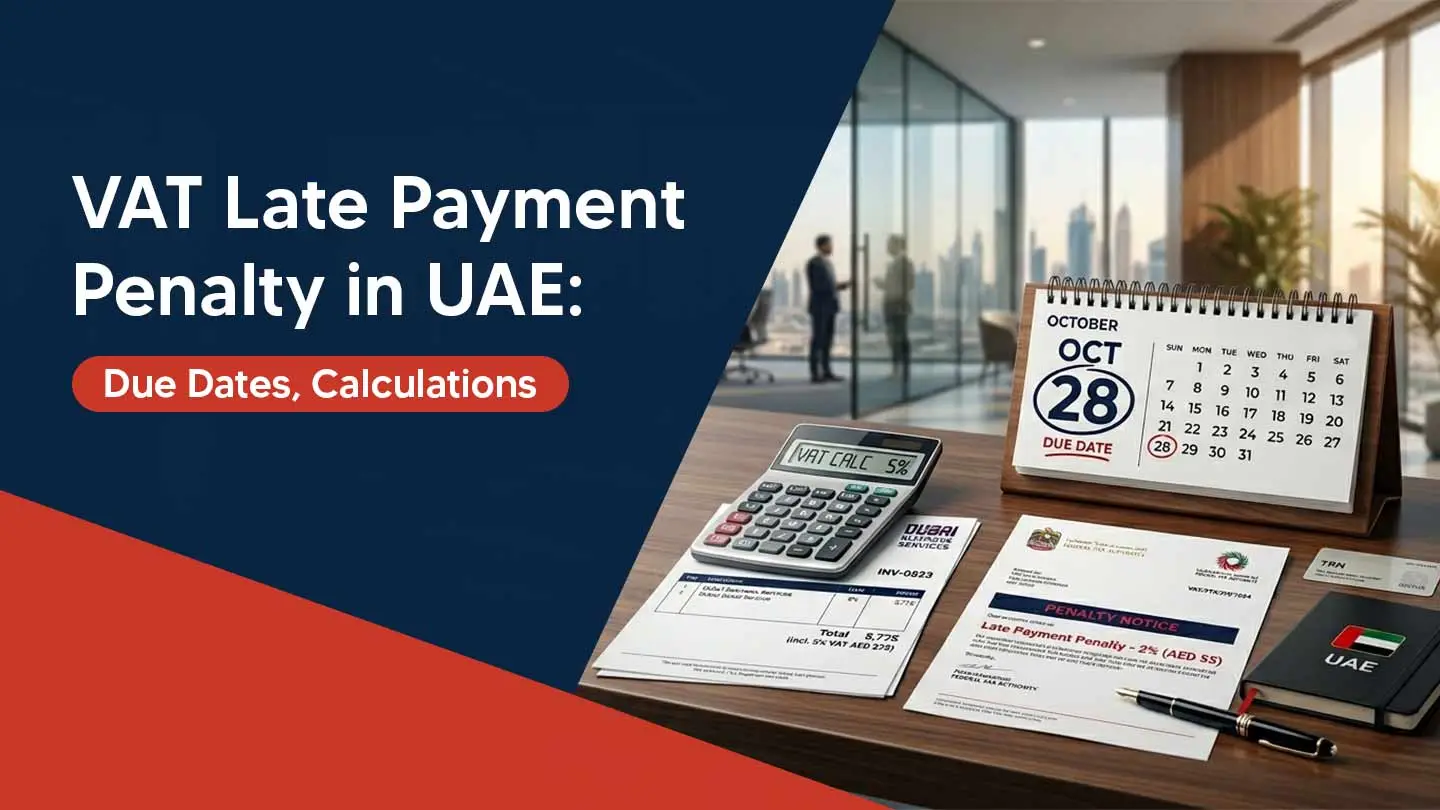
    UAE VAT Late Payment Penalties in 2026: Due Dates, Calculation

    Many businesses in the UAE get into VAT trouble, not because they are trying to avoid tax, but because they generally miss one or two key steps in the entire VAT filing process. 

    Sometimes it is a founder who thought the AED 375,000 VAT threshold works on a calendar-year basis. Sometimes it is a business owner who filed the VAT return but forgot to make the payment. Sometimes it is a company that had zero sales and assumed a VAT return was not required. And in many cases, businesses only realise the mistake after receiving a penalty notice from the Federal Tax Authority (FTA).  

    The challenge with UAE VAT compliance is that the rules may sound simple at first, but small misunderstandings can quickly become expensive. That is why understanding UAE VAT penalties is no longer just an accounting task. It is an important part of running a compliant and financially stable business in the UAE.  

    This guide explains how the VAT late payment penalty in UAE works in 2026, the common reasons businesses face penalties, how fines are calculated, and the practical steps companies can take to remain compliant and avoid unnecessary financial risks.

    Understanding UAE VAT Compliance 

    VAT in the UAE was introduced in 2018 at a standard rate of 5%. Businesses that meet the required turnover threshold must register for VAT, file VAT returns, maintain proper records, and pay VAT within the timelines set by the FTA. 

    However, VAT compliance involves much more than simply submitting a tax return every quarter. It includes: 

    • Tracking taxable sales
    • Maintaining proper invoices
    • Reconciling accounts
    • Monitoring deadlines
    • Ensuring accurate reporting 

    Even a small error can sometimes trigger penalties. This is why many UAE businesses now work with VAT consultants and tax professionals to manage compliance properly and reduce the risk of fines. 

    UAE VAT Registration Rules in 2026 

    Understanding VAT registration rules is important because many penalties can actually begin long before the first VAT return is filed. 

    A large number of businesses mistakenly assume registration becomes necessary only after the financial year closes. In reality, VAT registration in the UAE is based on taxable turnover over a rolling 12-month period.  

    This misunderstanding is one of the biggest reasons startups, consultants, agencies, e-commerce companies, and service businesses accidentally delay VAT registration. 

    Mandatory VAT Registration 

    Businesses must register for VAT if their taxable supplies and imports exceed AED 375,000 within a rolling 12-month period. The threshold is not based on calendar year or financial year, it is based on the previous continuous 12 months. 

    Voluntary VAT Registration 

    Businesses with taxable supplies exceeding AED 187,500 may apply for voluntary VAT registration. This is commonly used by startups and growing businesses that want to recover input VAT on operational expenses. 

    What Happens if Businesses Delay VAT Registration?  

    Late VAT registration may result in administrative penalties and additional compliance complications. Businesses that scale rapidly often cross the threshold without realising it because they are focused on revenue growth rather than rolling turnover calculations.  

    This is why businesses should regularly monitor revenue instead of checking VAT eligibility only at year-end. 

    Do Free Zone Companies Need VAT Registration? 

    Many free zone businesses assume they are automatically exempt from VAT obligations. However, VAT applicability depends on: 

    • The type of business activity
    • Where customers are located
    • Whether the free zone is a designated zone
    • The nature of supplies made by the company

    Even businesses providing zero-rated exports may still require VAT registration if they cross the threshold. 

    Late VAT Registration Penalty 

    If your business crosses the AED 375,000 threshold, you generally need to register for VAT within 30 days. If you complete registration within that period, no penalty applies.  

    If you fail to register within the required timeframe, the FTA may impose AED 10,000 late VAT registration penalty. 

    If a business does not register for VAT before the deadline, it will face a penalty of AED 1000, that will be applicable for every month. 

    UAE VAT Filing & Payment Deadlines 

    Once registered for VAT, businesses must file VAT returns and pay VAT within the timelines assigned by the FTA. Most businesses in the UAE follow either monthly tax periods or quarterly tax periods. 

    Standard VAT Deadline 

    VAT returns and payments are usually due within 28 days after the end of the tax period. 

    For example: 

    Tax Period VAT Return Due Date 
    January – March 28 April 
    April – June 28 July 
    July – September 28 October 
    October – December  28 January 

    If the deadline falls on a weekend or public holiday, the due date may shift to the next working day. 

    How to Check Your VAT Filing Date? 

    Businesses can check their assigned tax period through the FTA portal. 

    This generally involves:  

    • Logging into the FTA e-Services portal 
    • Accessing the VAT registration profile 
    • Reviewing the assigned tax period
    • Confirming filing frequency and due dates 

    Businesses are also advised to monitor official FTA emails and notifications regularly.  

    Some businesses identify their VAT registration details through the TRN (Tax Registration Number), which usually appears in a format similar to: T123456789.  

    This number is commonly used across VAT invoices, filings, and tax-related documentation. 

    VAT Late Payment Penalty Structure 

    Many businesses assume that filing the VAT return is enough. However, penalties can still apply if payment is delayed. Under the UAE VAT framework, late payment penalties can increase over time if the outstanding amount remains unpaid. 

    If VAT remains unpaid after the due date, the following penalties may apply:  

    Delay Duration Penalty 
    Immediately after missing deadline 2% of unpaid VAT 
    After 7 days Additional 4% penalty 
    After 1 month Additional daily/monthly penalties may apply on outstanding amount 
    Maximum cap Penalties may accumulate significantly depending on delay duration and applicable regulations 

    Late filing and late payment are treated as separate violations under UAE VAT regulations. This means a business can submit the VAT return successfully but still face penalties if the VAT liability itself is not paid within the deadline.  

    Similarly, businesses with zero transactions are still expected to submit VAT returns if they are VAT-registered. 

    Violation Penalty 
    First late filing offense AED 1,000 
    Repeated offense within 24 months AED 2,000 

    Incorrect VAT Information & Amendment Penalties 

    Another common issue is submitting incorrect VAT information. This usually happens because invoices are missing, calculations are incorrect, input VAT is wrongly claimed, or accounting records are incomplete. 

    The penalty for incorrect VAT information is usually case dependent and may vary based on the size of the error, whether it was intentional, whether the business corrected it voluntarily, and when the correction was made. 

    Amendment Penalty: AED 500 

    If businesses repeatedly amend VAT filings or corrections are required, amendment-related penalties may apply. 

    Wrong Tax Payment After Amendment: 14% Interest 

    If corrected VAT calculations show that additional tax should have been paid earlier, the difference amount may attract 14% interest on the outstanding difference amount 

    The FTA periodically updates administrative penalty frameworks, which is why businesses should always verify the latest official guidance instead of relying entirely on outdated online discussions or older forum advice. 

    Example of UAE VAT Penalty Calculation 

    Consider a business with an unpaid VAT liability of AED 50,000. At first glance, the delay may seem manageable. Many businesses assume they can simply clear the amount a few weeks later without major consequences. However, UAE VAT penalties begin applying almost immediately after the deadline is missed. 

    Immediate Penalty 

    • The business may immediately receive a 2% penalty. 
    • That means, 2% of AED 50,000 = AED 1,000.
    • At this stage, the company already owes AED 50,000 original VAT and AED 1,000 penalty. 

    After 7 Days 

    • If the VAT remains unpaid after seven days, an additional 4% penalty may apply.
    • 4% of AED 50,000 = AED 2,000.
    • Now the business liability becomes AED 50,000 VAT, AED 1,000 initial penalty, and AED 2,000 additional penalty. 

    Continued Delay Beyond One Month 

    • If the outstanding VAT remains unpaid beyond one-month, additional penalties may continue accumulating depending on the applicable FTA framework.  

    This is where businesses often underestimate the long-term financial impact. What initially appears to be a temporary cash flow delay can eventually turn into a much larger compliance cost. 

    Common VAT Mistakes Businesses Make 

    Most VAT penalties happen because businesses overlook routine compliance tasks. Here are some of the most common mistakes UAE businesses make and how to avoid them. 

    1. Missing the VAT Registration Deadline 

    Many businesses incorrectly assume the AED 375,000 threshold applies to the financial year. In reality, VAT registration eligibility is based on a rolling 12-month turnover calculation. 

    2. Filing the Return but Forgetting the Payment 

    Filing and payment are treated separately by the FTA. Businesses may successfully file the VAT return and still face late payment penalties if the VAT liability itself remains unpaid. 

    3. Ignoring NIL VAT Returns 

    Some businesses believe there is no need to file a VAT return if there were no transactions during the tax period. However, VAT-registered entities are still required to submit NIL returns. 

    4. Poor Record Keeping & Documentation 

    Businesses are expected to maintain proper accounting records, invoices, customs documentation, bank statements, and VAT calculations. Incomplete or disorganised records create problems during reconciliations, voluntary disclosures, and VAT audits. 

    5. Submitting Incorrect VAT Returns 

    Incorrect VAT figures, duplicate invoices, reporting errors, or missing entries can result in penalties and additional scrutiny. In some situations, businesses may also need to submit voluntary disclosures to correct previously filed returns. 

    6. Not Issuing Proper Tax Invoices  

    VAT invoices in the UAE must contain specific details required under VAT regulations. Missing or non-compliant invoices can attract penalties for each individual violation, especially during compliance reviews or audits. 

    Documents Required for UAE VAT Filing 

    Proper documentation plays a major role in accurate VAT filing. Before submitting VAT returns, businesses should organise and review all relevant financial records. 

    These generally include: 

    • VAT registration certificate
    • Sales invoices
    • Purchase invoices
    • Customs documents
    • Bank statements
    • Financial reports
    • VAT payment records
    • Credit notes and debit notes 

    Well-maintained documentation not only improves filing accuracy but also helps businesses respond more effectively during audits, reviews, or voluntary disclosure processes. 

    What To Do If You Missed a VAT Deadline? 

    If you already missed a VAT deadline, the worst thing you can do is ignore it. 

    Many businesses delay action because they panic after receiving a penalty notice. In reality, early correction usually puts businesses in a better position than continued non-compliance. 

    The recommended approach is usually to: 

    • File outstanding VAT returns immediately
    • Pay as much of the outstanding VAT liability as possible
    • Organise supporting financial records properly
    • Assess whether voluntary disclosure is required
    • Respond promptly to FTA notices or requests
    • Consult VAT professionals before the issue escalates further

    Ignoring VAT issues typically increases penalty exposure over time. 

    How Shuraa Business Setup Helps Businesses Stay VAT Compliant? 

    VAT compliance can become difficult when business owners are already managing operations, sales, staffing, banking, and growth. That is why many UAE businesses choose professional support instead of handling everything internally.

    At Shuraa Business Setup, we help with end-to-end company formation in Dubai along with managing their compliance responsibilities with practical, business-focused support. From VAT registration and return filing to accounting assistance and ongoing compliance guidance, our experts help businesses reduce operational risks while staying aligned with UAE regulations. 

    Our team assists with: 

    • VAT registration and deregistration
    • VAT return filing support
    • Accounting and bookkeeping assistance
    • VAT compliance guidance
    • Record management and documentation support
    • Tax planning and operational advisory
    • Assistance with FTA-related processes 

    Doesn’t matter if you are a startup, SME, growing mainland business, or just starting out with Dubai free zone company formation – our team helps simplify VAT compliance and reduce the risk of penalties. 

    Book a FREE consultation to speak to Shuraa Business Setup experts today

    Frequently Asked Questions 

    1. What is the VAT return deadline in the UAE? 

    VAT returns in the UAE are generally due within 28 days after the end of the assigned tax period. Depending on the category assigned by the FTA, businesses may be required to file returns monthly or quarterly. 

    2. What is the penalty for late VAT filing in the UAE? 

    Late VAT filing penalties typically begin at AED 1,000 for the first violation and may increase to AED 2,000 for repeated offenses within 24 months. Additional consequences may apply if compliance issues continue. 

    3. What happens if VAT payment is delayed? 

    Delayed VAT payments may trigger immediate penalties along with additional charges that increase depending on the duration of the delay. Businesses should settle outstanding VAT liabilities as quickly as possible to reduce further exposure. 

    4. Do businesses need to file VAT returns even with no transactions? 

    Yes. VAT-registered businesses are generally required to submit NIL returns even if no taxable transactions occurred during the tax period. Failure to file NIL returns can still result in penalties. 

    5. Is VAT registration mandatory in the UAE? 

    Businesses exceeding the mandatory taxable turnover threshold are generally required to register for VAT in the UAE. Companies below the mandatory threshold may still apply for voluntary registration under certain conditions. 

    6. Can VAT penalties be reduced or waived? 

    Penalty reconsideration outcomes depend on the specific circumstances, supporting documentation, and applicable FTA regulations. Businesses dealing with penalties should assess their case carefully and seek professional guidance where required. 

    7. What records should businesses maintain for VAT compliance? 

    Businesses should maintain invoices, receipts, customs records, VAT calculations, accounting records, and other supporting financial documentation to ensure accurate reporting and audit readiness. 

    8. Do free zone companies need VAT registration? 

    Free zone companies may still have VAT obligations depending on their activities, taxable supplies, place of supply rules, and business structure. Being located in a free zone does not automatically eliminate VAT compliance requirements. 

    9. What is a voluntary disclosure in UAE VAT? 

    A voluntary disclosure is a correction submitted by a business after identifying errors in a previously filed VAT return. Correcting errors proactively may help businesses manage compliance risks more effectively. 

    10. How can businesses avoid VAT penalties in the UAE? 

    Businesses can reduce VAT compliance risks by maintaining proper records, filing returns on time, monitoring revenue thresholds regularly, reconciling accounts accurately, and working with experienced VAT professionals when needed.


  • How to Register for Corporate Tax in UAE

    How to Register for Corporate Tax in UAE

    Navigating corporate tax registration in the UAE is a crucial step for businesses to stay compliant with the country’s evolving financial regulations. With the introduction of the federal tax regime by the UAE Ministry of Finance, all taxable entities — including mainland companies, free zone businesses, and foreign entities operating in the UAE — must now complete their tax registration process through the Federal Tax Authority (FTA) portal.

    Whether you’re a startup or an established enterprise, understanding the eligibility criteria, required documents, deadlines, and step-by-step process is essential to avoid penalties and ensure smooth operations. In this blog, we’ll guide you through the entire registration procedure, highlight crucial updates, and provide helpful tips to make your corporate tax journey seamless and compliant.

    What is VAT and Corporate Tax in the UAE?

    In the UAE, VAT (Value Added Tax) is an indirect tax levied on the consumption of goods and services, currently set at 5%. It is collected at each stage of the supply chain and ultimately borne by the end consumer. Businesses with taxable supplies exceeding the threshold are required to register VAT and submit returns periodically.

    Corporate Tax, on the other hand, is a direct tax imposed on the net profits of businesses. The tax regime in the UAE was introduced to align with global standards and promote transparency and accountability. Businesses with annual profits exceeding AED 375,000 are required to register for tax.

    The corporate tax registration UAE process involves obtaining a Tax Registration Number (TRN) from the Federal Tax Authority (FTA). Timely UAE tax registration ensures compliance and avoids penalties. If you’re operating in the UAE and meet the profit threshold, initiating your corporate tax registration is crucial for lawful business operations.

    Understanding the Registration Requirements

    To comply with UAE tax regulations, businesses must first determine if they meet the eligibility criteria for corporate tax registration. The primary requirement is that taxable profits must exceed AED 375,000 annually. Both mainland and free zone entities are required to assess their tax obligations, though certain free zones may qualify for exemptions under specific conditions.

    For corporate tax registration UAE, businesses must prepare the following:

    • Valid trade license
    • Emirates ID and passport copies of business owners/shareholders
    • Financial statements or estimated profits
    • Details of the business activities
    • Contact and bank information

    The corporate tax registration process is conducted through the EmaraTax portal, which is managed by the Federal Tax Authority (FTA). Once registered, companies receive a Tax Registration Number (TRN) and are required to comply with regular tax filing and payment schedules.

    Tax registration in the UAE is not just a legal necessity, but also a step toward maintaining transparency and ensuring smooth business operations in the country.

    Who Needs to Register for Corporate Tax in the UAE?

    Understanding who is required to undergo corporate tax registration is essential for compliance with the new federal tax laws. Below is a detailed breakdown:

    1. Businesses Required to Register

    The following entities are required to complete tax registration:

    • Mainland companies operating in any sector
    • Free Zone companies, including those eligible for 0% tax but still required to register
    • Branches of foreign companies operating in the UAE
    • Partnerships and joint ventures (unless treated as transparent for tax purposes)
    • Freelancers and self-employed individuals earning above AED 375,000 annually
    • Startups and SMEs once they cross the AED 375,000 profit threshold
    • Non-resident businesses with a permanent establishment (PE) or income sourced from the UAE 

    All of these businesses must complete their corporate tax registration in UAE with the Federal Tax Authority (FTA), even if they qualify for exemptions or reliefs.

    Start Your UAE Business Today – Get Expert Guidance!

    2. Businesses Exempt from Registration

    Some entities are exempt from corporate tax registration in the UAE , but may still be required to notify the FTA:

    • Government entities and government-controlled entities
    • Extractive businesses (involved in oil, gas, and natural resource extraction)
    • Non-extractive natural resource businesses
    • Qualifying public benefit entities, charities, and NGOs (subject to approval)
    • Investment funds meeting regulatory conditions
    • Pension and social security funds

    However, certain exempt entities may still need to file a tax exemption notification.

    3. Tax Residency Criteria

    To determine whether you need Dubai tax registration or tax registration in Dubai, you must check if your business qualifies as a tax resident in the UAE. The criteria include:

    • A legal entity incorporated in the UAE, including Free Zone and mainland companies
    • Foreign entities with a permanent establishment or significant economic presence in the UAE
    • Individuals conducting business activities in the UAE under a commercial license
    • Residency is not solely tied to physical presence but is based on economic and legal activities.

    Understanding your residency status is crucial before proceeding with corporate tax registration in UAE or deciding to register for VAT in Dubai.

    How to Register for Corporate Tax in the UAE

    Corporate tax registration is now a legal requirement for businesses operating in the UAE. Introduced to promote transparency and align with global taxation standards, the UAE tax applies to companies with taxable income over AED 375,000. Below are the detailed steps for the registration process in the UAE.

    Step 1: Create an EmaraTax Account on FTA Portal

    To begin your corporate tax registration UAE, you must first create an account on the Federal Tax Authority (FTA) portal through EmaraTax.

    • Visit eservices.tax.gov.ae
    • Click on “Sign Up”
    • Provide the necessary details, including:
    • Business email
    • Password
    • Mobile number for OTP verification

    This account will be used for both tax registration and VAT registration in Dubai.

    Step 2: Log in and Choose Corporate Tax Registration

    After account creation:

    • Log in to your EmaraTax account
    • Go to the “Dashboard”
    • Under the “Taxable Person”, click on “Corporate Tax”
    • Select “Register” to begin the application for how to register for corporate tax in UAE

    Step 3: Provide Business Information

    You’ll need to submit detailed information about your business entity. Ensure all documents and data are up to date and correct.

    Key details include:

    • Trade License copy
    • Legal Entity Type (e.g., LLC, branch, sole establishment)
    • Establishment Date
    • Business Activity
    • Authorised Signatory Details
    • UAE Residency or Non-Residency Status
    • Financial Year and Accounting Period
    • Turnover details 

    This step is crucial in determining whether you fall under the UAE corporate tax registration bracket or are exempt from it.

    Step 4: Upload Required Documents

    To complete corporate tax registration UAE, upload supporting documents:

    • Valid Trade License
    • Emirates ID and Passport of Owner/Partners
    • Memorandum of Association (MOA)
    • Financial Statements (if available)
    • Lease Agreement or Tenancy Contract
    • VAT Registration Certificate (if already registered)

    Tip: If you also need to register for VAT in Dubai, this can be done under the VAT section of your EmaraTax account.

    Step 5: Review and Submit the Application

    After completing all required fields:

    • Review the application for any errors or missing details
    • Click “Submit”

    You will receive a Tax Registration Number (TRN) for corporate tax upon successful registration, which will be shown in your EmaraTax dashboard. 

    Step 6: Receive Confirmation from FTA

    The FTA will review your application. If everything is in order, you’ll get a confirmation email with your Corporate Tax Registration Certificate.

    Keep this certificate safe—it’s necessary for future tax registration, Dubai filings and audits.

    Important Notes

    • Deadline: Businesses must register before their allocated deadline to avoid penalties. FTA assigns these based on license issuance dates.
    • Free Zone Companies: Even if they qualify for 0% tax as Qualifying Free Zone Persons, they must still complete tax registration.
    • Foreign Companies: Non-resident businesses earning income sourced in the UAE may also be required to register.

    Understanding how to register for corporate tax in UAE is essential for compliance and to avoid fines. Whether you’re a mainland company, a free zone entity, or a foreign branch, timely tax registration ensures smooth operations under the new tax regime. If you’re unsure, consulting with tax experts or business setup advisors in Dubai can simplify the process.

    For businesses already registered under VAT, updating your details through EmaraTax can help manage both VAT and corporate tax filings in one place.

    Get Your Free Accounting or Tax Consultation

    Documents Required for Registering for Corporate Tax in UAE

    Here’s a list of documents required for registering for Corporate Tax in the UAE, whether you’re registering through the EmaraTax portal or via an authorised tax agent:

    1. Trade License / Business License
    2. Emirates ID
    3. Passport Copy
    4. Memorandum of Association (MOA) / Articles of Association (AOA)
    5. Contact Details
    6. Company’s Contact Details
    7. Bank Account Details
    8. Financial Statements
    9. Business Activity Information
    10. VAT Certificate (if already registered for VAT)
    11. Tenancy Contract or Ejari Certificate (for address verification)

    Corporate Tax Rules for Foreign-Owned Businesses in the UAE

    Foreign-owned businesses operating regularly in the UAE fall under the scope of the UAE Corporate Tax (CT) regime. If a foreign individual or company is engaged in continuous business activities in the UAE, they are considered a “Resident Person” for tax purposes.

    Applicable Tax Rates

    • 9% Corporate Tax applies to taxable income above AED 375,000 (approx. USD 102,110).
    • 0% Tax Rate applies to Qualifying Free Zone Persons on income up to AED 375,000.

    OECD BEPS & Multinational Compliance

    Foreign multinationals that meet the criteria under the OECD’s Base Erosion and Profit Shifting (BEPS) framework must adhere to a minimum 15% effective tax rate. This ensures fair contribution and limits aggressive tax planning strategies.

    Stay Compliant

    To avoid legal issues and fines, foreign businesses must stay updated with UAE tax regulations and ensure timely corporate tax registration and filings.

    Seamless Corporate Tax Registration with Shuraa

    Understanding how to register for corporate tax in UAE is critical for businesses to remain legally compliant and financially transparent under the newly introduced UAE federal tax laws. Whether you are a mainland company, a free zone entity, a foreign branch, or a self-employed professional crossing the AED 375,000 threshold, timely and accurate tax registration UAE is essential. The process—right from determining eligibility to submitting required documents on the EmaraTax portal—demands clarity, precision, and awareness of compliance deadlines.

    Moreover, with additional requirements such as VAT registration in Dubai, understanding one’s tax residency status, and meeting OECD obligations (for foreign-owned entities), businesses often find themselves navigating a complex regulatory framework.

    That’s where Shuraa Tax and Shuraa Business Setup step in. Our experts guide you through every step of tax registration, from document preparation to final submission. Whether you’re wondering how I register my business for tax, how to handle Dubai tax registration, or need support to register for VAT in Dubai, our team ensures you’re fully compliant without hassle.

    With customised solutions for startups, SMEs, and multinational companies alike, Shuraa ensures your tax obligations are managed professionally and on time, so you can focus on growing your business.

    Need help with corporate tax registration?

    Call: +971 44081900
    WhatsApp: +971 508912062
    Email: info@shuraatax.com 

    Or 

    Need help to start a new business in the UAE? Contact us at +97144081900 or send a WhatsApp message to +971507775554. Alternatively, you can reach out to us via email at info@shuraa.com for prompt assistance.

    Frequently Asked Questions (FAQs)

    1. What is EmaraTax in the UAE?

    EmaraTax is the UAE’s digital tax platform managed by the Federal Tax Authority (FTA). It allows businesses and individuals to register for taxes, file returns, make payments, request refunds, and manage their tax profiles online securely and efficiently.

    2. How to pay tax in EmaraTax?

    To pay tax in EmaraTax, log in to your EmaraTax account, go to the “My Payments” section, review any outstanding liabilities, and choose a payment method, such as e-Dirham, credit/debit card, or bank transfer. Follow the prompts to complete the payment securely.

    3. How Do I Register for Corporate Tax in the UAE?

    To register for tax in the UAE, visit the EmaraTax portal, log in or create an account, and fill out the Corporate Tax registration form. Submit the required documents, including the trade license, Emirates ID/passport copy of the authorised signatory, and other relevant business information.

    4. What is the corporate tax registration fee in Dubai?

    Currently, there is no government fee for registering for corporate tax in Dubai or anywhere else in the UAE. Registration via the EmaraTax portal is free of charge.

    5. How can I pay my taxes online in the UAE?

    You can pay taxes online in the UAE through the EmaraTax portal. Log in, check your outstanding tax dues, and use available payment options like e-Dirham, debit/credit card, or bank transfer. Always ensure your payment is confirmed with a reference number or receipt.

    6. Who all needs to register for corporate tax in the UAE?

    The following must register for corporate tax in the UAE:

    1. UAE mainland companies
    2. Free zone companies (including qualifying and non-qualifying entities)
    3. Foreign businesses operating in the UAE regularly
    4. Individuals earning business income exceeding AED 1 million
    5. Non-residents with a Permanent Establishment or nexus in the UAE

    7. How do you calculate corporate tax?

    Corporate tax is calculated at 9% on taxable income exceeding AED 375,000. For example:
    If a business earns AED 500,000:
    First AED 375,000 is tax-free
    Remaining AED 125,000 × 9% = AED 11,250 payable in tax

    8. What is the Deadline for Corporate Tax Registration in the UAE?

    The deadline depends on the month the business license is issued. The Federal Tax Authority has released a schedule starting from January 2024. Entities must register within the deadline assigned to their license month or face penalties.

    9. Are Small Businesses in the UAE Required to Register for Corporate Tax?

    Yes, small businesses must register if their annual revenue exceeds AED 1 million. However, a Small Business Relief scheme is available, allowing eligible entities (with revenue under AED 3 million) to apply for tax exemptions.

    10. What are the Penalties for Late Corporate Tax Registration in the UAE?

    A late registration penalty of AED 10,000 is imposed if a business fails to register for corporate tax within the specified timeframe provided by the Federal Tax Authority (FTA).

    11. What Income is Subject to Corporate Tax in the UAE?

    Corporate tax applies to:

    • Net profits from business activities
    • Income from mainland and free zone operations (if not qualifying for free zone exemptions)
    • Income from UAE-sourced and foreign-sourced income (if applicable under residence status)

    12. How Long Does It Take to Register for Corporate Tax in the UAE?

    Once the application is submitted on EmaraTax with complete and correct information, the FTA typically processes corporate tax registration within 20 business days.

    Disclaimer: The information in this post is for general guidance only and may change due to updates in government policies or regulations.

  • The Ultimate Guide to ILOE Insurance in the UAE

    The Ultimate Guide to ILOE Insurance in the UAE

    The Involuntary Loss of Employment (ILOE) Insurance is a program mandated by the UAE government to help employees who lose their jobs unexpectedly. It provides short-term financial support to people who are laid off, making it easier to cover expenses while they look for new work. The ILOE program is available to both private- and federal-sector employees, helping them adjust to career changes.

    With the ILOE subscription deadline coming up, it is important to sign up on time to avoid penalties. Many employees are still unsure about how to pay online or renew their coverage. This guide explains what ILOE is, who can join, its benefits, how to subscribe, and what happens if you do not comply. You will also find details about Dubai insurance ILOE options, contact information, and how to resolve disputes.

    What is ILOE Insurance?

    In the UAE, ILOE insurance is a government program that provides financial support to employees who lose their jobs for reasons beyond their control.

    The Involuntary Loss of Employment (ILOE) insurance provides employees with a portion of their salary for a set period. This helps them cover their expenses while they look for a new job.

    The insurance plan puts employees into two groups based on how much they earn:

    • Category 1: Employees earning AED 16,000 or less must pay an insurance premium of AED 5 per month (or AED 60 annually).
    • Category 2: Employees earning above AED 16,000 must pay AED 10 monthly (or AED 120 annually).

    With ILOE insurance, employees can get 60% of their average basic salary for up to three months after losing their job.

    This system aims to give employees financial stability during unemployment. It helps reduce the stress of changing jobs and supports a healthy job market.

    What Does ILOE Cover?

    Involuntary Loss of Employment (ILOE) insurance helps employees who lose their jobs for reasons they cannot control. It offers temporary financial support so people can cover their expenses while looking for a new job.

    Coverage Includes:

    • Job loss due to redundancy, layoffs, or employer bankruptcy.
    • You can receive up to 60% of your basic salary for three months.
    • Claims are processed quickly, so you can get financial help without delay.
    • Both private- and public-sector employees can receive support, as long as they meet the eligibility requirements.

    Exclusions: What ILOE Does Not Cover:

    • Voluntary resignation or leaving the job by choice.
    • Termination due to misconduct, disciplinary actions, or legal violations.
    • Only full-time employees are eligible. Those on temporary, part-time, or freelance contracts are not covered.
    • Business owners, investors, and domestic workers such as maids and nannies are not covered.

    Job loss caused by external factors, including:

    • War, civil unrest, or acts of terrorism.
    • Natural disasters (earthquakes, floods, etc.).
    • Pandemics or government-imposed shutdowns.

    Additional Considerations:

    • To qualify for benefits, you must be enrolled in the ILOE scheme for at least 12 months in a row.
    • You need to submit your claim within 30 days of losing your job, and you must look for new work while receiving compensation.
    • This coverage is not a full salary replacement. It is a temporary safety net to help you cover your basic expenses.

    Knowing what ILOE covers and what it does not can help you make better decisions and follow UAE labour laws.

    Who Needs to Subscribe to ILOE Insurance?

    All employees working in the private and federal sectors in the UAE must have ILOE insurance. This rule applies to everyone, regardless of nationality. Employees need to sign up for ILOE before the deadline to avoid penalties. However, some people do not have to enrol, such as:

    • Business owners and investors who run their own companies.
    • Domestic workers, including housemaids, drivers, and personal assistants.
    • Employees who are younger than 18 years old.
    • Retired people who receive a pension and are still working.

    If you do not enrol before the ILOE deadline, you may have to pay fines and face other penalties. Not signing up can also make it harder to renew your work permit.

    Subscription Options for ILOE Insurance

    The Involuntary Loss of Employment (ILOE) Insurance is required in the UAE and provides financial support to employees who lose their jobs. Signing up is easy, and you can register and pay using several convenient options.

    • ILOE Portal: The main way to sign up is through the official ILOE Portal. You can visit the website, enter your details, and pay online for a smooth and secure registration.
    • MOHRE App: You can also use the Ministry of Human Resources and Emiratisation (MOHRE) App to sign up. The app lets you register for ILOE insurance and track your employment benefits.
    • Al Ansari Exchange: If you prefer to pay in person, you can visit any Al Ansari Exchange branch across the UAE. Staff there will help you complete your registration.
    • Bank Apps (e.g., C3Pay, Botim): Many banks and services, such as C3Pay and Botim, let you sign up for ILOE insurance through their mobile apps. This makes it easy to register using your banking app.
    • SMS (Etisalat): You can also register for ILOE insurance by sending an SMS through Etisalat. This method lets you sign up quickly with just a few text messages.
    • Kiosks (MBME Pay): Self-service kiosks like MBME Pay let you easily sign up for ILOE insurance. You can find these kiosks in malls, metro stations, and other public places for quick registration.
    • Insurance Brokers: Licensed insurance brokers in the UAE can also help you sign up for ILOE insurance. They can explain your coverage options and guide you through the process.

    With these different ways to sign up, the UAE makes it easy for employees to obtain ILOE insurance and protect their finances if they lose their jobs.

    How to Pay ILOE Insurance Online

    If you want to pay for Involuntary Loss of Employment (ILOE) Insurance online in the UAE, here’s what you need to do:

    Method 1: Through the ILOE Official Website

    1. Visit the ILOE Portal: https://www.iloe.ae
    2. Click on ‘Subscribe’ and enter your Emirates ID number.
    3. Check your details. The system will automatically fill in your employer and job category.
    4. Pick the plan that matches your salary:
    5. Category A: Salary ≤ AED 16,000 (AED 5/month)
    6. Category B: Salary > AED 16,000 (AED 10/month)
    7. Choose how often you want to pay: monthly, quarterly, every six months, or once a year.
    8. Go to payment and pay with your debit or credit card.
    9. After payment, you’ll receive an email with your policy details.

    Method 2: Through the MOHRE App

    1. Download and open the MOHRE app. It’s available for both iOS and Android.
    2. Log in with your UAE Pass or Emirates ID.
    3. Go to the Services section and select ILOE Insurance.
    4. Choose your plan and your payment method.
    5. Pay online. You’ll get a confirmation once your payment is complete.

    Method 3: Through Bank Apps & Exchange Centres

    • You can also pay for ILOE insurance using the mobile apps of many UAE banks.
    • You can make payments at Al Ansari Exchange or at other authorised payment centres.

    Method 4: Through SMS or Kiosk Machines

    • Some telecom providers like Etisalat and Du let you pay by SMS.
    • You can also use self-service kiosks found in malls and government centres.

    Remember: ILOE insurance is required for all employees in the UAE. If you don’t subscribe, you could be fined. Make sure to renew on time to avoid any penalties.

    ILOE Deadline/Last Date in UAE

    The UAE government has announced that employees must enrol in the ILOE insurance payment plan by October 1, 2023. If you do not register by this deadline, you could face penalties and limits on employment services.

    To avoid problems, make sure you finish your ILOE insurance registration in the UAE before the deadline. Missing the last date may result in a quick-pay fine or job restrictions that could impact your future opportunities.

    Why is ILOE Insurance Important?

    The ILOE insurance program in the UAE helps employees who lose their jobs unexpectedly. Here are some reasons why it matters:

    • Financial Security: This insurance provides temporary income so employees can cover essential needs like rent, groceries, and utility bills.
    • Job Market Stability: It helps lower financial stress, making it easier for employees to focus on finding their next job.
    • Affordable Protection: Employees can get this insurance in the UAE for a small monthly fee, so it does not cause financial hardship.
    • Legal Compliance: If employees do not register, they may face fines or even restrictions on their work permits.
    • Economic Growth: This insurance supports a stable workforce, which benefits both employees and employers.

    Penalties for Non-Compliance with Insurance Regulations

    In the UAE, individuals and businesses must comply with certain insurance regulations. Not following these rules can lead to fines, legal trouble, or problems with work permits and visa renewals. Here are the main penalties for not complying:

    • Non-Subscription to Mandatory Insurance: If someone or a company does not obtain the required insurance, such as health or unemployment insurance, they will be fined AED 400. This rule helps make sure everyone follows the country’s labour and social security laws.
    • Late Premium Payments: If insurance payments are late, a fine of AED 200 is charged. If the payment is more than 90 days late, the insurance will be cancelled automatically, and the person or business will lose coverage. This can lead to additional legal or financial problems, especially if medical care or compensation is needed.
    • Fraudulent Claims: If someone commits insurance fraud, such as providing false information, exaggerating losses, or using fake documents, they can face legal action. This may include criminal charges, large fines, or even jail time, depending on the seriousness of the fraud. The UAE has strict rules to stop insurance fraud and protect the system.
    • Work Permit and Visa Restrictions: Failure to comply with insurance requirements can affect a person’s work permit renewal and visa status. Authorities might refuse to renew work permits or fine employers who fail to provide the required insurance for their workers. This can lead to job loss, legal issues, or even deportation in serious cases.

    It is important for people and businesses in the UAE to comply with insurance regulations. This helps them avoid penalties and keep access to important services and legal work permits.

    How to Enroll in ILOE Insurance

    The Involuntary Loss of Employment (ILOE) insurance is required by law in the UAE and offers financial support if you lose your job unexpectedly. Here are the steps you need to follow to get covered:

    Check if You Are Eligible

    Before you sign up, make sure you qualify for ILOE insurance. Some people do not need to enrol, such as:

    • Business owners and investors who manage their companies.
    • Domestic workers employed in private households.
    • Employees under the age of 18.
    • Retired individuals who receive a pension and have re-entered the workforce.

    If you do not fall into any of these groups, you must enrol in the scheme to avoid any penalties.

    ILOE Insurance Eligibility

    Choose the Right Insurance Category

    The ILOE insurance scheme sorts employees into two groups depending on their monthly salary.

    • Category A covers employees with a basic salary of AED 16,000 or less. They pay a monthly premium of AED 5 plus VAT.
    • Category B is for employees earning more than AED 16,000. Their monthly premium is AED 10 plus VAT.

    If you want extra benefits or higher coverage, you can talk to your insurer. Article 11 of Cabinet Decision No. 97/2022 explains these options.

    Select Your Enrolment Method

    You can sign up for ILOE insurance in several ways, making it flexible and easy to access.

    • Official ILOE Portal & Mobile App: The fastest way to enrol is to visit the ILOE website or download the app from the Apple App Store or Google Play Store. Register using your Emirates ID and contact details to complete your sign-up.
    • Banking Channels: Some UAE banks let you enrol directly, with payments taken from your account.
    • Exchange Centres & Kiosks: You can pay at exchange houses or self-service kiosks found throughout the UAE.
    • Telecom Operators & Service Providers: Some telecom companies and approved service providers can also help you enrol in ILOE insurance.

    Select Your Payment Plan

    After you enrol, you need to pick your payment schedule:

    • Monthly, Quarterly, Semi-Annual, or Annual Payments: You can choose how often you want to pay your premiums, based on what works best for you.
    • One-Year or Two-Year Subscription: You can choose either a one-year or two-year insurance plan.
    • Multiple Payment Channels: Payments can be made through the ILOE website, mobile app, exchange centres, ATMs, banks, or approved service centres.

    All payments include VAT and should be made on time to keep your coverage active.

    ILOE Insurance

    Obtain Your Insurance Certificate

    After subscribing, you will receive a Certificate of Insurance as proof of enrolment. Download it from the ILOE website or app, and keep a digital or printed copy for your records.

    Maintain Your Coverage & Compliance

    To maintain continuous coverage under the ILOE scheme, follow these requirements:

    • Pay premiums on time to avoid fines and coverage cancellation.
    • Update your employment details promptly through the ILOE portal if your job status changes.
    • Failure to subscribe to or maintain your policy may result in fines from UAE authorities.

    Benefits & Claim Process

    If you lose your job involuntarily, you may be eligible for financial compensation under ILOE. Key benefits include:

    • Monthly compensation is available for up to three months, depending on your category.
    • Initiate your claim through the ILOE website or app within 30 days of job loss.
    • A 12-month waiting period from your enrolment date applies before you can file your first claim.

    For detailed claim procedures, visit the ILOE website or contact their support centre.

    Timely enrolment and premium payments help protect you from unexpected employment disruptions and provide financial security through the ILOE insurance scheme.

    How to Claim Your UAE ILOE Insurance

    If you lose your job for reasons beyond your control, you can file a claim to get the compensation you are entitled to. Here’s how you can do it:

    Step 1: Check Eligibility

    Before you submit a claim, make sure you meet the eligibility requirements. You need to have been enrolled in the Involuntary Loss of Employment (ILOE) insurance scheme for at least 12 months in a row.

    Your job loss must be involuntary, which means your employer let you go, not that you resigned or were dismissed for misconduct. Your last employer must also be a registered company, and you should not have any ongoing employment disputes.

    Step 2: Gather Required Documents

    You’ll need some important documents to process your claim. These include your Emirates ID, a termination letter from your previous employer explaining why you lost your job, proof of salary, such as bank statements or pay slips, and records showing you paid your insurance premiums before you lost your job. Check that all your documents are valid and up to date to avoid delays.

    Step 3: Submit Your Claim

    When your documents are ready, you can file your claim in several ways. You can use the official ILOE portal, the mobile app, or contact the call centre.

    Be sure to upload all required documents and complete the claim form carefully. Double-check everything before you submit to avoid delays or rejections.

    Step 4: Await Approval

    After you submit your claim, the insurer will review your eligibility and check your documents. Most claims are processed within 14 days. Sometimes the insurer may ask for additional documents or information, so keep an eye out for any updates.

    Step 5: Receive Benefits

    Once your claim is approved, you’ll start getting your insurance payments. These are paid monthly for up to three months to help support you while you look for a new job. The amount you receive is based on your last salary, providing you with some financial stability during this time.

    How to Resolve ILOE Disputes

    If you are having trouble with your Involuntary Loss of Employment (ILOE) insurance claim, you can try these steps to help resolve the issue.

    1. Contact the Insurance Provider: Begin by contacting Dubai Insurance or the ILOE call centre to ask questions and try to resolve the issue.
    2. File a Formal Complaint: If you still have issues, you can submit a dispute using the ILOE portal or mobile app.
    3. Seek Legal Advice: Talk to a legal expert to learn about your rights and find out what options you have.
    4. Escalate to MOHRE: If the problem persists, you can file a complaint with the Ministry of Human Resources and Emiratisation (MOHRE).
    5. Pursue Legal Action: If nothing else works, you can take your case to the UAE courts for a final decision.

    Real-Life Example: How ILOE Supports Employees

    Losing a job without warning is stressful. The Involuntary Loss of Employment (ILOE) scheme provides temporary income support. Here’s an example of how it works in real life:

    Scenario:

    Sarah is a marketing professional in Dubai who has worked at a multinational company for five years. She earns a basic monthly salary of AED 15,000. When the company downsizes, she loses her job.

    ILOE Benefit:

    Because Sarah has paid into the ILOE scheme, she qualifies for compensation. The scheme pays her 60% of her basic salary for up to three months. This means she gets:

    • AED 9,000 per month for three months (60% of AED 15,000)
    • A total of AED 27,000 in financial support during her job search

    How ILOE Helps Sarah:

    • Covers essential expenses like rent, groceries, and utilities
    • Reduces her financial stress while she searches for a new job.
    • Gives her time to find a role that aligns with her skills and career goals

    Without ILOE, Sarah might have found it hard to manage her finances while searching for a new job. This safety net helps employees stay financially stable during tough times.

    Tip: Employers can help their teams feel more secure by teaching them about the importance of ILOE, especially when the economy is uncertain.

    Government Awareness Campaigns

    The UAE government has taken active steps to educate employees about the Involuntary Loss of Employment (ILOE) scheme. These efforts help people understand the scheme’s benefits and how to enrol. Several initiatives have been launched to raise awareness and encourage more people to join.

    MOHRE Awareness Campaigns

    The Ministry of Human Resources and Emiratisation (MOHRE) has run awareness campaigns nationwide to inform employees about the ILOE scheme. These efforts include:

    • Public announcements and ads are shared on TV, radio, and social media.
    • Employees also receive direct reminders through SMS and email.
    • MOHRE works with businesses to help employees understand why the ILOE scheme is important.

    Online Resources and Government Guides

    To make information easy to find, the UAE government offers:

    • Official websites such as MOHRE and the ILOE portal offer step-by-step guides for enrollment.
    • There are also Frequently Asked Questions (FAQs) to address common employee concerns.
    • Educational videos and infographics help explain how the scheme works in a simple way.

    These efforts help both employees and employers stay informed, making it easier to enrol in ILOE and use its benefits when needed. Highlighting these initiatives shows the government’s commitment to supporting workers’ financial security.

    Ensure Financial Security: Subscribe to ILOE Insurance UAE on Time

    Signing up for ILOE insurance in the UAE is required by law and is important for financial stability. It gives employees compensation if they lose their jobs, making career changes easier. To avoid quick-pay fines, make sure you pay for your ILOE insurance and renew it before it expires.

    If you need more information or help, call +97144081900, send a WhatsApp message to 971507775554, or email us at info@shuraa.com. We are here to support you.

    Frequently Asked Questions (FAQs)

    1. Can I subscribe to ILOE insurance again if it gets cancelled?

    Yes, you can sign up for ILOE insurance again. You might need to pay any overdue amounts or meet certain requirements first.

    2. What are the key exclusions of the ILOE insurance policy?

    ILOE does not cover job loss due to misconduct, resignation, fraud, or unpaid premiums.

    3. How long does ILOE provide financial support?

    ILOE provides financial help for up to three months after you lose your job.

    4. What is the premium amount for ILOE insurance?

    Premiums depend on your salary, but they start at AED 5 per month if you earn less than AED 16,000.

    5. Can I change my insurance plan after subscribing?

    No, you cannot change your plan after you sign up. But you can cancel it and apply again.

    6. Who is exempt from subscribing to ILOE insurance?

    Investors, business owners, domestic workers, minors, retirees with pensions, and people on temporary contracts do not have to subscribe.

    7. Is ILOE insurance applicable to part-time employees?

    No, ILOE insurance is only for full-time employees in the UAE.

    Disclaimer: This information is for general guidance and may change if government policies or rules are updated.

  • How to Obtain Payment Service Provider (PSP) License in UAE

    How to Obtain Payment Service Provider (PSP) License in UAE

    If you’re looking to get a PSP license in the UAE, you’re on the right track to entering the growing world of digital payments. A PSP license allows you to offer businesses and consumers online payments, digital wallets, and other payment solutions. The UAE has a transparent and supportive system for businesses in the fintech industry, making it an exciting place to start.

    To help you understand this process quickly, we’ll explain everything you need to know about obtaining a PSP license in the UAE. From understanding the basic requirements to the application process, we’ll guide you step by step.

    What is a Payment Service Provider?

    A Payment Service Provider (PSP) is a company or financial institution that facilitates online business payment processing. It helps them to accept customer payments through various methods. PSPs provide the technology and infrastructure to handle payment transactions, such as credit/debit cards, e-wallets, bank transfers, and other payment methods.

    PSPs act as intermediaries between merchants and financial institutions (like banks). It may offer additional services such as fraud protection, recurring billing, and currency conversion. Examples of PSPs include PayPal, Stripe, and Square.

    How does PSP Function?

    A Payment Service Provider (PSP) is an intermediary between merchants, customers, and financial institutions. Here’s a simplified breakdown of how a PSP operates:

    Transaction Initiation

    • Customer’s Action: The process begins when a customer purchases goods or services from an online merchant and selects their preferred payment method (e.g., credit card, e-wallet, etc.).
    • Merchant’s Setup: The merchant has integrated the PSP’s payment gateway into their website or app to handle the transaction securely.

    Payment Authorization

    • Data Transfer: The customer enters payment details (e.g., card information) on the merchant’s website. This data is securely encrypted and sent to the PSP’s payment gateway.
    • Gateway Communication: The PSP forwards the payment information to the acquiring (merchant’s) bank for further processing.

    Payment Processing

    • Forwarding to Payment Network: The acquiring bank sends the payment details to the card network (e.g., Visa, MasterCard) or the bank’s payment processor.
    • Authorisation Request: The card network or processor forwards the request to the issuing bank (the customer’s bank) to confirm the funds are available and that the transaction is legitimate (fraud prevention).

    Transaction Approval or Decline

    • Issuing Bank Response: The issuing bank checks if the customer’s account has sufficient funds or credit and sends back an authorisation or decline message.
    • Communication Back: This decision is sent back through the card network and acquiring bank to the PSP. Then, the result is sent to the merchant’s system (approved or declined).

    Transaction Completion

    • Authorisation Confirmation: The transaction is completed if approved, and the funds are temporarily held in the merchant’s account.
    • Customer Notification: The customer receives confirmation (order receipt, payment success) from the merchant.

    Fund Transfer

    • Settling the Funds: After authorisation, the PSP facilitates the transfer of funds from the customer’s bank to the merchant’s bank (after a specific processing time, depending on the payment method).
    • Finalisation: Once the funds are transferred, the transaction is considered complete. PSPs often offer reporting tools for merchants to track these transactions.

    Post-Transaction Services

    • Fraud Protection & Security: PSPs offer tools like encryption, tokenisation, and fraud detection systems to ensure that payments are secure.
    • Dispute Resolution: If a customer challenges a transaction (chargeback), the PSP may assist in resolving the issue between the customer and the merchant.

    In summary, a PSP provides the infrastructure and tools to process, authorise, and settle payments securely and efficiently, enabling merchants and customers to conduct transactions smoothly.

    PSP License Regulations in UAE

    Starting a Payment Service Provider (PSP) business in the UAE, like any other business setup. It requires obtaining the appropriate trade license and approvals. The Central Bank of the UAE (CBUAE) regulates the digital payments sector in the UAE.

    Below is a simplified guide to help you understand the licensing options for operating as a Payment Service Provider in the UAE.

    1. DIFC License: Free Zone (Dubai)
    2. ADGM License: Free Zone (Abu Dhabi)
    3. Stored Value Facility (SVF) License: Mainland

    DIFC License: Free Zone (Dubai)

    The Dubai International Financial Centre (DIFC) is one of the leading financial hubs in the UAE. It is regulated by the Dubai Financial Services Authority (DFSA). The types of PSP licenses available here include:

    • Category 4 License: Allows money transmission services with a minimum capital of USD 140,000.
    • Category 3D License: Covers payment accounts and payment instrument issuance, with a capital requirement of USD 200,000.
    • Category 3C License: Required for wallet services, with a capital requirement of USD 500,000.

    ADGM License – Free Zone (Abu Dhabi)

    The Abu Dhabi Global Market (ADGM) is a prominent financial hub in the MENA region. To conduct payment services within ADGM, you need a PSP license from the Financial Services Regulatory Authority (FSRA). This includes activities like:

    • Money transmission and issuing stored value.
    • Operating payment accounts and executing payment transactions.
    • Providing or operating a payment account.

    Capital Requirement: USD 250,000 for a Category 3C license.

    Stored Value Facility (SVF) License: Mainland

    Introduced in September 2020, the SVF license allows businesses to issue and operate Stored Value Facilities (SVFs) like e-wallet services in the UAE. There are different types of SVF licenses:

    • Device-based SVF: Uses physical devices (e.g., prepaid cards, watches).
    • Non-device-based SVF: Uses network-based accounts (e.g., mobile e-wallets).
    • Single-purpose SVF: For specific non-monetary goods or services (closed-loop systems).

    Capital Requirement for SVF License: At least AED 15 million in paid-up capital.

    SVF License Requirements:

    • The principal business must be issuing SVFs.
    • Obtain approval for secondary businesses.
    • Ensure sufficient financial resources and implement strong risk management policies.
    • Comply with the Central Bank’s AML/CFT regulations.

    Whether you want to set up a payment service provider license in Dubai or elsewhere in the UAE, various licensing options are available based on your business model and services. If you’re interested in free zones, the DIFC and ADGM provide flexible options with favourable conditions for PSP businesses.

    Types of Payment Service Providers

    The UAE regulatory framework for stored values and electronic payment systems recognises four Payment Service Providers (PSPs) types. Here’s a breakdown of each type:

    1. Retail PSP: These are authorised business banks and other approved PSPs offering retail, government, and peer-to-peer (P2P) digital payment services. They also facilitate cash remittances, allowing consumers to transfer money digitally. To operate as a retail PSP, entities must acquire a PSP license in the UAE to offer these services legally.
    2. Non-giving PSP: These entities do not offer stored value services (i.e., they don’t hold customer funds) but still provide digital payment solutions. They facilitate government, retail, and P2P digital payments but are not involved in storing funds. These PSPs must still comply with the regulatory framework and obtain the appropriate PSP license in Dubai to operate in the UAE market.
    3. Government PSP: These PSPs are specifically designed for federal and local government entities, enabling them to provide digital payment solutions for public services, taxes, fines, and other governmental transactions. These services must also be licensed in the UAE, and the PSP license is issued to ensure they meet the necessary regulatory requirements.
    4. Micropayments PSP: This type of PSP focuses on offering payment solutions for smaller transactions, often catering to the unbanked and under-banked populations. Micropayments PSPs facilitate digital payments for low-value transactions, typically through mobile wallets or other online platforms. Businesses offering such services must obtain a PSP license in Dubai to comply with local regulations.

    To operate legally in the UAE, businesses need the relevant PSP license in Dubai or the UAE, depending on their operations and services. This licensing ensures compliance with the country’s financial regulations and facilitates secure, reliable digital transactions.

    How to Obtain a PSP License in the UAE

    To obtain a PSP license in the UAE (Payment Service Provider license), businesses must go through a specific regulatory process set by the UAE government to offer payment services legally. Here’s a step-by-step guide on how to obtain a payment service provider license in the UAE:

    Step 1: Understand the Regulatory Framework

    The UAE Central Bank is the primary authority that regulates payment service providers (PSPs) in the country. Businesses must comply with the regulations set forth by the Central Bank to operate legally as a payment service provider in the UAE.

    Step 2: Eligibility Criteria

    The applicant company must meet specific eligibility requirements, such as:

    • Being a registered legal entity in the UAE (typically in Dubai or another emirate).
    • Having adequate infrastructure to offer payment services (such as secure payment gateways or financial platforms).
    • Meeting capital requirements as set by the Central Bank.

    Step 3: Choose the Right Business Setup

    Decide whether to set up your business in a free zone, mainland, or offshore, as this can impact the licensing process:

    • Dubai: Setting up a business in Dubai allows you to obtain a PSP license in Dubai. It enables you to operate within the city and across the UAE.
    • Free Zones: Several free zones in the UAE also offer payment service provider licenses, but the restrictions vary by zone.

    Step 4: Prepare the Required Documents

    The documents typically required include:

    • A Business plan
    • AML and KYC compliance proof.
    • Company formation documents include the Memorandum of Association (MOA) and Articles of Association (AOA).
    • Identification documents for all shareholders and directors.

    Step 5: Submit the Application to the UAE Central Bank

    Apply for a payment service provider license in the UAE to the Central Bank, along with the required documentation. This application will be reviewed for compliance with UAE laws and financial regulations.

    Step 6: Obtain Approval from the Central Bank

    After the submission, the Central Bank will review your application. Once approved, you will be granted the PSP license in the UAE. It allows you to offer payment services legally within the country.

    Step 7: Comply with Ongoing Regulations

    Once licensed, you must comply with the UAE’s ongoing regulatory requirements, including regular audits, reporting, and maintaining AML and KYC standards.

    Step 8: Start Operations

    Once you have obtained your payment service provider license in Dubai or elsewhere in the UAE, you can begin offering your payment solutions to clients.

    Following these steps, you can obtain a PSP license in the UAE and offer payment services in Dubai and beyond.

    PSP License UAE Requirements

    To obtain a PSP license in Dubai, the following requirements must be met:

    1. Company Structure: A UAE-based company or branch in a Free Zone or DIFC.
    2. Application: Submit a business plan, demonstrate financial stability, and pass a fit-and-proper test for key personnel.
    3. Capital: Minimum capital requirements range from AED 1 million to AED 5 million.
    4. Compliance: Strong AML, KYC, and data protection measures.
    5. Technology: Secure payment systems and data protection in place.
    6. Ongoing Obligations: Regular audits and financial reporting.
    7. Regulatory Oversight: Compliance with Central Bank of the UAE or DFSA regulations.

    UAE PSP License Cost

    The PSP license UAE cost involves both an application fee and license fees, with prices typically starting from around USD 15,000*. This includes the initial application process and the associated licensing fees for businesses offering payment services in the UAE.

    It is essential to consider that the PSP license UAE fees may vary depending on specific requirements, the nature of the business, and the free zone or regulatory authority involved. If you want to know the exact cost, you can contact our Shuraa business setup experts.

    Obtain Your PSP License in the UAE with Shuraa!

    In conclusion, getting a PSP license in the UAE is essential for digital payment services businesses. The straightforward process allows firms to operate in a safe, regulated environment that builds customer trust. Following the steps and meeting local regulations, businesses can successfully get their PSP license in the UAE and offer payment solutions.

    For help with the process, contact us at +97144081900, send a WhatsApp message to +971507775554, or email info@shuraa.com for quick assistance.

  • Everything You Need to Know About Salary Certificate UAE

    Everything You Need to Know About Salary Certificate UAE

    A salary certificate in the UAE is an official document issued by an employer to verify an employee’s income and employment details. It’s a crucial piece of paper that holds significant weight in the UAE. From securing a visa to obtaining a loan, this document is often a mandatory requirement.

    If you’re working in the United Arab Emirates, understanding the ins and outs of a salary certificate is essential. A salary certificate is needed for various purposes, including opening a bank account, applying for a loan, or even renting an apartment. It provides assurance to banks, landlords, and government authorities about an individual’s financial standing.

    So, let’s understand the specifics of a salary certificate, its importance, and how to obtain one.

    What is a Salary Certificate?

    A salary certificate is a formal document issued by an employer to verify an employee’s income, employment status, and job position. It serves as official proof of an individual’s financial standing and employment details. Essentially, it’s a detailed breakdown of an employee’s salary, including base salary, allowances, deductions, and net salary.

    The certificate is typically printed on the company’s letterhead, signed by an authorized representative, and stamped with the company seal. It is generally valid for a specific period, usually three months.

    The salary certificate typically includes:

    • Employee’s name and job title
    • Date of employment
    • Basic salary
    • Allowances (housing, transportation, etc.)
    • Deductions (taxes, social security, etc.)
    • Net salary
    • The issuing authority (usually the HR department) and their contact information

    Keep in mind, a salary slip is a monthly record of your earnings, while a salary certificate is a broader overview of your income and employment status.

    Who Needs a Salary Certificate in the UAE?

    A salary certificate is a crucial document required by various entities in the UAE. It’s commonly needed for the following purposes:

    • Visa Application: Both residents and visitors often require salary certificates to support visa applications, renewals, or changes in visa status.
    • Bank Loans and Mortgages: Financial institutions use salary certificates to assess an individual’s loan eligibility. It helps determine the loan amount and repayment capacity.
    • Rental Agreements: Many landlords in the UAE ask for a salary certificate to ensure tenants can afford the rent. It’s a common requirement, especially for high-end properties.
    • Government Services: Some government services, such as obtaining a driver’s license or applying for certain benefits, may require a salary certificate as proof of income.
    • Other Financial Transactions: Salary certificates might be needed for purchasing properties, applying for credit cards, or other financial commitments.

    Salary Certificate Format in UAE

    Here’s a sample format you can refer to:

    [Company Logo]

    Salary Certificate

    This is to certify that Mr./Ms. [Employee Name], [Passport Number], is employed with [Company Name], located at [Company Address], UAE, as a [Job Title] since [Date of Joining].

    Employee Details:

    • Name: [Employee Name]
    • Passport Number: [Passport Number]
    • Job Title: [Job Title]
    • Department: [Department]
    • Date of Joining: [Date of Joining]

    Salary Details:

    • Basic Salary: AED [Amount]
    • Housing Allowance: AED [Amount]
    • Transportation Allowance: AED [Amount]
    • Other Allowances (if any): AED [Amount]
    • Total Allowances: AED [Total]
    • Gross Salary: AED [Basic Salary + Total Allowances]

    Deductions:

    • UAE Federal Tax: AED [Amount]
    • Social Security: AED [Amount]
    • Other Deductions (if any): AED [Amount]
    • Total Deductions: AED [Total]
    • Net Salary: AED [Gross Salary – Total Deductions]

    The above-mentioned salary is paid monthly.

    This certificate is issued at the request of the employee for [Purpose of Certificate, e.g., Visa Application, Bank Loan].

    • Issued on: [Date]
    • [Authorized Signatory Name]
    • [Designation]
    • [Company Stamp]

    Please Note: The specific allowances and deductions may vary depending on the company’s policies and the employee’s employment contract.

    How to Get Salary Certificate in the UAE?

    To get a salary certificate in the UAE, you’ll need to contact your company’s HR department, specify the purpose of the certificate, and provide necessary details like your employee ID and the recipient’s information if needed. It’s important to review the certificate for accuracy before submitting it.

    Here’s a more detailed breakdown:

    • Contact HR: Reach out to your company’s HR department or the team responsible for salary-related matters.
    • State Your Purpose: Clearly explain why you need the salary certificate. This helps the HR department tailor the certificate to the specific requirements.
    • Provide Necessary Details: This includes your name, employee ID, job title, and the name of the organization requesting the certificate (if applicable).
    • Format and Attestation: If the certificate is needed for a specific purpose (like a bank loan or visa), inform your HR department. They may need to follow a specific format or get it attested by the Ministry of Foreign Affairs and International Cooperation (MOFAIC).
    • Review and Receive: Once the certificate is prepared, review it carefully to ensure all details are correct. Then, you can receive the document. The time it takes to process a salary certificate varies from company to company. It usually takes a few working days.
    • Certificate Issuance: Once processed, the HR department will issue the salary certificate on the company’s letterhead. Ensure the certificate includes all necessary details (employee name, job title, salary components, deductions, etc.). Check for any required signatures and company stamps.

    Important Considerations:

    • Purpose: Knowing the purpose of the certificate is crucial as it may affect the format and the need for attestation.
    • Attestation: If the certificate is for use outside the UAE, it may require attestation by MOFAIC and possibly the embassy of the destination country.
    • Timeframe: Employers typically need 1-3 business days to issue a salary certificate.
    • Salary Slip vs. Certificate: A salary certificate is a separate document from a payslip/salary slip. A salary slip shows a breakdown of your salary and deductions, while a certificate proves your employment and income.

    For some purposes (like visa applications or foreign transactions), the certificate might need to be attested by the Ministry of Foreign Affairs (MOFA) and the consulate of your home country.

    How to Get Your Salary Certificate Attested in the UAE

    A salary certificate is a verification process confirming the document’s authenticity. It’s typically required when you need to submit your salary certificate to foreign authorities, such as embassies or immigration offices. The attestation process ensures that the document is genuine and can be trusted.

    • Company Attestation: The first step is to get the salary certificate attested by your company. This usually involves getting a stamp and signature from the HR department.
    • Chamber of Commerce Attestation: Next, the certificate needs to be attested by the Chamber of Commerce in the emirate where your company is located. Fees vary depending on the emirate. Expect to pay around AED 100 to AED 200.
    • Ministry of Foreign Affairs (MOFA) Attestation: The final step is to get the certificate attested by the UAE Ministry of Foreign Affairs. This is the highest level of attestation in the UAE.

    Documents Required for Attestation:

    • Original salary certificate (not laminated)
    • Passport copy with valid UAE visa
    • Emirates ID
    • In some cases, the original labour contract might be required

    Getting Salary Certificate Attested Online via MOFAIC

    While the traditional process involves physical visits to different government offices, it’s becoming increasingly common to get certificates attested online through the Ministry of Foreign Affairs and International Cooperation (MOFAIC) website or app.

    • Ensure your document is eligible for online attestation.
    • Register on the MOFAIC portal.
    • Submit the required documents in digital format.
    • Complete the online payment for the attestation service. The standard attestation fee is $41 (AED 150).
    • Monitor the progress of your application online.
    • Once approved, you might be able to download the attested certificate or collect it from a designated location.

    Legal Requirements and Regulations

    While the UAE Labor Law doesn’t explicitly mandate the issuance of salary certificates, they are widely recognized and accepted as official documents. Here are some key legal considerations:

    • The salary certificate must accurately reflect the employee’s salary, job title, and employment duration. Providing false information can lead to legal consequences for both the employee and the employer.
    • Employees have the right to request a salary certificate from their employer. Denying this request could be considered a violation of employee rights.
    • Employers must adhere to data protection laws when issuing salary certificates to ensure that sensitive employee information is handled confidentially.
    • If the certificate is required for use outside the UAE, it might need to be attested by the Ministry of Foreign Affairs (MOFAIC) and possibly the embassy of the destination country.

    Key Takeaways

    Salary certificates are important documents for both employees and employers in the UAE. For employees, possessing a valid and accurate salary certificate can streamline various processes and provide peace of mind. Always ensure that the certificate is up-to-date and ready when needed. For employers, issuing accurate salary certificates helps build trust with employees and meets local regulations.

    If you’re planning to move your business to Dubai or already have one there, it’s vital to know the local rules about salary certificates and other employment documents. We recommend consulting our business setup experts to understand these requirements better. Our experts can guide you through the process and ensure your business follows all local laws to make your operations in Dubai smooth and compliant.

    Frequently Asked Questions (FAQs)

    1. What is a Salary Certificate in the UAE?

    A salary certificate in the UAE is an official document issued by an employer, verifying an employee’s income and employment details. It’s a crucial document used for various purposes, including applying for loans, credit cards, visa processing, and renting apartments. The certificate confirms the employee’s job title, salary breakdown, and employment period.

    2. How Do You Get a Salary Certificate in the UAE?

    Here’s how you can get one:

    • Contact Your HR Department
    • Specify the Purpose
    • Provide Necessary Information
    • Request Attestation (if needed)
    • Allow Time for Processing
    • Review the Certificate

    3. What is salary proof in UAE?

    A salary certificate UAE is documented proof of your employment and salary entitlement provided by your employer. It is issued by the employer on the employee’s request. This document usually holds details about your employment with the company.

    4. What is a salary transfer certificate in UAE?

    A Salary Transfer Letter, commonly known as STL, is a document the employer of a company issues to the bank. This is especially required when the employee has to repay a loan. This allows the employee’s salary to be credited to his account until he fully pays the debt.

    5. What is the format of salary certificate letter in UAE?

    In the UAE, the salary certificate format typically includes the employee’s name, job title, base salary, allowances, deductions, net salary, employment tenure, and employer details. To obtain a salary certificate, employees usually need to submit a formal request to their HR department.

  • How to Open an Emirates NBD Account in 2026

    How to Open an Emirates NBD Account in 2026

    Opening an Emirates NBD account in 2026 is straightforward and offers a range of benefits for individuals and businesses. Whether you are a resident or a non-resident, Emirates NBD provides various account options customised to meet your banking needs.

    In this guide, we’ll explain the steps to open an account, the required documentation, and the features that make Emirates NBD a preferred banking choice in the UAE.

    Emirates NBD Zero Balance Account

    What is a Zero Balance Account?

    A zero-balance account is a hassle-free banking option that allows you to operate your account without the burden of maintaining a minimum balance. This means no penalties or restrictions if your balance drops to zero, offering you complete financial flexibility.

    Emirates NBD Family Savings Account

    Emirates NBD designed the Family Savings Account to simplify family finances, offering a shared yet structured way to save. With no minimum balance requirement, each family member can enjoy independent savings while staying connected under one financial umbrella.

    What are the Benefits of Banking with Emirates NBD?

    Below are multiple benefits of banking with Emirates NBD:

    • Variety of Accounts and Services: Savings, checking, loans, and credit cards.
    • Easy Online Banking: Manage accounts and transactions from anywhere.
    • Helpful Customer Support: Personalized assistance whenever you need it.
    • Reasonable Interest Rates: Competitive rates for savings and loans.
    • Rewards Program: Earn points and benefits on your transactions.
    • Convenient Access: Many branches and ATMs across the UAE.
    • Business Banking: Special services and products for businesses.
    • Strong Security: Advanced features to keep your money safe.
    • International Services: Support for global transactions and offshore accounts.
    • Innovative Solutions: Modern products and services to meet your needs.

    Why Open an Emirates NBD Account?

    Opening an Emirates NBD account offers several advantages, making it a top choice for individuals and businesses in the UAE. Here’s why you should consider it:

    • Wide Range of Accounts: Emirates NBD offers various account types to cater to different needs. Current accounts are ideal for daily banking transactions, while savings accounts provide competitive interest rates for growing your money. Salary accounts ensure hassle-free salary deposits, and fixed deposit accounts offer higher interest rates for long-term savings.
    • Digital Banking Convenience: With Emirates NBD’s mobile and online banking, you can manage transactions, pay bills, and track expenses anytime. The bank also offers secure access through Smart Pass and biometric login, along with a paperless account opening process that allows you to set up an account digitally without visiting a branch.
    • Attractive Benefits & Features: Emirates NBD provides free debit and credit cards with exclusive discounts and cashback offers. It also facilitates international transfers with competitive exchange rates and allows customers to hold and transact in multiple currencies. High-net-worth individuals can benefit from personalised banking services through Emirates NBD Private Banking.
    • Business Banking Support: For businesses, Emirates NBD offers corporate accounts tailored to startups, SMEs, and large enterprises. It also provides trade finance, business loans, and merchant services such as POS terminals, e-commerce payment solutions, and payroll management to support business growth.
    • Strong Reputation & Security: As one of the UAE’s leading banks, Emirates NBD is trusted by millions. It employs advanced security measures, including fraud protection and encrypted transactions, and is regulated by the UAE Central Bank, ensuring compliance and financial stability.

    Read Also: How to Open Business Bank Account in UAE

    Eligibility Criteria for Opening an Account at Emirates NBD

    Age Requirement

    • Applicants must be at least 18 years old to open an account.

    Income Requirements

    • Zero-Balance Accounts: No minimum income is required (e.g., Family Savings Account).
    • Salary Transfer Accounts: Requires a minimum monthly salary of AED 5,000 (approx. USD 1,361).
    • Non-Salary Transfer Accounts: Must maintain a minimum monthly average balance of AED 3,000 (approx. USD 817) unless opting for a zero-balance account.

    Residency Status

    • UAE Residents: Must provide a valid Emirates ID along with standard documentation.
    • Non-Residents: Eligible to open an account by submitting additional documents such as:
    1. A utility bill (as proof of address).
    2. Recent bank statements.
    3. A reference letter from their home country’s bank.
    4. Certain accounts may require higher minimum balances for non-residents.

    Instant Digital Account Opening

    Open an account instantly via the Emirates NBD Mobile App with:

    • A valid UAE mobile number.
    • Emirates ID and passport.
    • Proof of income meeting the minimum salary requirement of AED 5,000 (approx. USD 1,361).

    Perks of Opening an Emirates NBD Account

    Having an Emirates NBD account comes with numerous perks. You can enjoy easy online and mobile banking for all your everyday tasks. With over 200 branches and 900 ATMs/CDMs across the UAE and abroad, accessing your account is convenient and hassle-free.

    The bank offers exciting rewards and benefits with its debit and credit cards, including significant savings and cashback offers. You’ll also get up to 10 monthly free teller transactions and a complimentary first chequebook.

    Additionally, Emirates NBD provides comprehensive wealth solutions and various insurance plans to help you secure your financial future and protect your loved ones.

    Choose from the Range of Accounts

    Emirates NBD offers various current and savings accounts to suit your needs and financial goals. Consider opening a checking account for daily expenses and a savings account to earn a reasonable interest rate. If you have children under 18, you can open accounts for them too.

    To open your account on the same day, just ensure you bring all the required documents when applying.

    How to open an Emirates NBD account?

    Below are the steps that will help you open a bank account with Emirates NBD.

    For New Customers

    If you are a new customer, then you need to follow the steps below.

    Open an Emirates NBD Account via a Mobile App:

    1. Download the Emirates NBD Mobile App
    2. Select “Open Your New Bank Account
    3. Enter Your Employment Details
    4. Tap Next and click on “Get Started”
    5. Accept the Terms & Conditions
    6. Slide to Confirm
    7. Fill in Your Personal Information and tap Continue
    8. Scan, Upload, or Capture the front and back of your Emirates ID, passport details, and a selfie, then tap Continue.
    9. Provide Your Contact Details and tap Continue
    10. Enter the OTP sent to your registered mobile number and email address
    11. Input Your Work Details and tap Continue
    12. Review or Edit the Card Name and Slide to Confirm
    13. Check Your Account Details, set your new password, and tap Continue
    14. Log In to your new account.

    Your account will be set up, but once verification and due diligence are complete, you will be granted full access to everyday banking.

    Note: Emirates NBD may request additional information in some cases and will inform you if needed.

    Open an Emirates NBD Account via the Website

    UAE residents over 18 who earn a minimum salary of AED 5,000 can open an account through our website. You’ll need a UAE mobile number.

    1. Click on “Apply Now” under Accounts
    2. Enter Your Personal and Employment Information
    3. Upload the Required Documents and click Submit
    4. You can expect a Callback within one working day. If all documents are in order, we’ll immediately open your account.

    Note: If you’ve requested a debit card and chequebook, you’ll receive them within 3 to 5 working days after opening your account.

    For Existing Customers

    If you already have an account with us and wish to open an additional Savings or Current Account, you can follow the steps mentioned below:

    Open an Emirates NBD Account via Mobile Banking:

    1. Log into Mobile Banking
    2. Tap on the bottom menu of the app
    3. Select “Apply for New Service” > “Account” > “Open a New Account”
    4. Choose “Current” or “Savings Account”
    5. Swipe to select the account type you want and tap “Apply for This Account”
    6. Enter the required details and tap Continue
    7. Enter your Smart Pass PIN

    These steps will help you open your account. You can transfer money to it and start using Online Banking, Mobile Banking, and Emirates NBD ATMs.

    Open an Emirates NBD Account via Online Banking:

    1. Log in to Online Banking
    2. Click on the navigation menu
    3. Select “Apply for New Service” > “Account” > “Open a New Account”
    4. Choose “Current” or “Savings Account”
    5. Select the type of account you want and click “Apply for This Account”
    6. Enter the required details and click Continue
    7. You will receive an authorisation request on your mobile app. Then, open your app and slide it to confirm
    8. Enter your Smart Pass PIN

    You can easily open an account online, then transfer money and start using Emirates NBD’s Online Banking, Mobile Banking, and ATMs.

    Account Fees and Charges

    Opening a Skywards Savings Account comes with a one-time joining fee of AED 2,500; from the second year onwards, a monthly cost of AED 250 applies. There are no opening fees for other types of accounts with Emirates NBD.

    However, if you do not have a payroll or company account with Emirates NBD, you must maintain a minimum average monthly balance according to your banking package. You may be charged a monthly fee if your balance falls below this amount.

    Read Also: How to Open a Non-Resident Bank Account in UAE

    Documents required for opening a bank account with Emirates NBD

    Below are the documents needed for opening a bank account with Emirates NBD:

    Documents for Individual Resident

    • Passport and Emirates ID (or Emirates ID application if you’ve just applied)
    • UAE Resident Visa (for non-GCC Nationals)
    • For GCC Nationals without an Emirates ID: Provide one of the following to verify your address:
    • A letter from your employer
    • A utility bill (dated within the last 3 months)
    • A tenancy contract (in your name)

    For Payroll or Salary Transfer Accounts: Provide one of the following documents:

    • Your latest salary certificate
    • A copy of your appointment letter or contract
    • Your pay slip (dated within the last 3 months)
    • The last statement of an account where your salary was transferred

    Documents for Individual Non-Resident

    1. Passport
    2. Proof of Employment or Self-Employment: Salary letter, employment contract, trade license, or bank statement
    3. Address Verification: One of the following documents:
    4. Utility bill (dated within the last 3 months)
    5. Bank statement (dated within the previous 3 months; online statements are acceptable)
    6. Reference letter from your bankers in your home country, confirming the length and nature of your relationship with them and your residential address (must cover at least 12 months)

    Documents for the Company

    1. Commercial or Federal Registration Certificates (if applicable)
    2. Certificate of Commencement of Business (for joint stock companies)
    3. Power of Attorney (if applicable)
    4. Copies of Emirates IDs and Passports of the authorised signatories
    5. Board of Directors (BOD) Resolution: This should specify the titles and designations of officials authorised to open or operate the account, their extent of authority, and the manner of operating the account.
    6. Memorandum and Articles of Association
    7. For Public Shareholding Companies: List of names and addresses of shareholders with more than 5% of the shares.

    Emirates NBD Savings Account

    Are you looking to open an Emirates NBD bank account with excellent benefits? Whether you’re interested in a zero-balance account or a high-interest savings account, Emirates NBD provides flexible solutions tailored to your financial goals.

    Emirates NBD Savings Account Features

    • Interest Rate: 0.20% per annum.
    • Available Currencies: AED, USD, GBP, AUD, CAD, SGD, JOD, KWD, SAR, QAR, OMR, and BHD.
    • Minimum Balance Requirement: AED 5,000 (For those looking for an Emirates NBD zero balance account, salary accounts may qualify.)
    • Free Debit Card: Provided at account opening.
    • Teller Transactions: Up to 10 monthly free transactions (varies by banking package).
    • E-Statements: Half-yearly digital statements.

    Types of Emirates NBD Accounts

    1. Emirates NBD Zero Balance Account

    • Designed for salary transfers.
    • No minimum balance required.
    • It comes with a free debit card and online banking access.

    2. Emirates NBD Current Account

    • Suitable for businesses and individuals.
    • Emirates NBD Current Account Minimum Balance: AED 3,000 (or as per package).
    • Offers a checkbook and unlimited withdrawals.

    3. Emirates NBD Salary Account Opening 

    • Emirates NBD Bank Account Opening Minimum Salary: Varies by employer category.
    • Benefits include instant salary credit, free remittances, and discounts on loans.

    Emirates NBD Banking Services

    • Money Transfers: 60-second international remittances via SWIFT.
    • Bill Payments: Pay utility and telecom bills via the app.
    • Loans and Credit Facilities: Personal, auto, and home financing options.
    • Smart Pass: A secure transaction approval system for online banking.
    • ATM Access: Available at Emirates NBD branches and partner networks.
    • Priority Banking: Available for customers with balances of AED 200,000+.
    • Islamic Banking: Shari’ah-compliant banking options.

    Digital Banking and Innovation

    • ENBD X App: Over 150 real-time services.
    • API Souq: Open banking platform for developers.
    • Chat Banking via WhatsApp: Get secure account assistance.
    • Zero Balance Account Opening Online UAE: Open accounts digitally without a branch visit.

    If you’re looking for a reliable banking partner, Emirates NBD account opening is a seamless process with multiple benefits. Whether it’s a zero-balance account in UAE or a high-tier priority banking option, Emirates NBD has solutions customised for you!

    Read Also: How to Open a Company Account in RAK Bank

    How to Activate Your Emirates NBD Credit Card

    Activating your Emirates NBD credit card is a quick and essential step to start using it for purchases and financial management. The bank offers multiple activation methods to ensure convenience and security.

    • For New Customers: As a first-time Emirates NBD cardholder, you must activate your card by contacting the bank directly. This security measure verifies your identity before first use. For quick activation, call our 24/7 customer support team.
    • For Existing Customers: As a returning customer, you can easily activate your new credit card through Emirates NBD’s online or mobile banking platform. This is often the quickest and most secure method.
    • For Supplementary Cardholders: If you have supplementary cardholders, ensure that Emirates NBD has their mobile numbers on file. This allows them to receive SMS transaction alerts, which enhance security but do not display the remaining balance. Once their details are updated, they will receive SMS authorisation codes for transactions.

    Pro Tip: Once you receive your new card, immediately sign back for added security. Merchants may verify your signature during transactions.

    Activating Smart Pass for Secure Transactions

    Smart Pass is Emirates NBD’s digital security feature that replaces traditional SMS-based OTPs for credit card transactions. Before enabling it, make sure your Emirates NBD mobile app is up to date:

    • Android Users: Device must run Android 8 or higher.
    • iOS Users: Device must run iOS 10.3 or higher.
    • Check the Google Play Store or Apple App Store regularly for pending updates, as outdated software may cause activation issues.

    How to Enable Smart Pass

    1. Open the Emirates NBD Mobile App: If you’ve migrated to the new NBD X app, you may see a prompt to activate Smart Pass upon login.
    2. Accept Terms & Conditions: Read and agree to proceed.
    3. Verify Your Identity: Enter the OTP sent to your registered mobile number to confirm your identity and email.
    4. Set Up Smart Pass PIN: Create and confirm your new PIN. Activation is immediate.
    5. Secure Transactions: Once Smart Pass is enabled, you can authorise purchases using biometrics (Touch ID or Face ID) or your Smart Pass PIN, eliminating the need for SMS-based codes.

    By following these steps, you can efficiently activate and secure your Emirates NBD credit card for hassle-free transactions.

    Wrapping Up Your Emirates NBD Account Opening

    Opening an Emirates NBD account in 2026 is easy and offers numerous benefits for individuals and businesses. Emirates NBD is for your diverse financial needs, offering various account options and convenient banking services. From user-friendly online and mobile banking to competitive interest rates and rewarding perks, the bank provides a comprehensive suite of services to enhance your banking experience.

    If you need assistance setting up your business in the UAE, Shuraa is here to help. Shuraa offers expert guidance through the entire business setup process. It ensures you meet all legal requirements and smoothly integrate your financial needs with Emirates NBD’s banking services.

    Whether opening a personal account or managing business finances, Shuraa can provide valuable support to make your transition to banking in the UAE as smooth as possible.

    Contact us at +97144081900 or send a WhatsApp message to +971507775554. Alternatively, email us at info@shuraa.com for prompt assistance.

    Frequently Asked Questions

    1. How do you open a savings account in Emirates NBD?

    To open a savings account with Emirates NBD, visit their website or mobile app and select “Open a Savings Account.” Fill out the application form with your details, upload the required documents, and verify your identity.

    Submit your application, and if Emirates NBD approves it, they will open your account. Your debit card and chequebook will arrive within 3 to 5 working days.

    2. How do you open a salary account in Emirates NBD?

    To open a salary account with Emirates NBD, visit their website or mobile app and select “Open a Salary Account.” Complete the application form with your personal and employment details.

    Upload the necessary documents, such as your salary certificate or employment contract, and verify your identity. Once your application is submitted, your account will be set up. Your debit card will arrive within 3 to 5 working days.

    3. How do you open a zero-balance account in Emirates NBD?

    To open a zero-balance account with Emirates NBD, visit their website or mobile app and select “Open a Zero Balance Account.” Complete the online application form with your personal information, then upload the necessary documents, such as your passport and Emirates ID.

    Verify your identity using an OTP sent to your mobile and email and submit your application. Once approved, your account will be set up, and your debit card will be delivered within 3 to 5 working days.

    4. How do you open a joint account in Emirates NBD?

    To open a joint account with Emirates NBD, all applicants must visit an Emirates NBD branch with the required documents. The account will be opened on the same day, allowing all joint account holders to use it immediately.

    You can either open a new savings or current account and set it up as a joint account or convert an existing account to a joint one by adding additional account holders.

    5. How do you open a business account in Emirates NBD?

    To open a business account with Emirates NBD, start by visiting an Emirates NBD branch with the necessary documents, such as commercial registration certificates, a certificate of commencement of business (for joint stock companies), and a power of attorney (if applicable).
     
    You must also provide copies of Emirates IDs and the passports of authorised signatories. Complete the application form and submit it along with your documents.
     
    The bank will review your application and contact you for additional information. Once approved, your business account will be opened, and you’ll receive the required banking tools and services.

    6. What is the Minimum Balance for an Emirates NBD Savings Account?

    Emirates NBD offers different savings account options with varying balance requirements. The Family Savings Account allows customers to maintain a zero balance with no minimum requirement. However, to avoid penalties, a minimum balance of AED 5,000 (USD 1,361) must be maintained for other savings accounts.

    7. How Can I Open an Emirates NBD Account Instantly Using the Mobile App?

    Download the Emirates NBD app, select “Instant Account Opening,” verify your identity using your Emirates ID, and follow the on-screen steps.

    8. What is the Minimum Salary for an Emirates NBD Account?

    The Family Savings Account offers hassle-free banking without minimum salary or balance requirements. For other accounts, applicants must meet a minimum salary criterion of USD 1,361 (AED 5,000) to ensure financial reliability. Proof of income is a key part of the account opening process.

    9. How Do I Perform an NBD Bank Balance Enquiry?

    You can check your Emirates NBD bank balance using the Emirates NBD Mobile App or NBD Online Banking. Log in with your credentials; your account dashboard will display your current balance. Alternatively, you can visit an Emirates NBD ATM or call the 24/7 customer care number for balance inquiries.

    10. Can I Open an Emirates NBD Business Account if I Run a Small Company?

    Yes, Emirates NBD offers business accounts tailored for SMEs, start-ups, and large corporations. To open an account, you’ll need to provide:

    • Trade license
    • Memorandum of Association
    • Passport copies (for all signatories)
    • Emirates ID copies (for all signatories)

    The account provides benefits like payroll management, cash flow solutions, and financing options to support business growth.

    11. How Do I Open an Emirates NBD Current Account if I Am Not a Salaried Employee?

    If you are self-employed or a freelancer, you can open an Emirates NBD current account by visiting a branch. You may need to submit:

    • Trade license (if applicable)
    • Proof of self-employment or business activity
    • Other supporting financial documents

    Emirates NBD will verify your identity and financial details before approving the account.

    Disclaimer: The information in this post is for general guidance only and may change due to updates in government policies or regulations.

  • What is WPS in UAE: A Guide to the Wage Protection System

    What is WPS in UAE: A Guide to the Wage Protection System

    The Wage Protection System (WPS) in the UAE, often referred to as WPS UAE, is a pioneering electronic salary transfer system designed to ensure timely and complete payment of wages to employees. This system underscores the UAE’s commitment to safeguarding workers’ rights and maintaining a transparent labour market. Shuraa Business Setup offers invaluable guidance and expertise for entrepreneurs navigating this landscape. As a premier consultancy firm, Shuraa helps business owners understand and comply with regulations like WPS, making setting up a business in the UAE seamless and efficient. Shuraa ensures that your business operates smoothly and adheres to all legal requirements, whether a startup or an established enterprise. 

    What is WPS in UAE?

    The WPS UAE, established in July 2009 through Ministerial Decree No. 788, is a significant initiative by the Ministry of Human Resources and Emiratization (MoHRE) in collaboration with the Central Bank of the UAE. Further reinforced by Ministerial Decree No. 739 in 2016 and additional regulations introduced on September 1, 2019, the WPS ensures that employees in the UAE receive their salaries accurately and on time. The system allows MoHRE and the Central Bank to verify and validate these payments by requiring employers to upload salary information to a centralised database. This mechanism is crucial in preventing unfair practices such as salary delays, underpayment, and the use of illicit funds, thus fostering a healthier and more transparent employer-employee relationship. 

    Purpose of the Wage Protection System (WPS)

    The primary goal of the WPS UAE is to safeguard employees’ wages, which is particularly crucial in a country with a large expatriate workforce. By mandating that employers pay salaries electronically through accredited financial institutions, the system ensures transparency and efficiency in monitoring wage payments. This approach helps reduce labour disputes and protects workers’ rights by addressing non-payment or delayed salary payments. For employers, the WPS simplifies the payroll process through automation, saving time and resources while providing legal proof in case of disputes. 

    Evolution of the Wage Protection System (WPS)

    The Wage Protection System (WPS UAE) was launched in July 2009 under Ministerial Decree No. 788 to tackle issues like incorrect wage payments, payment delays, and the use of offshore accounts by some employers. Since its inception, the system has been strengthened through additional regulations, including Ministerial Decree No. 739 in 2016 and further updates in 2019 and 2022. These enhancements have been crucial in maintaining the system’s robustness and adapting to the changing dynamics of the labour market. 

    A Guide to Wage Protection Legislation in the UAE

    The Wage Protection System (WPS) is a comprehensive and mandatory framework for all private sector companies in the UAE, including those in the Jebel Ali Free Zone (JAFZA). Employers must register with the WPS, maintain a corporate bank account in the UAE, and engage a WPS agent responsible for disbursing employees’ wages. This process requires employers to prepare and submit a Salary Information File (SIF), which MOHRE and the Central Bank verify before transferring funds to employees’ accounts.

    Employers must meet precise wage transfer deadlines, guaranteeing a minimum of 70% of their workforce and 75% of their salary payments are processed via the WPS. Additionally, employers cannot pass on any fees charged by banks or exchange offices to the employees. Non-compliance with WPS regulations can result in severe penalties, including work permit bans, fines, court referrals, and liquidation of the employer’s bank guarantees.

    The WPS has significantly reduced labour disputes and streamlined payroll processes for employers, setting a benchmark for similar systems in the region. Understanding and complying with the WPS is crucial for employers and employees to ensure fair treatment and adherence to legal standards in the UAE.

    Benefits of the WPS UAE

    The WPS UAE guarantees employers pay their employees accurate and timely salaries, reducing disputes between parties. This system safeguards employees’ rights as outlined in the UAE Labour Law. Moreover, the WPS benefits employees and employers by streamlining payroll processes and mitigating legal complexities. Serving as legal proof, the WPS provides assurance to employers.

    Key Elements of Wage Protection Systems

    • Vigilant Oversight of Wage Payments: The system’s meticulous scrutiny ensures adherence to employment contracts, covers all private sector entities in the UAE and provides comprehensive employee safeguarding.
    • Ensuring Prompt Salary Disbursement: Under the WPS, designated agents swiftly transfer verified salaries to employees’ accounts, bolstering trust and credibility among compliant employers.
    • Facilitating Wage Dispute Resolution: Structured mechanisms, led by MOHRE and Labor Disputes Settlement Committees, aim to resolve conflicts, highlighting the UAE’s commitment to industrial harmony and employee rights.
    • Upholding Compliance with Labor Laws: Stringent regulation enforcement underscores the importance of accurate data submission and adherence to payment schedules for employers while empowering employees with knowledge of their entitlements.

    The WPS serves as a multifaceted framework, streamlining wage transfers, enhancing transparency, and fostering a balanced workplace. Reflecting the UAE’s progressive stance on labour rights, it signifies a commitment to equitable workplaces and employee well-being.

    How do you register for WPS UAE?

    To register for the Wages Protection System (WPS) in the UAE, employers must follow these steps: 

    • Ensure Possession of a Corporate Bank Account: Employers must have a corporate bank account registered in the UAE to facilitate wage payments.
    • Establish a Contract with a WPS Agent: A contract must be set up with a WPS agent responsible for disbursing employee wages. This agent can be a bank, exchange house, fintech company, or another financial institution.
    • Adhere to Payment Deadlines: Wages must be paid to employees according to the deadlines specified in Ministerial Decree No. 788.
    • Comply with Payment Percentage Requirements: Employers must pay at least 70% of all staff (excluding those on unpaid leave) and ensure that at least 75% of wages or salaries are distributed through the WPS.
    • Agree to Pay fees: Employers must cover any fees, charges, or expenses incurred by the WPS.

    By meeting these requirements, employers can successfully register for the WPS in the UAE, ensuring compliance with labour regulations and benefiting both employees and employers alike.

    Understanding the Operation of WPS UAE

    Registering and utilising WPS UAE is straightforward once all prerequisites are met. 

    • Preparation and Submission of SIF: The Salary Information File (SIF) contains essential details about the employer and employees, such as CTC, Basic Pay, perks, and deductions. Employers submit the SIF with wage payments to ensure accuracy and compliance with WPS guidelines.
    • WPS Salary Verification by MoHRE and Central Bank: After the SIF submission, MoHRE and the Central Bank conducted a salary check to verify compliance with WPS regulations. They examine criteria like paying at least 75% of salaries to employees.
    • Issuance of Payment Order to WPS Agent: Upon successful verification, MoHRE and the Central Bank issue a payment order to the WPS agent for wage disbursement.
    • Transfer of Funds to Employee Accounts: WPS agents transfer funds to employees’ bank accounts when receiving the payment order. Some banks offer a specialised WPS Payroll card for easy salary withdrawal.

    To ensure smooth operations and avoid penalties, employers should promptly address any identified errors in the SIF and ensure employees possess bank accounts and debit cards for efficient salary access.

    Guide to Preparing SIFs for WPS in the UAE

    To utilise WPS in the UAE effectively, preparing error-free Salary Information Files (SIFs) is crucial. Here’s a step-by-step guide on how to prepare SIFs and their format: 

    • Understanding the WPS SIF Format: Firstly, it’s essential to note that each SIF file is maintained as an Excel document. Begin by opening a blank Excel file.
    • Entering Employee Details Record (EDR): The next step is to input the Employee Details Record (EDR), which comprises basic information for each employee.

    Ensure to include the following details in each column for every employee:

    • Employee ID
    • Employee Name
    • Basic Salary
    • Allowances
    • Deductions
    • Total Salary

    By accurately inputting this information, you’ll create a comprehensive SIF that adheres to WPS requirements, ensuring smooth salary disbursement in the UAE. 

    ABCDEFGHIJ
    Employee details recordEmployee 14-digit labor card numberBank Routing CodeEmployee bank account numberStart date of salaryEnd date of salaryNumber of days for which salary is paidFixed or basic salary of employeeVariable salaryNumber of leave per year

    Consequences of Non-Compliance: Fines and Penalties

    Failure to meet WPS requirements in the UAE results in fines and penalties, particularly regarding payment delays.

    Payment Delays:

    When payments are delayed, fines or penalties vary based on the organisation’s size. For organisations with 100 or more employees in the UAE, the following penalties apply if wages are not paid within 10 days of the due date:

    • The company loses eligibility for work permits from the 16th day of wage delay.
    • The employer is prohibited from establishing new companies.
    • MoHRE can take action against all other companies owned by the defaulting employer.
    • The organisation is downgraded to the third category.
    • Workers are permitted to change employers.

    These penalties emphasise the importance of timely wage payments and adherence to WPS regulations to avoid financial and operational repercussions.

    Consequences of Intentional Misinformation

    Organisations found intentionally providing incorrect information to evade salary obligations face penalties in the UAE.

    Penalty for Misinformation:

    A fine of up to AED 5,000 per affected worker, with a maximum of AED 50,000 for multiple affected employees, is imposed. 

    These penalties underscore the seriousness of providing accurate and transparent information in wage-related matters, promoting fairness and accountability in employment practices.

    Maximising Returns with the Right WPS Agent in the UAE

    To maximise the benefits of the Wage Protection System (WPS) in the UAE, selecting the right agent is paramount beyond meeting regulatory requirements. This choice significantly impacts a company’s ability to avoid penalties, maintain compliance with deadlines, and ensure seamless salary disbursement. A reliable agent facilitates cost-effective and straightforward payment processing and guarantees timely salary distribution to all employees, regardless of their salary level. By prioritising the selection of a suitable agent, businesses can streamline their WPS experience, fostering trust and satisfaction among employees while optimising operational efficiency.

    Frequently Asked Questions (FAQs)

    1. What is the WPS system in UAE?

    WPS (Wage Protection System) is an electronic wage transfer system ensuring employee rights in the UAE.

    2. What does “WPS Salary” signify in the UAE?

    Employers registered with MoHRE must utilise WPS to pay employee wages.

    3. How can I verify my company’s WPS status?

    Employers and employees can verify WPS status on the MoHRE website.

    4. What is the minimum employee count required for WPS?

    Companies with at least 10 employees must follow WPS guidelines.

    Disclaimer: The information in this post is for general guidance only and may change due to updates in government policies or regulations.

  • How to Open a Dubai Offshore Company Bank Account

    How to Open a Dubai Offshore Company Bank Account

    Opening an offshore company bank account in Dubai can be a smart financial move for entrepreneurs and investors looking to optimize their business operations. Offshore company bank accounts are accounts opened outside of the account holder’s home country, often in a jurisdiction with favorable tax laws and regulations. These accounts offer benefits such as increased privacy, asset protection, and potential tax savings.

    Dubai, with its stable economy and strategic location, has become a popular choice for opening offshore company bank accounts. The city offers a business-friendly environment, world-class banking services, and a range of investment opportunities. Entrepreneurs and investors worldwide are drawn to Dubai for its ease of doing business and access to global markets.

    Let’s explore the benefits of opening an offshore company bank account in Dubai, the process of setting up an account, and why it can be an asset for your business ventures.

    What is Offshore Banking in Dubai?

    Offshore banking in Dubai refers to opening a bank account in Dubai that is associated with a company or individual residing outside of the United Arab Emirates (UAE).

    These accounts are typically set up in one of Dubai’s Free Zones, which are special economic zones that offer various benefits to businesses, including tax exemptions and relaxed regulations.

    Why Open an Offshore Company Bank Account in Dubai?

    There are several reasons why offshore companies need bank accounts:

    1. Facilitate International Transactions

    Offshore bank accounts in Dubai allow companies to receive and send international payments conveniently, which is essential for businesses operating in multiple countries.

    2. Separate Financial Management

    Offshore accounts enable companies to separate their international business finances from their domestic accounts, simplifying bookkeeping and financial management.

    3. Tax Advantages

    Certain offshore jurisdictions, including some Free Zones in Dubai, offer tax benefits for companies incorporating and banking there. This can result in significant tax savings.

    4. Confidentiality

    Offshore banking can provide a layer of confidentiality for companies’ financial activities, which can be advantageous for businesses seeking privacy.

    5. Access to a Stable and Well-Regulated Economy

    Dubai offers a business-friendly environment with a strong financial infrastructure. This can provide peace of mind for companies looking to expand their operations into new markets.

    How to Open an Offshore Account in Dubai

    Opening an offshore company bank account in Dubai involves several steps, and it’s crucial to ensure compliance with local regulations and requirements. Here’s a step-by-step process:

    1. Choose a Bank

    Research and select a reputable bank in Dubai that offers offshore banking services. Consider factors such as reputation, fees, services offered, and requirements.

    2. Establish Your Offshore Company

    You’ll need to have a registered offshore company in Dubai before opening a bank account. This typically involves working with a formation agent who can guide you through the company registration process.

    3. Complete Your KYC (Know Your Customer)

    Dubai adheres to strict KYC regulations. You’ll need to provide the bank with documents that verify your identity and the identity of your company’s beneficial owners (people who ultimately own or control the company). This typically includes:

    • Passport copies of all shareholders, directors, and authorized signatories.
    • Proof of residence (e.g., utility bill or bank statement).
    • Notarized copies of company documents (Certificate of Incorporation, Memorandum and Articles of Association, etc.).
    • Business plan and/or purpose of the account.
    • Reference letters from banks or professionals.
    • Personal and/or corporate financial statements.
    • Any additional documents required by the bank.

    4. Submit the Application

    Once you’ve compiled the required documentation, submit your application to the chosen bank. This may involve an in-person meeting or an online application process depending on the bank’s policy.

    5. Due Diligence Process

    The bank will conduct its due diligence process, which may include background checks on the company and its directors/shareholders, verification of documents, and compliance checks.

    6. Pay the Initial Deposit

    Fund your new offshore bank account in Dubai with the minimum deposit amount required by the bank.

    7. Account Activation

    After the bank approves your application and verifies your documents, your offshore company bank account will be activated. You’ll receive account details and online banking access (if available).

    8. Compliance and Reporting

    Ensure ongoing compliance with local regulations and reporting requirements for offshore companies. Stay updated on any changes in regulations that may affect your offshore account.

    The entire process, from company incorporation to opening the bank account, can take anywhere from a few weeks to several months depending on the complexity of your case.

    Considering the complexities involved, consulting with a specialist in Dubai such as Shuraa who can guide you through the process can be helpful. We can assist with company registration, bank selection, document preparation, and regulations.

    Post-Account Opening Considerations

    Conduct regular transactions through your offshore bank account in Dubai to avoid dormancy. Dormant accounts may incur fees or even be subject to closure by the bank. The definition of “dormant” can vary by bank, so check with your bank about their specific policy.

    Consult with a tax advisor in your home country to understand your reporting obligations for offshore accounts. Offshore accounts don’t necessarily shield you from taxes in your home country. Tax laws can be complex and vary by country, so consulting with a professional is essential.

    The bank may request updated documents or information periodically to comply with Know Your Customer (KYC) and Anti-Money Laundering (AML) regulations. Be prepared to cooperate with these requests to maintain your account in good standing

    What are the Fees for Opening an Offshore Company Bank Account in Dubai?

    The fees associated with opening an offshore company bank account in Dubai are generally around $ 950. Certain banks might require a minimum deposit to open the account, which could be around AED 50,000 (around $13,610 USD).

    However, it can vary depending on several factors, including:

    Chosen Bank: Different banks have their own fee structures, so comparing rates and account features is essential.

    Account Type: The type of account you select (basic current account, account with international transactions, etc.) will likely influence the fees.

    Minimum Deposit: Some banks may have minimum deposit requirements to open an account, and this initial deposit might count towards the fees.

    There will be costs associated with incorporating your offshore company. This can include government registration fees, agent fees, and registered office address fees. These can range from a few thousand to several thousand US dollars depending on the chosen package and complexity of the structure.

    Take the Next Step! Open Your Offshore Bank Account in Dubai Today

    Opening an offshore company bank account in Dubai offers numerous benefits for businesses seeking global expansion and financial diversification. By establishing a presence in one of the world’s leading financial centers, companies can enjoy advantages such as tax efficiency, asset protection, and access to international markets.

    Remember, consulting with a professional formation agent like Shuraa Business Setup can ensure a smooth and efficient process.

    Shuraa Business Setup is your one-stop shop for all your business establishment needs in Dubai. We offer a comprehensive range of company formation services, including assistance with offshore company incorporation and bank account opening. Our team of experts can guide you through every step of the process and ensure you meet all compliance requirements.

    Reach out to us at +971 44081900 or WhatsApp at +971 507775554 or drop an email at info@shuraa.com. Together, let’s make it happen.

    Frequently Asked Questions

    1. What is an offshore bank account?

    The offshore bank account is an essential tool for managing your company’s finances. Dubai Offshore provides comprehensive help for the establishment and administration of an offshore account.

    2. Can I open my offshore bank account online?

    Yes, you can open your offshore bank account online with some banks in Dubai’s Free Zones. However, the process may include in-person requirements like a follow-up meeting or video call for verification.

    Absolutely! Opening an offshore bank account in Dubai is legal if you use it for legitimate business activities. Offshore accounts are not intended to evade taxes or launder money.

    4. What documents do I need to open an offshore bank account?

    Typically, you’ll need to provide KYC (Know Your Customer) documents, including:

    • Personal documents (passports, proof of address) for directors and shareholders
    • Company documents (incorporation certificate, MoA & AoA, shareholder certificates)
    • Business plan and financial documents (depending on the bank)

    5. How long does it take to open an offshore bank account?

    The timeframe to open an offshore bank account can vary depending on the complexity of your case. It can take anywhere from a few days to weeks, from company incorporation to account activation.

    6. Can any type of company open an offshore bank account in Dubai?

    Not all companies qualify for offshore bank account in Dubai. Typically, businesses operating within the UAE itself are restricted from using offshore accounts. Offshore bank accounts are designed for companies conducting business outside of Dubai.

  • All You Need to Know about Escrow Accounts in Dubai

    All You Need to Know about Escrow Accounts in Dubai

    Curious about how high-value transactions, particularly in Dubai’s real estate sector, proceed smoothly and securely? One crucial component of the UAE’s financial infrastructure responsible for this is the Escrow Account. But what exactly is an Escrow account in Dubai? Dive in to uncover its significance!

    Escrow accounts defense buyers and sellers, guaranteeing all parties fulfil their transactional obligations. This blog will separate the definition, purposes, operation, and potential risks associated with escrow accounts in Dubai. Additionally, we’ll discover their role in easing online transactions and real estate acquisitions.

    Whether you’re watching an extravagance apartment purchase in Dubai or just fascinated by safe financial dealings, this blog by Shuraa Business Setup offers valuable insights into understanding escrow accounts in Dubai. Keep reading to dig deeper into this topic.

    Understanding Dubai Escrow Account

    An Escrow Account in Dubai functions as a protected repository where funds are deposited by one party (or multiple parties) to expend to another party (or parties) depending upon fulfilling specific conditions outlined within the Escrow account arrangement.

    The regulatory authorities of each Emirate oversee the operational conditions for real estate Escrow accounts. Every end user contributes to the project’s Escrow account when purchasing off-plan properties within a development. These funds are only kept for project-related expenses such as construction, consultancy, sales and marketing, and land payments.

    Payments from the Escrow account is exclusively directed to the project contractor and advisor upon the completion of each construction phase, subject to verification by pre-determined experienced engineers. Any other disbursements from the Escrow account adhere strictly to the terms outlined in the Escrow Agreement and comply with regulatory directives.

    Typical Applications of Escrow Accounts

    Escrow accounts in Dubai are commonly utilised in real estate transactions to safeguard the interests of both buyers and sellers. In the home-buying process, your purchase agreement classically involves a good faith deposit held in an escrow account until the transaction is completed, demonstrating your genuine intention to purchase the property.

    The loan lender found another escrow account to cover taxes and insurance after the purchase. A portion of your monthly mortgage payment is allocated to this account until tax and insurance obligations arise. This arrangement protects your initial deposit and guarantees that funds are allocated correctly under the sale terms.

    However, escrow accounts extend beyond real estate transactions and find applications in various other contexts, such as online transactions, banking, intellectual property taxes and insurance, mergers and acquisitions, and legal proceedings.

    Significance of Escrow in Financial Transactions

    Escrow accounts play a pivotal role in transactions dealing with substantial money. They instil a sense of security and facilitate monthly payments towards insurance premiums and taxes rather than a single large payment. This arrangement proves advantageous for both parties involved, particularly in transactions concerning high-value items.

    An escrow agent oversees the escrow process, serving as a neutral intermediary. They guarantee that all parties adhere to the terms outlined in the contract or agreement. This impartial oversight offers assurance and peace of mind to all parties involved. Escrow arrangements can be applied to nearly any contract exchanging money or property.

    Escrow is a preferred method for mitigating risks and guarding against potential non-performance of obligations by the counterparty. It is a valuable tool applicable across diverse transactions, including joint ventures, mergers and acquisitions, real estate transactions and leasebacks, share sales, asset sales, cryptocurrency exchanges, inter-insurer disputes, and construction projects.

    How Do You Establish an Escrow Account in Dubai?

    Setting up an escrow account for an off-plan project involves specific steps, varying by Emirate. Here’s a breakdown of the process in Dubai:

    1. Access the “Oqood” portal and navigate the “Escrow Account Link.”
    2. Select the desired service and complete the application submission.
    3. The appointed trustee will review the application, upload necessary documents, and forward it to the TAS system.
    4. The escrow account department will then assess the application for approval or rejection. Upon approval, the system is updated automatically.

    Note: This process applies exclusively to developers in Dubai. Developers in other Emirates should adhere to the procedures specified on the respective land authorities’ websites.

    Why Are Real Estate Escrow Accounts Essential?

    In the UAE, purchasing off-plan properties entails numerous checklists, but securing transactions is paramount. Enter the escrow account: a secure third-party entity that safeguards funds until the transaction’s completion. Here’s why it’s indispensable:

    1. Protection of Rights: Escrow ensures impartial management of funds, safeguarding the interests of both parties and facilitating smooth transactions.
    2. Secure transactions process: Depositing funds in an escrow account assures developers of buyers’ financial capability, enhancing transaction security.
    3. Assurance of payment: Managed independently, escrow accounts eliminate financial discrepancies, assuring both parties have secure finances.
    4. Legal Track Record: Escrow accounts provide a legal record of payments, serving as crucial evidence in potential legal disputes.

    In the UAE, governmental initiatives mandate escrow accounts for off-plan property purchases, further enhancing real estate investment appeal. Explore available properties in the UAE to seize investment opportunities today.

    Primary Advantages of Escrow Accounts

    Key benefits of an escrow account comprise:

    1. Competitive terms and pricing.
    2. Competitive profit rates on account balances and the option to establish fixed deposits.
    3. Strict adherence to Sharia principles.
    4. Provision of value-added services, enabling outsourcing of administrative duties to the Bank.
    5. Comprehensive account-level Management Information Systems (MIS) and real-time access to account information.
    6. Experienced in-house engineers verify payment certificates per RERA requirements.
    7. Dedicated customer service centre for developers, offering a single point of contact with the Bank.
    8. Our network of 90 branches across the UAE ensures convenient access to our services.

    Functionality of an Escrow Account

    Escrow accounts have played a vital role in Dubai’s financial landscape for over fifteen years, primarily protecting investors in real estate. They are notably employed in off-plan projects, facilitating secure deposit of payments.

    1. The Role of the Escrow Agent

    In this scenario, the bank acts as the escrow agent, managing the account under the Dubai Land Department’s and RERA’s watch. It’s essential to note that the account is created for the project’s benefit, not the developer’s, with funds designated solely for construction purposes.

    The agreement between the developer and the bank delineates the key construction milestones linked to disbursements from the account. The bank oversees construction progress, validates completion of each stage, and directly pays contractors accordingly.

    2. Handling Funds in Escrow

    When committing to buy an off-plan property, a down payment and monthly instalments must be made to the escrow account. This action assures the developer of adequate finances to cover the entire cost, ensuring a safe transaction for all involved. Managed by a third party, the escrow account minimises the risk of financial discrepancies. Moreover, it is legally mandated to maintain a comprehensive record of payments, serving as crucial evidence in legal matters.

    3. Release Criteria for Funds

    Funds within the escrow account are allocated to settle contractor and project consultant invoices. However, certain developer expenses are excluded. Marketing and general overheads are limited to a maximum of 5%, while land purchase funds cannot be withdrawn from the account. Developers may only request funds from the escrow payment account per conditions specified by the accounts management authorities.

    Escrow Accounts in Real Estate Deals

    For more than ten years, Escrow Accounts have been vital in Dubai’s real estate transactions. They were introduced to safeguard investor interests in off-plan projects. Funds deposited into these accounts are strictly designated for project construction, not for the developer’s personal use. Each off-plan property sale in Dubai requires establishing a separate escrow account.

    1. Utilisation of Escrow Accounts in Home Buying

    The functionality of escrow accounts in home purchases is regulated by Law No. 8 Concerning Escrow Accounts for Real Property Development in the Emirate of Dubai, established in 2007. Oversight of these accounts falls under the purview of the Dubai Land Department and RERA.

    To initiate an escrow account, developers must furnish various documents, including a license, plot title deed, contracts with contractors, project documentation, drawings, and additional requisite paperwork.

    2. Roles of Buyer and Seller

    The responsibilities of both buyer and seller regarding the escrow account are defined. The buyer’s payments for the off-plan project are deposited into the escrow account, where they continue until specific conditions are met.

    The seller or developer is banned from managing the escrow account, as the funds are primarily owed for settling contractors’ and project consultants‘ invoices. However, it’s important to note that not all developer expenses can be covered by funds from the account.

    3. The Importance of Escrow in Mortgage Payments

    Escrow plays a key role in facilitating monthly mortgage payments. Funds from the escrow account are sent directly to the project contractor and consultant upon the completion of each construction stage and validated by experienced engineers. Progress Payment Certificates (PPCs) are utilised to bill each stage of mortgage insurance.

    Utilising Escrow Accounts for Online Transactions

    Escrow Accounts in Dubai protects online marketplaces. In Dubai, they operate as holding accounts where funds are deposited by one party and transferred to another party upon meeting specific conditions. This process is supervised by RERA and governed by Escrow Law, which outlines the protocols for managing real estate escrow accounts.

    Guaranteeing Online Protection for Buyers and Sellers

    The core purpose of an escrow account is to provide safety for both the buyer and the seller throughout a transaction. For instance, in purchasing an off-plan property within a development, the buyer’s payment is directed to the project’s escrow account, where stringent controls are in place.

    These funds are strictly reserved for expenses directly linked to project construction, consultancy, sales, marketing, and land payments, preventing the developer from accessing them for other purposes. This guarantees the proper allocation of funds and assures the seller of payment once the agreed-upon conditions are met.

    Secure Guidelines for Online Escrow Usage

    To establish an escrow account in Dubai, several documents are required. These include RERA approval, a signed Escrow Account Agreement, a mortgage escrow account, and opening forms.

    Additional documents needed encompass:

    • A Land Title Deed or Sales and Purchase Agreement under the developer’s name
    • A Trade License
    • Commercial Registration & Chamber of Commerce Certificate or Offshore company documents
    • Passport copies of authorised signatories
    • Cash flows or Audited Statements of the Project
    • Technical documents associated with construction and consultancy contracts

    Following these guidelines and regulations empowers buyers and sellers to guarantee a safe and transparent transaction process. Incorporating escrow accounts in online transactions improves security and fosters trust and confidence in the digital marketplace.

    Possible Challenges and Risks Associated with Escrow Accounts

    Although escrow accounts provide a secure transactional environment, they are open to potential challenges and pitfalls. Acting as intermediaries, they safeguard funds or assets until specific conditions are fulfilled, exposing them to inherent risks and possible fraudulent activities.

    1. Potential Hazards Associated with Escrow Accounts

    One significant risk associated with escrow accounts is the potential misuse of funds. For example, insurance brokers are mandated to establish dedicated escrow accounts to safeguard client assets and funds. These accounts are structured to ensure transparency of insurance funds and protect homeowners’ insurance policyholders.

    However, improper management of these accounts can lead to exploitation for illicit activities such as money laundering.

    Regulatory frameworks mandate that escrow accounts be solely utilised to deposit premiums or insurance funds, settle dues to insurance companies, and disburse payments to third parties to mitigate these risks. Strict adherence to these regulations is essential in preventing the misuse of escrow accounts.

    2. Potential Fraudulent Practices

    Despite stringent security protocols, escrow services remain susceptible to fraudulent activities. Scammers frequently impersonate legitimate escrow agents and services, utilising the names of reputable firms to deceive individuals. They advertise enticing offers on popular online platforms and manipulate narratives to exploit emotions.

    Additionally, these fraudsters craft counterfeit websites mirroring authentic ones. Their objective is to persuade victims of the seller’s credibility, ultimately resulting in financial losses for unsuspecting individuals.

    3. Ways to Prevent Escrow Fraud

    To safeguard against escrow fraud, stay vigilant and familiarise yourself with how escrow services operate. Conduct thorough research on both parties involved and suggest alternative options or reputable escrow services.

    In Dubai, the Dubai Financial Services Authority (DFSA) offers directions on scam prevention. They advise verifying a person’s regulatory status and location before engaging in transactions and conducting business with trusted entities. It’s important to exercise caution with unsolicited communications and seek independent professional advice before committing to any investment or transaction.

    Furthermore, the DFSA cautions against false claims made by fraudulent escrow services, such as Hershel Escrow, which falsely asserted DIFC location and demanded all escrows were deposited in a “DFSA-insured bank.”

    Documentation for Escrow Account in Dubai

    Required documents for opening an Escrow account include:

    1. RERA approval
    2. Signed Escrow Account Agreement and Account Opening forms
    3. Land Title Deed / Sales & Purchase Agreement in the name of the developer
    4. Trade License, Commercial Registration & Chamber of Commerce Certificate, or Offshore company documents
    5. Passport copies of authorised signatories
    6. Cash Flows/Audited Statements of the Project
    7. Technical documents for construction and consultancy contracts needed post-account opening.
    8. If applicable: Memorandum/Articles of Association, Power of Attorney, Board resolution, Partnership deed

    Concluding Thoughts: The Impact of Escrow in Dubai

    Escrow accounts have emerged as a pivotal component within Dubai’s financial and real estate realms, offering a trusted mechanism for transaction transparency and security.

    With diverse applications spanning real estate purchases to online transactions, they provide a safeguard, ensuring all parties fulfil their commitments. While potential risks exist, adherence to regulatory standards and vigilant practices can mitigate concerns.

    Ultimately, escrow accounts in Dubai embody a proactive approach to secure financial transactions, fostering trust and bolstering confidence in the market. Understanding their significance is essential for investors, property buyers, and those interested in Dubai’s economic landscape.

    For further assistance, contact Shuraa Business Setup at +97144081900 or via WhatsApp at +971507775554. You can also email us at info@shuraa.com for prompt support.

    Frequently Asked Questions (FAQs)

    1. What is escrow account Dubai?

    An escrow account in Dubai is a dedicated, third-party-controlled bank account used for off-plan real estate purchases, safeguarding the buyer’s funds by ensuring they are released to the developer only when predefined construction stages are completed, as mandated by the Dubai Land Department (DLD) and the Real Estate Regulatory Agency (RERA). This system prevents fraud and misuse of funds, offering significant security and transparency for property investors by ensuring the money is used solely for the specific project.

    2. What is the role of an Escrow account in Dubai?

    Escrow accounts play a vital role in ensuring secure transactions, especially in Dubai’s real estate sector, by holding funds until specific conditions are met.

    3. How does an Escrow account benefit buyers and sellers?

    Escrow accounts protect the interests of both buyers and sellers by ensuring that funds are only released when agreed-upon terms are fulfilled, promoting trust and transparency.

     4. What are the typical uses of Escrow accounts in Dubai?

    Escrow accounts are commonly utilized in real estate transactions, online transactions, banking, intellectual property transactions, mergers and acquisitions, and legal proceedings.

    5. How do you set up an Escrow account in Dubai?

    To establish an Escrow account, one needs to access the “Oqood” portal, submit the application, and await approval from the escrow account department, adhering to specific regulatory criteria.

    6. Why are Escrow accounts essential in real estate deals?

    Escrow accounts provide security for both parties involved in real estate transactions by ensuring proper fund allocation and smooth transaction processes, minimizing risks.

    Disclaimer: The information in this post is for general guidance only and may change due to updates in government policies or regulations.