Blog

  • How to Become a Real Estate Agent in Dubai

    How to Become a Real Estate Agent in Dubai

    Dubai is known for its stunning architecture, luxurious properties, and booming real estate market. With its iconic skyline and world-class developments, it’s no wonder that the demand for real estate agents in Dubai is on the rise. Real estate agents play a vital role in connecting buyers and sellers, assisting in property transactions, and providing valuable insights into the market.

    However, to operate legally and ethically in Dubai’s real estate industry, agents must obtain a real estate broker license in Dubai.

    We are here to guide you on how to become a real estate agent in Dubai and how to obtain a real estate broker license.

    Market Insights: Dubai’s Real Estate in 2025

    Dubai’s real estate market continues to flourish, presenting lucrative opportunities for real estate agents. In 2024, the market experienced a 30% year-on-year growth in transactions, with annual sales volumes surpassing 151,000—a 13.4% increase over 2023. This upward trend is expected to persist, with property prices projected to rise by 5-8% on average in 2025, and luxury homes in prime locations potentially seeing even higher increases.

    The government’s investor-friendly policies, such as the Golden Visa scheme, have significantly contributed to this growth. Introduced in 2019, the Golden Visa allows individuals who invest approximately $550,000 in property to obtain a 10-year renewable residence visa, enhancing Dubai’s appeal to international investors. Additionally, Dubai’s population is expected to reach 4 million by the end of 2025, further driving demand for housing.

    For real estate agents, these developments indicate a thriving market with increasing opportunities to connect buyers and sellers, facilitate property transactions, and provide valuable market insights. Staying informed about market trends and government initiatives is essential for agents aiming to succeed in Dubai’s dynamic real estate sector.

    Role of Real Estate Agent in Dubai

    Dubai’s real estate agents are trusted advisors who play a multifaceted role in the success of any property search or sale. This includes:

    • Market Expertise: Agents possess extensive knowledge of Dubai’s diverse neighbourhoods, property types, pricing trends, and legal regulations. They help buyers identify suitable properties based on budget, needs, and lifestyle preferences.
    • Client Representation: Acting as intermediaries, real estate agents represent their clients’ best interests in transactions.
    • Property Search & Viewings: Agents efficiently source and curate property options that align with buyers’ criteria. They arrange viewings and provide detailed information to ensure informed decision-making.
    • Legal Compliance: Real estate agents ensure that all aspects of a deal comply with Dubai’s specific regulations.
    • Post-Purchase Support: Agents assist with property registration, utility connections, and offer ongoing advice on property management and investment opportunities.

    How to Become a Real Estate Agent in Dubai

    To become a real estate agent in Dubai, you’ll require a residency visa, complete a RERA-approved training program, pass the RERA exam, and obtain a real estate agent license.

    Here is a step-by-step guide to becoming a real estate agent:

    Step 1: Obtain a Residency Visa

    As a foreigner, a residency visa sponsored by your chosen real estate agency is essential. Discuss visa sponsorship with your potential employers upfront. You can also explore options like employment visas, investor visas, or family sponsorship if applicable.

    Step 2: Complete a Real Estate Course

    Enroll in the mandatory four-day “Certified Training for Real Estate Brokers” offered by the Dubai Real Estate Institute (DREI). The course covers Dubai’s real estate laws, regulations, and best practices. Passing this course is essential for taking the RERA exam. The course fee is generally around AED 3,000 and can be taken online or in person.

    Step: 3: Pass the RERA exam

    After completing the training, take the RERA registration exam conducted by the Dubai Land Department. Dedicate time to preparing thoroughly using resources like study guides or mock tests. The exam evaluates your understanding of the material covered in the DREI course.

    Step 4: License Application

    Submit your application for a real estate agent license to the Real Estate Regulatory Agency (RERA). Required documents typically include:

    Step 5: Obtain Your Real Estate Agent License

    Upon RERA approval, you will receive your real estate broker license, valid for one year. Keep in mind that renewals require completing Continuing Professional Development (CPD) courses.

    Step 6: Join a brokerage

    Partner with a reputable real estate brokerage to gain industry experience, access property listings, and connect with clients. Look for agencies that provide mentorship, training, and networking opportunities.

    Step 7: Build your Network

    Networking is critical for success. Connect with other agents, developers, lawyers, and industry professionals. Attend property expos, industry seminars, and networking events in Dubai to build a robust referral network.

    Other Considerations:

    • Stay Updated: Familiarize yourself with Dubai’s real estate laws and market trends.
    • Build Your Brand: Develop a strong personal brand by creating an online presence, using social media effectively, and showcasing your expertise.

    How to Renew Your Real Estate Broker License in Dubai

    Renewing your real estate agent license in Dubai is straightforward, but staying updated on requirements and deadlines is crucial.

    1. Register for the renewal exam online through the Dubai Real Estate Institute (DREI) website at least one month before your license expires. A minimum score of 85% is required to pass.
    2. Gather required documents such as:
      • Passport-sized photograph
      • Police clearance certificate
      • Proof of passing the RERA exam
    3. Ensure your passport is valid for at least 6 months beyond your license renewal date.
    4. Submit your renewal application online through the Dubai Land Department (DLD) website. Processing typically takes 5-10 working days.

    Cost of Obtaining a Real Estate Agent License in Dubai

    The cost of obtaining a real estate agent license in Dubai generally starts from AED 10,000. This includes:

    • DREI Training: ~AED 3,000
    • RERA Exam: ~AED 520
    • License Application Fee
    • Annual Renewal Fee
    • Government Service Fees

    Actual costs may vary based on individual circumstances.

    Dubai’s real estate market is constantly evolving. Key trends include:

    • Sustainability Goals: Demand for eco-friendly properties is rising. Specializing in sustainable properties can open a growing niche market.
    • Off-Plan Properties: These offer attractive entry points and potential for capital appreciation.
    • Emerging Neighborhoods: Areas like Jumeirah Village Circle, Dubailand, and Silicon Oasis are gaining popularity among investors.
    • Affordable Housing: The government’s focus on affordable housing projects creates opportunities to cater to middle-class families.

    Read Also: How to Purchase Property in Dubai?

    Get Shuraa’s Expert Support

    Becoming a real estate agent in Dubai may seem complex, but with dedication and the right guidance, you can achieve success. Shuraa Business Setup can simplify the process for you. From company registration to PRO services, we handle the legwork so you can focus on building your career.

    Contact Shuraa at +971 44081900 or WhatsApp at +971 507775554. For inquiries, email info@shuraa.com. Let Shuraa be your key to success in the land of opportunity.

    Frequently Ask Question (FAQs)

    1. How to become a real estate agent in Dubai, UAE?

    To become a real estate agent in Dubai, UAE you must first secure a residency visa, find employment with a registered real estate brokerage, and then complete the official RERA training and pass the RERA exam. After passing the exam, you can apply for your Broker’s Registration Number (BRN) and Broker’s Permit, which allows you to legally work in Dubai’s property market.

    2. How to get a real estate license in Dubai?

    To get a real estate license in Dubai, you need to:

    • Secure a residency visa sponsored by a real estate agency.
    • Complete the “Certified Training for Real Estate Brokers” course by DREI.
    • Pass the RERA exam conducted by the Dubai Land Department.
    • Submit your documents and application to RERA for approval.

    3. How to become a real estate agent in Abu Dhabi?

    To become a licensed real estate agent in Abu Dhabi, follow these steps:

    • Complete the Certified Broker Course & pass the RERA exam.
    • Obtain a trade license from Abu Dhabi DED.
    • Join a registered real estate brokerage.
    • Get a broker ID card through Abu Dhabi ADRR.

    Read more: How to become a real estate agent in Abu Dhabi

    4. How to become a freelance real estate agent in Dubai?

    You cannot become a freelance real estate agent in Dubai; you must be employed by a registered real estate brokerage firm to legally practice real estate in the emirate. The process involves obtaining a residency visa, completing mandatory training with the Dubai Real Estate Institute (DREI), passing the Real Estate Regulatory Agency (RERA) exam, and finally applying for your real estate broker license and Broker ID Card through your sponsoring company.

    5. What qualifications do I need to become a real estate agent in Dubai?

    There are no formal educational requirements, but you need to complete a four-day “Certified Training for Real Estate Brokers” course approved by the Dubai Real Estate Institute (DREI) and pass the Real Estate Regulatory Agency (RERA) exam.

    6. What are the job prospects for real estate agents in Dubai?

    The Dubai real estate market is growing, and the demand for skilled agents is expected to increase. However, competition can be fierce, especially in some segments. Strong networking, specialization, and excellent customer service can help you stand out.

    7. What languages do I need to speak to be a successful real estate agent in Dubai?

    English is essential. Fluency in Arabic or other languages like Hindi, Urdu, or Russian is an added advantage.

    *Disclaimer: The information in this post is for general guidance only and may change due to updates in government policies or regulations.

  • Best Office Coffee Machines in Dubai

    Best Office Coffee Machines in Dubai

    A quality coffee machine is an essential addition to any Dubai office, supporting productivity and a positive work environment. In this blog, Shuraa Business Setup reviews the best office coffee machines in Dubai, highlighting their features, benefits, and the value they bring to your workplace.

    Explore the Best Coffee Machines in Dubai

    Below are the top office coffee machines in Dubai and their key benefits:

    1. Nespresso Professional:

    The Nespresso Professional line offers sleek, user-friendly machines that provide gourmet coffee with minimal effort. A wide range of capsules ensures every employee can find their preferred brew. These efficient machines help your team stay focused on their work.

    Benefits:

    • Consistent and high-quality coffee
    • A variety of flavours to suit everyone’s taste
    • Minimal maintenance for busy office schedules

    2. Jura Impressa X-Series:

    The Jura Impressa X-Series adds sophistication to your Dubai office with Swiss-engineered technology that grinds beans for a rich, flavorful cup. Customisable settings allow employees to personalise their coffee experience.

    Benefits:

    • Precision brewing for coffee connoisseurs
    • Elegant design enhances your office environment.
    • Energy-efficient features for sustainability

    3. Keurig K-Elite:

    The Keurig K-Elite is valued for its speed and efficiency, making it ideal for fast-paced offices. Its wide selection of coffee pods, tea, and hot chocolate accommodates diverse preferences in your Dubai workplace.

    Benefits:

    • Rapid brewing for on-the-go professionals
    • Wide variety of beverage options
    • Easy maintenance and cleaning

    Importance of Best Coffee Machines in a Dubai Office

    Key reasons to invest in a coffee machine for your Dubai office include:

    • Boosts Productivity: Caffeine is a natural stimulant that enhances focus and alertness, promoting a more productive work environment.
    • Fosters Collaboration: The communal aspect of a coffee break encourages team bonding and fosters a sense of camaraderie among colleagues.
    • Enhances Employee Well-being: Providing high-quality coffee options shows you value your employees’ well-being, fostering a positive workplace culture.
    • Attracts and Retains Talent: A well-equipped office with a quality coffee machine is a desirable workplace perk that can attract and retain top talent.

    Contact us if you are interested in starting a new business in Dubai or the UAE.

    With Shuraa Business Setup

    Investing in a quality coffee machine for your Dubai office is a strategic way to enhance workplace culture and productivity. Whether you choose Nespresso, Jura Impressa, or Keurig, the benefits go beyond providing coffee. To learn more about office solutions, contact Shuraa at +971 4 4081900, WhatsApp +971 50 7775554, or email info@shuraa.com.

  • How Can I Get My PRAN Number in UAE?

    How Can I Get My PRAN Number in UAE?

    Ever dreamed of living and working under the Dubai skyline? Well, obtaining your PRAN number in UAE (Personal Registration Acknowledgment Number) is your first golden key. This unique identification number, given when you apply for an Emirates ID card, plays a crucial role in various government processes and services in the UAE including the UAE residency process, visas, job offers, and ultimately your exciting new life in Dubai.

    However, getting your PRAN can feel daunting, considering local rules and regulations. But fear not, we will guide you through the process of how to find PRAN number in UAE hassle-free, its crucial role in accessing various government services, and all the information you need.

    What is PRAN Number?

    In the UAE, a PRAN number, or Personal Registration Acknowledgment Number, is a unique identifier assigned to individuals during the Emirates ID card application process. It serves as a tracking number for the application, confirming that the application has been submitted and registered. This number is essential for tracking the application’s progress (whether it’s for a new card, renewal, or replacement). It also plays a role in various administrative and financial tasks (such as visa processing, opening bank accounts, and employment verification).

    But it’s much more than just a receipt!

    It’s like a temporary passport to the world of UAE services, acting as your official entry point for:

    • Visa Applications: Whether you’re applying for a new visa, renewing an existing one, or switching between visa types, the PRAN is often a mandatory requirement.
    • Emirates ID card: Once your visa is approved, the PRAN helps track your Emirates ID card application, which becomes your official UAE identification document. Your PRAN lets you check its progress online or at any Amer center. It is also used to renew an existing one or requesting a replacement for a lost or misplaced card.
    • Opening bank accounts: Many banks in the UAE require the PRAN to verify your identity and open an account.
    • Employment: Companies in the UAE might request your PRAN during the recruitment process to track your visa status and residency permit.
    • Manage your National Pension System (NPS) Account: If you’re employed in the UAE, your PRAN links you to your NPS account, ensuring a secure retirement future.

    What are the Benefits of Obtaining Your PRAN in the UAE?

    The PRAN number in UAE might sound like just another bureaucratic hurdle, but it actually unlocks many benefits for residents in the UAE.

    Here are just a few key advantages of securing your PRAN:

    1. Streamlined Residency Process

    Say goodbye to endless paperwork and frustrating delays. Your PRAN serves as a unique identifier, allowing you to track the progress of your Emirates ID application online or at any Amer center. No more chasing down officials or wondering if your ID is lost in the bureaucratic process.

    2. Open Door to Essential Services

    Your PRAN acts as your golden key to essential services in the UAE, including:

    • Opening bank account
    • Applying for driving license
    • Renting apartments
    • Enrolling your children in schools
    • Accessing healthcare
    • And much more

    3. Build Credit History

    Establishing a solid credit history in the UAE is crucial for financial independence. Your PRAN links you to your credit profile, for easing future loans, mortgages, and other credit-based opportunities.

    4. National Pension System (NPS) Access

    If you’re employed in the UAE, your PRAN links you directly to your NPS account. This secures your future by allowing you to contribute to your retirement savings plan and build a financially secure future.

    5. Faster and Easier Visa Renewals

    When it comes time to renew your visa, having your PRAN on hand can expedite the process. It simplifies verification and ensures a smoother transition to your next residency term.

    What are Eligibility Criteria for PRAN?

    There are some basic eligibility criteria you need to meet. Here’s a breakdown of the key requirements:

    • The PRAN is issued to individuals, not businesses or organizations.
    • Minors cannot apply for a PRAN independently.
    • You must hold a valid residence visa.
    • If you already hold a valid PRAN in the UAE, you cannot apply for another one.

    How to Get PRAN Number in the UAE?

    Securing your PRAN is a straightforward process that can be done both online and offline. Here’s the step-by-step guide to claim your PRAN:

    Options 1: Offline via Amer Centers or Typing Offices

    1. Gather the required documents:

    • Valid passport with a UAE entry stamp
    • Original visa copy (residence visa, employment visa, etc.)
    • Two passport-size photographs with a white background
    • Supporting documents requested by the Amer center

    2. Locate your nearest Amer center (also known as typing offices). Look for the “New Residents” section.

    3. You’ll be provided with the “Annexure S1 – Application Form for PRAN” document. Complete it accurately and ensure all required information is included.

    4. Pay the processing fees and submit your application

    5. You’ll receive a receipt with your PRAN number.

    Option 2: Online Via Federal Authority for Identity, Citizenship, Customs and Port Security (ICP) Website:

    1. Create an account on the ICP website. You’ll need your passport details and UAE visa information.
    2. Select the “New Pre-Registration Application” service.
    3. Fill out the online application form. Similar to the offline form, it will require your passport and visa details.
    4. Upload scanned copies of your passport and visa. Ensure good quality scans within the specified file size and format.
    5. Make the online payment for processing fees.
    6. Download your PRAN receipt with a unique reference number. This receipt helps track your application progress.
    7. Once approved, your PRAN will be displayed online, and you can print it.

    How to Check Your Emirates ID Status in the UAE?

    Visit the Federal Authority for Identity, Citizenship, Customs & Port Security. Enter your PRAN number (excluding hyphen) in the “Check ID status” section. Click “Check” and view your application status details.

    Alternatively, you can visit any Amer centre and provide your PRAN number. Staff can access your application status and update you on the progress.

    How to Manage and Secure Your PRAN?

    Keeping your PRAN safe and accessible is crucial for enjoying its benefits as a resident in the UAE. Here are some tips to manage and secure your PRAN effectively:

    Safeguarding Your PRAN

    • Don’t share your PRAN publicly or with anyone you don’t trust.
    • Resist the urge to save your PRAN in easily accessible online locations like email or cloud storage.
    • Print and store a copy of your PRAN document in a secure location.
    • Don’t click on suspicious links or emails requesting your PRAN.

    Managing Your PRAN

    • Inform the ICP or Amer center if your address changes to ensure your PRAN remains linked to your current location.
    • If you lose your PRAN document or suspect it’s been stolen, contact the ICP or visit an Amer center to report it and request a replacement.
    • Ensure your visa is valid, as expired visas lead to PRAN cancellation.
    • Occasionally, the ICP may update PRAN requirements or application procedures. Stay informed through the ICP website or official announcements.

    In a Nutshell

    Getting your PRAN in the UAE isn’t just another bureaucratic hurdle, it is a crucial step that ensures your seamless integration into the local systems. This unique identifier plays a significant role in various transactions and official processes, making it imperative to acquire and use it correctly.

    And if you’re looking to expand your horizons by setting up a business in Dubai, Shuraa Business Setup is here to guide you every step of the way. As the leading business setup consultant in Dubai, we take care of everything from company registration and licensing to PRO services and visa assistance.

    Let us handle the paperwork so you can focus on the crucial moment of your business expansion. Contact us today at +971 4 4081900, via WhatsApp at +971 50 7775554, or by sending an email to info@shuraa.com, and experience the Shuraa difference.

    Commonly Asked Questions

    1. Do I need to renew my PRAN?

    No, your PRAN is valid for as long as your Emirates ID is valid.

    2. I lost my PRAN document. What should I do?

    Contact the ICP or visit an Amer center to report the loss and request a replacement document.

    3. Can I share my PRAN number in UAE with anyone?

    No, treat your PRAN as confidential information. Do not share it publicly or with anyone you don’t trust.

    4. Are there any fees associated with obtaining a PRAN?

    Yes, there are processing fees for both offline and online applications. The exact amount may vary depending on the application type and chosen service center. Check the ICP website or inquire at an Amer center for current fee details.

    5. Can I apply for a PRAN if I’m on a tourist visa?

    No, unfortunately, you cannot apply for a PRAN on a tourist visa. You need a valid residence visa, such as an employment visa, family visa, or investor visa, to be eligible.

    6. I recently changed my job and residence visa. Do I need to update my PRAN information?

    It’s best practice to update your PRAN information with the ICP whenever your residency status changes, including a new job or visa category.

    Disclaimer: The information in this post is for general guidance only and may change due to updates in government policies or regulations.

  • How to Get a Teacher License in UAE

    How to Get a Teacher License in UAE

    Dubai, renowned as an educational hub with a significant number of private and international academic centres, places a premium on the importance of a teaching license in the UAE, especially for educators shaping students’ learning experiences in the region. The government, through the Knowledge and Human Development Authority (KHDA), has implemented rigorous approval processes to ensure that educational providers deliver high-quality services. The KHDA possesses the authority to audit schools, publicly assess their performance, and levy fines on those not meeting the prescribed standards.

    The responsibility for the development and quality of private education in Dubai falls under the purview of the KHDA, which establishes teacher qualification standards in alignment with its commitment to uphold educational excellence. These standards are designed to safeguard and enhance the overall quality of teaching and learning within private schools in Dubai. For assistance in obtaining a teaching license in the UAE, Shuraa Business Setup offers valuable support and guidance.

    Why is obtaining a teaching license crucial?

    Acquiring a teaching license in the UAE is indispensable for educators, showcasing the country’s dedication to top-notch education. Beyond meeting legal obligations, this procedure guarantees that teachers adhere to rigorous standards, engage in continuous professional development, and unlock various career prospects. The acknowledgement of a teaching license not only boosts credibility but also reinforces the implementation of professional standards, highlighting the UAE’s unwavering commitment to fostering a strong and ethical education sector.

    Multifaceted Role of Teaching license in Dubai

    In Dubai, teaching serves pivotal roles:

    • Educational Excellence: Teachers in Dubai play a crucial role in maintaining high educational standards, ensuring students receive top-quality education.
    • Cultural Integration: Educators contribute to the cultural integration of diverse student populations, fostering understanding and respect among students from various backgrounds.
    • Workforce Development: Teachers prepare students for the global workforce, imparting skills and knowledge for success in a competitive economy.
    • Professional Standards: Teaching in Dubai involves upholding and adhering to professional standards, contributing to the overall integrity and reputation of the education system.
    • Nation Building: Educators contribute to the development of a knowledgeable and skilled workforce, aligning with broader national goals of progress.
    • Global Competitiveness: The role of teaching in Dubai extends to enhancing the global competitiveness of the UAE, nurturing a population capable of contributing to international fields.

    Criteria for School Assessment by the UAE Teaching Authority:

     The ensuing criteria outline the key factors considered during school assessments.

    1. Student’s Progress: Evaluation of academic achievements, including performance in tests and co-curricular activities.
    2. Teaching and Guiding: Assessment of the quality and effectiveness of teaching and Review of teacher qualifications, materials, resources, and teaching practices.
    3. Co-curricular Activities: Examination of academic, co-curricular, and sports activities to gauge overall student performance
    4. Examination and Appraisal: Assessment of school activities, examination processes, and student progress in mid-term and final exams. Review of feedback provided to parents and students during meetings.
    5. Teacher’s Qualification: In Dubai, teachers must meet specific educational qualifications for their initial appointment. Class teachers need an acceptable bachelor’s degree or higher in education, and subject teachers must hold a relevant bachelor’s degree. After their appointment, teachers must register with the Educator Permit System at a Dubai private school to comply with regulatory standards.

    What is the registration process to become a teacher in the UAE?

    The requirements include:

    1. Subject qualification
    2. Teacher preparation qualification
    3. Additional criteria for certification 
    4. English competence
    5. Legal status
    6. Fitness for teaching
    7. Strong standing
    8. Mandatory professional development 

    Mandatory Teaching License in Dubai for Education Professionals 

    A teaching license is essential for individuals seeking employment as educators in the UAE. As of the end of 2020, it became a mandatory requirement for all education professionals, aimed at fostering professional development and maintaining high-quality education standards. Education professionals can register in designated stages to book exams aligned with their respective specialties. The UAE Teachers’ Licensing System (TLS) pilot phase was introduced in 2017, paving the way for its mandatory implementation for all education professionals by the conclusion of 2020.

    Applying for a Teaching License in Dubai

    Here’s a concise guide to help you navigate through the essential steps and requirements.

    1. Examinations: Teachers must pass two exams, one in pedagogy and one in their specialized area.
    2. Customised Training: If exam scores fall short, personalized training courses are offered to achieve desired results.
    3. License Requirement: Licenses are essential credentials for legal teaching operation in the UAE.
    4. Guidelines and Regulations: KHDA teacher guidelines and regulations, mandated by the Knowledge and Human Development Authority and UAE Ministry of Education, outline necessary qualifications and licensing programs.
    5. Private School Application: For private school applications, the school’s administration contacts the Ministry of Education or the Knowledge and Human Development Authority for necessary documents.

    UAE’s Education Professional Licensing

    The ‘Education Professional License’ is obligatory for educators in the UAE, serving as a legal requirement for teaching. Obtaining the license involves tailored tests, with training courses offered for those not meeting exam criteria. Applicants have three chances, and after three attempts, a six-month waiting period allows for test retakes along with access to training programs. To be a teacher in the UAE, a relevant bachelor’s degree is required. The license mandate extends to all educational staff, from employees to principals, ensuring the quality of the teaching workforce in the UAE.

    Documents Required for Teaching License in the UAE

    The license is acquired by successfully completing tests tailored for each specific category within the education sector. In the event of an applicant not meeting the exam criteria, the system offers customized training courses aligned with their exam performance level to attain the necessary outcome.

    • Graduates from non-UAE schools must attest their certificates at the country’s embassy or consulate where the school is located.
    • Ensure legal accreditation and possess proper documentation with an apostille stamp, enhancing employability.
    • A valid UAE residency visa is a prerequisite for all teachers.
    • Provide a school or job contract as part of the application process.
    • Submit attested graduate certificates and transcripts.
    • Obtain an equivalency certificate from the Ministry of Education (MOE).
    • Declare physical and mental fitness for teaching.
    • Provide a police clearance certificate and a letter from the school affirming the instructor’s good standing.
    • Teachers residing in the UAE for less than five years need police clearance certificates from each country of previous residency for the last five years.
    • Mandatory professional development courses for ongoing certification.
    • For certain roles, a medical professional qualification is necessary.

    How Shuraa Business Setup can help?

    Let Shuraa Business Setup guide you through the process of opening an Early Childhood Education Centre in Dubai. From company incorporation to securing office space, our experienced advisors ensure an easy and hassle-free experience. Reach out to Shuraa by phone at +971 4 4081900, via WhatsApp at +971 50 7775554, or by sending an email to info@shuraa.com.

    Frequently Asked Questions (FAQs)

    1. What does KHDA oversee or manage?

    The KHDA is tasked with ensuring that higher education institutions in Dubai are established and operated in accordance with local legislation and the highest standards of quality.

    2. Which entity oversees registering educational institutes in Dubai?

    The Knowledge and Human Development Authority in Dubai (KHDA).

    3. Is a local sponsor required for opening a private school in Dubai?

    Yes, it is necessary on the mainland.

    4. Is approval from the KHDA required for opening a training institute in Dubai?

    Yes.

    5. What is the cost of obtaining a teacher’s license in the UAE?

    The examination fee is Dh250, and upon successful completion, there is an additional Dh50 fee for the license. In the event of a failed test, teachers are allowed two more attempts, each incurring a Dh100 resit fee.

    Disclaimer: The information in this post is for general guidance only and may change due to updates in government policies or regulations.
  • Types of Residency Visa in UAE

    Types of Residency Visa in UAE

    The United Arab Emirates (UAE) stands as a beacon of opportunity, attracting individuals from around the globe seeking to establish residency in this dynamic nation. With its diverse landscapes, booming economy, and vibrant culture, the types of residency visa in UAE cater to different needs and purposes. From investors and professionals to families and retirees, the UAE presents various visa options tailored to accommodate diverse aspirations and lifestyles.

    Why are the various types of visas in UAE significant?

    The importance of different types of residency visas in the UAE can be outlined through various vital points:

    1. Legal Stay and Compliance:

    • Residency visas provide legal permission for individuals to reside in the UAE.
    • They ensure compliance with immigration laws, avoiding legal complications related to overstaying.

    2. Work Opportunities:

    • Different visa categories cater to professionals, entrepreneurs, and skilled workers, offering avenues for employment and career advancement.

    3. Business Setup and Investment:

    • Investor and business visas facilitate business setup and investment, encouraging economic growth and foreign investment in the UAE.

    4. Family Reunification:

    • Family residency visas allow expatriates to bring their families to live with them, fostering family unity and stability.

    5. Access to Healthcare and Education:

    • Residency visas often grant access to healthcare and educational facilities, contributing to individuals’ and their families’ overall well-being and development.

    6. Long-Term Planning:

    • Residency visas provide a foundation for long-term planning, enabling individuals to establish roots and contribute to the social and economic fabric of the UAE.

    7. Cultural Integration:

    • Residency visas encourage cultural integration as individuals become part of the diverse community in the UAE, fostering a multicultural environment.

    8. Global Talent Attraction:

    • By offering various visa options for skilled professionals, the UAE attracts global talent, contributing to the country’s development and competitiveness on the global stage.

    9. National Development:

    • Residency visa policies align with the UAE’s vision for national development, attracting skilled individuals and businesses that contribute to the country’s growth and prosperity.

    What are the different types of residency visa in UAE?

    The different types of visas in UAE are as follows:

    1. UAE’s 10-Year Golden Visa or Long-Term Investor Visa

    The UAE allows expatriates to secure long-term residency through the esteemed UAE Golden Visa program. Those holding the Dubai Golden Visa can enjoy extended residency in the Emirate for up to 10 years. Explore the outlined requirements and guidelines below for the type of residence visa in UAE:

    Minimum Requirements (At least 1):

    • Property ownership of at least AED 2 million
    • Bank investments of at least AED 2 million for 2 years

    Entrepreneurs

    Own a business in Dubai that generates a minimum annual profit margin of AED 2 million.

    Highly Qualified Individuals

    To meet eligibility requirements for this category, applicants must fulfil at least one of the following conditions:

    • Recipients of note-worthy awards in their field
    • Recognition from the UAE or home country ministries in the form of awards or certificates
    • Appreciation letter from home country government or certification/accreditation from respective UAE Ministry
    • Hold a patent for an invention under your name

    Directors/CEOs/Executives

    Recipients of minimum monthly salary of AED 30,000 (must show last 6 months’ pay slip)

    Doctors/Researchers/Specialists

    To meet eligibility requirements for this category, applicants must fulfil at least two of the following conditions:

    • Have at least 10 years of experience in their respective fields
    • Recipients of note-worthy awards in their respective fields
    • Publication of research in any recognised journal
    • Hold a patent for an invention

    Gifted Students

    • Are under the age of 25 years
    • Maintain a minimum GPA of 3.8
    • Hold a bachelor’s degree from a university of note

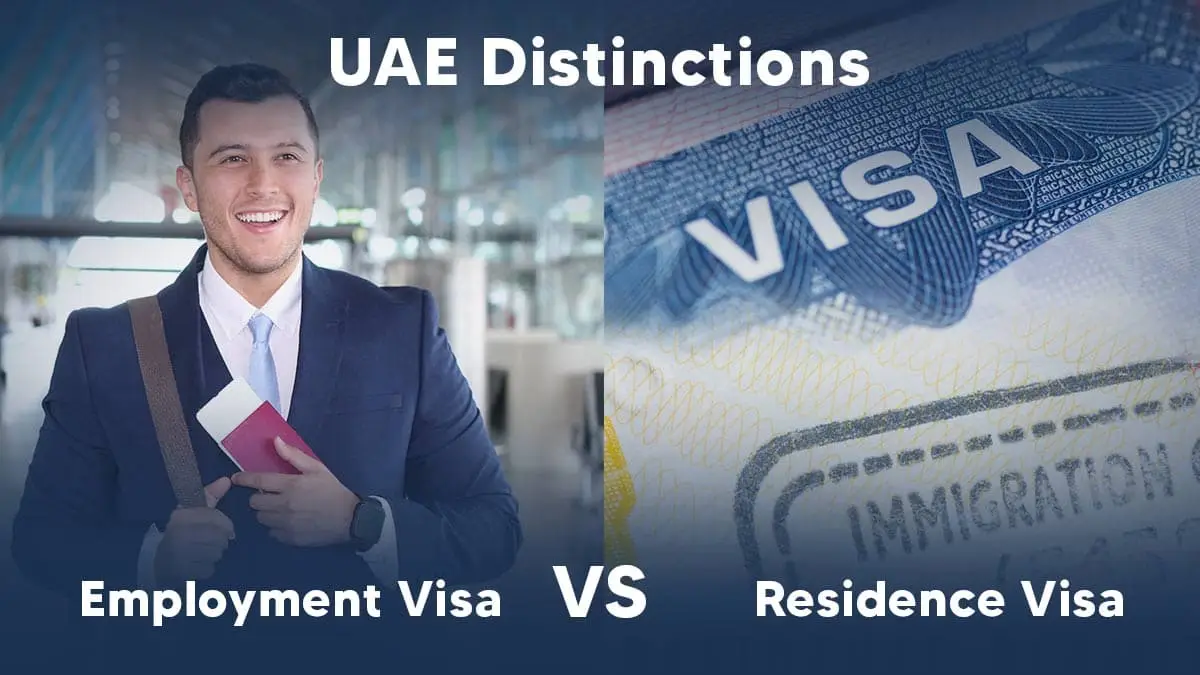
    2. UAE Employment Visa

    • Diverse Sponsorship Options: A UAE resident can sponsor residence visas, be it a family member friend, or through avenues such as property ownership, retirement, or investment in the country.
    • Extended Validity Periods: Unlike other visas, residence visas are typically issued for longer durations, spanning two or more years. Renewal is possible, provided the sponsor and visa holder meet the specified criteria.
    • Privileges for Visa Holders: Holders of residence visas enjoy various privileges, including the ability to open bank accounts, obtain a driver’s license, and enrol in educational institutions.
    • Freedom from Employment Restrictions: In contrast to employment visas, residence visas offer unparalleled flexibility. They do not tie you to a specific job or employer, allowing you the freedom to work for any employer or engage in various business activities.

    Visa Application Procedures:

    Navigating the application processes for employment and residence visas encompasses multiple steps, including medical examinations, security checks, and paperwork verification. Collaborating closely with your employer or sponsor and strictly adhering to the guidelines outlined by UAE immigration authorities is crucial to ensuring a seamless application process.

    Navigating Employment Visa:

    • Company-Specific Work Authorization: Grants an individual the authority to work exclusively for a particular company in the UAE.
    • Issued by MOHRE: It is administered and issued by the Ministry of Human Resources and Emiratisation (MOHRE).
    • Sponsorship by Employer: It is sponsored by the employer, enabling the employee to participate in work-related activities.
    • Grace Period Provision: Incorporates a one-month grace period following termination or cancellation, allowing the individual to explore alternative employment opportunities.

    Transition Opportunities and Grace Period:

    Work visas sponsored by employers include a one-month grace period, allowing individuals to pursue other employment or residence options following visa termination or cancellation. For work visa cancellation, individuals can smoothly transition to a resident visa within the stipulated grace period, facilitating their continued stay in the UAE under different sponsorship categories.

    Employment visas are inherently linked to the duration of a job and are typically sponsored by the employer. These visas are renewable if the individual remains employed with the sponsoring company. They are tied explicitly to a designated job position and the sponsoring employer, offering a structured framework for employment within the UAE. The scope of these visas is primarily limited to activities directly related to the individual’s employment, ensuring a focused alignment with work responsibilities and obligations.

    Read more: How to apply for a Dubai working visa

    3. UAE Company Investor Visa

    Upon reaching 18 or above, you gain the legal eligibility to assume roles as an investor, entrepreneur, or shareholder in any company within Dubai and across the UAE. This eligibility further grants you the opportunity to acquire a UAE residence visa. The Dubai investor visa holds a validity period of two (2) years. As part of the renewal process, every three years necessitates undergoing a medical test and updating medical insurance and Emirates ID to ensure the continuation of your investor visa.

    Visa Duration:

    The Dubai investor visa is valid for two years. Renewing the investor visa requires undergoing a medical test and updating medical insurance and Emirates ID every three years.

    Documentary Requirements:

    To sponsor your family members, you need to provide the following documents:

    1. House tenancy contract with a minimum requirement of a 2BHK.
    2. Attest the marriage certificate if you are sponsoring a spouse.
    3. Attested birth certificate(s) if you sponsor a child/children.
    4. A refundable deposit of AED 1,500 for each family member being sponsored. (Please note: To support entrepreneurs during the pandemic, the original deposit amount of AED 3,000 has been reduced to AED 1,500.)

    Dubai Investor Visa Application Process:

    1. Company Registration:

    Commence the process by registering your company with the Dubai Economic Department (DED).

    2. Establishment Card Application:

    Proceed to apply for your company’s establishment card, a critical step in the investor visa application.

    3. Entry Permit and In-Country Status Change:

    If you are outside the UAE, apply for your entry permit, enter the country, and undergo an in-country status change for your visa. If you are already in the UAE, proceed with an in-country visa status change.

    4. Medical Test:

    Fulfilling the requirement of a medical test is an essential step in the application process.

    5. Emirates ID Application:

    Apply for your Emirates ID, an integral component of the investor visa application.

    6. Health Insurance Coverage:

    Obtain suitable health insurance coverage as part of the visa application prerequisites.

    7. Investor Visa Stamping:

    The final step involves stamping your investor visa in your passport and completing the application process.

    Visa Validity:

    This investor visa is valid for two years, offering entrepreneurs and business owners the flexibility to manage and grow their ventures in the UAE. The visa is subject to renewal, providing a sustainable pathway for long-term business engagement within the dynamic landscape of the UAE.

    4. UAE Family Visa

    Suppose an expatriate holds any type of residency visa in the UAE. In that case, they gain the privilege of sponsoring their immediate family, fostering familial togetherness in the vibrant atmosphere of the country.

    Sponsorship Dynamics:

    • Eligible Dependents: Expatriates with a residency visa can sponsor their spouse, children, and parents.

    Requirements for Issuing a UAE Family Visa:

    • Investors’ Contribution: Investors seeking to sponsor their families must pay a refundable amount of AED 3,000 per family member.
    • Employee Criteria: Employees aspiring to sponsor their families must have a monthly salary of at least AED 4,000, or AED 3,000 plus the monthly rent.
    • Parental Sponsorship Criteria: Sponsoring parents requires a monthly income of not less than AED 20,000. If both parents are sponsored, the monthly income requirement applies; in case of the demise of one parent, a death certificate is necessary.

    Required Documents for UAE Family Visa:

    Sponsor’s Documents:

    • Passport copy.
    • UAE residency visa copy.
    • Original Emirates ID.
    • Bank statement if applicable.

    Dependants’ Documents:

    • Passport with at least 6 months validity.
    • Passport-size photo with a white background.
    • Previous visa copy, if applicable.
    • Marriage certificate (for spouses).
    • Birth certificate for children.

    Visa Validity and Renewal:

    • Family visas vary in duration, depending on the sponsor’s visa type, and are typically for 2 years or the length of the sponsor’s visa. Renewal is case-specific.
    • Family visas are intricately linked to the sponsor’s visa. If the sponsor’s UAE residency visa is cancelled, the dependents’ visas must also be cancelled.
    • Upon cancelling the sponsor’s visa, there is a 30-day grace period for cancelling the UAE family residency visa. Beyond this duration, fines may apply. This ensures regulatory compliance and timely adjustments to changes in sponsorship status.

    5.  Dubai Freelance Visa

    Several free zones in Dubai and across the UAE extend freelance permits to Indian nationals. Obtaining a freelance permit in these zones does not necessitate having a sponsor or being employed by any organisation within the UAE.

    The Dubai freelancer’s visa functions as a form of UAE residency, granting you the authorisation to reside and work in the UAE for a duration ranging from one to five years, including your family members.

    Required Documents for Obtaining a Freelance Visa in Dubai:

    To secure a freelance license, the following essential documents are needed:

    1. Completed application forms.
    2. Copy of your passport.
    3. Passport-size photo.
    4. Updated Curriculum Vitae (CV).
    5. Academic credentials certified by the Ministry of Foreign Affairs or the UAE Consulate.
    6. Two professional references with contact details.
    7. Letter of intent or a job offer detailing your work history and personal and professional background.
    8. If required, your sponsor will issue a No Objection Certificate (NOC).

    The relevant free zone authorities will assess your application and the supporting documentation.

    Eligibility criteria to obtain freelance visa in Dubai

    To be eligible, you need to meet the following requirements:

    1. Obtain a permit from the Ministry of Human Resources and Emiratization for self-employment or freelance work.
    2. Possess a minimum of a bachelor’s degree or specialist diploma in education.
    3. Demonstrate a minimum annual self-employment income of AED 360,000 for the past two years or showcase the ability to sustain oneself financially throughout the intended stay.

    Cost of a Dubai Freelance Visa?

    Understanding the expense of a Dubai freelance visa is crucial before applying for this distinct employment visa (separate from your residency or UAE resident visa). The cost of a Freelance Visa in 2026 begins at AED 20,000, valid for 2 years. It’s important to note that additional fees may apply for a permit if mandated by the Dubai Development Authority.

    6. UAE Specialist Resident Visa

    The UAE residency visa permits individuals from diverse backgrounds to reside in the Middle Eastern country for a designated period. The validity ranges from 2 to 10 years and is subject to multiple renewals as needed.

    Individuals entering the country under an employment contract have two additional avenues to secure a UAE residence permit. One option is to invest in real estate, while the other involves initiating a business venture within the UAE.

    UAE Residence Visa Requirements

    Understand the visa requirements and prepare the following documents:

    1. Fill in the UAE residency visa application form
    2. A copy of your original passport
    3. Two passport-sized pictures, ensuring they meet the UAE visa photo requirements
    4. Your original entry visa and its copy
    5. Proof of your sponsor’s legal residency in the UAE
    6. The pass certificate of your medical fitness test
    7. A copy of your health insurance plan, if required
    8. Copies of the company’s trade license and establishment card
    9. You need proof of family ties for a family visa application. Furthermore, these include birth or marriage certificates attested by the UAE embassy in their home country.

    Residence Visa Renewal Cost

    The UAE residence visa renewal cost depends on the type:

    Employment visas

    • One-time government fee
    • Labour fee based on the category of your company
    • PRO service charge
    • Medical test and Emirates ID
    • Insurance fee for people with limited skills category

    Partners or investor visas

    • Medical typing fee
    • Emirates ID typing
    • Residence visa typing fee
    • PRO service charge

    Read More: How to apply residence visa in Dubai

    7. UAE Student Visa

    The Student Residency Visa offers a pathway for students aspiring to pursue education in the UAE to enrol in educational institutions.

    Documentary Requirements:

    • Passport Details: Copy of the passport with a validity of at least 6 months.
    • Photographic Identification: Passport-size photo with a white background.
    • Financial and Enrollment Proof: Receipts for visa and tuition fees, Current visa copy if applicable, and – Copy of the admission letter from the educational institution.

    Visa Validity and Renewal:

    • The student visa is initially issued for 1 year. Students are required to apply for annual renewals throughout their educational program.
    • Exceptional students, achieving a grade of 95% in secondary school or a minimum GPA of 3.75 for university students, can apply for a 5-year student visa. This extended duration is a testament to the UAE’s recognition and encouragement of academic excellence.

    The Student Residency Visa facilitates educational pursuits and emphasises the importance of recognising and rewarding outstanding academic achievements.

    8. UAE Green Visa

    The UAE has recently unveiled a groundbreaking visa category – the Green Visa. Tailored to attract highly skilled professionals, investors, entrepreneurs, and students, this visa is a versatile option suitable for investment and employment endeavours in the UAE.

    Key Benefits of the Green Visa:

    • Comprehensive Residency Privileges: Green Visa holders enjoy long-term residency in the UAE, providing stability and continuity for their professional and personal pursuits.
    • Family Sponsorship Rights: Holders can sponsor all first-degree relatives, extending the visa’s benefits to the entire family unit.
    • Flexible Work Opportunities: Holders can work for any UAE-based company or establish their own business, fostering entrepreneurial spirit and professional growth.
    • Access to Services: Green Visa holders gain access to healthcare, education, and other government services, ensuring a seamless and enriching living experience.
    • Extended Grace Period: Enjoy a more flexible grace period of up to 6 months after the end or cancellation of the residency visa, providing leeway for transitions.

    Sponsorship Dynamics:

    Green Visa holders can sponsor all family members, ensuring a unified residency duration for the entire family.

    Eligibility Criteria:

    The Green Visa is open to the following categories:

    • Talented individuals.
    • Skilled professionals/employees.
    • Freelancers.
    • Investors and entrepreneurs.

    Requirements Based on Categories:

    Skilled Professionals/Employees:

    • Valid employment contract.
    • Classification at the 1st, 2nd, or 3rd occupational level.
    • Minimum educational qualification of a BA degree or equivalent.
    • Minimum salary of AED 15,000 (USD 4,083.74).

    Freelancers/Self-employed:

    • Freelance or self-employment permit from the Ministry of Human Resources and Emiratisation (MOHRE).
    • Proof of education with a minimum BA or specialised diploma qualification.
    • Annual income from self-employment for the past 2 years equal to or exceeding AED 360,000 (USD 98,009.86) or proof of financial solvency.

    Investor or Partner:

    • AED 1 million investment with approval or proof.
    • Approval from responsible local authorities.

    Required Documents:

    • Valid passport with a minimum validity of 6 months.
    • Passport-size photograph on a white background.
    • Medical reports from responsible local authorities.
    • Proof of health insurance or health card.
    • Valid entry permit.
    • Document proving qualification.
    • Freelancing permit from MOHRE or proof of employment.
    • Filled out the application form.

    Visa Validity:

    The Green Visa provides a 5-year residence in the UAE for all eligible parties, marking a significant stride in the country’s commitment to attracting global talent and fostering innovation and sustainability.

    How Shuraa Business Setup Can Help:

    Guiding the intricacies of UAE residency visas can be a complex endeavour. Shuraa Business Setup is a trusted ally, providing comprehensive support and guidance throughout the various visa application processes. With a deep understanding of the UAE’s legal framework and immigration policies, Shuraa offers tailored solutions to individuals and businesses seeking residency there. From consultation and documentation assistance to facilitating the application process, Shuraa Business Setup simplifies the journey, ensuring a smooth and efficient path to acquiring the most suitable residency visa for your needs.

    Contact us today by phone at +971 4 4081900, via WhatsApp at +971 50 7775554, or simply email info@shuraa.com.

  • The Vital Role of Payment Platforms in Boosting Business Success

    The Vital Role of Payment Platforms in Boosting Business Success

    In a world that has shifted to a majorly digital paradigm, business processes have gone through an equally significant transformation. Disappearing global borders have facilitated the necessity of faster and more efficient financial transactions. Additionally, this has led to the emergence of new markets, business deals in multiple currencies and compliance with a plethora of local and international regulations. All these factors have led to the advent of new payment platforms to help accelerate the commercial processes between clients, partners and global suppliers.

    Today’s dynamic and interconnected business landscape requires a reliable payment platform that is no longer a luxury but a necessity for business entities, both in Dubai and on the international stage. In this blog post, we’ll delve into why integrating a secure and efficient payment platform is crucial for your business’s growth and success.

    Benefits of Using Digital Payment Platforms for your Company

    Increase in digital payments has led to better evolved corporate growth opportunities and businesses have leaned into the payment process as a separate customer experience touchpoint. The digitalisation of vendor payments has become so enormous that people have drastically reduced physical banking services. It is safe to say that most money transfers happen via apps and online platforms.

    However, this has also highlighted the drawbacks of the traditional manual, paper-based systems which were mostly dependent on in-person processes, slow-moving checks and expensive paper invoices. The financial system of B2B payments still has significant infrastructural gaps and inefficiencies costing the industry trillions of dollars each year. Therefore, it has become even more imperative that businesses start converting to digital payment platforms and other electronic remittance solutions.

    Here are some of the chief advantages of shifting to digital payment platforms for business-to-business transactions:

    Enhancing Global Reach

    One of the key advantages of implementing a robust payment platform is the ability to transcend geographical boundaries. As businesses increasingly operate on an international scale, having a payment solution that supports seamless cross-border transactions becomes paramount. This not only simplifies payment processes but also expands your business’s reach to new markets. 

    Streamlining Transactions and Improving Efficiency

    A dedicated payment platform streamlines the payment process, making it quicker, more secure, and less prone to errors. This efficiency not only enhances customer satisfaction but also allows businesses to focus more on their core operations, fostering overall productivity.

    Building Trust and Credibility

    Customers value transparency and security when it comes to financial transactions. A reliable payment platform ensures that transactions are secure and transparent, thereby building trust with clients. This trust is fundamental for customer retention and positive word-of-mouth, contributing to the long-term success of your business.

    Embracing Technological Advancements

    The business landscape is evolving at a rapid pace, with technological advancements shaping the way transactions are conducted. Integrating a modern payment platform not only keeps your business aligned with industry trends but also positions it as forward-thinking and adaptable.

    Experience the Shuraa Advantage with Payoneer

    At Shuraa Management & Consultancy, we are committed to providing our clients with tools that empower their business endeavours. It is with great enthusiasm that we announce our recent partnership with Payoneer, a leading global payment platform renowned for its security, efficiency, and global connectivity. Payoneer offers businesses a seamless and secure platform for local and international transactions. With a focus on innovation and customer-centric solutions, Payoneer aligns perfectly with our commitment to delivering excellence to our clients.

    By choosing Shuraa, entrepreneurs can not only gain access to our extensive business expertise but also to the cutting-edge capabilities of Payoneer. This partnership is designed to elevate your business transactions, ensuring they are efficient, secure, and seamlessly connected on a global scale.

    For further information on how our partnership with Payoneer can benefit your business, feel free to reach out to us. Let’s embark together on a journey toward streamlined, efficient, and globally connected transactions.

    Camila Cascio

    Head of B2B and Strategic Partnerships

    partners@shuraa.com

  • Establish a Subsidiary in Dubai, UAE—Guide for 2026

    Establish a Subsidiary in Dubai, UAE—Guide for 2026

    In today’s interconnected world, businesses are increasingly seeking to expand their reach beyond borders, tapping into new markets and opportunities for growth. One effective strategy for international expansion is establishing a subsidiary company setup in Dubai or in a strategic location that offers a favorable business environment.

    Establishing a subsidiary company in a strategic location like Dubai, UAE, can be a powerful step towards international expansion. But what exactly is a subsidiary company, and why is setting one up in Dubai so advantageous? Let’s understand.

    What is a subsidiary company?

    A subsidiary company is a distinct legal entity that is owned and controlled by another company, referred to as the parent company. While the parent company holds majority ownership, the subsidiary operates independently, managing its own assets, liabilities, and business activities.

    A branch and a subsidiary are both business entities that are owned by another company. However, there are some key differences between a branch and a subsidiary in the UAE. A subsidiary is a separate legal entity that is owned by another company, known as the parent company. Branches are not separate legal entities and are considered extensions of the parent company.

    Establishing subsidiary companies plays a crucial role in international expansion, enabling businesses to:

    1. Risk Mitigation

    Subsidiaries limit the parent company’s liability to the subsidiary’s assets, protecting the parent company from potential financial risks in the new market.

    2. Local Presence

    Subsidiaries establish a local presence in the new market, enabling the company to better understand and cater to the needs of local customers and partners.

    3. Tax Advantages

    Depending on the location, subsidiaries may enjoy tax benefits, such as lower corporate tax rates or tax exemptions.

    4. Compliance and Regulatory Ease

    Subsidiaries simplify compliance with local laws and regulations, as they are treated as domestic companies.

    5. Talent Acquisition and Retention

    Subsidiaries facilitate the recruitment and retention of local talent, allowing the company to tap into the skills and expertise of the local workforce.

    Why Choose Subsidiary Company Setup in Dubai

    Dubai’s strategic location, coupled with its business-friendly policies and infrastructure, has transformed it into a global hub for international business. Several factors contribute to Dubai’s attractiveness as a destination for subsidiary companies:

    • Dubai lies at the crossroads of Asia, Europe, and Africa, offering easy access to major markets and transportation routes.
    • Dubai’s government actively promotes foreign investment.
    • Dubai is among the most tax-friendly countries for entrepreneurs, offering tax incentives, free zones, and streamlined regulatory processes.
    • The city has world-class infrastructure, including transportation networks and financial institutions.
    • Dubai’s diverse population provides a pool of skilled and experienced professionals from around the globe.
    • Dubai maintains a stable political and economic environment that ensures long-term growth prospects.

    How to Set Up a Subsidiary Company in Dubai?

    Expanding your business to Dubai can be a strategic move towards global success. However, the process of setting up a subsidiary requires careful planning and adherence to local regulations.

    Prerequisites 

    • Determine your business activity and legal structure, such as a limited liability company (LLC), which is the most common option for foreign investors.
    • Choose a suitable location, including mainland and free zones. Each location has its own regulations, tax implications, and business restrictions. Select the location that aligns with your business objectives and target market.

    Here’s a simplified process of subsidiary company setup in Dubai:

    1. Initial Approval and Name Reservation

    Submit an initial application to the DED, providing details about your proposed subsidiary company. Once initial approval is granted, reserve a unique trade name for your subsidiary company, ensuring it complies with naming regulations.

    2. Register Your Subsidiary with the Department of Economic Development (DED)

    After obtaining initial approval, you can proceed to register your subsidiary with the DED. This involves submitting the required documents, such as passport copies of shareholders and directors, MOA (if applicable), etc.

    Upon successful registration, you will receive a trade license, which authorizes your subsidiary to operate in Dubai.

    3. Open a Corporate Bank Account

    To manage your subsidiary’s finances, you need to open a corporate bank account in Dubai. Several local and international banks offer corporate banking services in Dubai. Choose a bank that aligns with your business needs and provides competitive banking solutions.

    4. Secure Visas

    Apply for visas for shareholders, directors, and employees who will be working in Dubai.

    5. Arrange Office Space

    Find a suitable office space to accommodate your subsidiary’s operations. Dubai offers a variety of office options, from shared workspaces to serviced offices and leased commercial spaces.

    6. Tax Implications

    Be aware of the tax implications for your subsidiary company in Dubai, including corporate tax, withholding tax, and value-added tax (VAT).

    Please note that depending on the activities that your subsidiary will be carrying out, you may need to obtain additional permits and licenses.

    Subsidiary company setup in Dubai can involve complex legal and regulatory procedures. It is advisable to seek guidance from experienced business consultants in Dubai like Shuraa, who can assist you with the process, ensuring compliance with all requirements and maximizing your chances of success.

    What is the Cost of Setting up a Subsidiary Company in Dubai?

    The average license cost of setting up a subsidiary company in Dubai generally starts from AED 25,500. However, the cost varies depending on several factors, including:

    • Type of business structure
    • Nature of your business
    • The number of visas required
    • Location of your office
    • Additional licenses and permits

    Besides the license costs, there are other costs involved, such as:

    • Visa cost
    • Legal documents cost
    • Office space rent
    • Bank account opening fees
    • Furniture and equipment cost
    • Accounting and tax registration fees (If applicable)

    To get the actual cost of establishing a subsidiary company in Dubai, get in touch with the business setup advisor at Shuraa Business Setup.

    Get in touch with a business setup advisor like Shuraa Business Setup to get the actual cost to establish a subsidiary in Dubai.

    Taxation of Subsidiaries in Dubai

    As of July 1, 2023, a new corporate tax regime has been implemented in the United Arab Emirates (UAE), including Dubai. This new regime applies to all businesses operating in the UAE, including subsidiaries of foreign companies.

    Under the new regime, the corporate tax rate is set at a flat rate of 9% for taxable profits exceeding AED 375,000. However, there are certain exemptions and deductions available, which can reduce the effective tax rate for some businesses.

    Final Steps for Your Dubai Venture with Shuraa Business Setup

    Establishing a subsidiary company in Dubai presents a compelling option for businesses seeking to expand their global footprint. Without a doubt, Dubai offers a pool of opportunities for growth and expansion.

    The process of setting up a subsidiary company in Dubai may seem complex, but with careful planning and expert guidance, it can be navigated smoothly and efficiently. Shuraa Business Setup, a leading service provider of company formation in Dubai, offers expert assistance to businesses throughout the entire process, ensuring compliance with all regulations and maximizing the chances of success.

    From initial company registration to comprehensive PRO services, Shuraa Business Setup provides a one-stop solution for all your business establishment needs.

    Connect with us today—Phone: +971 44081900, WhatsApp: +971 507775554, Email: info@shuraa.com.

    Seize the opportunities that Dubai has to offer, and let Shuraa be your guide to a successful business venture in the heart of the UAE.

  • Manufacturing License in Dubai: A Step-by-Step Guide

    Manufacturing License in Dubai: A Step-by-Step Guide

    To start a manufacturing business in Dubai or the UAE, obtaining a manufacturing license is the first legal requirement. The UAE is a leading hub for advanced manufacturing, supported by its strategic location, pro-business policies, strong infrastructure, and national initiatives such as Operation 300bn.

    As of 2026, the UAE’s National Manufacturing Strategy aims to increase the industrial sector’s contribution to GDP to over 25%, creating significant opportunities in sectors like agri-tech, pharmaceuticals, electric vehicle components, and renewable energy equipment.

    This license legally authorizes you to produce goods in the UAE, ensuring compliance and market access. Whether you plan to operate on the mainland or in a free zone, this guide covers the latest 2026 regulations, costs, and procedures.

    2026 UAE Manufacturing Snapshot:

    • Ownership: 100% foreign ownership available in most zones and sectors.
    • Setup Time: Average license processing time is 2-4 weeks post-approval.
    • Key Growth Sectors: Advanced materials, medical devices, AI-driven machinery, and sustainable packaging.
    • Strategic Advantage: Access to over 15 global markets via the UAE’s Comprehensive Economic Partnership Agreements (CEPAs).

    What is a Manufacturing License?

    To obtain a manufacturing license in Dubai, you must secure an Industrial License, register with the Department of Economy and Tourism (DET) or a Free Zone, obtain Ministry of Industry and Advanced Technology (MoIAT) approvals, and lease a physical facility. Costs typically range from AED 23,000 to 57,000 or more, depending on location, activity, and facility size. A detailed business plan and technical approvals are also required.

    Why You Need a Manufacturing License in the UAE?

    A manufacturing license in the UAE is a mandatory regulatory requirement for any entity engaged in the production, processing, or assembly of goods. It serves as the foundational legal document that legitimizes your operations, from food processing and electronic assembly to heavy machinery production.

    In addition to compliance, obtaining this license in 2026 offers advantages that help integrate your business into the UAE’s forward-looking industrial ecosystem.

    1. Legal Compliance & Operational Legitimacy

    The license ensures your business operates within the stringent legal and regulatory framework of the UAE, covering civil defense, environmental standards, and municipal regulations. Non-compliance can result in heavy penalties or operational shutdowns.

    2. Full Market Access & Export Facilitation

    It grants the legal right to manufacture and sell products in the lucrative UAE market and to re-export them globally. A mainland license offers direct access to the local GCC market, while free zone licenses are optimized for international export and leverage the UAE’s network of trade agreements.

    3. Access to Government Incentives & 4.0 Initiatives

    Licensed manufacturers can access government support programs, including subsidies for Industry 4.0 technologies, grants for sustainable manufacturing, and preferential terms in industrial parks and clusters.

    4. Enhanced Investor Confidence & Funding Opportunities

    A valid license significantly boosts corporate credibility, making it easier to secure financing from UAE-based banks and attract investment from local and international funds focused on the region’s industrial growth.

    5. Legal Protection & Intellectual Property (IP) Rights

    Operating with a proper license strengthens your ability to register and enforce patents, trademarks, and designs under UAE law, which is crucial for protecting proprietary technology and innovation.

    6. Compliance with ESG & Sustainability Standards

    In line with the UAE Net Zero 2050 strategic initiative, a manufacturing license now requires compliance with Environmental, Social, and Governance (ESG) reporting standards, which can open the door to partnerships with leading global corporations.

    How to Get Your UAE Manufacturing License: 2026 Step-by-Step Process

    Securing a manufacturing license in Dubai or other emirates follows a structured process. The following 2026 step-by-step guide will help you navigate the application.

    Step 1: Conduct a Feasibility Study & Initial Approvals

    Before formal application, conduct a detailed study of your market, supply chain, and regulatory landscape. For certain high-impact or specialized activities (e.g., pharmaceuticals, plastics), you may need to secure a No-Objection Certificate (NOC) or pre-approval from sector-specific federal authorities.

    Step 2: Choose Your Setup: Free Zone vs Mainland

    This decision affects ownership, cost, and market access. Choose between a free zone or mainland license based on your target market and ownership goals.

    Step 3: Select Your Business Location & Emirate

    Select the emirate, industrial park, or free zone that aligns with your logistics, sector focus, and budget. Consider proximity to ports, suppliers, and available labor.

    Step 4: Determine Activity & Register Trade Name

    Define your manufacturing activity in accordance with the Department of Economic and Tourism or the relevant free zone authority. Reserve a trade name that meets UAE naming standards.

    Step 5: Prepare & Submit License Application

    Submit your application digitally through the emirate’s business platform or free zone portal, including all required approvals, documents, and fee payments.

    Step 6: Obtain Facility & Operational Approvals

    After receiving the initial license, obtain final approvals for your facility, including:

    • Municipal Approval: For building plans and intended use.
    • Civil Defense NOC: Ensuring fire safety compliance.
    • Environmental Permit (EIA): Mandatory for most manufacturing activities to assess environmental impact.

    Step 7: License Issuance & Activation

    Once all inspections are complete and final NOCs are submitted, the regulatory authority issues your manufacturing license. You may then activate your company and begin operations.

    Step 8: Post-Licensing Formalities

    Complete your setup by opening a corporate bank account, applying for employee visas, registering for VAT if required, and enrolling in the mandatory industrial health insurance scheme.

    Manufacturing License in Dubai vs Other Emirates vs Free Zones

    Selecting the appropriate jurisdiction is essential. The following 2026 comparison will help guide your decision.

    AspectMainland (e.g., Dubai DET)Free Zone (e.g., Dubai Industrial City, KIZAD)Other Emirates (e.g., Sharjah, Ajman)
    Market AccessDirect access to the entire UAE & GCC market.Primarily for export; local market access may require a customs agent.Direct local market access within the emirate, with some restrictions to other emirates.
    OwnershipMay require a local service agent (for LLCs). 100% ownership in specific sectors/activities.100% foreign ownership guaranteed.Varies; often similar to mainland rules, with some emirates offering competitive incentives.
    Manufacturing License Cost (2026 Estimate)AED 32,000 – 57,000+ (Higher due to local partner/sponsor fees and municipal costs).AED 23,000 – 43,000+ (More predictable, often all-inclusive packages).AED 28,000 – 50,000+ (Can be lower than Dubai, with competitive incentives).
    Location FlexibilityCan lease or own industrial land anywhere within the emirate.Must operate within the designated free zone premises.Can operate within the emirate’s industrial areas; often more affordable land.
    Ideal ForBusinesses targeting the UAE/GCC domestic market extensively.Export-focused businesses, startups wanting cost clarity, and tech manufacturers.Businesses with lower overhead targets, specific supply chain ties to Northern Emirates.

    Free Zone Manufacturing License: Complete 2026 Guide

    A free zone manufacturing license is a preferred option for export-oriented businesses. Key free zones for manufacturing include:

    • Khalifa Industrial Zone Abu Dhabi (KIZAD): For heavy industry, metals, and logistics.
    • Dubai Industrial City (DIC): For light to medium industry, FMCG, and base operations.
    • Sharjah Airport International Free Zone (SAIF Zone): For aviation-linked manufacturing and SMEs.
    • RAKEZ (Ras Al Khaimah): For cost-effective SME manufacturing setups.

    Key 2026 Benefits:

    • Streamlined Process: Single-window services for licensing, visas, and facility leasing.
    • Customs Advantages: Simplified export/import procedures with dedicated customs support.
    • Fully Digital: Most free zones now offer end-to-end digital application and management portals.

    Documentation Required for Application (2026 Update)

    UAE government digital services have streamlined documentation requirements. Prepare the following documents:

    1. Completed Application Form: Filed digitally on the relevant portal.
    2. Passport Copies & Visas: For all shareholders and proposed managers.
    3. Detailed Business Plan: Including projected capacity, machinery list, and supply chain overview.
    4. Technical & Operational Layout: Factory floor plan, machinery placement, and workflow.
    5. Proof of Financial Capability: Bank statements or an auditor’s certificate.
    6. Curriculum Vitae (CV): For the proposed factory manager/engineer.
    7. Approvals from Specialized Authorities (if applicable): Required for sectors like food, pharmaceuticals, and chemicals.
    8. Environmental Impact Assessment (EIA) Plan: Now mandatory at the application stage for most manufacturing categories.

    Working with an expert such as Shuraa Business Setup ensures your documents meet 2026 requirements and helps prevent delays.

    Manufacturing License Cost in UAE: Detailed Breakdown

    Manufacturing license costs depend on several factors. Below is a breakdown for 2026 planning.

    Cost ComponentFree Zone (Average)Mainland Dubai (Average)Notes
    Initial License FeeAED 15,000 – 25,000AED 20,000 – 30,000Varies by activity complexity.
    Government ApprovalsAED 5,000 – 10,000AED 7,000 – 15,000Includes DET/Trade Name, municipal filing.
    Civil Defense & EIA PermitsAED 3,000 – 8,000AED 5,000 – 12,000EIA is now mandatory and a separate cost.
    Local Agent/Sponsor FeeNot ApplicableAED 10,000 – 20,000/yrAnnual fee for mainland LLCs requiring an agent.
    Total Estimated License CostAED 23,000 – 43,000AED 32,000 – 57,000+One-time fees, excluding recurring rents/visas.

    Note: The costs provided are for reference only. The exact manufacturing license cost depends on your specific activity, location, and facility scale. For an exact, personalized quotation, contact Shuraa Business Setup today.

    Additional & Hidden Costs to Budget For (2026):

    • Industrial Land/Unit Rental: Varies dramatically by location (e.g., Dubai vs Ajman). Expect AED 150,000+ annually for a mid-size facility.
    • Visa Costs: Approximately AED 5,000-7,000 per employee/year.
    • Equipment & Machinery Import: Customs duties may apply (typically 5%), but many free zones offer exemptions.
    • Sustainability Compliance: Potential investment in energy-efficient systems or waste management to meet 2026 standards.

    Note: the costs are only for the refence only, for exact costing use cost calculator.

    Benefits of Obtaining a Manufacturing License in the UAE

    1. 100% Foreign Ownership Across Most Sectors

    The revised Commercial Companies Law allows 100% foreign ownership for most manufacturing activities on the mainland, removing the previous local sponsorship requirement. Free zones have always offered this advantage.

    2. Tax Efficiency & CEPA Advantage

    Benefit from corporate tax exemptions on qualified income for certain “Qualifying Activities,” numerous double taxation treaties, and zero customs tariffs with countries under the UAE’s CEPA agreements (like India, Turkey, Indonesia, and more).

    3. World-Class Logistics & Infrastructure

    Leverage state-of-the-art ports (Jebel Ali, Khalifa Port), expanding rail networks (Etihad Rail), and airports to build a resilient and efficient supply chain.

    4. Access to Talent & Innovation Ecosystems

    The UAE’s attractive residency visas (Golden Visa, Green Visa) help you recruit global talent. Proximity to tech parks and universities fosters R&D partnerships.

    5. Government Support & Ease of Doing Business

    From the fully digital “Invest in Dubai” platform to dedicated industrial sector desks, the UAE continues to streamline processes, ranking among the world’s best for ease of doing business.

    Common Mistakes to Avoid in Your 2026 Application

    1. Underestimating the EIA Process: This is no longer a formality. Start early and budget appropriately.
    2. Choosing the Wrong Legal Form: Incorrectly selecting between FZCO, LLC, or sole establishment can limit future growth.
    3. Overlooking Sector-Specific Approvals: Food (MoCCaE), pharmaceuticals (MoH), chemicals (ESMA) – each has a dedicated federal authority.
    4. Neglecting Digital Platform Registration: All mainland applications must now go through the emirate’s unified digital business platform (e.g., Dubai’s “Invest in Dubai”).
    5. Insufficient Capital Proof: Authorities now require clearer evidence of financial capability to sustain operations.

    Choose Shuraa for Your UAE Manufacturing Business Setup

    Setting up a manufacturing business in the UAE in 2026 requires up-to-date expertise. Shuraa Business Setup streamlines the process for you.

    Why Partner with Shuraa?

    • 2026-Ready Expertise: Our consultants are up to date on the latest EIA, licensing, and digital submission requirements.
    • End-to-End Service: From feasibility study and license acquisition to PRO services, VAT registration, and bank account opening.
    • Free Zone & Mainland Specialists: We provide unbiased advice on the optimal jurisdiction for your manufacturing business in Dubai or any other emirate.
    • Transparent Costing: We provide a clear, all-inclusive quote with no hidden fees, so you know the exact manufacturing license cost upfront.

    Take the First Step Today.
    Contact Shuraa Business Setup for a complimentary manufacturing feasibility consultation. We will manage the process so you can focus on your core business.

    Frequently Asked Questions (FAQs)

    1. How long does it take to get a manufacturing license in Dubai in 2026?

    The timeline is approximately 8-12 weeks from initial application to final issuance, subject to the complexity of your activity and speed of approval from external authorities (Civil Defense, Environment).

    2. Can I get 100% ownership for a mainland manufacturing license?

    Yes, for most manufacturing activities as per the updated 2026 regulations. Some specific strategic sectors may have different requirements, which we can clarify for you.

    3.  What is the single biggest change in the 2026 process?

    The mandatory Environmental Impact Assessment (EIA) and the complete digitization of the application process through unified emirate-level platforms are the most significant updates.

    4. Is a manufacturing license different from an industrial license?

    In the UAE context, the terms are often used interchangeably. The official document is an “Industrial License” issued for manufacturing activities.

    5. Can I convert my free zone manufacturing license to a mainland license later?

    Yes, but it involves a formal process of licensing a new mainland entity and potentially liquidating or restructuring the free zone entity. Professional guidance is crucial.

  • Difference between employment visa and residence visa in UAE

    Difference between employment visa and residence visa in UAE

    The United Arab Emirates (UAE) is a vibrant and diverse country, attracting people from all corners of the globe for employment and residency opportunities. If you’re considering working or residing in the UAE, understanding the nuances between different types of visas is crucial. Two common categories that are often confused are employment visas and residence visas. In this blog, we will delve into the differences between these two types of visas, shedding light on their purposes, application processes, and privileges. In this blog, Shuraa Business Setup will guide you through the difference between employment visa and residence visa in UAE.  

    Employment Visa

    An employment visa in the UAE is a legal document that permits an individual to work for a specific company. Here are the critical aspects of an employment visa: 

    • Sponsorship: An employment visa is sponsored by the employer, meaning the company you work for is responsible for obtaining and managing your visa. 
    • Validity: Employment visas in the UAE are typically issued for a specific job and are valid for a limited period, often tied to the duration of the employment contract.
    • Renewal: Employment visas can be renewed if you remain employed by the sponsoring company and meet the renewal requirements. 
    • Responsibilities: As a visa holder, you must work for the sponsoring employer and adhere to UAE labour laws and regulations. 

    Residence Visa

    On the other hand, a residence visa allows an individual to reside in the UAE long-term, independent of employment. Here’s what you need to know about residence visas:

    • Sponsorship: Residence visas can be sponsored by a UAE resident, such as a family member or friend. It can also be obtained through property ownership, retirement, or investment in the country.
    • Validity: Residence visas are generally issued for longer durations, such as two or more years, and can be renewed if the sponsor and the visa holder meet the renewal criteria.
    • Privileges: Holders of residence visas enjoy various privileges, including the ability to open bank accounts, obtain a driver’s license, and enrol in educational institutions.
    • No Employment Restriction: Unlike employment visas, residence visas do not tie you to a specific job or employer. You can work for any employer or engage in business activities. 

    Application Process

    The application processes for employment and residence visas involve several steps, including medical examinations, security checks, and paperwork verification. It’s essential to work closely with your employer or sponsor and adhere to the guidelines provided by the UAE immigration authorities to ensure a smooth application process.

    Navigating Work Permits and Residence Permits with Ease

    Certainly, here are the rewritten points to highlight the distinctions between a work visa and a UAE residence permit:

    1. Work Visa in UAE:

    • Enables an individual to work for a specific company in the UAE. 
    • Issued by the Ministry of Human Resources and Emiratisation (MOHRE).
    • Sponsored by the employer, allowing the employee to engage in work-related activities. 
    • Provides a grace period of one month in case of termination or cancellation, during which the individual can explore other employment opportunities. 

     2. UAE Residence Permit:

    • Permits a foreign citizen to reside in the UAE. 
    • Issued by the General Directorate of Residency Foreign Affairs (GDRFA).
    • Not tied to a specific job or employer, offering more flexibility in terms of employment. 
    • Can be obtained through various sponsorship options, such as family, property ownership, or retirement. 

    3. Authority Issuing Visas:

    • Work visas are issued by the Ministry of Human Resources and Emiratisation (MOHRE), focusing on employment-related permissions.
    • Residence permits, on the other hand, are issued by the General Directorate of Residency Foreign Affairs (GDRFA), emphasizing the right to reside in the UAE. 

    4. Grace Period and Transition:

    • Employer-sponsored work visas provide a grace period of one month, allowing individuals to explore alternative employment or residence options after visa cancellation or termination. 
    • In the event of work visa cancellation, individuals can transition to a resident visa within the one-month grace period, enabling them to stay in the UAE under different sponsorship categories. 

    5. Flexibility and Purpose:

    • Work visas are specific to the job and employer, restricting the holder to employment-related activities.
    • Residence permits offer greater freedom, enabling individuals to live in the UAE for various purposes, such as education, retirement, or property ownership, without being job dependent.  

    Understanding these differences is crucial for individuals seeking employment or residency in the UAE, as it allows them to make informed decisions based on their specific needs and circumstances.

    Difference between employment visa and residence visa in UAE

    Certainly, here is a simplified table outlining the key differences between different types of employment visa and residence visa in UAE:

    Visa TypeSponsorshipValidityRenewalWork RestrictionsOther Privileges
    Employment VisaSponsored by EmployerTypically tied to job durationRenewable with employmentTied to specific job and employerLimited to employment-related activities
    Investor VisaSponsored by Investor/Company2 years, renewableRenewable with continued investmentCan work for the investing companyBusiness ownership and investment opportunities
    Family Sponsorship VisaSponsored by a UAE ResidentUsually 2 years, renewableRenewable with valid sponsorshipNot tied to specific employmentAccess to healthcare, education, and other public services
    Property Owner VisaSponsored by Property Owner2-5 years, renewableRenewable upon property ownershipCan work for any employerProperty ownership and real estate investment opportunities

    Understanding the distinctions between employment visas and residence visa in UAE is crucial for individuals planning to live and work there. While employment visas are job-specific and tied to a particular employer, residence visas offer more flexibility, allowing individuals to live in the UAE for an extended period, engage in various activities, and enjoy the country’s diverse opportunities.

    Whether pursuing a career or seeking a new chapter in the UAE, knowing the differences between these visa types will empower you to make informed decisions and navigate the complex immigration process more effectively. Connect with our knowledgeable Shuraa Business Setup experts, ready to assist you in navigating the visa application process. Contact us today by calling +971 44081900, messaging us on WhatsApp at +971 50 7775554, or emailing us at info@shuraa.com. We’re here to help you every step of the way!

  • Dubai’s Global Domination Constant in Attracting Greenfield Projects

    Dubai’s Global Domination Constant in Attracting Greenfield Projects

    In the wake of UAE’s increasing strides in development, the emirate of Dubai attracted 6.58% of the global percentage of greenfield FDI projects in H1 2023. This is a significant rise of 3.83% when compared to the same period in 2022. A grand total of 511 greenfield foreign direct investment (FDI) projects bolstered Dubai to the leaderboard while Singapore came second with 325 greenfield projects.  

    The Crown Prince of Dubai & Chairman of the Executive Council, Sheikh Hamdan bin Mohammed bin Rashid Al Maktoum, said in a statement: “Dubai’s ability to maintain its top ranking in attracting greenfield FDI projects reflects the city’s ability to create unparalleled growth opportunities and value for global investors… With the clear growth roadmap set out by the Dubai Economic Agenda D33, we continue to work to create an investment environment that not only wins the trust of investors from all over the world but also encourages them to contribute to Dubai’s transformation.”

    Credit: Twitter (@HamdanMohammed)

    What are Greenfield Projects?

    Put simply, Greenfield Projects are those that are built from the ground up, i.e., from scratch. This terminology has its origins in real estate correlating to an untouched green grass field site that is prime for development and has never had a previous construction on it.

    Today, Greenfield is a term used to denote the development of a brand-new product, service or entity that has never been brought to fruition before. On the other hand, a project that further accentuates pre-existing infrastructure or adds upgrades to existing products is a Brownfield Project.

    Influx of Foreign Direct Investment and Greenfield Projects in Dubai

    The Dubai FDI Monitor at Dubai’s Department of Economy & Tourism (DET) recently released new data showing how the Emirate announced a total of 880 FDI projects from January to June 2023, signifying a 70% year-on-year growth. Additionally, the FDI Monitor data also showed that Dubai’s greenfield projects accounted for a whopping 65% of the total announced FDI projects. On the other hand, year-on-year reinvestment FDIs increased to 4.4% from 3% in the first half of 2023 compared to H1 2022.

    Global greenfield FDI capital attraction in Dubai also experienced a year-on-year rise, accumulating a total of AED 20.87 billion and ultimately rising to the sixth position globally in H1 2023, a significant climb from the eighth position in H1 2022.

    The Dubai Department of Economy & Tourism’s Director General, Helal Saeed Almarri, said in a statement: “As we work to enhance the city’s competitiveness & business environment internationally, these strong increases in announced FDI projects for H1 2023 drive home how our progressive policy enablers and diverse attraction programmes are resonating with global investors and decision makers alike.”

    The influx in FDI projects saw Dubai rise to the global fourth position in employment creation in H1 2023, a significant upgrade from the 9th position last year same period. This amounted to a 43.3% surge in job creation in the first half of 2023, I.e., a total of 24,236 jobs formed due to the Foreign Direct Investment.

    The breakdown of the FDI created jobs stand at:

    • Business Services – 5,212 jobs (21.5%) 
    • IT & Software – 3,525 jobs (14.5%) 
    • Food & Beverage – 3,090 jobs (12.7%) 
    • Consumer Products – 2,104 jobs (8.3%) 
    • Financial Services – 1,813 jobs (7.5%)
    • Real Estate – 921 jobs (3.8%) 

    The Pros and Cons of Greenfield Projects in Dubai

    Greenfield projects can sprawl over multiple sectors with literal examples being establishing new factories, power plants or airports because of their utilisation of greenfield land. From a sales perspective, greenfield opportunities denote untapped marketplaces that are free for the taking. Additionally, when IT organisations come up with brand new live services or practices that have never been implemented before can also be referred to as ‘greenfield’ situations.

    Benefits of Greenfield Projects in Dubai

    Hence, there are several benefits as well as drawbacks when it comes to getting greenfield projects live. The primary benefits of launching a greenfield project are: 

    1. Zero Legacy Restrictions: The major benefit of working on a greenfield project is the fact that you have zero limitations when it comes to establishing the project framework. There are no constraints of a legacy process allowing you to build customised roles and choose the best practises.
    1. Create From Scratch: Whether it is real estate, product development or software launches, greenfield projects are emerging in a variety of sectors. And they provide complete and uninterrupted freedom to create as they see fit. This is a highly lucrative advantage that attracts people to join greenfield projects.
    1. New Job Creation: Nothing compares to the sense of achievement that comes from exploring and conquering unchartered territory. Greenfield projects in Dubai, UAE can lead to new revenue opportunities, enhance brand names, and can positively impact new job creation.

    Drawbacks of Greenfield Projects in Dubai

    On the flip side, there are also certain drawbacks when it comes to investing in greenfield projects. Some of them are:  

    1. Venturing into the Unknown: The very nature of greenfield projects being the first of their kind means that there is no reference to fall back upon. There are several factors that can affect success such as extended market research, competitors jumpstarting their own launches, economic fluctuations and other external factors. 
    1. Unpredictable Resource Drainage: The development of a project that has no prior blueprint can be exhausting and would require a lot of resources including manpower and a significant amount of time. 
    1. Significant Amount of Risk: Greenfield projects are created with brand-new conceptualisation and have never been tried before. Therefore, there is a high level of risk associated with greenfield projects. 

    UAE to Usher in New Age of Global Investments

    People all over the world are now recognising the commercial significance of the United Arab Emirates, especially its crown jewel, Dubai. The surge in attraction of greenfield projects in Dubai are a clear indicator of the high potential of the emirate. Additional factors such as its liberal tax laws, a business-friendly infrastructure and its globally accessible location also contribute to the economic development of the nation.  

    Dubai is home to leading company formation experts like Shuraa Business Setup to ease the process for global investors. Shuraa, present in Dubai since 2001, offers a comprehensive range of corporate services like UAE business setup, PRO & Golden Visa, VAT, tax and accounting, company auditing, office space requirements and more. We are a one-stop shop when it comes to building your business in Dubai.  

    Contact our team of expert corporate advisors to figure out how you can utilise the untapped potential of Dubai and the rest of the Emirates. We are just a call away at 800-SHURAA or +97144081900. You can also reach out to us via WhatsApp at +971507775554 or you can email us at info@shuraa.com