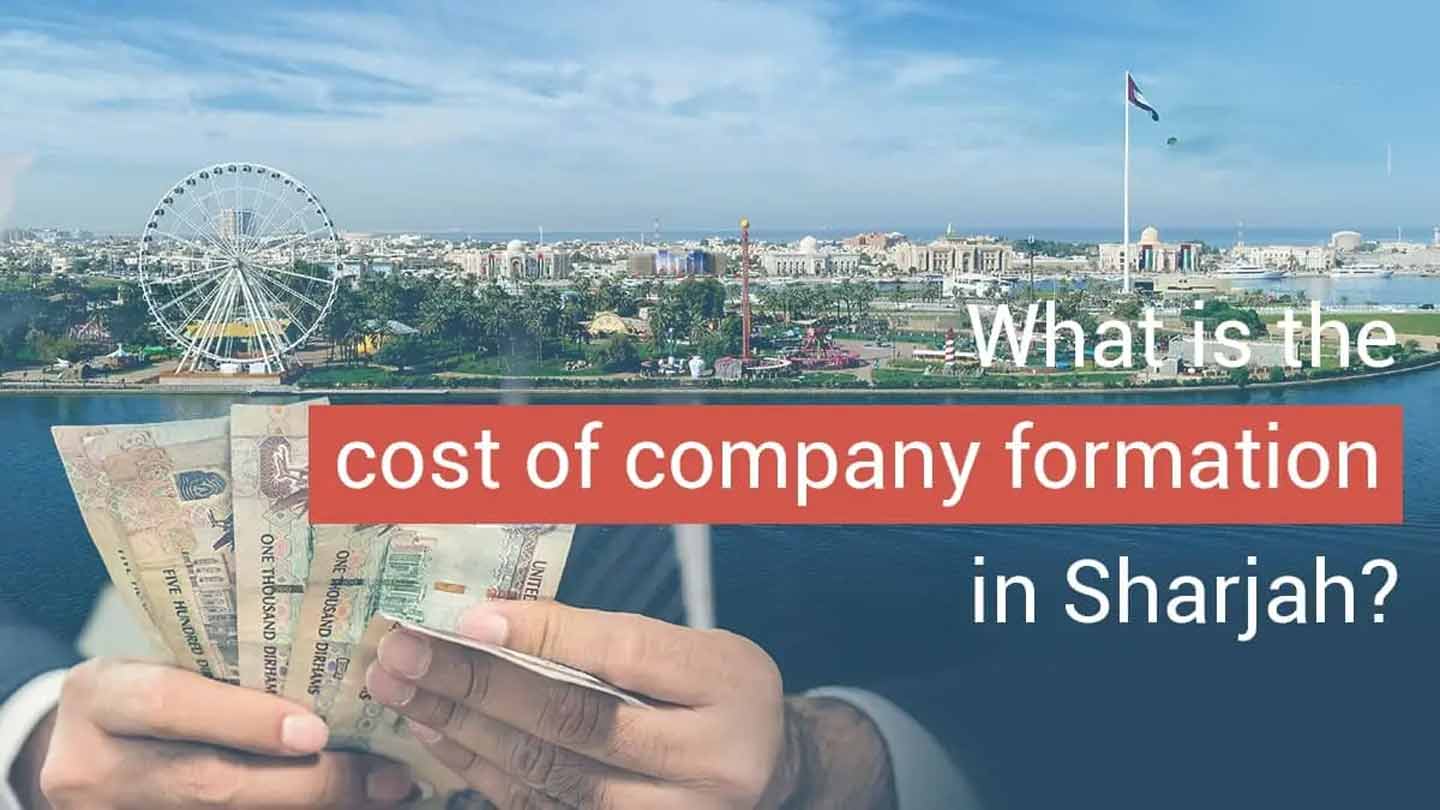
Company formation in Sharjah provides sustainable commercial growth companies and businesses. Let us understand the variables before analysing the business setup cost in Sharjah.
Company registration in Sharjah provides a multipurpose module to businessmen and entities. Which is why, opening a company in Sharjah is appealing. Foreign investors can explore and participate in various commercial segments. The governmental authorities uplift and support the entrepreneurial environment in the region. This encourages businesses in Sharjah to find potential and development possibilities.
Types of company formation in Sharjah
Company formation in Sharjah has stimulated the shipping sector of the country and has created an industrial base for the United Arab Emirates. For several years, Sharjah company formation is preferred by the shipping, trading and FMCG sectors along with the import & export industry.
Sharjah has been valued for its strategic location as it connects some of the major trading zones. Trading entities prefer setting up a business in Sharjah because to its excellent logistics chain management. Sharjah connects the Arabian Gulf coast, the East coast along with the Indian Ocean.
In the recent times, Sharjah businesses are not only limited to these peripherals rather have a vast outlook. The Sharjah government has taken every step to give the region a major thrust for foreign investments. With an envision to create enormous opportunities of company formation in Sharjah.
The region has an immense opportunity for trading, service sectors, industrial projects, etc. There is also a major scope in Sharjah for manufacturing industries, metal scrap industries, paper industries, retail companies and garment businesses.
Sharjah has given a pathway to economic and financial sectors, training institutes, educational sectors and cultural oriented businesses as well.
Guidelines for company formation in Sharjah
If you are wondering how to set up an LLC company in Sharjah or any other type of business in the region you must consider these guidelines. These guidelines do not only help you through the process of Sharjah company registration, but also helps you understand the steps involved in company setup. They are as follows –
1. Research and plan your business setup in Sharjah
Researching about Sharjah company formation is a perfect start towards setting up your business in Sharjah. Registration of the company is a legal procedure involving the governmental authorities and licensing bodies. Depending on the business activities the procedures of company registration in Sharjah will be put into action.
2. Understanding the process of company registration in Sharjah
The process of Company Registration in Sharjah is fulfilled by the Department of Economic Development in the Emirates. Once the business activity and jurisdiction are finalised the process is followed by getting the business license under the given jurisdiction.
3. Renting an office space for registering company in Sharjah
You will need an office space to setup business in Sharjah. If you are considering to setup a business under a freezone in Sharjah, ensure that the rental office must be within the freezone. Once the business is registered in the given jurisdiction, it becomes mandatory for the organization to engage in any business activity only within the given jurisdiction. However, this is not applied to mainland business setups.
4. Considering business expansion & future growth
Sharjah business registration is a great option for people considering business expansion and growth in the UAE market. But it is important to ascertain that the given registration will allow you assimilate adjacent business activates in the future as well. Secondly, under the proceeding the company is registered there needs to be growth and development possibilities. Speak to an expert before!
5. Appoint A Company Registration Consultant
Company Registration Consultant take care of all the “things you need to know”. We advise you on how to start a business in Sharjah in the best means possible. You can completely concentrate on your business and do not worry about the legalities involved during the process of company registration in Sharjah.
Cost of company formation in Sharjah
If you are planning to register your company in Sharjah Mainland or what to know the cost of a general trading license in Sharjah get in touch with Shuraa Business Setup and we will help you with your entrepreneurial endeavour.
Package Excludes – Market Fees (13% of Annual Rent) Municipality Fees (5%of Tenancy Contract) Foreign Trade Name Sewa Deposit All Visa Costs
Package Excludes – Market Fees (13% of Annual Rent) Municipality Fees (5%of Tenancy Contract) Foreign Trade Name Sewa Deposit All Visa Costs
Package Excludes – Market Fees (13% of Annual Rent) Municipality Fees (5% of Tenancy Contract) Foreign Trade Name Sewa Deposit All Visa Costs
Sharjah Free Zone Company Setup Cost
Sharjah free zones offer world-class business amenities, flexi office setups, access to free-hold property, etc. Sharjah Free Zone also provide affordable land and labour as well as incentives to Small and Medium Enterprises. All these factors contribute towards the affordability of Sharjah freezone company setup cost. However, when compared to Sharjah LLC company formation or mainland, free zones are more expensive and restrictive.
Business setup in SHAMS (Sharjah Media City) which is a well-known Sharjah free zone costs AED 25000 approximately. Whereas, Sharjah Airport International Free Zone business setup costs around AED 35000 approx. In a free zone, companies are only allowed to do trade within the free zone or outside the country. Hence, free zone company setup in Sharjah will also restrict on doing business within the country.
Book a Free Business Setup Consultation
Speak to a business setup consultant for free to understand the cost of company formation in Sharjah. Also, with a free consultation analyse whether to go for a Sharjah LLC company formation or a free zone business setup, depending on your preference and business activity.
To know the various perks and advantages of business setup in Sharjah Mainland or even for a Sharjah free zone company setup, contact Shuraa Business Setup. Shuraa makes Sharjah company registrations easy and affordable.
Dubai’s real estate market remains strong in 2026, supported by population growth, tourism, and investor-friendly policies. If you plan to open a real estate brokerage, understanding startup costs is essential for effective budgeting and planning.
This guide outlines the expenses, requirements, and steps involved, using the latest data from the Dubai Land Department (DLD), the Real Estate Regulatory Agency (RERA), and the Dubai Department of Economy and Tourism (DET).
Initial costs typically range from AED 21,000 to AED 50,000 or more, depending on your setup, office requirements, and team size. The guide also addresses hidden fees, cost-saving tips, and strategies for scaling your business.
By the end of this article, you will have actionable insights to make informed decisions and potentially save thousands of dirhams.
Why Start a Real Estate Brokerage in Dubai?
Dubai’s property sector is expected to grow by 5-7% annually through 2026, supported by strong demand for residential, commercial, and off-plan developments. The city provides 100% foreign ownership in free zones and the mainland, tax incentives such as no personal income tax and a 9% corporate tax on profits above AED 375,000, and efficient digital processes.
However, with over 2,000 brokerages operating in Dubai, it is important to prioritise marketing and compliance to differentiate your business.
Key benefits:
Access to a global client base.
High commission potential (2-5% on sales).
Flexible business setups are available through free zones, such as RAK or on the mainland for a broader operational scope.
Steps of Starting a Real Estate Brokerage in Dubai
Becoming a real estate broker in the UAE is straightforward if you follow the correct process. The steps below outline how to become a real estate agent in Dubai.
1. Name Approval
Choose a name for your real estate brokerage in Dubai, either in Arabic or English, in accordance with the Department of Economic and Tourism (DET) guidelines. A nominal fee applies.
2. Initial Approval + Tasheel
Obtain initial approval from the Department of Economic and tourism (DET) and complete the required documentation through Tasheel.
4. Real Estate Brokers Registration Services (RERA Services)
To open a real estate brokerage in Dubai, brokers or agents must be certified by the Real Estate Brokers Registration (RERA). This requires applying for the RERA exam and obtaining a Broker ID.
Applying for RERA’s certified training for real estate brokers
Attending the classes held at the opted RERA training centre
Writing the RERA exam
Obtaining the license and certification
5. Good Conduct Certificate
The Good Conduct Certificate is issued by the Dubai Police to the Real Estate Regulatory Agency.
6. Dubai Land Department Approval
Approval from the Dubai Land Department (DLD) is also required. The DLD oversees all real estate matters in the region.
7. Dubai Rented Office Space
A RERA real estate brokerage license in Dubai requires a rented office space or an office in a business centre, as specified by the Department of Economic Development regulations.
Costs depend on jurisdiction and scale. For 2026, the estimated initial investment to establish a real estate brokerage in Dubai ranges from AED 21,000 to AED 50,000 for a basic setup, and up to AED 300,000 or more for a fully equipped office with staff.
Cost Category
Estimated Amount (AED)
Details
Trade Name Reservation
620–2,000
DET fee; higher for foreign or special names.
Initial Approval
870
From DET or free zone authority.
RERA Training & Exam
3,200–15,750
Depends on education: AED 3,200 (bachelor’s degree), AED 6,300 (non-degree), AED 15,750 (no qualifications). Includes training (AED 525), exam (AED 1,087), and knowledge bank (AED 315).
Includes MoA, share certificate; starts at AED 12,500 in free zones like Meydan.
Office Space
30,000–100,000 (annual)
Lease in affordable areas (AED 80,000+); prime locations higher. Add AED 20,000–50,000 for furniture/tech. Flexi-desks in free zones: AED 5,000–10,000.
Visas & Residency
3,500–7,000 per person
Includes Emirates ID, medicals; AED 3,750–5,500 in free zones.
Corporate Bank Account
50,000 (minimum deposit)
Setup fees minimal; requires license.
RERA Broker Card
1,000 (annual)
For certified individuals.
Other Fees (Good Conduct, Ejari, etc.)
200–1,000
Per document or lease agreement.
A basic free zone setup without office space or staff typically costs AED 21,000-30,000. Establishing a competitive brokerage with an office and two to three agents requires an initial investment of AED 100,000 to AED 200,000, in addition to annual operational expenses of approximately AED 2 million for rent, salaries, and marketing.
Please consider the following ongoing and hidden expenses:
Marketing & Software: Budget AED 30,000 to 50,000 for CRM systems such as Property Finder integration, website development, and advertising on platforms like Google and social media.
Staff Salaries: Allocate AED 60,000 to 300,000 per year for each role, including brokers and administrative staff.
Insurance & Compliance: Expect annual costs of AED 5,000-10,000.
Renewals: License renewal costs AED 5,000, and visa renewals range from AED 2,000 to 3,000.
Taxes: A 9% tax applies to profits. VAT at 5% is required on services if annual turnover exceeds AED 375,000.
To reduce costs, consider operating in free zones, adopting a digital-first approach without a physical office, and engaging consultants to streamline approval processes.
Step-by-Step Guide to Setting Up a Real Estate Business in Dubai
To register a real estate company in Dubai, please follow the procedures outlined below.
Research & plan by selecting your business activities, choosing the appropriate jurisdiction, and deciding on a business name.
Obtain the necessary approvals by reserving your business name and securing initial approval from the DET or relevant free zone authority.
Complete the required RERA training and examination to obtain your broker card.
Register your company by submitting the Memorandum of Association, paying the applicable fees, and obtaining your business license.
Secure office space by leasing premises and, as required, applying for residency visas.
1. How much does it cost to open a real estate brokerage in Dubai in 2026?
Initial setup costs for a basic operation typically range from AED 21,000 to AED 50,000, especially in free zones with flexi-desk options and no full office. This covers trade name reservation, initial approvals, RERA training and exam, brokerage license, and basic setup fees. For a more competitive setup with a physical office and 2-3 agents, initial costs range from AED 100,000 to AED 200,000, with ongoing annual operational expenses of around AED 2 million for rent, salaries, and marketing. Costs vary by jurisdiction and business scale.
2. What is the cost of the RERA training and exam in Dubai?
RERA certification is mandatory for brokerage activities. Training and exam fees range from AED 3,200 to AED 15,750, depending on educational qualifications:
AED 3,200 for bachelor’s degree holders.
AED 6,300 for non-degree holders.
AED 15,750 for those without formal qualifications. This includes training fees (approximately AED 525), exam (AED 1,087), knowledge bank fees (AED 315), and related components. Broker card issuance costs an additional AED 500–1,000 annually.
3. How much is the real estate brokerage license fee in Dubai?
The initial real estate brokerage license costs AED 10,000 to AED 15,000. RERA charges approximately AED 5,020 per activity, such as sales brokerage. Annual renewal is about AED 5,000. Combined with trade license setup (AED 12,500–18,000 in free zones), these are core startup expenses. Fees may be higher for additional activities, such as leasing or management.
4. Can foreigners open a real estate brokerage in Dubai without a local sponsor?
Yes, 100% foreign ownership is permitted in most free zones, such as IFZA and RAK, and increasingly on the mainland under recent UAE reforms. Mainland setups may require additional compliance, but a local sponsor is not mandatory for many professional services. Free zones offer a simpler, faster setup with full ownership benefits.
5. Is a physical office required to open a real estate brokerage in Dubai?
Yes, for mainland and most RERA-approved brokerages, a rented office space with Ejari registration is required. Flexi-desks may be acceptable in some free zones. Annual office costs start at AED 30,000–100,000, with AED 20,000–50,000 for furniture, technology, and setup. Free zones often offer lower-cost flexi-desk options (AED 5,000–10,000) to reduce expenses.
6. What is the difference in costs between a free zone and mainland setup for a real estate brokerage?
Free zone: Lower startup costs (often AED 15,000–30,000 for basic packages), 100% foreign ownership, flexi-desk options, and streamlined processes. However, direct mainland trading is limited without additional approvals. This option is ideal for international focus or startups.
Mainland: Higher costs (AED 50,000–100,000+ due to stricter office requirements and approvals), but full UAE market access, including local clients and developers. Better for scaling locally. RERA certification is mandatory for both brokers.
7. What are the ongoing or hidden costs after opening a brokerage?
After setup, budget for the following ongoing expenses:
Marketing & software (AED 30,000–50,000 initially for CRM, website, Property Finder integration, ads).
Staff salaries (AED 60,000–300,000 per role annually).
Insurance & compliance (AED 5,000–10,000/year).
Visa renewals (AED 2,000–3,000 per person).
License and visa renewals, a 9% corporate tax on profits over AED 375,000, and 5% VAT if turnover exceeds the threshold can add up quickly. Many brokerages incur AED 1–2 million in first-year operational costs.
8. How long does it take to set up a real estate brokerage in Dubai?
The process takes 1–4 weeks in free zones, especially with digital approvals. On the mainland, it may take up to 1–2 months due to additional RERA and DLD steps, MoA notarization, and office leasing. Delays may occur with document preparation or exam scheduling.
9. Do I need a minimum capital or bank deposit to start?
There is no government-mandated minimum capital for real estate brokerages. However, corporate bank accounts often require a minimum deposit of AED 50,000. It is advisable to plan for at least AED 100,000 in working capital to cover initial operations.
10. What are the best ways to reduce costs when starting a brokerage in Dubai?
Select a free zone for lower fees and flexi-desk options, as a full office is not required initially.
Adopt a digital-first approach, utilising online marketing and virtual tools.
Start with a small team, either solo or with 1–2 agents on commission.
Engage professional consultants to streamline the approval process.
Focus on high-commission off-plan or international deals to generate revenue quickly.
Conclusion
Launching a real estate brokerage in Dubai in 2026 is a strategic decision in a highly dynamic property market. The process includes obtaining RERA certification, securing a DLD-approved license, and setting up your office. Initial investments range from AED 21,000 for a basic setup to over AED 200,000 for a comprehensive operation, with strong potential for high returns in Dubai’s tax-friendly environment.
Navigating the requirements of RERA, the Dubai Land Department, and free zone or mainland authorities can be complex. Any error in documentation or compliance may result in costly delays. Partnering with experts who have local knowledge and experience in UAE compliance is essential.
Connect with the UAE’s Most Trusted Business Setup Company
If you have questions about setting up a real estate company in Dubai or the UAE, RERA’s certified training, or the RERA license application process, we are here to help.
With over 26 years of experience and more than 100,000 successful company formations, Shuraa Business Setup is a leading consultancy in Dubai and the UAE. Our specialised knowledge in real estate company formationallows us to guide you efficiently from concept to launch.
Shuraa Business Setup offers a free consultation on UAE company formation and provides comprehensive support for your business setup needs.
Disclaimer: This guide provides general information based on data available as of 2026. Costs, fees, and regulatory requirements are indicative and may change at the discretion of government authorities, including the Dubai Land Department (DLD), Real Estate Regulatory Agency (RERA), and Department of Economy and Tourism (DET). We recommend consulting professional business setup advisors or confirming details with the relevant authorities before making financial or business decisions.
Wondering how to get a training institute license in Dubai? Interested in setting up a training institute in UAE? There are some important steps you will have to follow. These steps are different from other types of company formation in Dubai and across UAE.
To start an educational firm, training institute or school, you will have to obtain a license for a Training Institute. You can establish a training institute in Dubai mainland or in one of the several free zones in Dubai. Before comprehending how to a get training institute license in Dubai, it is essential to know the requirements.
The steps of setting up an educational training license in Dubai Mainland –
Step – 1 Initial Phase of Department of Economic Development (DED)
Get initial approval
Trade name reservation
Step – 2 Initial Phase of Knowledge and Human Development Authority (KHDA)
Application form
Registration plan
Course list
Shareholders list (all + manager)-passport copies & notarized signature
Nominate manager, should be qualified & possess attested certificates
Business plan will be forwarded to strategy department of KHDA for review.
KHDA will either permit or reject the application.
For obtaining permit fee is AED 30,000, will be charged and NOC will be issued by KHDA.
Submit the documentation and paperwork from the Initial Phase.
Step – 4 Second Phase of KHDA
Submit copy of professional license
Copy of tenancy contract
Civil defence certificate
Requirements of obtaining educational training license in Dubai Mainland
To establish an educational sector in Dubai Mainland you need to get approvals from the Department of Economic Development (DED).
What is the role of DED?
The Department of Economic Development (DED) is the licensing body for Dubai mainland. Every commercial entity must be licensed by the DED and it is the same for educational sectors in Dubai. DED provides the initial approval, trade name reservation and the ultimately the professional license in Dubai.
Primarily, the DED will reserve the trade name for training or educational institutes in Dubai. The DED will provide the initial approval for the establishment. DED will also demand approvals depending on the nature of the institute. After fulfilling all the requirements the DED issues the educational training license in Dubai Mainland.
To open an educational training facility, an institute or a school you will have to obtain a training permit or approval from the Knowledge and Human Development Authority (KHDA).
What is KHDA?
The Knowledge and Human Development Authority (KHDA) is a governmental authority authorised to supervise private education sectors in Dubai. KHDA works towards the procedural outlook of the educational institutes and ensures educational excellence.
KHDA supervises and provides approvals to training institutes, early child education centres, schools, higher education providers, colleges and training facilities. The goal of KHDA is to safeguard the continual development of the education sector in Dubai and to expand the value and products of education on all fronts.
Similarities of obtaining educational training license in Dubai mainland and freezones
The process of obtaining an training institute license in freezones is different from Dubai mainland. Furthermore, the process of getting an educational training license from freezone to freezone also differs. Nevertheless, be it freezone or mainland, the KHDA approvals are similar for both the commercial entities and play a crucial role. After receiving the pre-approval from freezone authority or mainland, sanctions from the KHDA is a must.
These involve –
The business plan and layout for the facility must be submitted to KHDA for initial approval.
The educational course materials that will be applicable on the training institute will also need to be submitted for approval.
The supporting documents for the facility’s teacher and instructor also will need to be submitted.
Once the approval is issued by KHDA, the license shall then be issued by the respective supervising authority freezone or Dubai mainland.
What are the benefits of setting up an educational institute in Dubai?
One of the attractive features getting an educational institute license is that you get 100% Foreign Ownership. This means you get solely can own and operate the educational training institute, without the need to deal with an additional shareholder.
You have the freedom of choosing an ideal space for the institute anywhere in mainland or freezone, while setting up an educational institute in Dubai.
Another beneficial area is the existence of foreign educational institutes in the region. This allows you to collaborate and affiliate with other international curriculum and educational brands.
Commercial training institutes are also tax free and have no direct taxation applied such as corporate taxation in UAE.
If you decide to get a professional license in Dubai mainland rather than a freezone, you will have no restrictions and can access a wide range of market. You can also contract with large companies, education institutes, government agencies apart from your end target audience.
Cost Breakdown for Setting Up a Training Institute in Dubai
The costs can be categorized into one-time setup fees and recurring annual fees. Below is a structured table summarizing all the charges.
Summary of Costs
Category
Description
Typical Cost (AED)
Frequency
Minimum Initial Investment
Gov’t fees, approvals, and first-year sponsor/license costs.
~AED 26,805
One Time
Recurring Annual Costs
Sponsor, license, KHDA, and market fees.
~AED 54,600 + Rent & Market Fees
Every Year
Detailed Cost: A. Initial Government & Setup Fees (One-Time)
Fee Description
Type of Fee
Amount (AED)
Initial Approval
Government Fees
235
Trade Name Approval
Government Fees
735
Typing of MOA/LSA*
Typing Centre
500
Notarization of MOA/LSA*
Government Fees
875
Foreign Trade Name Surcharge
Government Fees
2,000
Labour Card Fees
Government Fees
2,700
Telephone & P.O. Box Registration
Government Fees
560
Company Rubber Stamp
Service Fee
100
Subtotal (One-Time Fees)
~7,705
Setting up a training institute in Dubai can be complex at times, and there are many factors to take into consideration. Seeking professional advice or speaking to an expert its always advisable. Book free consultation with our company formation consultants in Dubai today!
Company formation in Ajman offers prosperous business opportunities. This has led to an extensive demand among the overseas investors, SMEs and budding entrepreneurs. Another major reason of company registration in Ajman is the cost of setting a business in Ajman mainland and free zones. The affordable Ajman mainland license costs and the unending possibilities in Ajman free zones offered by both the jurisdictions has created a huge demand for business setup in Ajman mainland & free zones.
Before we comprehend the Ajman business license cost and the various variables related to cost of setting a business in Ajman mainland, let us analyze why start a business in Ajman.
Here is why company registration in Ajman is preferred –
Low Cost Business Setup in Ajman
Cost of setting of business in Ajman mainland is affordable than any other Emirates. Ajman company setup fees are affordable and inexpensive, when compared to any other business setups in UAE. Whether it is the Ajman general trading license cost, fee for general maintenance license in Ajman, getting a sole proprietorship or renting an office space in the jurisdiction – Ajman can always offer you the best price.
Scalable Business Platform
Company formation in Ajman is an ideal match for budding enterprise or new companies as they offer growth and global exposure at a substantial rate. Not only business setup in Ajman mainland is cost-efficient, but also provides scalable business platforms. If you start a business in Ajman, you have an option of limited investment depending on the level of the company.
Ajman Freezone and Offshore
Business setup in Ajman free zone and offshore are also a great option. The cost of setting of business in Ajman freezone is also the cheapest in the region. Ajman freezones make it convenient for international investors to comprehend the benefits of business setup in Ajman freezone. Set up business in Ajman Freezone and re-domicile your business enterprise as per your opportuneness. Offshore companies’ operating at Ajman freezone can make use of re-domiciliation services that will allow direct inward foreign investments, as well. Moreover, setting up a company in Ajman Free Zone also assures 100% privacy with limited financial disclosures; minimum capital or documentation processing requirements; complete ownership and tax advantages; etc.
Other Added Benefits
Be it mainland, free zone or offshore, Ajman business license cost is the most cost effective. Apart from that there are several other benefits of company registration in Ajman. Such as low-cost land, rental space and discounted lease rents. Easy access to two international airports and four ports making it easy for trading companies. Affordable and good infrastructure system.
Mainland Company Setup & LLC License Cost in Ajman –
Ajman Media Free zone company cost would normally be around AED 20,000 (approx) all inclusive and Ajman Free zone would be AED 25,000 (approx) all inclusive. This may variate depending on the number of visas you require, the rental space and the business activity you decide to conduct.
To know the Ajman business license cost for your business activity or for more information on any other jurisdiction contact Shuraa Business Setup. Shuraa is the #1 business setup service providers in UAE. Our experienced and professional business setup consultants in Ajman aid you with easy company formation. Request a call back or book a free consultation today please click here
Opening a grocery store in Dubai offers several opportunities and multiple trading avenues. These little stores sell a range of general food products and small items can be found all over Dubai and the UAE. The lucrative UAE market and large foreign investments have always made business setup in Dubai appealing and profitable. This in turn attracts small entrepreneurs to open a grocery store in Dubai.
However, every business setup is different and must follow different sets of procedures. The Dubai Government has laid out an easy process for individuals wanting to start a grocery store in Dubai.
Nevertheless, as a foreign entity entering the international market, opening a grocery store business in the UAE can require guidance and assistance. Therefore, you should get in touch with the business experts at Shuraa and we’ll help you obtain the grocery store license in Dubai.
Here are some factors that need to be taken into consideration when starting a grocery store business in Dubai.
Benefits of Opening a Grocery Store in Dubai
Dubai’s booming economy and diverse population make it a very attractive location to open a grocery store. Here are some of the key benefits:
High Demand: Dubai’s population is constantly growing, and a large portion of it consists of expatriates from all over the world. This creates a high demand for a wide variety of groceries.
Ease of Business Setup: The government of Dubai has made it relatively easy to set up a business, with streamlined procedures and free zones offering additional incentives.
Lucrative Market: The grocery sector in Dubai is a multi-billion-dollar industry and is projected for further growth. This translates to potentially high profits for business owners.
Free Zone Opportunities: Setting up your grocery store in a Free Zone can offer additional benefits like 100% foreign ownership, simplified regulations, and exemptions on import and export duties.
Events and Expo Opportunities: Dubai frequently hosts major international events and expos. This presents a chance to showcase your grocery store’s offerings to a wider audience.
E-commerce Integration: Dubai has a thriving e-commerce sector. Integrating online grocery delivery or pickup options into your business can expand your reach and cater to the growing tech-savvy population.
How To Start a Grocery Store in Dubai?
To Open a grocery business in Dubai, involve several steps:
Step 1: Do Business Planning & Company Structure
Before you start a grocery store in Dubai, you need to decide your initial investments, reserve funds, business location, company structure, the type of license for your business, and study market trends.
Furthermore, you also need to consider the cost of a grocery license in Dubai alongside other approvals that you might need to run a full-fledged grocery store in the UAE.
Step 2: Choose Your Business Activity
Decide what kind of grocery store you want to open. Will it be a neighbourhood convenience store, a speciality store with organic or imported goods, or a discount grocer? With over 2,000 options, the specific activities listed will depend on the type of license you choose.
Be careful though, because operating outside those limits can lead to serious trouble with Dubai’s authorities.
Step 3: Gather Required Documents
Documentation is a mandatory requirement. The passport and visa of the owner(s) must be submitted along with the trade license application. It is followed by the tenancy contract, Ejari, approvals from the Municipality, trademark registration from the Ministry of Economy, and other submissions as required.
It’s imperative to have all these documents handy to ensure hassle-free procurement of a grocery store license in Dubai.
Step 4: Get Initial Approval From DED
To start a grocery in Dubai, the documentation must be submitted as per the guidelines laid out by the Dubai government and the Department of Economic Development (DED) in Dubai. After all the documents are thoroughly vetted, the initial approval is granted by the DED.
Getting initial approval means that the UAE government has allowed your business to be established in the UAE. If you do not receive this approval, you cannot go ahead with the next steps in the application process.
Step 5: Select A Trading Name
The trade name must be approved by the DED. It is extremely important that the trade name be the same on the license and on the signboard of the grocery store. The trade name, which is also called the commercial name, must be in accordance with the DED’s guidelines.
Ensure that you don’t include any derogatory terms or controversial words in your official name as this can land you in legal trouble. Moreover, refrain from using any reference to gods and use a person’s full name if you wish to keep it as your professional business name.
Step 6: Find a Suitable Location for Your Store
If you have already submitted the tenancy contract and finalised the location before the initial approval, you may skip this stage. However, if the location of the store is not confirmed or could possibly change, then prior approval must be taken from the DED.
Once you have the location finalised for your grocery store, draft the tenancy contract and get the Ejari.
Step 7: Apply Your Business License
Every business activity is grouped under a certain license type in Dubai. There are four categories of licenses: commercial license, professional license, tourism license, and industrial license. To get your grocery license in Dubai for your grocery business, a commercial license is a must.
Under a grocery license, only things listed as grocery items can be sold. It does not allow the sale of any products related to medical, herbal, pharmaceutical, or even cosmetics. Don’t forget to pay the grocery license fee in Dubai within the specified time to ensure that the issued license is always valid.
Step 8: Open a Corporate Bank Account
Before you may begin sending and receiving money in the United Arab Emirates, you must have a corporate bank account. This will be necessary for managing your business finances.
Step 9: Apply for Visa
Visa processing takes place simultaneously along with getting a trade license. At this stage, you will get your investor visa and may also apply for subsequent family and employee visas under the company.
Cost of Starting a Grocery Store in Dubai
The cost of starting a grocery store in Dubai starts from AED 12,000 and can go up to AED 50,000. This range includes initial setup costs and varies based on several factors such as location, size, and the types of products you plan to sell.
Here’s a breakdown of the main factors affecting the total cost:
Government and municipal fees
Business structure
Office rent (Prime locations will naturally cost more)
Staffing
Visa fees
Inventory
Utilities (Electricity, water, and waste disposal fees)
Technology (Point-of-sale systems and inventory management software)
Marketing and advertising
Starting a grocery store in Dubai involves various factors that can influence the total cost, making it difficult to provide an exact figure. For a precise estimate tailored to your specific requirements, consider reaching out to Shuraa business setup consultants in Dubai. They can offer a customized quote based on your business needs.
Factors to Consider Before Starting a Grocery Store Business in Dubai
Any amendment or changes in the license needs approval from the authorities involved, the municipality, and the DED.
Any advertisements, promotions, banner ads, and wall stickers posted by the grocery store must have pre-approval from the DED.
Products with fake trademarks are prohibited by law. Hence, ensure not to sell such products.
To open a grocery store in Dubai, you will need a VAT registration number and need to file tax returns as is mandated by the UAE government. Also, all sales must have a proper invoicing system. You don’t need to worry about the cost of a grocery license in Dubai, as you don’t need to pay any corporate taxes or customs duties. Moreover, the VAT rate is also 5%, which ranks among the lowest in the world.
Your decision to acquire a grocery store license in Dubai is the right one because of the booming economy, and lucrative business opportunities in this sector. Moreover, you also get appropriate support from the UAE’s government as they continue to introduce new reforms aimed at improving the existing business infrastructure and working environment for expats and locals.
To know more about how to open a grocery store in Dubai in the quickest and most affordable way, contact Shuraa Business Setup. Our expert business setup consultants will help you through the entire process. Get in touch with us today at +971 44081900 or WhatsApp at +971 507775554 or drop an email at info@shuraa.com.
Grocery stores are community anchors. Stocked with convenience products such as food and drinks, small household necessities and more, a grocery store in Dubai is potentially very profitable.
2. How much does it cost to open a grocery in Dubai?
The cost of starting a grocery store in Dubai starts at AED 12,000 to AED 50,000 for the initial setup. The price varies depending on several factors, including rental, license, government and municipal fees, and other expenses.
3. How Can I open a grocery store in Dubai?
To start a grocery business in Dubai, involve several steps:
Business Planning & Company Structure
Choose Your Business Activity
Gather Required Documents
Get Initial Approval from DED
Trade Name Reservation
Choose Your Business Location
Obtain Your Business License
Open a Corporate Bank Account
Visa Processing
Disclaimer: The information in this post is for general guidance only and may change due to updates in government policies or regulations.
Starting a business in Dubai or anywhere else worldwide is an important decision. It involves planning, conceptualising, researching, budgeting, setting up, and making decisions, among other things. It also requires guidance and assistance in selecting the right trade license for your business, especially if you are a new entrepreneur. Here, you will learn the important steps to start a business in Dubai, UAE.
The UAE is a popular destination among investors and entrepreneurs. It is an investor-friendly country, and its low tax policies and ease of business have helped strengthen its position as a business hub in the Middle East. The government also has rules and regulations that favour and encourage business owners.
Why Start a Business in Dubai?
Starting a business in Dubai offers a unique blend of strategic advantages, making it an attractive destination for entrepreneurs and investors. The city’s luxurious location is a gateway between major global markets.
It also boosts international trade and connectivity. Dubai’s diverse economy is supported by strong sectors like trade, tourism, real estate, finance, and technology. It provides a stable and dynamic business environment. Free zones offer significant benefits, including 100% foreign ownership and tax exemptions.
Dubai’s world-class infrastructure, high quality of life, and access to a skilled, multicultural workforce further build its appeal. Government initiatives focused on sustainability and digital transformation create new opportunities for innovation and growth, and Dubai is also a prime destination for business ventures.
Top Reasons to Launch Your Business in Dubai
Starting a business in Dubai offers a unique blend of strategic advantages, making it an attractive destination for entrepreneurs and investors. The city’s luxurious location is a gateway between major global markets.
It also boosts international trade and connectivity. Dubai’s diverse economy is supported by strong sectors like trade, tourism, real estate, finance, and technology. It provides a stable and dynamic business environment. Free zones offer significant benefits, including 100% foreign ownership and tax exemptions.
Dubai’s world-class infrastructure, high quality of life, and access to a skilled, multicultural workforce further build its appeal. Government initiatives focused on sustainability and digital transformation create new opportunities for innovation and growth, and Dubai is also a prime destination for business ventures.
Benefits of Starting a Business in Dubai
Starting a business in Dubai 2026 offers numerous benefits. Below are the benefits of starting a business in Dubai:
Strategic Location: Dubai’s strategic location is a gateway between Europe, Asia, and Africa, providing access to a vast market. One of the world’s busiest airports and seaports boosts the city’s global connectivity, facilitating international trade and travel.
Economic Strengths & Government Incentives: Economically, Dubai boasts a diverse economy with strong trade, tourism, real estate, finance, and technology sectors. The government offers various incentives to attract foreign investment, including tax exemptions and free zones.
Free Zone Advantages: Free zones allow 100% foreign ownership and offer tax benefits such as corporate and personal income exemptions and no import or export duties. These zones are supported by world-class facilities, advanced transportation, telecommunications, utilities, and a strong emphasis on technological advancement.
Ease of Doing Business: Dubai’s business-friendly environment is characterised by simplified procedures for setting up businesses, with online platforms for registration and licensing. Additionally, various government and private entities provide support services like business incubation, legal assistance, and financial services.
A High Quality of Life: The city offers a high quality of life, with excellent healthcare, education, and recreational facilities. Its cosmopolitan lifestyle and cultural diversity create a rich and inclusive environment for expatriates.
Transparent Regulatory Framework: Dubai’s legal and regulatory framework strongly protects intellectual property and business rights. The regulatory environment is transparent and designed to foster business growth.
Access to Global Talent: Access to a skilled workforce is another advantage, as Dubai attracts a highly skilled and diverse talent pool worldwide. Numerous top-tier universities and training centres provide a knowledgeable and capable labour force.
Types of Business Setups Are There in Dubai
Dubai has three business setups: mainland, free zone, and offshore. Each setup offers unique features and benefits to different business requirements.
1. Free Zone
Registering a free zone company in Dubai offers many benefits. These include corporate tax exemptions and relief from certain mainland regulations. Free zones provide highly favourable business environments and allow companies to operate from designated areas with 100% foreign ownership.
These setups are particularly beneficial for international companies targeting specific industries, seeking tax efficiencies, or requiring a strategic location. Dubai’s free zones play an important role for international businesses by offering regulatory benefits and specialised infrastructure to various industries.
Mainland companies in the UAE can trade freely across the country and lease or own property in mainland areas. This setup is ideal for businesses that want to engage directly with the UAE market.
It provides products and services to local consumers. Mainland companies also benefit from the ability to bid for government contracts. It also offers different business opportunities and growth potential.
Registering a Dubai offshore company offers businesses an attractive option for prioritising international trade and safeguarding assets. These companies are ideal for operations outside the UAE, providing a flexible and efficient structure for international business activities.
How to Open a Company in Dubai—The Company Formation Process
However, setting up a business in Dubai is relatively more straightforward. Experts at Shuraa Business Setup can make creating a business account easier. Additionally, they will handle the paperwork and other issues on your behalf.
To start a business in Dubai, you need to follow these steps:
1. Select a Business Activity
When selecting a business activity for your entrepreneurial venture, consider its practicality with the UAE market. Before opening a company in Dubai, thoroughly research its feasibility and profitability. Then, decide when to start a business in Dubai, UAE.
2. Select the Jurisdiction
The UAE market divides into distinct economic zones: Mainland, Free Zone, and Offshore. People often refer to these economic zones as jurisdictions. Each jurisdiction operates under its own set of laws and regulations for business setup, addressing various business needs.
However, selecting a jurisdiction for your business depends on your requirements and activity.
3. Finalise the company structure/legal form.
Choosing the legal form for your company is an important decision when starting a business in the UAE. It sets the tone and structure for dealing with profits and losses and how you should organise your resources and assets. Decide the legal form or your company structure during the initial planning stages.
This will help provide a layout for your company. You cannot apply for your business license unless you decide on your company’s legal form. Following is some of the legal forms or company structures under which you can register your business in the UAE:
4. Get Approval for Your Company Name and Activity
The Department of Economic Development (DED) must approve your company’s trade name before you can start setting up your company in the UAE. Your company name and selected business activity are approved during this stage.
Once you receive the approvals, you must submit documents to apply for your UAE trade license and begin opening a company in Dubai.
5. Apply for a Trade License
There are four types of trade licenses in the UAE, also called business licenses, that you can choose from:
If you plan to start a business on the mainland of the UAE, you can apply for any of these trade licenses. The licensing structure in UAE free zones differs and depends on your company’s business activity.
6. Register Your Company
Company registration and licensing is a simultaneous process. However, the entire process of documentation and approvals goes through various stages. In this step, you must get all approvals from relevant government authorities as requested by the Department of Economic Development. The documents required are different for each company type and activity.
7. Get your external approvals
Depending on your business activity, DED may request additional approvals from other government or non-government agencies. For instance, some businesses may be asked to get approvals from the municipality, specific banks, embassies, etc.
8. Choose an Office Space
Depending on your business needs, you can rent an office unit or opt for a shared workspace in a business centre. An office space can also determine the number of visas you can request from the Department of Economic Development (DED).
9. Get Your Tenancy Contract and Ejari
When you start your own business in Dubai, you might need an ejari. This tenancy contract is the agreement between you and the real estate agency whose office unit or shared workspace you intend to rent. Ejari is an online system governed by the Real Estate Regulatory Agency (RERA).
It also allows fairness and transparency between both parties involved in the tenancy. Furthermore, you must submit your tenancy contract and a few more documents to activate your Ejari account. Ejari is very important because you need it to get or renew visas for your family members and/or employees.
10. Apply for Visas
Applying for visas is equally crucial for your families. Visas can be obtained for your spouse, child, maid, and driver. It’s important to note that once one person holds a visa, others can be sponsored provided they meet all entry criteria.
The process consists of four straightforward stages:
Entry permit application
Status adjustment
Medical fitness test
Emirates ID registration and visa stamping
11. Collect Your Trade License
To get your UAE trade license, you will have to submit the following:
Opening a bank account for your company is essential after completing all required paperwork and documentation. Evaluating the advantages can help optimise your business expenses.
Documents Required for Business Startup in Dubai
To start a business in Dubai, you will need the following documents:
Passport photographs
Application form
Passport copies of all legal participants
Memorandum of Association (MoA) and Local Service Agent (LSA) documents (notarised and attested)
How Much Does It Cost for starting a Business in Dubai?
Starting a business in the UAE typically costs between AED 12,500 and AED 28,500. However, the exact cost can vary widely depending on several factors. It includes business registration, licensing, office location, size, and visa requirements.
For an accurate estimate of your business startup costs in the UAE, consult Shuraa Business Setup for expert advice and assistance.
Start your Business in Dubai with Shuraa
If you need advice on how to open a company in Dubai, UAE, contact Shuraa Business Setup. We have been helping entrepreneurs form their companies in the UAE for nearly 26 years. Also, book your free consultation with our company formation experts today!
Frequently Asked Questions (FAQs)
1. How long does it take to start a new business in Dubai?
According to most business consultants in Dubai, setting up a business takes 4 to 5 working days, but it does depend on several factors and certifications required for the company’s establishment.
2. What are the primary economic drivers in Dubai?
In Dubai, small to medium-sized enterprises constitute 90% of the economy. Economic growth’s main drivers include transportation, finance, wholesale and retail trade, accommodation and food services, real estate, and manufacturing.
3. Why is Dubai considered a top choice for starting a business?
Dubai stands out as a premier business city due to its extensive commercial services, opportunities for foreign investment, and technological advancements.
4. What are the ownership rules for foreign entrepreneurs starting businesses in Dubai?
Foreigners can start businesses in Dubai and own them fully, especially in free zones where 100% foreign ownership is allowed. On the mainland, most sectors also permit full foreign ownership, although there are restrictions for certain activities.
5. How Can I start your company in Mainland?
To start your company in Mainland you need to go through the steps mentioned below:
Identify business activity
Determine legal structure
Register trade name
Apply for initial approval
Create LSA or MOA
Choose a business location
Apply for government approval
Submit documents
Pay fees and collect license
Register with Chamber of Commerce
6. How to start a business in the Freezone?
Below the points which will help you to start a business in the Dubai Free zone:
Determine business activity
Choose legal structure
Register trade name
Select business location
Get initial approval
Register and pay fees
7. Can I Start a Company in Dubai Without an Office?
You can register your company in a free zone or opt for a shared workspace. Many free zones in Dubai offer flexible packages that allow you to start your business without renting a dedicated office. This setup is ideal for entrepreneurs looking to minimize initial costs.
8. What are the Most Profitable Businesses to Start in Dubai?
Some of the most profitable businesses include:
E-commerce ventures targeting local and global markets.
Food and beverage outlets catering to Dubai’s multicultural population.
Technology solutions focusing on smart city initiatives.
Real estate agencies capitalizing on Dubai’s robust property market.
Disclaimer: The information in this post is for general guidance only and may change due to updates in government policies or regulations.
Dubai is a global hub for fashion and business, making it the perfect place to start a clothing business in Dubai. With its growing retail sector, diverse consumer base, and strong economy, the city offers endless opportunities for entrepreneurs looking to start a fashion business in Dubai. Whether you want to open a boutique, start an online store, or set up a wholesale garments business in Dubai, now is the perfect time to enter this growing industry.
Starting a clothing business in Dubai has several advantages, including tax benefits, access to international markets, and a high demand for trendy and luxury fashion. Whether you’re selling casual wear, high-end designer pieces, or custom-made clothing, Dubai’s fashion industry provides a dynamic space to grow your brand.
In this guide, we will walk you through the essential steps to start your clothing business in Dubai. From choosing the right business structure, obtaining the necessary licenses, finding suppliers, and marketing your brand, we’ve got you covered. So, if you’re ready to turn your passion for fashion into a successful business, let’s explore how you can make your mark in Dubai’s fashion scene!
What Determines the Profitability of a Clothing Business in Dubai?
In the fashion industry, the popularity of your brand depends more on your marketing team than your production team. Having high-quality products is not the key to success.
Instead, you must sell an idea or a trend, not just clothes. The clothes will naturally sell if you can effectively create a trend. Therefore, having an expert marketing team is crucial to driving your clothing business’s success.
License Requirements to Start a Clothing Business in Dubai
To start a clothing business in Dubai, you must obtain a trade license from the Department of Economy and Tourism (DET) (formerly DED). The type of license required depends on the nature of your fashion business in Dubai:
Commercial Trade License: A commercial trade license is necessary for operating a clothing business in Dubai, including selling ready-made garments, accessories, and footwear.
E-commerce License (Optional): If you plan to sell clothing online, you may need an e-commerce license to operate an online garments business in Dubai legally.
Free Zone vs. Mainland License
Mainland License: You can open a physical store and sell across the UAE.
Free Zone License: This license offers tax benefits but may restrict direct sales to UAE mainland customers without a local distributor.
How to Start a Clothing Business in Dubai
Dubai is a global fashion hub with a thriving retail sector, making it an ideal destination to start a clothing business. Whether you plan to open a boutique, launch an online fashion store, or establish a garments manufacturing unit, Dubai offers many opportunities.
Here’s a step-by-step guide to successfully setting up a clothing business in Dubai.
Step 1: Choose Your Business Model
Before starting, decide the type of fashion business in Dubai you want to establish:
Retail Clothing Store: Selling garments through a physical boutique or store.
Online Clothing Store: Selling clothes via e-commerce platforms.
Garments Manufacturing: Producing clothing items for wholesale or private labels.
Dubai offers two leading jurisdictions for setting up a cloth business in Dubai:
Mainland: Allows business operations across the UAE without restrictions.
Free Zone: Offers tax benefits and full ownership but limits direct trading in the local market without a distributor.
Step 3: Register Your Clothing Business
To legally operate a garments business in Dubai, you must:
Choose a Trade Name: Ensure it complies with the UAE’s naming conventions.
Apply for a Trade License: Obtain a commercial license from the Department of Economic Development (DED) for a mainland business or the respective free zone authority.
Get Initial Approvals: If required, secure approvals from relevant authorities like Dubai Municipality.
Step 4: Find a Suitable Location
Selecting the right location for your fashion business in Dubai is crucial:
Choose prime areas like Dubai Mall, Mall of the Emirates, or City Walk for a retail store.
Consider industrial areas such as Al Quoz or Jebel Ali when setting up a warehouse or manufacturing unit.
Step 5: Source Suppliers & Inventory
Building strong supplier relationships is key for a clothing business in Dubai. You can:
Import garments from international manufacturers.
Partner with local suppliers.
Set up your own production unit for custom designs.
Step 6: Obtain Necessary Permits
Depending on your business model, you may require:
Import/export permits for trading across borders.
E-commerce license for an online store.
Health and safety approvals for manufacturing.
Step 7: Develop a Marketing Strategy
Promoting your garments business in Dubai effectively ensures growth:
Leverage social media and influencer marketing.
Create an e-commerce website.
Participate in fashion exhibitions and trade shows.
Step 8: Open a Business Bank Account
A corporate bank account is essential for smooth transactions. Choose a bank that offers business-friendly services for SMEs and entrepreneurs.
Step 9: Hire Employees & Launch Operations
Starting a fashion business in Dubai is a rewarding venture with significant growth potential. With proper planning, strategy, and legal setup, you can build a successful brand in the city’s thriving fashion industry.
When hiring staff, ensure compliance with UAE labour laws to avoid legal issues. Once everything is in place, launch your clothing business in Dubai and actively attract customers through targeted marketing, social media campaigns, and engaging events to establish your brand in the competitive market.
Documents required to start a clothing business in Dubai
To start a clothing business in Dubai, you must obtain the necessary approvals and submit the required documents to the Dubai Department of Economy and Tourism (DET). If you are setting up in a free zone, you will need to submit the documents to the respective free zone authority instead.
Passport Copies
Visa Copies
Emirates ID Copy
Trade Name Reservation Certificate
Initial Approval Certificate
Memorandum of Association (MOA)Lease Agreement / Ejari
No Objection Certificate (NOC)
Activity-Specific Approvals
Bank Reference Letter
Import/Export Permit
Dubai Municipality Approvals
DTCM Permit
Steps to Start an Online Clothing Business in the UAE
Below are the steps to start an online clothing business in the UAE:
Choose a Business Model: Dropshipping, print-on-demand, wholesale, or private label.
Select a Jurisdiction: Mainland (sell across UAE) or Free Zone (100% ownership).
Register Your Business: Get an e-commerce license from DED (Mainland) or a Free Zone authority.
Set Up an Online Store: Use Shopify, WooCommerce, or a marketplace like Amazon.ae.
Source Products: Find suppliers and manufacturers or create your designs.
Handle Payments & Shipping: Set up secure payment gateways and partner with logistics providers.
Market Your Brand: Use social media, SEO, influencers, and paid ads to attract customers.
Ensure Compliance: Follow UAE laws on business operations, VAT registration, and online sales.
Cost of Starting an Online Clothing Business in Dubai
Starting an online clothing business in Dubai requires an investment of AED 20,000* – 30,000*. However, it’s crucial to note that this amount covers only the online company trading license. Several additional factors must be considered to determine the total cost of establishing an online clothing business in Dubai.
These include expenses related to office space, advertising on social media platforms and search engines, website development for the e-commerce market, and various professional services.
Get a clothing business license with Shuraa Business Setup
You must obtain a Dubai trade license to set up a clothing business in Dubai. There is no need for any additional licenses or permits, which is a plus point. Partnering with a team of experts like Shuraa Business Setup makes opening a garment business in Dubai, including an online clothing business, straightforward. Navigating through trade license applications, company structure, and visa regulations can be challenging. However, Shuraa Business Setup in Dubai helps you avoid unnecessary delays and rejections, ensuring a streamlined and efficient process.
Once you provide us with essential documentation and information about your company and business activities, our experienced specialists will take charge. Sit back and relax as our team manages your online clothing business’s trade license and visa applications. We will handle all communication with relevant local departments and authorities and inform you when you’re ready to begin trading. Rest assured, partnering with us simplifies the process, and Shuraa stands out as one of Dubai’s best business setup consultants.
Frequently Asked Questions (FAQs)
1. How to get a general trade license?
To get a general trade license in Dubai, choose a business activity, select a jurisdiction (mainland or free zone), register your company, obtain initial approvals, and submit the required documents to the Department of Economy and Tourism (DET) or relevant free zone authority.
2. What documents are required to get a general trade license?
Required documents for mainland businesses include passport copies of shareholders, Emirates ID (if applicable), business name approval, initial approval certificate, Memorandum of Association (MOA), and tenancy contract (Ejari).
3. How to get a residence visa in Dubai?
To obtain a residence visa in Dubai, you need sponsorship (by an employer, family member, or through company ownership). The process includes an entry permit, a medical test, an Emirates ID application, and visa stamping on your passport.
4. How do you start a garments business in Dubai?
To start a garment business in Dubai, you must select a legal structure, register your company with DET or a Free Zone, obtain a trade license, and comply with import/export regulations. Proper market research is essential for launching a physical store or exploring how to start an online clothing business in the UAE.
5. What are the benefits of opening a readymade garments business in the UAE?
Starting a clothing business in Dubai provides numerous advantages, including 100% foreign ownership in free zones, tax-free profits, access to a thriving retail market, seamless global trade connections, and ample opportunities to grow your fashion business in the region.
Disclaimer: The information in this post is for general guidance only and may change due to updates in government policies or regulations.
The food industry in Dubai is thriving, with a wide range of restaurants, cafes, and markets offering cuisine from all over the world. One key aspect of Dubai’s food industry is foodstuff trading, which plays a crucial role in ensuring that residents and tourists have access to high-quality products.
Foodstuff trading is a vital part of Dubai’s economy, as the city relies heavily on imported goods to meet the demands of its diverse population. This creates a wealth of opportunities for entrepreneurs looking to start their own foodstuff trading business in Dubai.
Starting a foodstuff trading business in Dubai comes with multiple benefits. Additionally, Dubai’s tax-free environment and business-friendly policies make it an attractive destination for foreign investors looking to establish a presence in the food industry. So, let’s understand the steps involved, the cost of Foodstuff Trading license in Dubai, as well as the necessary licenses and permits.
What is the Foodstuff Trading Business?
Foodstuff trading involves the buying and selling of food products, including ingredients, processed goods, and beverages. It encompasses activities such as sourcing, importing, exporting, storing, and distributing food items.
Types of Foodstuffs That Can Be Traded
Foodstuff trading can involve a wide variety of products, categorized into:
Perishable Goods: These are products with a limited shelf life, requiring special handling and storage conditions. Examples include:
Fresh fruits and vegetables
Meat and poultry
Dairy products
Seafood
Non-Perishable Goods: These products have a longer shelf life and can be stored for extended periods without significant deterioration. Examples include:
Grains and cereals
Spices and herbs
Canned goods
Dry fruits and nuts
Processed foods
Dubai’s diverse population and cosmopolitan lifestyle have created a strong demand for a wide range of food products. There is a growing demand for healthy and organic food products, driven by health-conscious consumers. The convenience and accessibility of online food ordering and delivery services have also significantly impacted the food industry in Dubai.
Food Safety Standards and Certifications
Dubai has strict food safety regulations to ensure the quality and safety of food products. Compliance with these regulations is essential for foodstuff traders operating in the emirate. Some of the key food safety standards and certifications include:
Emirates Authority for Standardization and Metrology (ESMA): ESMA sets and enforces food safety standards in Dubai.
HACCP (Hazard Analysis Critical Control Point): This is a food safety management system that helps identify and control potential hazards in food production.
ISO 22000: This is an international standard for food safety management systems.
Halal certification: For food products targeting Muslim consumers, Halal certification is often required, ensuring that the products comply with Islamic dietary laws.
Foodstuff Trading License in Dubai
To operate a foodstuff trading business in Dubai, you will need to obtain the necessary licenses and permits from the Department of Economic Development (DED) and relevant authorities. The specific requirements may vary depending on the nature of your business and the types of food products you will be trading. However, a commercial license is generally required for any commercial activity in Dubai. It can be obtained from the Department of Economic Development (DED).
If your business involves importing or exporting food products, you will need an import/export license from Dubai Customs.
Documents Required to Open a Foodstuff Business in Dubai
When starting a foodstuff trading business in Dubai, you will need to submit the following documents to the relevant authorities.
Steps to Start a Foodstuff Trading Business in Dubai
Here are the steps to obtain a foodstuff trading license in Dubai, UAE:
1. Conduct Thorough Market Research
Understand current trends, consumer preferences, and competition. Determine which specific food products or cuisines you want to focus on. Familiarize yourself with the rules and procedures for importing and exporting food items in Dubai.
2. Choose the Right Business Structure for your Business
Decide whether to set up your business on the mainland or in a Free Zone. Each has its benefits:
Mainland allows trading within Dubai and the UAE, full business ownership for most activities, but may have higher setup costs.
Free Zone offers 100% ownership, tax benefits, and simplified import/export procedures but restricts trading within the UAE without a local distributor.
Consider factors like ownership, cost, location, and scope of business while choosing the structure.
3. Finalize a Trading Name for your Foodstuff Company
In the UAE, all legal entities must have an authorized trading name for their businesses. As a result, the same standard applies to food trade companies. In addition, you must make a list of three to four names that you want to use as your legal name and submit it to the appropriate authorities.
Once you’ve filed your request, the department will review it and approve all the eligible trading names. Hence, you have the freedom to select the one that best expresses your fundamental values and philosophy. However, when shortlisting names for your organization, remember to adhere to all naming convention regulations.
4. Obtain the Foodstuff Trading License
Apply for a commercial license through the DED. This license allows you to trade in various food products in the UAE. If you plan to import or export food products, obtain an import/export license from Dubai Customs.
Here is some common foodstuff trading activities covered under this license:
Fresh fruits and vegetables
Dairy products
Meat and poultry
Seafood
Grains and cereals
Bakery items
Confectionery
Canned goods
Beverages (including soft drinks, juices, and alcoholic beverages, subject to specific regulations)
Spices and seasonings
Organic food products
Food supplements
Preserve food
Frozen food
Other Related Activities:
Import and export of food products
Storage and distribution of food items
Wholesale and retail trade of food products
Trading of food ingredients and additives
Food processing and packaging
Trading of food equipment and supplies
Depending on your specific business activities, you may need additional permits, such as health permits, fire safety permits, or environmental permits.
5. Register with the Dubai Municipality
Register your business with the Food Control Department of Dubai Municipality to comply with food safety regulations. This step is crucial for obtaining the necessary permits for trading food products. Ensure that your business meets all food safety and hygiene standards, including proper storage facilities and transportation methods to prevent contamination.
6. Secure a Physical Location and Warehousing
Depending on the business structure, you may need to have physical office space. Ensure it meets all regulatory requirements. Secure a warehouse that complies with Dubai Municipality’s guidelines for food storage, such as
Containers that are free of contamination and composed of high-quality materials
Proper food composition partitioning
Temperature, humidity, and other factors are monitored 24 hours a day, seven days a week to keep food fresh
Ventilation
Sanitation of the warehouse regularly to keep it germ-free
7. Open a Corporate Bank Account
Choose a bank in Dubai that offers services tailored to foodstuff trading businesses. Provide all necessary documentation, including the trade license, shareholder information, and a company business plan.
8. Source and Establish Relationships with Suppliers
Find reliable suppliers both locally and internationally. Negotiate favourable terms, including pricing, quality, and delivery schedules. Establish strong relationships with your suppliers to ensure a consistent supply of products.
Foodstuff Trading License Cost in Dubai
Obtaining a foodstuff trading license in Dubai generally requires an investment of AED 15,000 to AED 30,000. This includes administrative approvals, the foodstuff trading license cost in Dubai, external certificates, and more. The overall cost varies depending on your location, warehouse size, number of visa permits, and other factors.
Remember that the foodstuff trading license cost in Dubai can vary between the mainland and the free zone. If you wish to trade with ease in Dubai and the rest of the UAE, you should apply for a mainland foodstuff trading license. Otherwise, you can establish your food business in any of the free zones. Autonomous governing bodies oversee them. As a result, business laws in free zones are more liberal.
Role of Dubai Municipality in Foodstuff Trading Business in Dubai
Dubai Municipality (DM) is the government agency whose Food Safety Department is responsible for inspections and regulation of best practices for foodstuff trading in Dubai. Therefore, every company trading foodstuff in Dubai must register with the Dubai Municipality.
Their responsibilities include:
The Municipality issues food establishment licenses, health permits, and other necessary permits for foodstuff trading businesses.
Enforcing food safety regulations to ensure the quality and safety of food products in the market.
They conduct regular inspections of food facilities and act against businesses that violate food safety standards.
Promoting food safety awareness programs and campaigns.
Resolving food safety complaints.
Supporting local food producers.
If your business will be engaging in the import of foodstuff, you must conform to the following requirements by the Dubai Municipality Food Control department:
Register your company in the DM Food Import and Re-export System (FIRS) – This is to be able to apply for food import requests and to be able to follow up on the status of your import, from inspection to release
Acquire food label approval for all items that you will be importing – This is to confirm that your food labeling follows government standards to avoid rejection of the consignment
Register all food items in the DM Food Import and Re-export System (FIRS) before importing them
Obtain a FIT analysis result from the Dubai Central Food Laboratory – This is advisable for the food items you will be importing to specify whether the item is fit for human consumption
Role of Dubai Customs
Dubai Customs plays a pivotal role in the foodstuff trading business in Dubai. As the regulatory body for imports and exports, it ensures that all food products entering or leaving the emirate comply with relevant laws, regulations, and quality standards.
If you plan to import or export food products, obtain an import/export code from Dubai Customs. This code is necessary for clearing goods through customs and conducting international trade.
Dubai Customs also conducts inspections and verifications of food products to ensure that they meet the required quality standards and comply with import/export regulations.
Get Your Foodstuff Trading License Now!
Starting a foodstuff trading business in Dubai is a great opportunity for entrepreneurs and investors. With Dubai’s growing market and its position as a global trade hub, there’s a lot of potential for success in this field. However, setting up a business involves many steps, including getting the right licenses, understanding local regulations, and ensuring you meet all food safety standards.
That’s where Shuraa Business Setup can help. We offer a wide range of services to make the process easier for you, including help with foodstuff trading licenses, finding the right office space, visa assistance, PRO services, and more. Our team of experts will guide you through every step to ensure your business starts off on the right foot. Get in touch with Shuraa Business Setup today to get all the support you need to start your foodstuff trading business in Dubai!
If you are wondering how to start a beauty salon business in Dubai, this article can help you with the process!
Opening a salon business in Dubai is a promising idea, as there will always be a steady demand for this service. With a high standard of living and substantial disposable income per capita in Dubai, people prioritise their appearance. As a result, salon businesses thrive in the city.
You can enter a salon franchise, open a brand-new salon, set up a small salon in Bur Dubai, or start a boutique salon in Jumeirah. All you need to do is connect with the business setup consultants and acquire the salon license Dubai.
Dubai Mainland is an ideal location to start a beauty salon business in Dubai or a barbershop, as you can attract the maximum number of customers by making the most of Dubai’s local marketplace. The Dubai Department of Economy & Tourism (DET) is the regulatory body for all types of businesses in Dubai Mainland. The department has outlined some significant requirements for starting a salon business in Dubai.
Is Salon Business Profitable in Dubai?
Yes, starting a salon business in Dubai is profitable. The industry is expected to surpass $531.7 million in 2025, with profit margins ranging between 35% and 50%. Dubai holds 50% of the UAE’s salon market, with around 5,000 salons serving a high-demand customer base. The sector is growing at a CAGR of 3.58% (2023-2030), driven by increasing interest in grooming and wellness services.
Market Potential
Popular salon services include hairstyling, makeup, skincare, facials, nail care, and henna designs and serve residents and tourists.
Luxury and organic beauty treatments are in high demand, making high-end salons particularly profitable.
Startup Costs and Requirements
The initial investment varies depending on location, salon size, and services but generally ranges from AED 150,000 to AED 500,000.
Licensing is mandatory and requires The Dubai Department of Economy & Tourism (DET) approval. Salon owners can choose between a Women’s Salon License (for hair, makeup, nails, and skincare) or a Men’s Salon License (for haircuts, beard grooming, and skincare).
Salon premises must meet strict hygiene and safety standards, including designated service areas, proper ventilation, and fire-resistant materials.
Challenges and Considerations
Competition is high, making branding, marketing, and unique service offerings critical.
Operational expenses (rent, staff salaries, inventory) can be significant.
If planned well, opening a salon in Dubai can be profitable, especially when targeting the premium market and leveraging social media marketing to attract clients.
Benefits of a Salon Business in Dubai
Starting a beauty salon business in Dubai offers numerous advantages, making it a profitable venture for entrepreneurs in the beauty and wellness industry. Here are the key benefits:
High Demand for Beauty Services: Dubai is known for its luxury lifestyle, where beauty and self-care are priorities. The demand for hair, skincare, and wellness services is consistently high, creating a growing market for those looking to open a beauty salon in Dubai.
Booming Tourism Industry: With millions of tourists visiting Dubai every year, there is a steady flow of potential customers. Many tourists seek grooming services during their stay, further boosting the profitability of a salon business in Dubai.
Tax-Free Income and Business-Friendly Policies: Dubai offers a tax-free business environment, allowing salon owners to maximise profits. The salon license in Dubai is relatively easy to obtain with the proper guidance, ensuring a smooth business setup process.
Diverse Customer Base: Dubai is home to a diverse population, including expatriates and high-net-worth individuals willing to spend on premium beauty services. This diversity provides an excellent opportunity for salons to serve different beauty trends and treatments.
Affordable Business Setup Costs: Compared to other luxury hubs, opening a salon in Dubai is cost-effective. Entrepreneurs can choose between mainland or free zone business setups, with flexible options for location, ownership, and operational costs.
Advanced Beauty Industry and Trends: Dubai is at the forefront of beauty trends, offering an ideal environment for salons to introduce innovative treatments and services. The availability of international beauty products and skilled professionals further enhances the industry’s growth.
Franchise and Expansion Opportunities: Once established, a salon business in Dubai can expand rapidly through franchising or launching multiple branches across the UAE. The business ecosystem supports salon growth and brand recognition.
Networking and Business Support: Dubai’s business ecosystem provides salon owners with networking opportunities, partnerships, and access to government support initiatives. Additionally, it’s easier to establish and grow the business.
With its growing beauty industry, supportive government policies, and high demand for personal grooming services, opening a salon in Dubai is a promising and profitable venture.
Obtaining the right salon license in Dubai is crucial to ensure compliance with local regulations. For more information, you can contact business setup consultants!
How Do You Obtain a Beauty Salon License in Dubai?
Starting a beauty salon business in Dubai is a profitable opportunity, given the city’s beauty and wellness industry. However, to operate legally, you must obtain a beauty salon license in Dubai, which requires approvals from various authorities, including the Dubai Economy and Tourism (DET) and Dubai Municipality.
Here is a step-by-step guide to getting a salon license in Dubai:
Step 1: Choose the Type of Beauty Salon
Before applying for a beauty salon license in Dubai, determine the type of salon you want to establish:
Women’s Beauty Salon: Offers haircuts, facials, manicures, pedicures, waxing, and other beauty treatments.
Men’s Salon/Barbershop: Provides grooming services such as haircuts, beard trimming, shaving, and essential skincare.
Your business activities will depend on the type of salon you choose, and they must be clearly stated in your salon license in Dubai application.
Step 2: Choose the Business Location
Selecting the right location is essential for your beauty salon business in Dubai. The premises must meet specific requirements set by Dubai Municipality, such as:
Located in a commercial area or shopping centre (residential areas are not permitted).
The salon must have sufficient space to accommodate all the different services you plan to offer.
Meeting hygiene and safety standards, including proper ventilation, lighting, and waste disposal systems.
If you choose a free zone, check the authority’s regulations before proceeding.
Step 3: Obtain Initial Approvals
To proceed with your salon license in Dubai, you must secure the following approvals:
Trade Name Registration
Choose a unique business name following UAE naming guidelines (no offensive words or references to religious or political terms).
Register the trade name with Dubai Economy and Tourism (DET).
Select Business Jurisdiction
Mainland: If setting up on the mainland, you need approval from DET.
Free Zone: You must get approval from the respective free zone authority to establish a free zone.
Tenancy Contract & Ejari Registration
Secure a rented or owned commercial space for your salon.
After obtaining initial approvals, submit your beauty salon license in Dubai application to DET (for mainland businesses) or the relevant free zone authority. The application should include:
Trade name reservation certificate
Initial approval certificate
Ejari-registered tenancy contract
MOA (if applicable)
Passport copies of owners and partners
Visa copies of owners and partners
Once approved, you will receive the salon license in Dubai, allowing you to proceed with further approvals.
Step 5: Obtain Dubai Municipality Approvals
To officially launch your beauty salon business in Dubai, you need final approval from Dubai Municipality, which will inspect the salon for compliance with:
Hygiene and safety standards (e.g., sterilisation of equipment, proper waste disposal).
Interior layout regulations, including designated areas for different beauty treatments.
Employee health and safety requirements, such as valid occupational health cards for salon staff.
Upon successful inspection, Dubai Municipality will issue the required permits, allowing you to start operations.
Step 6: Finalise Licensing and Begin Operations
Once all approvals are in place:
Pay the required license fees to DET or the free zone authority.
Obtain your official beauty salon license in Dubai.
Apply for visas for staff and business owners.
Register your salon for VAT (if applicable).
With your salon license in Dubai, you can now legally launch your beauty salon business in Dubai and start offering clients services.
Setting up a beauty salon business in Dubai involves multiple approvals and legal requirements. To ensure a hassle-free process, consult business setup advisors, where experts can handle everything from trade name registration to Dubai Municipality approvals.
Contact Shuraa today to get your salon license in Dubai and start your beauty business quickly!
Requirements for a beauty salon license in Dubai
Don’t overlook or skip any paperwork or certification to avoid future disagreements. Maintain a list of gadgets and other equipment for uninterrupted functioning in your salon.
Here’s a checklist to make things simpler for you:
Customer chairs shouldn’t be smaller than 3.0 m wide and 3.5 m in length.
A multi-purpose washbasin for hair cleansing, facial treatments
A separation of 2.30 m between the vault and the floor of your station
Fireproofing for areas that are prone to catching fire during cosmetic preparations
A geyser and closet for keeping gadgets and other equipment
Location’s approval
Additional Municipality Guidelines:
Ceiling Height: At least 2.3 metres high.
Chair Spacing: 1-metre distance between hairdressing/makeup chairs and 0.5-metre distance between manicure/pedicure chairs.
Wall Spacing: At least 0.5 metres distance between chairs and walls.
Minimum Area: A two-chair salon should be at least 3 metres by 4 metres in size.
Separate Treatment Areas: Ensure distinct areas for different beauty services.
How Much Does It Cost to Open a Salon in Dubai?
The cost of opening a salon in Dubai varies depending on several factors, including location, salon type, and required approvals. On average, a trade license costs between AED 10,000* and AED 15,000*, while Dubai Municipality approvals range from AED 2,000* to AED 4,000*.
Depending on the area, renting a commercial space can cost between AED 50,000* and AED 200,000* annually. Additional expenses include interior setup, furniture, and beauty products ranging from AED 30,000* to AED 150,000*. Business owners should also consider visa costs, marketing expenses, and insurance fees.
Setting up a salon in Dubai can cost between AED 80,000* and AED 300,000*. For an exact cost estimate and assistance with the setup process, contact Shuraa Business Setup today!
Marketing and Launch Strategies to Start a Salon Business
Social Media Marketing:
Leverage platforms like Instagram and Facebook to showcase your salon’s services, before-and-after transformations, and customer testimonials.
Use trending hashtags and collaborate with influencers to increase visibility.
Grand Opening Ideas:
Host a launch event with live demonstrations, free consultations, or discounts for first-time customers.
Offer bundled services or loyalty programmes to attract and retain clients.
Technology Integration:
Use salon management software for appointment scheduling, inventory tracking, and customer relationship management.
Offer online booking and digital payment options for convenience.
Staff Recruitment and Training
Hire qualified professionals with certifications in hairdressing, makeup, or beauty therapy, as per Dubai Municipality regulations.
Provide ongoing training to keep your staff updated on the latest beauty trends and techniques.
Ongoing Compliance and Renewals
Regularly renew your salon license and ensure compliance with Dubai Municipality’s health and safety standards.
Schedule periodic inspections to maintain hygiene and operational standards.
Consult with Shuraa for your beauty salon business setup.
Still not sure how to get a license for a beauty salon in Dubai. Simply get in touch with Shuraa Business Setup and avail yourself of a free consultation on registering a salon business in Dubai or a spa business in Dubai and getting your business license.
We also assist you through the entire process of any business setup, from a barbershop to a men’s or women’s beauty salon – all at an affordable cost. So, what are you waiting for? Connect with our corporate advisors today to launch your dream venture in the UAE!
Click here to book a free consultation with our experts and learn more about the cost of opening a salon in Dubai, or call +97144081900. You can also send a WhatsApp message at +971507775554. For email assistance, mail your query to info@shuraa.com.
Frequently Asked Questions
1. What is the gent’s salon license cost in Dubai?
The gent’s salon license cost in Dubai varies depending on the location, business activities, and other factors. On average, it ranges from AED 10,000* to AED 15,000*, excluding additional expenses like rent, approvals, and visas.
2. How to open a beauty salon in Dubai?
To open a beauty salon in Dubai, you must select a business location, obtain approvals from the Dubai Municipality and DET, and apply for a salon license. Compliance with hygiene and safety standards is also required.
3. What are the lady’s salon requirements in Dubai?
The lady’s salon requirements include obtaining a business license, adhering to Dubai Municipality regulations, ensuring proper salon space and equipment, and hiring qualified professionals.
4. Do you need a business license to open a salon in Dubai?
Yes, opening a salon in Dubai requires a business license. The Dubai Department of Economy & Tourism (DET) issues this license, and you must obtain it to operate legally.
5. How much do I need to start a salon business in Dubai?
The cost to start a salon business in Dubai varies but generally falls between AED 100,000* and AED 300,000*, depending on the salon size, location, and services offered.
6. How to apply for a salon shop license in Dubai?
To apply for a salon shop license, register with the DET, secure initial approvals, obtain a trade name, rent a salon space, and meet health and safety regulations.
7. What are the salon licensing requirements in Dubai?
Salon licensing requirements include a trade license, Dubai Municipality approval, safety and hygiene standards compliance, and necessary permits for beauty treatments.
8. What qualifications do you need to open a beauty salon in Dubai?
To open a beauty salon in Dubai, owners don’t need specific qualifications, but staff must have hairdressing, makeup, or beauty therapy certifications, as per Dubai Municipality regulations.
9. What are the ongoing compliance requirements for salons in Dubai?
Salons must adhere to Dubai Municipality’s health and safety standards, renew licenses annually, and undergo regular inspections.
10. Can I operate a unisex salon in Dubai?
Yes, you can operate a unisex salon, but you must ensure separate areas for men and women as per Dubai Municipality guidelines.
Disclaimer: The information in this post is for general guidance only and may change due to updates in government policies or regulations.
Positioned at the nexus of global commerce, Dubai stands as a beacon for industrial innovation and trade. With its strategic geographic crossroads, visionary infrastructure, and investor-centric regulatory framework, the emirate offers an unrivaled ecosystem for manufacturing excellence. For ambitious entrepreneurs and established corporations alike, Dubai presents a dynamic gateway to regional and international markets.
Launching an industrial venture here, however, requires navigating a structured pathway of registration, licensing, and compliance. A meticulous, well-informed approach is crucial to transform opportunity into operational success.
This comprehensive guide is designed to demystify the entire process. We will walk you through each critical step—from initial business registration and location selection to securing essential industrial permits and operational licenses. Whether you are a seasoned industrialist expanding your footprint or a first-time founder turning a vision into reality, this roadmap will provide the clarity and insight needed to successfully establish and launch your manufacturing company in Dubai.
Key Advantages: Why Dubai is a Premier Hub for Your Manufacturing Company
Dubai has strategically positioned itself as a global leader for industrial investment and manufacturing excellence. For entrepreneurs and corporations looking to establish a robust, scalable, and profitable manufacturing base, the city offers a compelling combination of strategic advantages. Here are the core factors that make Dubai an ideal choice:
1. Unrivaled Strategic Location & Global Connectivity
Situated at the crossroads of Europe, Asia, and Africa, Dubai provides unparalleled access to a market of over 4.5 billion people.
World-Class Logistics Infrastructure: Home to Jebel Ali Port (one of the world’s largest container ports) and Al Maktoum International Airport (a major global cargo hub), Dubai ensures seamless import of raw materials and export of finished goods.
Efficient Supply Chains: Advanced road networks and integrated logistics zones (like Dubai Logistics City) minimize transit times and costs, offering manufacturers a significant competitive edge in global markets.
2. Progressive & Supportive Government Policies
The UAE government actively cultivates industrial growth through visionary policies and incentives.
Foreign Ownership:100% foreign ownership is permitted in industrial sectors across thousands of activities, both in dedicated free zones and on the mainland.
Regulatory Efficiency: Streamlined processes through digital platforms and a commitment to reducing bureaucratic hurdles facilitate a faster, more transparent setup.
Reliable Utilities: Access to high-capacity, reliable power, water, and gas connections through entities like DEWA supports heavy industrial operations without interruption.
4. Dynamic and Skilled Workforce
A diverse, highly skilled, and adaptable talent pool is readily available.
Global Talent Attraction: Dubai’s high quality of life and tax-free income attract top-tier international engineers, technicians, and managers.
Local Development: Significant investments in UAE national education and vocational training (e.g., Emiratisation initiatives in technology and engineering) ensure a growing pipeline of skilled local professionals.
Multicultural Environment: A multicultural workforce fosters innovation and provides the linguistic and cultural fluency needed to manage global operations.
5. Stable, Business-Friendly Economic Environment
Manufacturers benefit from a predictable and secure operational landscape.
Political & Economic Stability: A stable government and resilient, diversified economy reduce investment risk.
Favorable Fiscal Regime: Zero personal income tax, competitive corporate tax structures (9% on taxable income exceeding AED 375,000, with 0% relief for small businesses under AED 3 million revenue until December 31, 2026), and extensive double taxation treaties enhance profitability and ease of cross-border business.
Strong Legal Framework: A transparent, English-language common law system in free zones and continuous legal reforms protect intellectual property and enforce contracts reliably.
In summary, Dubai is not just a location—it is a strategic partner for manufacturing growth. By combining geographic advantage with intentional policy, cutting-edge infrastructure, and human capital, it provides a complete ecosystem where industrial businesses can thrive, innovate, and expand their global footprint.
For a detailed analysis of how these advantages apply to your specific manufacturing activity, consult with our industry experts atShuraa Business Setup.
Mainland vs. Free Zone: Key Comparison
Manufacturing is ideal in free zones for export-focused operations due to customs exemptions, but mainland allows unrestricted UAE trading. Below is a comparison:
Aspect
Mainland
Free Zone
Ownership
100% foreign in most industrial activities (some sectors may require local sponsor).
100% foreign ownership.
Trading
Full access to UAE market without distributors.
Export-oriented; local sales require distributor or mainland branch (5% customs duty).
Location Examples
Industrial areas like Al Quoz, Jebel Ali (non-free zone).
JAFZA (heavy industry), Dubai Industrial City (light manufacturing), Hamriyah (petrochemicals).
Approvals
Dubai Department of Economy & Tourism (DET), Dubai Municipality, MOIAT.
More approvals, potential local partner in restricted activities.
Limited local trading, location-specific rules.
Choose based on your scale: free zones for startups (cost-effective packages), mainland for established firms.
Essential Permits & Licenses for an Industrial Company in Dubai
Establishing an industrial company in Dubai requires obtaining a series of approvals and licenses from multiple government authorities. Compliance is mandatory to operate legally and ensure a safe, sustainable business.
The following are the core permits and licenses you will need to secure:
1. Primary Business License
This is the fundamental legal document authorizing your company’s operations. Depending on your chosen jurisdiction, it is issued by different authorities:
Department of Economy and Tourism (DET): Issues the Commercial/Industrial License for mainland companies.
Relevant Free Zone Authority: Issues the Free Zone Establishment (FZE) License for companies established within a designated industrial free zone (e.g., Jebel Ali Free Zone – JAFZA, Dubai Industrial City).
This license defines your approved activities and is the foundation for all subsequent approvals.
2. Industrial License / Permit
An additional, specialized permit is required to conduct manufacturing or industrial processing activities. This ensures your facility meets industrial standards.
Purpose: Authorizes the physical transformation of materials and the operation of industrial machinery. It involves a detailed review of your factory layout, production processes, and machinery list.
3. Environmental Permit
Mandatory for any operation with potential environmental impact, such as emissions, wastewater discharge, or hazardous waste generation.
Requirements: Submission of detailed operational plans. For medium to high-risk activities, an Environmental Impact Assessment (EIA) study may be required before the permit is granted.
Ensures your industrial facility complies with stringent UAE fire protection and life safety codes.
Issuing Authority: Dubai Civil Defence.
Process: Requires submission of architectural and MEP (Mechanical, Electrical, Plumbing) drawings for plan review, followed by an on-site inspection after construction/renovation to certify all installed firefighting systems (alarms, sprinklers, extinguishers).
5. Dubai Electricity and Water Authority (DEWA) Services Connection
You must secure reliable power and water supplies for your industrial operations.
Prerequisites: Before applying, you typically need a Building Completion Certificate (for new builds) or a Tenancy Contract registered via Ejari, and a No Objection Certificate (NOC) from Dubai Municipality confirming the building’s suitability for industrial use.
Note: Large consumers may require a high-voltage or dedicated industrial substation connection.
6. Additional Sector-Specific Approvals
Depending on your specific industry, further permits are compulsory:
Food & Beverage:Food Trade License and Sanitary Health Card from Dubai Municipality’s Food Safety Department.
Chemicals/Hazardous Materials: Special permits from Dubai Municipality and potentially MOIAT.
Import/Export: Registration with Dubai Customs to obtain a Customs Code.
Critical Compliance Note
These permits are interlinked. For example, you often cannot receive your final Primary Business License without proof of Civil Defence Approval and DEWA connection. Similarly, the Industrial License from MoIAT is contingent on environmental and safety clearances.
Recommendation: Engage a reputable local business setup consultant or PRO service. They can navigate the sequential application process, manage documentation, and coordinate with multiple government departments efficiently, preventing costly delays and compliance issues.
Steps to Establishing an Industrial Business in the UAE
Phase 1: Pre-Application Planning & Definition
1. Define Business Activity & Develop Plan:
Identify your precise industrial activity (e.g., food manufacturing, metal fabrication, pharmaceutical packaging).
Verify that your chosen activity is permitted in your target jurisdiction (Mainland or specific Free Zone).
Prepare a detailed business plan, including financial projections, operational workflow, and market analysis.
2. Reserve Your Trade Name:
Submit 1-3 name options to the relevant authority (DET for Mainland, Free Zone Authority for Free Zone).
Names must be unique, align with the business activity, and include the legal form suffix (LLC for Mainland, FZE/FZC for Free Zones).
Restrictions apply (no offensive/religious terms, no names of existing brands or government bodies).
Phase 2: Initial Approvals & Legal Structure
3. Obtain Initial/Provisional Approval:
Submit a basic application with passport copies and the business plan. Use the Basher platform for faster processing (often 1-3 business days).
For mainland industrial LLCs (commercial or industrial activities), no Local Service Agent (LSA) or local sponsor is required, as 100% foreign ownership is permitted under the 2021 Commercial Companies Law amendments for most non-strategic sectors, including manufacturing. LSA requirements apply primarily to professional licenses (e.g., civil companies or sole proprietorships) or specific restricted activities. If your activity falls under professional services, an LSA may still be needed, but this is not the case for standard manufacturing.
For Free Zones: This is often the formal application to the Free Zone Authority.
Timeline: Typically 1-3 business days.
4. Draft and Notarize Legal Documents:
For Mainland LLC: Prepare the Memorandum of Association (MOA), defining shareholder structure and capital. This must be notarized before a Notary Public in the UAE.
For Free Zone Entities: Prepare the Articles of Association and the Free Zone’s standard incorporation contract.
Other documents may include board resolutions and powers of attorney.
Phase 3: Location & Core License
5. Secure a Physical Facility & Register Lease:
Lease a factory or warehouse in a designated industrial zone (e.g., Dubai Industrial City, ICAD in Abu Dhabi, or within an industrial Free Zone like JAFZA or KIZAD).
Register the lease contract via the official system (Ejari in Dubai, Tawtheeq in Abu Dhabi, or the Free Zone’s internal system).
Ensure the facility size meets the specific authority’s requirements for your activity and desired employee visa quota.
6. Apply for the Industrial License:
Submit the complete application (including initial approval, legal docs, and lease) to DET or the Free Zone Authority.
This step includes a review of your factory layout plans by the licensing and industrial development departments.
Fees: Vary widely (from ~AED 15,000 to AED 50,000+) based on activity, location, and authority. Free Zone packages often bundle license, lease, and visa costs.
Phase 4: Sector-Specific & Operational Approvals
7. Secure Necessary NOCs and Permits:
Environmental Permit: Mandatory clearance from the relevant municipality (e.g., Dubai Municipality) or the Ministry of Industry & Advanced Technology (MoIAT). An Environmental Impact Assessment (EIA) may be required for high-risk activities.
Civil Defence Approval: Fire safety system approval from the local Civil Defence department.
Health/Sanitary Permit: For food, pharmaceuticals, or cosmetics, from the municipality and the Ministry of Health and Prevention (MOHAP).
Utilities: Apply for industrial connections from DEWA (Dubai) or the relevant emirate’s utility provider.
Customs & Import/Export: Register with UAE Customs and obtain an Importer-Exporter Code if you will trade goods across borders.
Phase 5: Post-License Setup
8. Finalize Incorporation & Register for Taxes:
Receive your formal Industrial License and company registration certificates.
Register for VAT (5%) with the Federal Tax Authority (FTA) if annual turnover is expected to exceed AED 375,000.
Understand corporate tax obligations (9% on taxable income exceeding AED 375,000, with 0% relief for small businesses under AED 3 million revenue until December 31, 2026).
Register with the local Chamber of Commerce.
9. Open a Corporate Bank Account:
Approach banks with your complete “company kit” (license, MOA, shareholder/director passports, business plan). This process can be lengthy; prepare for due diligence.
10. Recruit Workforce & Apply for Visas:
Important: For an industrial license (and subsequent federal industrial production license from MOIAT), a minimum of 10 employees (not necessarily skilled; can include general workers) is required, along with a minimum capital investment of AED 250,000. This is a federal requirement under MOIAT for commencing operations in manufacturing. Employee visas and quotas are tied to facility size, but the 10-employee threshold must be met for license approval. This applies to both mainland and free zones, though free zones may have additional activity-specific rules.
In addition to the 10-employee minimum, companies must comply with Emiratisation targets. As of 2026, private sector companies with 20-49 employees must employ at least 2 UAE nationals (increased from 1 in 2024), and companies with 50+ employees must achieve annual growth targets (e.g., 2% annual increase in Emirati workforce in skilled roles). Non-compliance incurs fines up to AED 108,000 per unfilled position annually (escalating from AED 96,000 in 2025). From January 1, 2026, all Emirati employees must earn at least AED 6,000 per month, with a 6-month adjustment grace period (fines apply thereafter). This is enforced by MOHRE and applies to both mainland and free zones. Integrate this into workforce planning during visa applications.
Begin production after passing any final municipal or MoIAT inspections of the actual facility and installed equipment.
12. Annual Renewal & Compliance:
The Industrial License, lease, and visas require annual renewal.
Maintain compliance with all regulatory bodies (environment, civil defence, health).
File timely tax returns with the FTA.
Non-renewal or non-compliance results in heavy fines and potential license cancellation.
Cost Overview: Obtaining an Industrial License in Dubai
Estimating the total cost of establishing an industrial company in Dubai requires considering several variables. The figure often cited for the core government license fee (typically between AED 25,000 to AED 30,000) is just one component of a larger investment. Use free zone calculators (e.g., JAFZA) for personalized quotes; 2026 inflation may add 5-10% to leases.
Breakdown of Key Cost Components:
1. Core Government Licensing Fees:
This includes the Industrial License issuance fee from the Department of Economy and Tourism (DET) or your chosen Free Zone Authority, plus associated registration charges.
Estimated Range: AED 15,000 – AED 35,000. The final amount depends on the specific industrial activity’s risk/impact classification and the chosen jurisdiction (Mainland vs. Free Zone).
2. Approvals & NOC Fees:
Separate fees are payable to various government departments for mandatory no-objection certificates (NOCs) and approvals.
Examples: Environmental permit (Dubai Municipality), Civil Defence approval, Ministry of Industry and Advanced Technology (MoIAT) registration, and municipality inspections.
3. Professional Service Fees:
Most businesses engage a licensed consultant to navigate the complex, multi-agency process. These fees cover application preparation, document attestation, PRO services, and government liaison.
Estimated Range: AED 10,000 – AED 25,000+, depending on the scope of services required.
4. Mandatory Physical Infrastructure:
This is often the most significant cost and is not included in license fees.
Lease: Annual rent for an industrial warehouse/factory in a designated zone (e.g., Dubai Industrial City, JAFZA).
Ejari: Tenancy contract registration fee.
DEWA Deposit & Connection: Substantial security deposits and connection charges for industrial-scale water and electricity.
Other Potential Costs:
Legal translation and attestation of documents.
Local Service Agent annual fee (for mainland LLCs).
Visa and immigration costs for shareholders and employees.
Important Considerations:
Total Setup Cost: The all-inclusive cost to legally establish and ready an industrial facility—covering license, approvals, professional services, and first-year lease—typically starts from AED 70,000 to AED 150,000+, excluding facility fit-out and machinery.
Activity & Location Dependent: Costs vary significantly based on the industry sector (e.g., food processing vs. metal fabrication), the required approvals, and the specific industrial park or free zone selected.
Recommendation: Due to the variable and layered nature of these costs, obtaining a detailed, personalized quotation based on your specific business plan is essential. Consulting with experienced business setup specialists can provide clarity on the full financial commitment and ensure an efficient, compliant licensing process.
Conclusion: Launch Your Industrial Venture in Dubai with Confidence
Dubai’s strategic global position, visionary pro-business policies, and world-class industrial infrastructure create an unparalleled environment for manufacturing and industrial growth. As outlined, navigating the specific requirements—from securing your Industrial License and Environmental Permit to obtaining Civil Defence approval and DEWA connections—requires precise knowledge and systematic execution.
This is where proven expertise makes the critical difference.
With over 26 years of dedicated experience and a legacy of successfully forming more than 100,000 businesses in the UAE,Shuraa Business Setup possesses the deep institutional knowledge necessary to streamline your industrial company setup.
How We Guide Your Success:
End-to-End Licensing: We manage the entire application process with the Department of Economy and Tourism (DET), Free Zones, the Ministry of Industry and Advanced Technology (MoIAT), and all relevant authorities.
Approvals & Compliance: Our experts secure all mandatory NOCs and permits from Dubai Municipality, Civil Defence, and other regulatory bodies, ensuring full compliance from day one.
Strategic Location Advisory: We help you select the optimal industrial zone or free zone based on your activity, logistics needs, and cost parameters.
Let us transform the complexity of establishment into a clear, efficient pathway. Partner with Shuraa to build a solid, compliant foundation for your industrial enterprise in Dubai and across the UAE.
Ready to Start Your Manufacturing Journey?Contact Shuraa Business Setup Today:
1. How to set up a manufacturing business in Dubai?
Setting up a manufacturing business in Dubai involves choosing a location (mainland or a free zone like Dubai Industrial City), defining your industrial activity, getting initial approvals from DED/relevant authority, securing an industrial license, finding & leasing a suitable facility (with Ejari), and obtaining specific approvals (Municipality, Civil Defense, Ministry of Economy, DEWA).
The process requires comprehensive documentation (passport copies, MoA, tenancy contract) and adherence to environmental & safety standards, culminating in final registration, bank account setup, and visa processing for staff.
2. How much does it cost to start a manufacturing company in Dubai?
Starting a manufacturing company in Dubai can cost anywhere from AED 25,000* for basic setups to several million for large-scale operations, with typical ranges often falling between AED 100,000 and AED 500,000 for small- to medium-sized ventures, depending heavily on your chosen Free Zone vs. Mainland, required machinery, warehouse size, and number of visas. Key expenses include license fees (industrial license), office/warehouse rent, machinery, permits, and staff visas, with free zones offering cost-effective options like flexi-desks.
3. What support is there for registering an industrial or manufacturing company in Dubai?
Dubai offers significant support for registering an industrial or manufacturing company, primarily through the federal “Operation 300bn” strategy and various local incentives. Key support mechanisms include financial incentives, customs exemptions, dedicated industrial zones, and streamlined processes. For more details, visit u.ae.
4. What are the requirements for an industrial license in the UAE?
An industrial license requires a minimum of 10 employees (including general workers) and AED 250,000 capital investment, as per MOIAT’s federal rules. Submit your business plan, trade name reservation, MOA, lease contract, and factory layout to DET (mainland) or a free zone authority. Additional approvals include environmental impact assessments (EIA) for high-risk activities and fire safety from Civil Defence. Fees range from AED 15,000-50,000. This applies nationwide, ensuring compliance for production operations.
5. Can foreigners own 100% of a manufacturing business in Dubai?
Yes, 100% foreign ownership is allowed for most manufacturing activities under the 2021 Commercial Companies Law amendments. No local sponsor or Local Service Agent (LSA) is needed for industrial LLCs on the mainland or in free zones. Exceptions apply to strategic sectors like defense or telecom—verify your activity via u.ae. This makes Dubai attractive for international investors, with full profit repatriation and no personal income tax.
6. Mainland vs. Free Zone: Which is better for manufacturing in Dubai?
Choose mainland for unrestricted UAE trading and local sourcing (e.g., Al Quoz zones), ideal for domestic-focused firms. Free zones like JAFZA or KIZAD suit export-oriented manufacturing with 100% ownership, duty-free imports, and streamlined approvals—but local sales need a distributor (5% customs duty). Mainland offers flexibility; free zones provide incentives like 0% tax in qualifying setups. Assess based on your market: exports favor free zones for cost savings.
7. What permits are needed for a manufacturing business in Dubai?
Key permits include: Environmental clearance (Dubai Municipality/MOIAT, with EIA for chemicals), Civil Defence fire safety approval, health/sanitary permits (MOHAP for food/pharma), and utility connections (DEWA). Register for customs if importing/exporting. These NOCs are secured post-license application and can add 1-2 weeks. Ensure factory layout complies during inspections to avoid delays.
8. How many employees do I need to start manufacturing in the UAE, and what about visas?
MOIAT mandates at least 10 employees for an industrial license, tied to facility size for visa quotas. Visas are sponsored via MOHRE (mainland) or free zone portals, costing AED 3,000-5,000 each. Comply with Emiratisation: Companies with 20-49 employees need 2 UAE nationals; 50+ must hit 2% annual growth in skilled Emirati roles (fines up to AED 108,000 for non-compliance). From January 1, 2026, Emiratis must earn at least AED 6,000/month (6-month grace). Plan recruitment early to meet thresholds.
9. What taxes apply to industrial companies in the UAE?
Register for 5% VAT with the FTA if turnover exceeds AED 375,000 annually. Corporate tax is 9% on taxable income over AED 375,000 (effective 2023), with exemptions for qualifying free zone entities and 0% relief for small businesses under AED 3 million revenue until December 31, 2026. No personal income tax, but import duties (5% standard) apply unless in free zones. File annual returns; consult FTA for deductions on R&D or machinery.
10. How long does it take to set up an industrial company in Dubai?
The full process takes 4-8 weeks: 1-3 days for trade name/initial approval, 1 week for legal docs and lease, 1-2 weeks for license and permits, plus 1-2 weeks for bank account/visas. Digital platforms like Basher can shorten core licensing to 1-2 weeks, but industrial approvals (e.g., EIA) extend to 4-8 weeks total. Delays occur with EIAs or inspections—engage a PRO consultant to streamline.
11. What are the benefits of starting manufacturing in Dubai/UAE?
Dubai offers strategic location (global trade hub), 100% foreign ownership, tax incentives (0% in free zones), and access to FTAs. Subsidized utilities, no currency controls, and Operation 300bn initiative boost efficiency. With over 2,000 permitted activities, it’s ideal for sectors like food, metals, and pharma. Annual renewals ensure ongoing compliance for sustainable growth.
Disclaimer: The information provided in this blog post is for general informational and guidance purposes only. It does not constitute legal, financial, or professional advice. Business regulations, licensing requirements, fees, and processes in Dubai and the UAE are subject to change by the relevant authorities. Readers are advised to seek personalized consultation from qualified professionals or official government sources before proceeding.