The beauty industry is booming in the UAE. In fact, the cosmetics market is one of the largest in the region with Dubai leading the list. Because of this, starting a beauty salon in a free zone in Dubai would undoubtedly be one of the best business decisions an investor can make.
You will need to take the various rules and regulations for setting up a salon into consideration. However, starting your company in a free zone is an easy and quick process.
Continue reading to find out more about starting a beauty salon in a free zone.
A guide on starting a salon business in a free zone
It is often misunderstood that it is not possible to open a salon in a free zone. However, contrary to popular belief, there are certain free zones that allow you to conduct this business. These free zones are the ones that are also residential units.
In order to start a salon business in a free zone, the investor will need to obtain a professional license. You would also need to get approval from the Municipality.
There is one main difference between mainland and free zone for starting this business. When it comes to mainland, you will need to obtain permission from the Department of Economic Development (DED). This means that the company can start its business anywhere on mainland.
On the other hand, free zone companies would only be able to conduct their business in the premises of the free zone. These premises being the jurisdiction that the company opened the company with.
Salon business setup costs in a free zone would start from approximately AED 40,000.
Steps to start a salon business in Dubai
Setting up a salon in a free zone is a relatively easy process. It requires minimum paperwork and the process is as follows:
1. Selecting the preferred jurisdiction
The first step in starting your business is to select your preferred jurisdiction. As mentioned earlier, there are about four jurisdictions that permit you to open a salon in a free zone. You can pick one depending on which available activities are the most suitable for your business.
2. Submit application forms and required documents
The next step is to submit your application form. During this process you will also have to finalise your location.
3. Proceed with the process for your visa
Once you have submitted all the necessary documents, you can apply for a visa. You can also submit the application to sponsor your dependents in this process. Depending on the free zone and your chosen activities, you will have a certain visa eligibility, exceeding that limit would require you to pay additional charges.
4. Open a bank account
A free zone bank account would enable the investor to track their company’s expenses, calculate tax liabilities effortlessly, and regulate cash flow more effectively. It is important to find a bank that offers the solutions most suitable for your company. This is so that you would not need any additional assistance and your bank can be a one-stop solution for all your business’ financial needs.
Documents required to start a beauty salon in a free zone
Blueprint/layout of the salon (only applicable for certain free zones)
Passport copy of the investor.
Visa copy of the investor
2 coloured passport sized photographs.
Business plan
There may be a requirement of additional documents depending on the free zone that you opt for.
Requirements of opening a salon in a free zone
In order to get your salon approved, you will need to do the following:
Location of the salon needs to be approved by the license authority.
Adhere to the inspections from relevant authorities.
Ensure your layout is in accordance with the specifications laid down by the relevant authorities.
Ensure that the space is well lit and the furniture meets the specifications provided.
Start your company with Shuraa now!
If you want to obtain your trade license for a salon in Dubai, look no further. Shuraa will help you get started with your business and ensure that the entire process runs smoothly.
Shuraa has been one of the leading business setup companies in the UAE for over 26 years. Furthermore, our goal is to help entrepreneurs build a foundation in the UAE’s thriving economy, from start to finish.
Our expert consultants will guide you through the entire process — from registering your business, under cost of opening a salon in Dubai, and helping you understand the entire process.
To get in touch with our expert business consultants, call us on +97144081900. Send a WhatsApp message for a chat query on +971507775554. You can also email us at info@shuraa.com.
To legally monetise social media content in Dubai, influencers must obtain a trade or freelance license and a media or influencer license from the UAE Media Council.
The UAE influencer marketing market is rapidly expanding, valued at approximately USD 173 million in 2025 and projected to reach USD 442.54 million by 2034. This growth is fueled by high social media engagement: 75% of residents follow influencers, and 76.9% of marketers prioritise influencer marketing, often reallocating budgets from traditional advertising.
The influencer license in Dubai is now among the most sought-after permits. To promote transparency and ethical standards, the UAE government requires influencers to obtain an official license to operate legally. Introduced by the National Media Council (NMC), this requirement applies to anyone conducting paid promotional activities on social media.
Operating without the appropriate UAE influencer license can result in substantial penalties, including fines of up to AED 5,000, legal action, and restrictions on social media activities.
What is an Influencer License?
A Dubai influencer license is a legal permit that authorises individuals or businesses to post paid, sponsored, or commercial content on social media platforms, including Instagram, TikTok, YouTube, and blogs. It ensures compliance with UAE advertising laws, ethical standards, and consumer protection regulations. This license is required if you receive payment, free products, or other benefits for promoting brands or services in the UAE.
Who Needs an Influencer License in the UAE?
Anyone earning income from paid promotional activities on social media must obtain an influencer license. This includes:
Bloggers – Individuals who share written content and reviews on topics such as travel, lifestyle, food, and fashion.
Vloggers – Creators who produce video content on platforms like YouTube, TikTok, or Instagram.
Social Media Influencers – Individuals who promote brands, services, or products through their social media profiles for commercial purposes.
Podcasters – Creators who earn income through sponsorships or paid collaborations by producing audio content.
Gaming Streamers – Individuals who monetise gaming content through brand partnerships or paid promotions.
Motivational Speakers & Life Coaches – Individuals who generate revenue through sponsored videos, online courses, or promotional events.
Technology Reviewers – Creators who review gadgets, apps, and software, often partnering with tech brands for paid promotions.
If you earn money by promoting brands or services on social media, you must have an influencer license to operate legally in the UAE.
Why Do Influencers Need a License?
Influencers in the UAE require a license to legally and professionally monetize their online activities. Key reasons include:
Legal Requirement: A license is mandatory for paid promotions, ensuring regulatory compliance and avoiding significant fines or penalties.
Monetization: It enables legal brand partnerships, sponsorships, and revenue generation.
Content Standards: Licensing ensures content meets the National Media Council’s ethical, cultural, and professional guidelines.
Professionalism: It fosters accountability and raises industry standards.
Digital Economy Support: Licensed influencers contribute to the UAE’s regulated and growing digital ecosystem.
Types of Influencer Licenses
The UAE offers three main influencer licenses to regulate commercial content creation:
1. Individual License
This license is intended for solo influencers who monetise their personal platforms.
It is required for individuals such as bloggers, vloggers, and podcasters.
Holders must register with the National Media Council (NMC) and renew the license annually.
2. Agency License
This license is designed for companies or agencies that manage multiple influencers.
It allows agencies to legally represent creators, sign contracts, and manage projects.
While this license involves higher costs, it provides comprehensive commercial representation capabilities.
3. Partnership License
This license is suitable for a small group of influencers who wish to form a collaborative company.
It requires both a trade license and business registration.
This option offers a cost-effective middle ground between individual and agency structures.
Influencer Licensing Requirements in the UAE
To obtain an influencer license, the following key documents are required:
For Individual Licenses:
Applicants must be at least 18 years old and hold a valid UAE residency visa.
Submit copies of your passport, visa, and Emirates ID.
Complete the NMC/MRO application form and provide evidence of your social media accounts.
Include a No-Objection Certificate (NOC) if required.
For Agency Licenses:
Provide a valid trade license and company registration documents.
Submit the NMC/MRO application form.
Include a list of managed influencers and documentation of agency activities, such as an office lease agreement if required.
How to Obtain an Influencer License in Dubai
Follow these steps to become a licensed influencer in Dubai:
Free Zone: Provides full foreign ownership and tax advantages. Recommended for creators with international audiences. Notable options include Dubai Media City (DMC) and Fujairah Creative City.
2. Select the License Type
Individual License: For solo creators monetising their own platforms.
Agency License: For businesses representing multiple influencers.
3. Prepare Required Documents
Prepare required documents, including passport copies, UAE residency visa, Emirates ID, and completed application forms. Agencies must also submit a trade license and company documents.
Pay the applicable fee, typically between AED 15,000 and AED 30,000 per year, depending on license type and jurisdiction.
6. Await Review and Approval
The authority will review your application. Approval usually takes a few days to several weeks.
7. Receive Your License
Once approved, you will receive your official influencer license, which will allow you to legally monetise your content in the UAE.
8. Renew Annually
The license is valid for one year and must be renewed before expiration to remain compliant and avoid penalties.
Cost of an Influencer License in the UAE
The total cost depends on license type, emirate, and business structure. Estimated annual fees are outlined below.
1. By License Type
Individual License: For solo influencers, annual costs typically range from AED 4,500 to AED 10,000.
Agency/Company License: For businesses managing multiple influencers, annual fees generally range from AED 10,000 to AED 30,000.
2. By Emirate
Dubai: As the main commercial hub, costs are higher. Individual licenses typically range from AED 5,000 to AED 10,000, and agency licenses from AED 15,000 to AED 30,000.
Abu Dhabi & Sharjah: Fees are generally lower. Individual licenses cost approximately AED 4,500 to AED 6,500, and agency licenses range from AED 10,000 to AED 20,000.
Important Considerations:
These estimates typically include the core registration fee with the National Media Council (NMC) or Media Regulatory Office (MRO), as well as the basic trade license cost.
Additional expenses may apply for government processing, document attestation, or optional services such as registered agent fees in free zones.
The final cost depends on the requirements of the emirate’s regulatory authority and the applicant’s business model, whether a freelancer or a company.
These costs are for reference only. For precise pricing, please use our cost calculator.
Understanding UAE Media Regulations
To operate in the UAE media sector, you must understand the main regulatory bodies and their guidelines. Compliance is mandatory and strictly enforced to uphold cultural values and protect consumers.
Key Regulatory Bodies:
National Media Council (NMC) / Media Regulatory Office (MRO): The federal authority overseeing all media activities, including influencer licensing, advertising standards, and content regulation across the UAE.
Dubai Media City (DMC) and Other Free Zone Authorities: While the NMC provides the federal framework, free zones such as DMC issue licenses within their areas, often combining trade and media permits.
Core Content & Advertising Guidelines:
All licensed influencers must follow these mandatory rules:
Clear Disclosure: Any sponsored or paid content must be explicitly tagged with #ad, #sponsored, or equivalent unambiguous language.
Truth in Advertising: Claims about products or services must be accurate, verifiable, and not misleading. Exaggeration or false promises are prohibited.
Cultural Sensitivity: Content must respect UAE laws, Islamic values, and social norms. This includes wearing modest attire in public and avoiding offensive or prohibited material.
Privacy & Defamation: You must obtain consent before filming individuals in private settings. Content must not defame individuals, brands, or government entities.
Consumer Protection: Promotions must not exploit vulnerable groups. All advertised offers or competitions must include clear explanations of terms and conditions.
Comparing Mainland vs. Free Zone Licenses
Choosing the right jurisdiction is a critical first step. Your choice between Mainland and a Free Zone will define your business scope, clientele, and setup process.
Feature
Mainland License (via DET)
Free Zone License (e.g., Dubai Media City)
Market Access
Can trade directly anywhere in the UAE local market and with government entities.
Primarily for international/offshore business. Local UAE market access may require a local service agent.
Ownership
Requires a UAE national to hold 51% ownership, or to act as a Local Service Agent for certain professional activities.
Allows 100% foreign ownership with no local partner requirement.
Ideal For
Influencers targeting the UAE-wide consumer market, seeking local brand deals, or wanting to work on government campaigns.
Content creators focused on a global audience, international brands, and those prioritizing full ownership and profit repatriation.
Setup Flexibility
Office requirements can be more flexible depending on the activity.
Often requires a physical office or flexi-desk within the free zone.
Key Consideration
The partnership structure (Local Partner/Agent).
Geographic scope and local market access limitations.
Post-License Compliance & Best Practices
Obtaining your license is only the first step. Ongoing compliance and professional conduct are essential for long-term success and avoiding penalties.
1. Mandatory Compliance Activities:
Annual Renewal: Your license expires one year from issuance and must be renewed proactively to avoid fines or operational disruption.
Accurate Record-Keeping: Maintain organised records of all brand contracts, invoices, and payments for at least five years, as required by UAE commercial law.
Immediate Updates: Notify the NMC or MRO and your licensing authority (Free Zone or DET) of any changes to your business name, contact information, or social media handles.
2. Professional Best Practices:
Contract Clarity: Always use a written contract for collaborations. Include deliverables, timelines, payment terms, usage rights, and the required #ad disclosure clause.
Content Quality Over Quantity: Focus on creating authentic, high-quality content that provides value to your audience. This approach builds trust and strengthens your brand.
Transparency is Key: Be transparent with your audience about partnerships. Clear disclosures ensure compliance and enhance your credibility.
Stay Informed: Media regulations may change. Subscribe to official authority newsletters or consult with your advisor to remain updated on legal changes that affect your work.
How Shuraa Supports Obtaining a UAE Influencer License
Obtaining an influencer license in the UAE is essential for establishing a professional, credible, and compliant personal brand. It legitimises your creative work, enables sustainable monetisation, protects you from penalties, and facilitates premium collaborations. This guide has explained the reasons, process, and costs to give you a clear roadmap for 2026.
Navigating the National Media Council (NMC) requirements, deciding between a mainland and a free zone setup, and preparing the necessary documentation can be complex. Expert guidance is invaluable in this process.
UAE’s Most Trusted Business Setup Company
At Shuraa Business Setup, we make this process straightforward. With over 26 years of local experience and a record of supporting more than 100,000 company formations, we offer comprehensive support.
Our specialists manage every step, from choosing the appropriate license and jurisdiction to preparing your application and ensuring a smooth approval, so you can focus on content creation.
Ready to launch or formalise your influencer career? Contact Shuraa Business Setup today to secure your license and build a strong foundation for long-term success in the UAE’s digital landscape.
Frequently Asked Questions (FAQs)
1. Do influencers need a license in Dubai?
Yes. Anyone earning income, free products, or services through paid promotions, sponsorships, or brand endorsements on social media in Dubai must obtain an influencer license from the National Media Council (NMC). Operating without a license is illegal and may result in fines.
2. Do you need a license to be a content creator in the UAE?
A license is required if you monetise your content. If your content is purely a hobby with no commercial gain, no license is needed. Accepting payment, gifted products, or any benefit for promotional posts requires licensing.
3. Do YouTubers need a license in Dubai?
Yes, if a YouTube channel generates revenue through ads, sponsorships, affiliate marketing, or branded content, an Individual Influencer License is required. Business use of a YouTube channel is treated the same as any other influencer platform.
4. Is vlogging allowed in Dubai?
Yes, vlogging is permitted and popular in Dubai. However, if you monetise your vlogs, you must obtain an influencer license. Ensure compliance with UAE cultural and media laws regarding public filming and content.
5. How much is an influencer license in Dubai?
License costs vary by type:
Individual License: Typically AED 5,000 to AED 10,000 per year.
Agency License: Ranges from AED 15,000 to AED 30,000+ annually. These are estimates. Final costs depend on the chosen jurisdiction, such as the Mainland or Free Zone.
6. How much is a vlogging license in Dubai?
There is no separate vlogging license. Vloggers who monetise their content require the standard Individual Influencer License, with the costs noted above.
7. How to get an influencer visa in Dubai?
The process includes two main steps:
Step 1: Obtain your Influencer License (as outlined in the guide).
Step 2: Use the license to apply for a Residence Visa. This usually requires leasing office space, such as a flexi-desk in a free zone, and completing standard visa medical and fingerprinting procedures. The license allows for visa sponsorship.
8. How to register as a content creator in the UAE?
Registration involves obtaining an influencer license. The key steps are:
Choose a business jurisdiction (e.g., Dubai Media City for media-focused creators).
Apply for the appropriate trade or influencer license through the National Media Council (NMC) or the relevant Free Zone authority.
Submit the required documents, including passport, visa, application forms, and social media proof.
Pay the fees and await approval.
9. How to get a media license in Dubai?
For influencers and content creators, the specific permit required is the “Media/Influencer License” issued by the NMC. You obtain it by applying through the NMC/MRO portal or via an approved Free Zone like Dubai Media City (DMC) or Fujairah Creative City, which bundles the media license with their trade license.
10. What is the influencer contract in Dubai?
An influencer contract in Dubai is a legally binding agreement between an influencer and a brand/agency. It must comply with UAE contract law and include key clauses: scope of work, deliverables, payment terms, exclusivity, content-use rights, disclosure requirements (#ad), termination terms, and a clause confirming that the influencer holds a valid UAE influencer license.
11. Do I need a license to sell on Instagram in the UAE?
Yes. Using Instagram to sell products or services, whether through your own shop, affiliate links, or promotional posts, is considered a commercial activity. You need both a standard trade license for e-commerce and an influencer or media license for promotional content. A business account on Instagram does not replace the need for a legal UAE license.
12. How to obtain an influencer license in Dubai? (Process Summary)
Step 1: Choose your business structure (Individual, Agency, or Partnership).
Step 2: Select a jurisdiction, such as Mainland Dubai via DET or a Free Zone like Dubai Media City.
Step 3: Prepare the required documents, including passport, visa, Emirates ID, and application forms.
Step 4: Submit your application and pay the fees to the relevant authority, such as the NMC/MRO or Free Zone.
Step 5: Receive your license upon approval and renew it annually.
(For a detailed, step-by-step guide, refer to the full blog section above.)
13. Why should I use a business setup consultant like Shuraa?
Navigating government authorities, preparing documents, and selecting a jurisdiction can be complex. A consultant with over 26 years of UAE experience, like Shuraa Business Setup, ensures a smooth, compliant, and efficient process—from choosing the right license to handling the entire application—allowing you to focus on content creation.
Disclaimer: This blog provides general information only. While we aim to provide accurate and up-to-date information on influencer licensing in the UAE, government policies, regulations, and fees may change without notice. Please verify the latest requirements with the relevant authorities, such as the National Media Council (NMC), Media Regulatory Office (MRO), or your selected free zone, before making any decisions. This content does not constitute legal or business advice.
The UAE has undeniably made a name for itself as one of the most ideal business hubs in the world. The very reason that it offers an abundance of opportunities and benefits has made it one of the most desirable locations from around the world to start a free zone business.
Dubai, in particular, is a highly developed city with numerous benefits. These benefits range from world-class infrastructures, global connectivity, flourishing economy, and many more. The country has also set up free zones specifically to accommodate foreign investors by providing them with various benefits for business setup.
If you want to know more about obtaining a Dubai LLC license in a free zone, continue reading.
What is a limited liability company in a free zone?
A free zone establishment (FZE) or free zone company (FZC) is a limited liability company that is formed and governed by the rules and regulations of the free zone in which it is established.
There are two company structures for free zones businesses: Free zone establishment limited liability company (FZE LLC) and free zone company limited liability company (FZCO LLC). The feature of FZ LLC is that it has a single shareholder, unlike FZCO LLC where one can have multiple shareholders.
A structure of free zone LLC in Dubai and other emirates would also mean that you could only suffer losses up to the amount that you have invested in your company and not any more than that.
It is also worth noting that both, professional and commercial trade license would mean that the free zone company’s structure would be LLC by default. However, this isn’t possible on the UAE mainland. It also helps with obtaining a credit letter with the bank in which the investor has an account.
Who can obtain professional license in a free zone?
A professional license is issued to individuals who are in the service sectors. In other words, any business that would require the individuals to use their energy and intellectual thoughts would need to obtain a professional license. These could include management consultancies, web design agencies, artisans, service providers and more.
It is not mandatory for an individual to have a degree in order to obtain a professional license. However, there are exceptions such as educational sectors that may require the shareholders to have the necessary educational qualifications and additional approvals from various authorities.
Benefits of setting up an LLC company in UAE free zone
100% foreign ownership
Full repatriation of capitals and profits
No personal, corporate and export duties
Exception from all import and export duties
A wide range of business activities
Various available options for office space facilities
Emirates ID copy (if required by the chosen jurisdiction)
Two coloured passport sized photographs with white background
Along with the above, you may also be required to submit additional documents depending upon the selected free zone.
Which free zone is the most ideal to start an LLC company?
If you are looking to obtain your professional license with an LLC structure in the golden city, then IFZA is one of the best options. IFZA, also known as International Free Zone Authority, has become one of the leading investment hubs in the UAE.
Some of the highlights of setting up a business in IFZA include:
1 free lifetime investor visa
No requirement for the investor to submit an annual audit report
No paid-up share capital requirement
Up to 3 years visa for owners and employees
No requirement for employee guarantee deposit to the free zone
Permission to have a virtual office
No requirement of investors to be physically present during company formation
No NOC required from the current visa sponsor
Obtain your professional license and start your LLC company with Shuraa
If you want to start your free zone company with an LLC structure, now is the time to take your first step. Shuraa will help you get started and ensure that the entire process of setting up your business runs smoothly.
Shuraa has been one of the leading business setup companies in the UAE for over 26 years. Furthermore, our goal is to help entrepreneurs build a foundation in the UAE’s thriving economy, from start to finish.
Our expert consultants will guide you through the entire process — from registering your business and helping you understand all about free zone to getting the documentation process completed.
To get in touch with our expert business consultants, call us on +97144081900. Send a WhatsApp message for a chat query on +971507775554. You can also email us at enquiry@shuraa.com.
Dreaming of starting your own business in a global hub? The United Arab Emirates (UAE) is a top choice for investors and entrepreneurs worldwide. Known for its dynamic economy and business-friendly policies, the UAE offers a unique landscape for companies to grow and succeed.
When setting up a business here, you have three main options: Mainland, Free Zone, and Offshore. For many international entrepreneurs, Free Zones are the perfect launchpad. But what exactly are they?
Free Zone Advantages for Foreign Investors
Think of a Free Zone as a special economic area designed to make business easier. They offer fantastic benefits like:
100% Foreign Ownership: You have full control of your company.
Tax Advantages: Enjoy 0% corporate and personal income tax for a set period (often renewable).
Full Repatriation: Send all your profits and capital back home without restrictions.
Streamlined Setup: The process is typically faster and requires less paperwork than a mainland company.
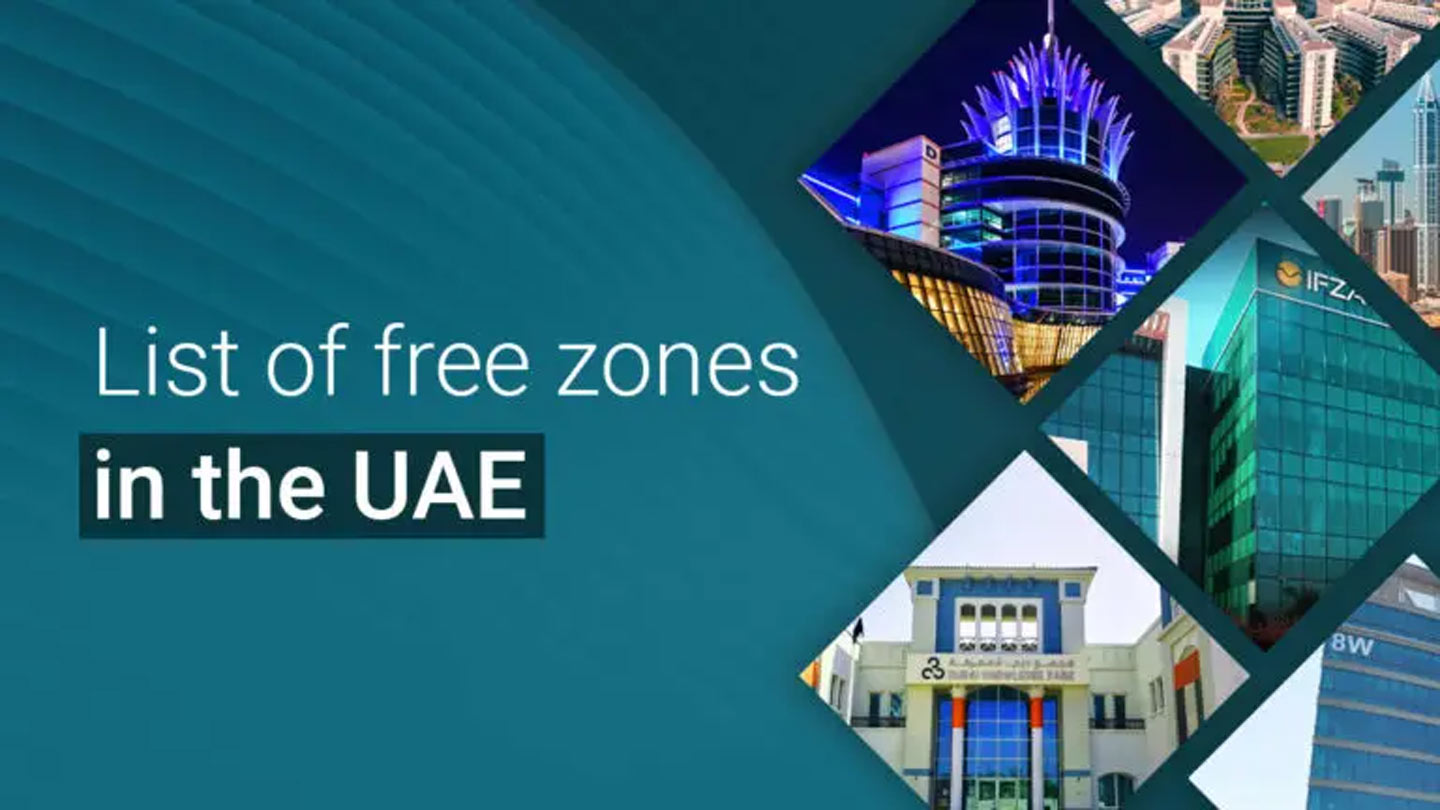
Now, let’s explore the diverse Free Zones across the UAE. The country is home to over 46 specialized zones, each catering to different industries.
There are 46 Free Zones in the UAE, each designed for different business needs.
List of Free Zones in Dubai
Dubai leads with the highest number of Free Zones; each designed for specific sectors.
Free Zone
Ideal For
Key Highlights
DMCC
Commodity Trade, Global Businesses
Consistently ranked a top global Free Zone. Allows crypto trading and offers a dual license.
DIFC
Finance & Banking
A leading international financial hub that operates under English common law.
JAFZA
Logistics, Industrial, Trade
One of the oldest and largest Free Zones, integrated with Jebel Ali Port.
Dubai Internet City & Dubai Silicon Oasis
Tech & IT Companies
The region’s premier hubs for technology innovation and smart city solutions.
Dubai Media City, Studio City, & twofour54 Abu Dhabi
Media, Production, Entertainment
Full-service hubs for broadcasting, film production, digital media, and creative content.
Dubai Healthcare City
Medical & Wellness
A dedicated zone for hospitals, clinics, and medical research.
DAFZA
Aviation-linked Businesses
A high-profile zone connected to Dubai International Airport.
IFZA
Startups & SMEs
Known for its affordable and flexible business setup packages, including e-commerce licenses.
TECOM Group Zones (D3, DSO, DKP, etc.)
Design, Science, Education
A collection of specialized zones for industries like design, science, education, and manufacturing.
List of Free Zones in Abu Dhabi
The capital offers powerful, well-established zones with a focus on industry and finance.
Free Zone
Ideal For
Key Highlights
ADGM
Finance & FinTech
An award-winning international financial centre on Al Maryah Island.
KIZAD
Industrial & Manufacturing
A massive industrial zone adjacent to Khalifa Port, offering cost-effective solutions.
twofour54
Media & Entertainment
Abu Dhabi’s leading media and content creation hub.
Masdar City
Clean-Tech & Sustainability
A pioneer in sustainable urban development and renewable energy innovation.
List of Free Zones in Sharjah
Sharjah provides strategic and cost-effective options with excellent connectivity.
Free Zone
Ideal For
Key Highlights
SAIF Zone
Trading, Logistics, SMEs
Connected to Sharjah International Airport, it’s one of the most popular and affordable zones.
Hamriyah Free Zone
Heavy Industry & Manufacturing
The second-largest industrial Free Zone, offering large plots of land and deep-water port access.
Shams
Media, Consulting, General Trading
A fast-growing zone that is not limited to media; offers flexible licenses and freelancer permits.
Other Key Emirates
Ras Al Khaimah
RAKEZ: A highly versatile and economical zone suitable for almost any business activity, from SMEs to large industries. It’s known for its flexible packages and support services.
Fujairah
Fujairah Free Zone (FFZA): Offers strategic access to the Indian Ocean and is a major hub for shipping and oil storage.
Ajman
Ajman Free Zone (AFZ): A well-established and cost-effective option, popular for trading, industrial, and service activities.
Umm Al Quwain
UAQ Free Trade Zone (UAQ FTZ): Known for its affordable licensing and flexible options, allowing multiple activities under a single license.
Start Your Business Journey with Confidence
Navigating the options for Free Zone setup can be exciting, but you don’t have to do it alone. Partnering with a trusted business setup consultant can save you time, money, and stress.
Why Choose Shuraa Business Setup?
With over 26 years of experience, Shuraa is a leading business setup expert in the UAE. We simplify the entire process for you:
Free Zone Selection: We help you choose the perfect zone for your business type and budget.
License Processing: We handle all the paperwork and government formalities.
Ongoing Support: From visa processing to PRO services, we support your business long after it’s established.
Get in Touch Today!
Ready to make your business idea a reality? Our expert consultants are here to guide you every step of the way.
The UAE is home to over 46 Free Zones spread across all seven emirates. New zones and authorities are occasionally established to support evolving industries.
2. What is the main benefit of a Free Zone company?
The key benefits include 100% foreign ownership, full profit repatriation, tax exemptions, and custom-duty benefits on imports and exports.
3. Can a Free Zone company do business directly in the UAE local market?
Generally, a Free Zone company can only sell directly to the local (mainland) market through a local distributor or agent. To conduct business freely within the mainland, you would typically need to secure a mainland license or set up a commercial agent relationship.
4. What is the difference between a Free Zone and a Mainland company?
A Mainland company (with a DED license) can trade directly anywhere in the UAE and GCC, but a local sponsor is rarely required (100% ownership in most sectors since 2021). A Free Zone company offers 100% ownership but has restrictions on direct local market trade.
5. Can I get a residence visa through my Free Zone company?
6. Which Free Zone is the cheapest for starting a business?
Costs vary significantly based on the zone and your business activity. Zones like IFZA (Dubai), RAKEZ (Ras Al Khaimah), and SAIF (Sharjah) are known for offering very competitive and affordable startup packages.
7. Can I run my Free Zone business from home?
Many Free Zones now offer flexible options like “virtual offices” or “flexi-desk” packages that fulfill the office space requirement without needing a physical office, allowing you to operate remotely.
Disclaimer: The information in this post is for general guidance only and may change due to updates in government policies or regulations.
Are you a new entrepreneur venturing into the world of business? Or are you a seasoned entrepreneur looking to expand your business in Dubai? With the help of affordable Dubai company setup packages for startups, you can get your establishment up and running in the most seamless way.
We understand that first-time entrepreneurs or small and medium enterprises (SMEs) may have financial constraints or limited knowledge about starting a business in Dubai, especially if you are new to the UAE. Which is why, our cost-effective and comprehensive start-up packages for company formation will simplify this process for you. These packages are designed to take care of necessary documentations, approvals, service fees, and processes.
Business Setup Packages in Dubai
Below are some of the most affordable Dubai company setup packages offering competitive and customised business setup services in the UAE.
Mainland Starter Package
Trade License Corporate Service Agent PRO Services Complete Documentation Dedicated Consultant Free Consultation And more From AED 14,500*
Mainland All-Inclusive Package
Trade License Investor Visa Office Solution Employee Visa Quota Free VAT Registration Bank Account Assistance And more From AED 18,500*
Free Zone Starter Package
Trade License Lifetime Investor Visa 15% off for 3yr license Bank Account Assistance Free 1hr VAT Consultation Dedicated Account Manager And more From 17,900*
Dubai is an entrepreneur-friendly city. Its government is regularly introducing new policies or improving older laws to benefit the business community in the city. One such game-changing amendment was the implementation of 100% business ownership for foreign nationals, rolled out earlier this year.
Previously, an expat businessperson had to partner with a UAE national (local sponsor) to register a commercial company with the Department of Economic Development (DED) on Dubai mainland. This also meant that the profit-sharing structure of the business would be 51-49, where 51% shares would be held by the Emirati sponsor. But with the recent amendment, you can now own 100% shares of your UAE business.
In Dubai, you can opt to establish your business either on the mainland or in one of the many free zones. Some prominent mainland regions for setting up a business include Sheikh Zayed Road, Business Bay, Karama, and Al Quoz. Some prominent Dubai free zones include International Free Zone Authority (IFZA), Jebel Ali Free Zone (JAFZA), Dubai Media City (DMC), and Dubai Multi Commodities Centre (DMCC).
Benefits of establishing a company in Dubai
Here’s why you should start your company in Dubai:
100% foreign ownership
0% personal, corporate, income tax
Strategic geographic location
Growth-centric global business hub
World-class infrastructure
One of the safest cities in the world
Unparalleled global connectivity
Active government support for entrepreneurs & investors
While the government of Dubai has made it easy for entrepreneurs to set up their companies, it is advisable to take the help of industry experts to assist you. This is because the legal requirements and processes that entail company establishment differ depending on the business activity you select as well as the structure you choose for your business.
Shuraa Business Setup is a leading provider of company formation and corporate services in the UAE. For over 26 years, we have been helping international and local entrepreneurs register, expand, and maintain their businesses in the UAE. Whether you are an individual businessperson or a multinational company, we will help you gain a foothold in the lucrative and diversified UAE market.
Our proficient team of legal corporate advisors, business setup consultants, PROs, tax agents, and lawyers have helped more than 35,000 entrepreneurs to date. Here’s why you should choose Shuraa for your Dubai company formation:
35,000 businesses formed in the UAE since 2001
Strong team of 100+ professionals from 16 nationalities
Multilingual and highly experienced team of corporate advisors
Trustworthy corporate local agent
Certified Investor Rights & Protection services to secure the ownership & profit share of clients as per central government’s regulations
Simple, fast, transparent, and hassle-free processes
Exclusive and customised company formation packages offering value for money
Approved service agents for the Department of Economic Development in Dubai
Affiliated with various government agencies in the UAE
People call Dubai the commercial hub of the UAE, especially when it comes to textile business setup in Dubai. The city is a thriving business venue for global entrepreneurs and investors. It welcomes all types of business activities, thereby strengthening its business foundation. To set up a business in Dubai is now very simple, especially since the announcement of 100% business ownership for foreign nationals. Hence, many people from across the world consider establishing a textile business in Dubai.
The textile industry is one of the most lucrative and rapidly developing industries in Dubai. This industry has played a crucial role in powering the country’s economy. Besides that, textile business setups in Dubai have created huge employment opportunities for people from around the globe.
If you are an entrepreneur interested in or having expertise in the textile industry, you can start a textile business in Dubai. But before that, you must educate yourself about the cost of setting up a textile business in Dubai, among other things. This blog will help you figure out how to start a textile business in the UAE and other related information.
Steps to Start a Textile Business in Dubai, UAE
With the help of the supportive UAE government, forming a company in Dubai is now easier than ever before. The process for starting a textile business in the UAE is not that complicated either. To further simplify it for you, the steps for the process are mentioned below:
1. Pick a Trade Name
You must pick a simple yet catchy name, something that directly connects with your product or service. It is important to follow the rules for trade name selection established by the UAE government. One of the most important rules is to not use any controversial words in your trade name. You should also avoid the mention of any religious names. If you decide to keep the name of your company after the name of a person, make sure to use the full name, as mentioned in passport. Once you have decided on the name, register it legally.
2. Pick a Suitable Location
Pick a location where you can attract the right audience that can help you take hold of the market from the get-go. If you choose a location where your target audience cannot easily find your shop or warehouse, it will backfire. Make sure the location meets all the requirements for your business. Once you decide the location, do not forget to register with the Dubai Land Department and get your Ejari.
The Ejari, also known as tenancy contract, will be provided to you by your landlord. The tenancy contract is one of the most important documents for starting a textile business in Dubai. However, an Ejari is only required if you decide to set up a retail store. In the case of a textile manufacturing business in Dubai, you will need to finalise a warehouse, which also requires an Ejari. But if you plan to start a textile import-export business or a wholesale textile business, the Ejari for your business’ physical space will be waived off for the first year.
3. Select the Legal Structure of Your Business
Every business must select a specific structure for their company. The third step is to decide how you want your business to operate and its legal entity. This will point you towards the right and required legal framework. You can set up your textile selling business as an LLC with either a single shareholder or multiple partners. With the implementation of the regulation regarding foreign ownership, you no longer require an Emirati sponsor (local sponsor). You can now become 100% owner of your textile business in Dubai.
4. Submit Documents for Approval
After you have decided the legal structure of your business, submit all the necessary documents with the respective legal authorities and departments. They will inspect all your documents and if all seems fine, you will get the initial approval for setting up a textile business in Dubai. You can then acquire your trade license to conduct business activities legally.
5. Get Your Business License
The last step is to acquire the trade license for your textile trading business in Dubai. Once the relevant authorities approve your applications and all your documents, the Department of Economic Development (DED) in Dubai will issue your business license. DED is the only agency appointed by the UAE government to issue business licenses in Dubai.
Why Start a Textile Business in Dubai?
There are various benefits of setting up a textile business in Dubai. Being one of the most profitable business industries, a textile business in Dubai can be life-changing for many aspiring entrepreneurs. Some prominent benefits of setting up a textile business in the UAE are as follows:
1. Target Diverse Audience and Markets
Dubai is home to a huge number of expats and is one of the hottest destinations for tourism. Entrepreneurs in Dubai get to cater to the needs of audiences with different preferences. This helps them to increase their business turnover. Moreover, Dubai is the second largest import-export hub for fashion and textile in the world. This further confirms why starting a textile business in Dubai is an excellent move.
2. Tax Benefits
When it comes to the payment of tax, entrepreneurs and investors enjoy much relief as the UAE offers total tax exemption. UAE is one of the most tax-friendly countries in the world, with 0% income, personal, and corporate taxes. So, if you plan to start a textile business in Dubai, you can reap these favourable tax benefits.
3. Repatriation of Profits and Capital
Many businesspeople are worried about the extra capital that needs to be paid at the time of either starting or liquidating their company. Well, when it comes to doing business in Dubai, you don’t have to worry about it. The city allows complete repatriation of profits earned and capital invested in the business.
4. Expo 2020 Dubai
With Expo 2020 Dubai just around the corner, now is the right time to start planning for your textile business setup in Dubai. The event is going to create ample opportunities for businesspersons from around the world looking to expand into the UAE market. It is expected to be a game-changer for various small and medium enterprises as it will open the city to newer business industries. With an expected attendance of 25 million visitors, the 6-month long event is just the networking and growth platform that any entrepreneur would look forward to.
5. Simple Business Set-Up Process
The government of Dubai is very cooperative when it comes to business setup. It provides various facilities to entrepreneurs, making it easy and interesting for them to conduct business in the city. The government has taken several initiatives to make the process of starting a business in Dubai seamless. This will increase the business opportunities in the country, ultimately strengthening the economy.
6. Excellent Location
When we talk about the location of Dubai, it is one of the foremost reasons why international entrepreneurs prefer the city. Thanks to its strategic location on the global map, the city acts as a gateway to other neighbouring countries and boasts excellent connectivity with the rest of the world. Because of this, Dubai never has to cut off the supply of any types of goods and products from countries nearby. Businessmen and women enjoy the easy import-export and re-export processes. Its location also provides opportunities for businesspersons to expand their business not just across the UAE but also other countries.
Documents Required for Starting a Textile Business in Dubai
To acquire your trade license for textile business in Dubai, you need to submit the following documents to the Dubai DED:
Passport copies of you and all your business partners
Visa copies of you and all your business partners. Submit UAE residency visa copy if you are a resident of the UAE, or tourist visa copy if you are a non-resident
Emirates ID copy of you and all your business partners, if residents of the UAE
Initial approval certificate
Trade name registration certificate
Attested MoA with proof of approval of business information
Lease agreement and Ejari as proof of physical address of the shop or factory (if applicable)
Approval from relevant departments for textile selling and/or manufacturing
Plan for Your Textile Business Setup in Dubai
Now that you know how profitable the textile industry in Dubai is, you can easily start planning for setting up a textile business in Dubai. Even though the process to start one is quite easy, it is advised to take help from experts. You can reach out to our experienced corporate advisors at Shuraa Business Setup to help and guide you through your company formation in Dubai. If you would like to understand what the cost of setting up a textile business in Dubai is, all you have to do is call us and we will provide you with all the necessary information.
Connect with Shuraa today by calling us on +97144081900. For chat assistance, send us a WhatsApp message on +971507775554. You can also write to us at info@shuraa.com.
Starting a facilities management company in Dubai is a smart business option. Why? Dubai is one of the fastest growing cities in the world in all aspects. It is not only the home to the world’s tallest building, Burj Khalifa. But, it also houses numerous skyscrapers which reflect its world-class infrastructure. Moreover, the city’s population of over three million mainly comprises expats. These residents live and work in varied accommodations and structures. And those needs quality maintenance throughout the year. Therefore, the following blog will answer how to start a facility management company in Dubai.
One of the common queries received by business setup consultants is: How to start a facility management company in Dubai? However, first one needs to understand the services that facilities management companies, also known as FM services, provide.
What comprises facility management (FM)?
Facility management services include checking on the smooth flow of the operational aspects of any given building. For instance, a sports facility engaged in hosting players and games such as football, equestrian, golf, and water activities. The hired facility management company will be responsible for all the tasks concerning all the tasks concerning running these entities, preparing, and renting facilities, organizing activities, promoting products, and more. Furthermore, facility management services include maintenance of the building in terms of security, fire safety, electricity, plumbing, carpentry as well.
Types of FMs in Dubai
Facility managing companies engage in two broad types of activities:
Hard FM
This type refers to the services catering to the actual building structures and systems that make a facility run smoothly. This may include fire safety, alarm systems, plumbing, and other maintenance works such as corridors and elevators.
Soft FM
Meanwhile, soft services are those that support the main property management. This includes pest control, cleaning of the premise, maintaining the grounds and ensuring security.
How to start a facilities management company in Dubai
Entrepreneurs wondering how to start a facility management company in Dubai, need to get started by obtaining a professional / service license. Therefore, for any business setup in Dubai, acquiring a trade license is a must. However, which license suits your company, depends on the nature of the business activities you will be conducting.
Documents required for starting a facilities management company:
Filled application form
Copies of passports (owner and all other partners)
A copy of Jinsiya (naturalization book of local partners)
No Objection Certificate from international partners’ sponsors if the expatriate is already on a work visa. If the shareholder is on a visit visa, the UID number of the shareholder is requested
Primary approval by the competent authority, depending on the form of business operation to be conducted
Ejari registration, rental contract, and name registration certificate
Procedure for starting a facilities management company in Dubai
There is a standard set of formalities entrepreneurs have to fulfil for license registration in the Emirate. So, here is a quick checklist to begin with:
Getting initial, name and TRA approvals
Attesting the MoA
Notarising the LSA
Paying government charges including license fee, yearly fee, Department of Economic Development fee, Tasheel fee, and non-Arabic name fee
Preparing Ejari (if required)
In the next phases, you will be completing immigration-related formalities. This includes, applying for an immigration card, paying investor visa cost, and obtaining Emirates ID after getting a formal medical test.
Finally, the last set of documentations required involves applying for a labour card and employee visa as required.
With the above formalities complete, you are set for starting a facilities management companies in Dubai.
Still wondering how to start a facility management company? Get expert assistance
Although the arranging the documents required for starting a facilities management company in Dubai appears fairly simple, the process is not as easy for individuals., Therefore, it is better to get help from UAE company formation experts. The experienced and well-connected corporate advisors at Shuraa Business Setup, will walk you through the entire phase of how to start a facility management company in Dubai, while you can focus on your business goals.
With a population of more than three million and a fair influx of visitors, aspiring entrepreneurs can fare well with a small business setup in Dubai. When you think of a startup, the initial picture could be that of a corporate office with young workers, a football table and a swanky pantry. However, there are numerous possibilities when one wants to start a small business in Dubai.
Starting small could mean providing consultation based on yours expertise from a desk space or opening a tea stall next to a parking lot, or even selling groceries. The possibilities for small business setup in Dubai are vast. However, one needs to bear in mind some important factors before they start a small business in the UAE.
How to Start a Small Business in Dubai, UAE
1. Finding sponsorship
Without a doubt, starting a small business in Dubai will be on the steeper side. From obtaining various permits, renting out space, furnishing it, buying equipment, getting supplies, and paying staff salaries, to promoting your business, the process might be an expensive affair.
If you do not have the required funds, find a like-minded partner, or consider taking out a business loan. Most banks in the city do not require any collateral, offer flexible repayment plans, and have simple documentation processes.
Although the amendments made to the Commercial Companies Law allows expat entrepreneurs to have 100% ownership of their business, the deposits required for the same are quite high. Therefore, if you want to do business on Dubai Mainland, you should partner with a local sponsor. This local partner will act as your service agent who will charge you a mutually agreed annual fee.
2. Preparing documents for business setup
This involves several government agencies inspecting, approving, and issuing various permits you will require for your business operations. The main document required for setting up a small business in Dubai is your trade license, which is either issued by the Department of Economic Development (DED) or the respective free zone authority under which your business will fall based on your choice of location.
Below are the basic documents you would have to keep handy while applying for a small business license in Dubai:
Depending on the nature of your business, you might need to get some formal permits. For instance, to open a restaurant in Dubai, you need to obtain a trade license from the DED or the respective free zone authority or the Department of Tourism and Commerce Marketing (DTCM) depending on your location, a food and safety license issued by the Department of Food and Safety, and an NOC is required from the Dubai Municipality.
4. Choosing location for business
The address of your office or store speaks for your brand, which is important for your business. Dubai has specific areas which are suitable for certain categories of businesses. For example, Sheikh Zayed Road and Business Bay host premiere corporate offices, Dubai Healthcare City houses specialty clinics and hospitals, Media City is home to the branches of several international media companies, DIFC is the hub of financial institutions, and the industrial areas are where most of the assembling and manufacturing units are located.
However, there are other factors to bear in mind while choosing your business location. Its proximity to public transportations such as bus and metro stations so that your employees and potential clients can travel conveniently, the availability of eateries and convenience stores, and parking facilities among others.
Moreover, the interiors of your workplace matter too. The decor, vibe, pricing, and personal touches including furniture and lighting also play a major role in attracting clients as well as creating a healthy work environment. The city has no dearth interior designers and companies offering complete furnishing solutions at competitive prices.
5. Set up a business with the right staff
Your hiring choices could make or break the project, so, take your time to find the right people to run the show. Inquire not only about their past experience, but also try to figure how they get along with colleagues, large teams, and deal with clients under pressure. You can outsource this to a staffing company. Furthermore, you can also get their visas and documentation done via professionals with expertise in the field.
6. Marketing
Newly opened businesses in Dubai need to advertise themselves across varied platforms, including print and digital mediums. Having an in-house IT team would ensure your visibility in this fast-paced world with rapidly evolving technology.
Associating with a public relations company dealing with clients in the relevant industry is a good idea as you might already have too much on your plate. Trust these executives to prepare press releases, run social media campaigns, organize promotional events that help your company step into the limelight.
7. Get professional assistance
The process of establishing your own company might sound overwhelming given the investment and multiple factors mentioned above, but you can get help at every step on your journey with expert consultants at Shuraa Business Setup.
The team will advise and assist you with both planning and walk you through the formalities required to start a small business in Dubai. From helping you choose an ideal property for your dream project, identifying a local sponsor and getting the paperwork sorted at various stages, to getting special permits, Shuraa spells success. Furthermore, the company will also guide you with financial aspects and take care of PRO services.
How Much Does It Cost to Start a Small Business in Dubai?
Numerous factors influence the small business license cost in Dubai. Your business operations, license type, location, and other factors are among them. A trading license for your small business can also be issued for as little as AED 20,000.
Therefore, any amount between AED 20,000 and AED 30,000 is considered a safe bet. It’s vital to remember that the small business license cost in Dubai will increase if you require special privileges.
For example, regulations like a foreign trading name or governmental approval add to the entire cost. You can reach out to Shuraa’s company formation experts, and we’ll help ensure you don’t overpay at any time during the procedure for starting a small business in the UAE.
Required Documents for Starting a Small business in the UAE
Here’s a list of documents you need to start a small business in Dubai:
A descriptive business plan document
Duly filled application form
MoA and LSA agreements
Payment receipt of trade name registration
Passport copies of all the stockholders in your company (if any)
Dubai is one of the countries that has made it compulsory for every firm and organization to have a business license. For the same reason, annual trade license renewal in Dubai is compulsory. This process is under the supervision of the Department of Economic Development in Dubai. The license renewing process is straightforward, but you might need to deal with a lot of documentation.
It’s very important to renew a license in time, and if not renewed it can cause problems such as penalties, banning of business, or some other serious issues. Before you learn about license renewal you must be aware of trade licenses. To establish a business or trade in a particular country, applicants need to have a written document that provides them the legal permission to carry out their activities. The license does not allow any trade except the one it has permitted.
Furthermore, it does not give any ownership of property on which the applicant is trading. It’s just a simple document that shows the legality of your business. If you have set up your business in Dubai, it’s imperative to get your trade license and renew it from time to time to ensure the smooth functioning of your company. You don’t have to worry about the process of trade license renewal in Dubai when you partner with local business setup consultants.
Documents Required for Trade License Renewal in Dubai
The trade license you are issued is valid for only one year and must be renewed yearly. The application for renewal of the trade license must be submitted before 30 days of expiry. In case you fail to do the same, a late fee can be imposed on you, which is AED 200 per month (excluding external penalty, if any). There are almost 50 free zones in the UAE, and all have their unique requirements for the trade license renewal process. Below is the list of required documents:
Ejari registration: For renewal of the license, it’s necessary to possess a registration certificate from Ejari. It’s compulsory to have a tenancy certificate that is approved by Ejari, or else a fine will be imposed on you.
Tenancy contract with validity: To renew the license one must have a tenancy contract that still has a validity of one month or more. For applying you must first check and verify your tenancy contract. Moreover, this contract must be confirmed by Ejari. If your contract does not have a validity of at least one month, your trade license renewal request can be rejected under legal obligations.
A copy of your old trade license: You need to attach a copy of your old license to get it renewed. You cannot apply for a trade license renewal if you don’t have the mandatory permits that allow you to carry out your business activities in the UAE.
BR/1 form: BR/1 form is a license renewal form that must be filled and submitted to start the process. You must type a BR/1 form with the signature of existing partners and submit it to the DED for approval. All the documents must be attached to this form before submitting.
Photocopy of passport of all business partners: A passport photocopy of each business partner must be mandatorily submitted to show the stakeholders involved in your business. If you don’t have any partner you shall submit only yours.
You can submit your renewal form to the DED with all these mandatory documents. Moreover, there are two processes of applying for renewal, i.e., online and offline. You can choose any one of them at your convenience. All regulatory procedures and evaluations are performed by the governing bodies in Dubai irrespective of the application method.
Process to Renew a Trade License in Dubai
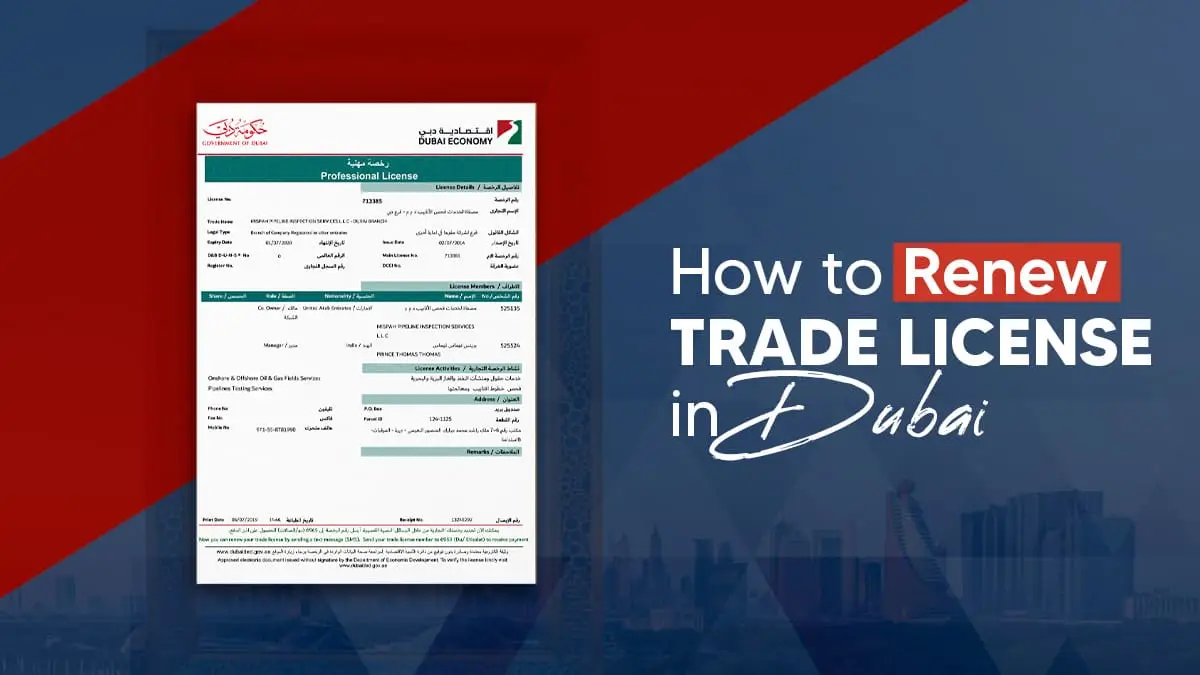
To renew a trade license in Dubai, businesses need to submit an application to the Department of Economic Development (DED), either online through the Invest in Dubai or Dubai Economy and Tourism (DET) e-services portal, or through authorized service providers. The process involves verifying information, uploading necessary documents (like the tenancy contract, license copy, and partner passport copies), and paying the renewal fees.
Steps for Renewal:
Access the DED Portal: Log in to the DED e-services portal using your UAE Pass or DED account credentials.
Locate Renewal Section: Navigate to the “My Transactions” section and click on “Renew License”.
Enter License Details: Specify the license number you wish to renew.
Verify Information & Upload Documents: Review the license details and upload required documents such as a copy of the current trade license, valid tenancy contract (Ejari), and passport copies of all partners.
Submit Application: Once all information is verified and documents are uploaded, submit the renewal application.
Pay Renewal Fees: After the application is processed and approved, you will receive a payment voucher for the renewal fees. Pay the fees through the provided channels.
Receive Renewed License: Upon successful payment, your trade license will be renewed, and a digital copy of the renewed license will be sent to your registered email address.
Important Considerations:
Ensure your tenancy contract is valid for at least one month beyond the renewal date.
Keep your Ejari registration certificate valid to avoid issues during renewal.
Consider using the Invest in Dubai platform or service centers for convenient renewal options. or you can get in touch with Shuraa Business Setup Consultants.
How Much Does It Cost to Renew a Trade License in Dubai?
The cost of renewing a trade license in Dubai varies depending on the business type and jurisdiction but generally ranges from AED 8,000* to AED 15,000*. Consulting with business setup consultants can help minimize costs and ensure a smooth renewal process.
The best part is that you can avail the trade license renewal Dubai discount for accommodation fees if you have a residential Ejari. Furthermore, you can also get sizable discounts on the overall Chamber of Commerce fees.
What happens if you will not be renewing your trade license in Dubai?
A valid trade license is one of the critical factors that ensure smooth business functioning in the UAE. Trade license renewal in time saves you from the possibility of banning or blacklisting your company. Always keep a check on your tenancy contract and trade license. Note that if you fail to renew the license before the expiration date, it can lead to legal repercussions. Some of them include:
Penalties: The DED in Dubai has all legal rights to impose monetary fines on businesses that don’t renew their trade licenses. A penalty of AED 5,000 can be imposed on the institutions that operate without a trade license. Furthermore, a penalty of AED 250 per month is applicable on traders who trade after the expiry of the trading license.
Blacklisting business: The company that operates without a trade license or with an expired one exposes their business to the risk of being blacklisted. This will lead to the termination of the operation of the entire company.
Banning the company: If you operate your enterprise with an invalid trading license in the UAE, the DED can shut down your company at any time. This is a serious consequence, and you may not be able to re-establish your enterprise in Dubai.
How Shuraa Can Help to Renew Your Trade License
Renewing your trade license in Dubai is now quicker and simpler than ever with Shuraa Business Setup! Our expert business consultants guide you through every step—from document preparation to approvals—ensuring a seamless renewal process.
Let us handle the paperwork while you focus on growing your business. With Shuraa’s end-to-end support, your license renewal is in trusted hands.
Gold has been at the heart of Dubai’s economy for decades and in 2026, that story is still very much being written. The city handles roughly 25% of the world’s physical gold trade, runs one of the most advanced precious metals infrastructure networks on the planet, and continues to attract investors, wholesalers, jewellers, and online traders from across the globe.
If you’re thinking about starting a gold trading business in Dubai, you’re looking at a market that’s well-regulated, globally connected, and genuinely profitable for those who set up correctly. This guide walks you through everything: the licenses you’ll need, the jurisdictions to consider, the real costs involved, and the compliance requirements that matter most in 2026.
Why Dubai for Gold Trading in 2026?
The case for Dubai is strong, and it goes well beyond the tax benefits. Here’s what makes it one of the world’s best locations for gold trading:
Strategic location bridging Europe, Asia, Africa, and the Middle East, making it a natural hub for import/export
Zero personal income tax and zero corporate tax on most gold trading activities
DMCC’s world-class infrastructure: purpose-built vaults, LBMA-approved refineries, and the Tradeflow financing platform
Access to the Dubai Gold & Commodities Exchange (DGCX) for futures and spot trading
Strong demand from both local residents and millions of tourists visiting the Gold Souk each year
UAE Good Delivery (UAEGD) standard, an internationally recognised responsible sourcing framework that lends credibility to UAE-based traders
Dubai’s gold market has consistently grown year-on-year. In 2025, total gold trade through UAE channels hit record volumes, driven by strong demand from South and Southeast Asia, African markets, and domestic jewellery retail.
Types of Gold Trading Businesses You Can Set Up
Before applying for a gold trading license in Dubai, you need to decide what kind of gold business you actually want to run. The activity you choose affects your license type, jurisdiction options, compliance requirements, and banking experience.
Gold Bullion Trading: Buying and selling gold bars and coins, usually B2B or through commodity channels
Precious Metals Import/Export: Sourcing gold internationally and trading across borders
Gold Jewellery Manufacturing: Design, production, and retail of gold jewellery (common in the Gold & Diamond Park)
Gold Jewellery Retail: Selling finished pieces to consumers, tourists, or corporate buyers
Gold Wholesale: Supplying to retailers, manufacturers, or other traders
Online Gold Business in Dubai: E-commerce-based gold sales or digital investment platforms
Each model comes with its own regulatory considerations. Retail businesses, for instance, will have different VAT implications than wholesale B2B traders. Make sure your license activity is precisely defined from the start, vague activity descriptions can create issues with banking approvals and customs clearance.
Choosing the Right Jurisdiction
One of the most important decisions you’ll make is where to register your company. In Dubai, you have three primary options:
DMCC Free Zone (Most Popular for Gold Traders)
The Dubai Multi Commodities Centre is the go-to jurisdiction for the gold trade business in Dubai. It’s home to the largest concentration of precious metals companies in the UAE, and offers:
100% foreign ownership with no local partner required
Dedicated gold trading and precious metals licenses
Access to DMCC’s vaults, Tradeflow platform, and commodity financing facilities
A well-established community of gold traders, refiners, and brokers
Typical license processing: 10 working days
Gold & Diamond Park
Ideal if your business involves jewellery manufacturing or retail. It’s a specialised free zone with facilities designed for production and showroom operations. If you’re building a brand around crafted pieces, this is worth considering alongside DMCC.
Dubai Mainland (DED/DET)
A mainland setup gives you direct access to the UAE domestic market, including government procurement and walk-in retail without free zone restrictions. Since 2021, 100% foreign ownership is permitted for most trading activities, which makes mainland more attractive than it used to be. If your primary market is UAE-based buyers, this route is worth exploring.
Step-by-Step: How to Start a Gold Trading Business in Dubai
Here’s the process most gold trading businesses follow in 2026:
1. Define Your Business Activity and Prepare a Business Plan
Be specific: “Gold Bullion Trading,” “Precious Metals Import/Export,” or “Gold Jewellery Retail.” Your business plan should cover sourcing strategy, target markets, projected turnover, and, importantly, your AML compliance approach. Banks and regulators will review this.
2. Choose Your Jurisdiction
DMCC for trading/wholesale, Gold & Diamond Park for manufacturing/retail, or Dubai Mainland for UAE market access. Your choice affects costs, timelines, and operational flexibility.
3. Reserve a Trade Name
Submit via the DMCC or DED portal. Names must be unique and compliant with UAE naming conventions. Approval typically takes 1–2 working days.
4. Submit Initial Approval Application
Upload documents through the relevant online portal. Pre-approval usually comes through within 3–5 working days, subject to document completeness.
5. Secure Office Space
A physical presence is mandatory for gold trading licenses. DMCC offers flexi-desk, shared, and dedicated office options. The lease agreement is required before the license is issued.
6. Pay Fees and Receive Your License
Once payment and lease confirmation are submitted, your e-license is issued. DMCC typically completes this in around 10 working days from initial approval.
7. Open a Corporate Bank Account
Present your trade license to banks such as Emirates NBD, Mashreq, or FAB. Gold trading businesses typically go through enhanced due diligence given the sector’s AML exposure. Budget for a 2–4 week approval timeline and prepare thorough documentation including your source of funds and supplier details.
8. Apply for Visas and Complete Compliance Registration
Apply for investor visa and/or employee visas. Register for VAT if your annual turnover exceeds AED 375,000. Set up your AML/KYC procedures before you begin trading.
9. Begin Trading Operations
Source gold from LBMA-approved refineries, establish supplier agreements, and start building your client network. DMCC members benefit from direct access to trading events, vault services, and the broader commodity ecosystem.
From initial application to fully operational: most businesses complete the entire setup in 2–4 weeks when handled by an experienced business setup consultant.
Documents Required
Here’s what you’ll typically need to submit:
Passport copies of all shareholders and directors
Proof of residential address (utility bill or bank statement, within 3 months)
Business plan (including AML strategy and sourcing details)
Per visa; gold businesses face enhanced due diligence
Share Capital (if applicable)
0 – 50,000
DMCC may require for certain packages
Bank Account + AML Setup
2,000 – 5,000
Includes compliance documentation
TOTAL (First Year)
~25,000 – 80,000
Average ~AED 35,000–45,000 with one visa
Note: These figures are indicative and based on typical 2026 market rates. DMCC occasionally offers bundled packages that include workspace and visa allocation, worth checking before applying independently.
Key Compliance Requirements in 2026
Compliance is not optional in the gold sector, and the requirements have become more stringent in recent years. Here’s what every gold trader in Dubai must be aware of:
AML/KYC Obligations
Gold trading is classified as a Designated Non-Financial Business and Profession (DNFBP) under UAE law. This means you are required to register with the UAE’s goAML platform, conduct customer due diligence, monitor transactions, and maintain detailed records. Non-compliance carries significant penalties.
VAT on Gold
Investment-grade gold (bars and coins meeting the UAE standard) is zero-rated for VAT purposes. Retail jewellery sales, however, carry the standard 5% VAT. If you’re trading across both categories, clear separation of your invoicing is essential.
CMA Oversight (2026 Update)
In 2026, the Capital Market Authority (CMA) replaced the previous Securities and Commodities Authority as the primary regulator for commodity-related businesses. If your activities include futures trading, commodity funds, or structured precious metals products, you may require an additional CMA license classification. This is a new development worth discussing with your business setup advisor before registering.
India CEPA Considerations
India remains one of the largest buyers of UAE gold, but in 2025, India introduced tighter import regulations to address misuse of the UAE-India CEPA trade agreement. Under the new rules, only qualified entities with valid quotas can import certain gold categories from the UAE at preferential tariff rates. If your business plan relies heavily on India as a target market, review your eligibility under the current CEPA framework before committing to a volume-based model.
UAE Customs and DMCC Tradeflow
For import/export activities, all gold shipments must comply with UAE Customs Authority regulations. DMCC’s Tradeflow platform streamlines trade finance and documentation for commodity shipments, a significant operational advantage for high-volume traders.
Can You Run an Online Gold Business in Dubai?
Yes, and it’s increasingly popular. An online gold business in Dubai can be structured in several ways: as an e-commerce platform selling physical gold, a digital investment platform, or a B2B wholesale portal serving international buyers.
To trade gold online legally, you’ll need an e-commerce activity added to your trade license. Some platforms also require additional approvals depending on whether they handle client funds or offer gold-linked financial products. If you’re looking to build a digital-first gold business, DMCC is typically the most flexible jurisdiction for structuring this.
How Shuraa Business Setup Can Help
Setting up a gold trading business in Dubai involves moving parts that interact with each other, and getting the sequence wrong can cost you weeks. Shuraa Business Setup has been helping entrepreneurs and investors establish businesses in the UAE for over 26 years, with more than 100,000 companies formed across free zones, mainland, and offshore jurisdictions.
Our services for gold trading businesses include:
Business activity selection and license application (DMCC, mainland, and other free zones)
Trade name reservation and company incorporation
Visa processing for investors and employees
Corporate bank account opening assistance with tailored documentation support
VAT registration and ongoing compliance support
PRO services and government liaison
Golden Visa eligibility guidance for qualifying investors
Ready to take the next step? Our consultants will walk you through your options, help you choose the right structure for your goals, and handle the entire process from application to operation.
Starting a gold trading business in the UAE is one of the most rewarding moves you can make as an entrepreneur, but only if the foundation is right. We’re here to make sure it is.
Frequently Asked Questions
1. How long does it take to get a gold trading license in Dubai?
DMCC applications are typically processed within 10 working days. Full setup, including bank account, visas, and compliance registration, usually takes 2–4 weeks when managed professionally.
2. Can foreigners own 100% of a gold trading company in Dubai?
Yes. Full foreign ownership is permitted in DMCC and other free zones, as well as for most mainland trading activities since the 2021 ownership law reform.
3. Do I need a local sponsor?
No. Neither DMCC nor most mainland gold trading activities require a local UAE sponsor in 2026.
4. Is there a minimum capital requirement?
There’s no universal minimum, though DMCC may require an AED 50,000 share capital deposit for certain license packages. Check the current requirements when applying.
5. How is gold taxed in the UAE?
Investment-grade gold is zero-rated under UAE VAT law. Retail jewellery attracts 5% VAT. There is no corporate income tax on most gold trading activities, and no personal income tax.
6. What banks work well for gold trading businesses?
Emirates NBD, Mashreq Bank, and First Abu Dhabi Bank (FAB) are among the most commonly used by gold trading companies in Dubai. Expect enhanced due diligence during the account opening process – prepare comprehensive documentation on your business model, suppliers, and expected transaction volumes.
7. Do I need SIRA approval for gold storage or security?
If your operations involve on-site security systems, CCTV, or physical vault storage, you may need approval from the Security Industry Regulatory Agency (SIRA). This depends on your specific setup – confirm with your chosen jurisdiction.